What to Expect from the Affordable Care Act in 2025: Key Changes in Individual and Family Health Insurance (the negative and the positive)

By D. Kenton Henry
Editor, Broker, Agent
9 August 2024

For all Americans seeking to obtain or renew “Individual and Family” health insurance in 2025, there are (as always) certain changes to be anticipated.

Open Enrollment Period (OEP)—the period when all U.S. citizens may purchase health insurance for a January 1 effective date of the coming calendar year—runs from November 1st to December 15th. For those who, for whatever reason, want a February 1 effective date—the cutoff is January 15th. After that, a person must qualify for a Special Election Period (SEP). The most common of these is “loss of coverage through no fault of one’s own. During a SEP, an individual has 60 days to pick a plan. That plan will become effective on the first of the month after the date of the application.

To begin, let’s get the negatives out of the way.

THE NEGATIVE:

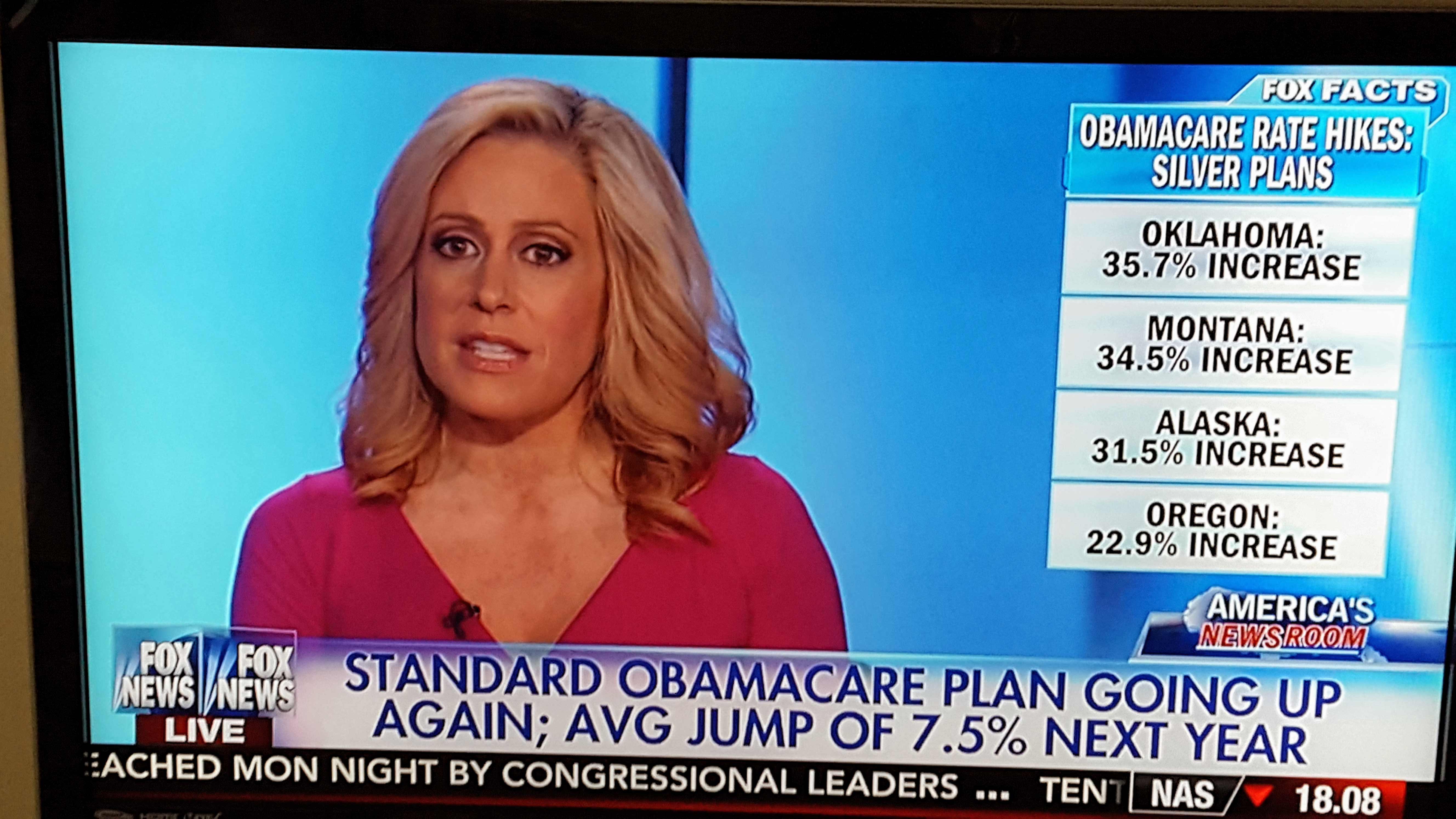
In 2025, ACA (Affordable Care Act) individual and family health insurance premiums are expected to increase by a median of 7%. This rise is driven by several key factors, including the increasing costs of hospital services, workforce shortages, and growing demand for high-cost specialty medications like GLP-1 drugs commonly used for weight loss and diabetes management (such as Ozempic). General inflation and healthcare provider consolidation are also contributing to these hikes.

Although most enrollees in ACA plans receive subsidies that will mitigate the impact of these increases, the cost burden on the federal government will grow as more funds will be needed to cover the subsidies. Insurers across the country are proposing premium increases that vary significantly, ranging from 5% to 10% on average, with some areas seeing rates fluctuate outside this range.

THE POSITIVE:

As we approach 2025, the Affordable Care Act (ACA) continues to evolve, aiming to address the shifting landscape of healthcare needs and to improve the accessibility and affordability of health insurance for individuals and families. The upcoming changes reflect ongoing efforts to enhance coverage, reduce costs, and ensure that more Americans have access to quality care. Here’s a comprehensive look at what you can expect from the ACA’s individual and family health insurance provisions in 2025.

1. Expanded Subsidies and Enhanced Affordability

One of the most significant changes coming in 2025 is the expansion of subsidies for health insurance premiums. Building on previous enhancements, such as those from the American Rescue Plan Act and the Inflation Reduction Act, the ACA will offer even more robust premium assistance. These expanded subsidies are designed to make health insurance more affordable for a broader range of income levels, particularly benefiting middle-income families who previously struggled with premium costs.

For 2025, the eligibility for premium tax credits will be extended, and the income thresholds for receiving assistance will be adjusted to account for inflation and rising living costs. This means that more individuals and families will qualify for financial help, reducing the burden of monthly premiums and making comprehensive coverage more accessible.

2. Increased Cost-Sharing Reductions

In addition to expanding premium subsidies, the ACA will also introduce enhanced cost-sharing reductions (CSRs). These reductions will lower out-of-pocket costs such as copayments, coinsurance, and deductibles for low- and moderate-income families. The aim is to make healthcare services more affordable at the point of care, not just in terms of monthly premiums.

The improved CSRs will be particularly beneficial for those who purchase coverage through the ACA marketplaces, ensuring that even the most essential health services, like prescription drugs and specialist visits, are within reach for more Americans.

3. Broader Coverage Options and Flexibility

The ACA will introduce more flexibility in plan design and coverage options starting in 2025. Health insurance plans available through the ACA marketplaces will offer a wider variety of coverage levels and network options, allowing individuals and families to choose plans that better match their specific needs and preferences.

For example, there will be more options for plans that cater to different health conditions or provide enhanced preventive care services. This diversification aims to address the diverse needs of the population and provide more tailored solutions to meet individual health requirements.

4. Enhanced Support for Mental Health and Substance Use Treatment

Recognizing the growing importance of mental health and substance use treatment, the ACA will place a stronger emphasis on coverage for these services in 2025. Insurance plans will be required to offer more comprehensive mental health benefits, including increased access to therapy, counseling, and substance use disorder treatment.

This change reflects a broader understanding of the integral role mental health plays in overall well-being and aims to reduce the barriers to accessing necessary mental health services.

5. Strengthened Protections Against Discrimination

The ACA will bolster protections against discrimination in health insurance. New regulations will ensure that insurers cannot deny coverage or charge higher premiums based on pre-existing conditions, gender, or other personal factors. Additionally, there will be greater oversight to ensure that insurance plans adhere to these non-discrimination policies.

These protections aim to create a more equitable healthcare system and to ensure that all individuals have fair access to health insurance, regardless of their personal circumstances.

6. Improvements to the Enrollment Process

The enrollment process for ACA health insurance plans will become more streamlined and user-friendly. In 2025, the federal and state-based marketplaces will introduce enhanced digital tools and support services to assist individuals and families with plan selection and enrollment. This includes improved online interfaces, more robust customer support, and clearer guidance throughout the enrollment period.

The goal is to reduce barriers to accessing coverage and to make it easier for people to navigate their options and secure the insurance that best fits their needs.

7. Emphasis on Preventive and Wellness Services

The ACA will continue to focus on preventive care and wellness services. In 2025, there will be increased incentives for health plans to cover preventive services without cost-sharing and to provide additional resources for wellness programs. This shift aims to encourage healthier lifestyles and early detection of potential health issues, ultimately reducing long-term healthcare costs and improving overall public health.

Conclusion:

The changes to the ACA’s individual and family health insurance provisions in 2025 represent a significant step forward in making healthcare more affordable, accessible, and equitable. With expanded subsidies, increased cost-sharing reductions, broader coverage options, and enhanced support for mental health, the ACA is set to offer even greater support to those in need. As these changes are implemented, individuals and families can expect a more supportive and responsive healthcare system that better meets their needs and helps them achieve better health outcomes.

*Please refer to Feature Articles 1 and 2 below the comments box for details on upcoming changes.

Whether you feel you qualify for an “Advanced Premium Tax Credit” (premium subsidy) or not, I can guide you through the process of determining such and enrolling in the plan of your choice for 2025. My years of experience specializing in medical insurance, including ever since ACA compliant plans became available on January 1, 2014, make the process go as quickly and smoothly as possible. Please contact me. There is no obligation to utilize my service and no charge for doing so. If you elect to acquire a policy I introduced you to, I only ask that you go through me to do so. You will be charged no more for the policy than if you walked through the front door of the insurance company and acquired it directly. I am currently appointed with every insurance company doing business in SE Texas; however, I represent you and your interests first and foremost.

Thank you for considering my service,

D. Kenton Henry, Jr
All Plan Med Quote
Office: 281-367-6565
Text my cell 24/7 @ 713-907-7984
Email: Allplanhealthinsurance.com@gmail.com

Https://TheWoodlandsTXHealthInsurance.com
Https://Allplanhealthinsurance.com
Https://HealthandMedicareInsurance.com

For Medicare Supplement Quotes click here:
https://applyformedsupp.com?npn=387509

Leave a comment

******************************************************************************************************

FEATURE ARTICLE 1:

THE KAISER FAMILY FOUNDATION (KFF) – The independent source for health policy research, polling, and news.

The independent source for health policy research, polling, and news.

Tammie Smith
August 5th, 2024                                                                                                                      

Marketplace Insurers are Proposing a 7% Average Premium Hike for 2025 and Pointing to Rising Hospital Prices and GLP-1 Drugs as Key Drivers of Costs

ACA Marketplace insurers are proposing a median premium increase of 7% for 2025, similar to the 6% premium increase filed for 2024, according to a new KFF analysis of the preliminary rate filings. Insurers’ proposed rate changes – most of which fall between 2% and 10% – may change during the review process.

Although the vast majority of Marketplace enrollees receive subsidies and are not expected to face these added costs, premium increases generally result in higher federal spending on subsidies. The justifications insurers provide for these premium changes also shed light on what is driving health spending more broadly.

Insurers cite growing health care prices – particularly for hospital care – as a key driver of premium growth in 2025, as well as growing use of weight loss and other specialty drugs, according to KFF’s examination of publicly-available documents.

This year, increases in the prices insurers are paying for medical care tend to affect premiums more than growth in the utilization of care. Insurers say workforce shortages and hospital market consolidation, which can put upward pressure on health care costs and prices, are increasing 2025 health insurance premiums.

Meanwhile, growing demand for Ozempic, Wegovy, and other costly GLP-1 drugs, which are used to treat diabetes and obesity, is increasing prescription drug spending.

The full analysis and other data on health costs are available on the Peterson-KFF Health System Tracker, an online information hub dedicated to monitoring and assessing the performance of the U.S. health system.

********************************************************************************************************

FEATURE ARTICLE 2:

KFF  The independent source for health policy research, polling, and news.

How Narrow or Broad Are ACA Marketplace Physician Networks?

Matthew Rae, Karen Pollitz, Kaye PestainaMichelle LongJustin Lo, and Cynthia Cox
Published: Aug 26, 2024

One way insurers seek to control costs is to limit the size of the physician networks serving their plans. Providers agree to lower fees and other terms with insurers in order to be included in one or more of the networks they offer. Insurers then either limit coverage to services provided by network providers or encourage enrollees to use network providers through lower cost sharing. Reducing the number of providers in-network can effectively reduce plan costs, but it also limits enrollees’ choices, increases wait times, and can complicate the continuity of care for those switching plans. Enrollees receiving care from out-of-network providers often face coverage denials or substantially higher out-of-pocket expenses. These factors highlight how the size and composition of provider networks impact access to care and the financial protection insurance provides enrollees.

The breadth of provider networks in the Affordable Care Act (ACA) Marketplaces has been the subject of significant policy interest. Insurers often compete aggressively to be among the lowest-cost plans, potentially leaving enrollees with poor access. According to the 2023 KFF Survey of Consumer Experiences with Health Insurance, one in five (20%) consumers with Marketplace plans reported that in the past year, a provider they needed was not covered by their insurance, and nearly one in four (23%) said a provider they needed to see that was covered by their insurance did not have appointments available. Enrollees with Marketplace coverage were more likely than those with employer coverage to face these challenges. While the Centers for Medicare and Medicaid Services (CMS) establishes minimum standards for the adequacy of provider networks for Marketplace plans, insurers retain considerable flexibility in how they design networks and how many providers they include. As a result, the breadth of plan networks varies considerably within counties, presenting challenges for consumers who need to select a plan with little information on the network breadth of their options.

This brief examines the share of doctors participating in the provider networks of Qualified Health Plans (QHPs) offered in the individual market in the federal and state Marketplaces in 2021, and how network breadth affected costs for enrollees. The analysis uses data on the physician workforce, from 2021, matching that to provider networks in marketplace plans from the same year. Doctors filing Medicare Part B claims in or near each county are considered to be part of the active workforce available to Marketplace enrollees. Only doctors filing a claim and therefore known to have engaged in patient care in 2021 were included. The share of local physicians participating in a network is a rough measure of how much access enrollees have; depending on the number of providers in the area and the workloads of those physicians, enrollees in plans with similar breadths may face different wait times to book appointments. The share of local physicians participating in-network distinguishes whether enrollees have a broad or narrow choice of local doctors. Those in plans including a small share of doctors have fewer options when trying to find a provider with available appointments. See the Methods section for more details.

Key Findings

  • On average, Marketplace enrollees had access to 40% of the doctors near their home through their plan’s network, with considerable variation around the average. Twenty-three percent of Marketplace enrollees were in a plan with a network that included a quarter or fewer of the doctors in their area, while only 4% were in a plan that included more than three-quarters of the area doctors in their network.
  • Some of the narrowest network plans were found in large metro counties, where enrollees on average had access to 34% of doctors through their plan networks. Marketplace enrollees in Cook County, IL (Chicago) and Lee County, FL (Fort Myers) were enrolled in some of the narrowest networks (with average physician participation rates of 14% and 23%, respectively). Plans in rural counties tended to include a larger share of the doctors in the area, though rural counties had fewer doctors overall relative to the population compared to large metro counties.
  • On average, more than one-quarter (27%) of actively practicing physicians were not included in any Marketplace plan network.
  • On average, Silver plans with higher shares of participating doctors had higher total premiums. Compared to plans where 25% or fewer of doctors participated in-network, those with participation rates between 25% and 50% cost 3% more while those with participation rates of more than 50% cost 8% more. (Silver plans are midlevel plans in terms of patient cost-sharing and are particularly significant because they are the benchmark for federal premium subsidies.)
  • More than 4 million enrollees (37% of all enrollees) lived in a county in which the two lowest-cost Silver plans included fewer than half of the doctors in the area and a broader plan was available. In order for these enrollees to enroll in the cheapest Silver plan that included at least half the doctors, they would have needed to spend an additional $88 per month.

How Broad are Marketplace Plan Physician Networks?

On average, enrollees in the ACA Marketplaces had access to 40% of the doctors near their homes through their plan’s network. This share was similar for pediatric and non-pediatric doctors.

A quarter of enrollees were in plans where fewer than 26% of the local doctors participated in their plan’s network, while another quarter were in plans where at least 54% of local doctors participated.

There is no formal definition of what constitutes a narrow network plan. Some researchers have labeled plans covering fewer than a quarter of the physicians in an area as narrow. Under this definition, 23% of Marketplace enrollees were in a narrow network plan. About seven in ten enrollees (70%) were in a plan that included half or fewer of the doctors near their home. Only 4% of enrollees were in a plan that included at least three-quarters of local doctors, and 1% of enrollees were in a plan that included at least 85% of local doctors.

How Broad Are Plan Networks for Primary Care and Physician Specialties?

Even a plan with a relatively large share of local doctors participating in its network may not have enough doctors in different specialties to meet the needs of plan enrollees. In particular, enrollees with chronic conditions may look for plans that include their doctors across multiple specialties.

Primary Care Physicians: Marketplace enrollees, on average, had plan networks that included 43% of the primary care doctors in their area. A quarter of Marketplace enrollees had plan networks that included fewer than 25% of primary care doctors. More than half a million Marketplace enrollees were in a plan with fewer than 50 in-network primary care doctors near their homes. As is the case for physician networks overall, primary care physician networks tended to be narrower in large metro counties, where the average enrollee had a plan network that included 35% of local primary care doctors. While primary care doctors account for a smaller share of spending than specialists, they play an important role in insurers’ network design either by acting as gatekeepers to specialty care and referring patients to specialists.

Specialists: Marketplace plan networks tended to include a larger share of practicing medical and surgical specialists than primary care physicians. The average Marketplace enrollee had a plan network that included 52% of medical specialists and 53% of surgical specialists in their area; however, one-quarter of Marketplace enrollees had access to fewer than 34% of the medical specialists and 32% of the surgical specialists. On average, Marketplace enrollees had plan networks that included 21% of hospital-based physicians, which may include anesthesiologists, radiologists, pathologists, and emergency physicians.1 Information on additional specialties is available in the appendix.

Psychiatrists: Marketplace networks for psychiatrists were smaller. On average, Marketplace enrollees had access to 37% of the psychiatrists in their area through their plan.2 Twenty-five percent of Marketplace enrollees were in a plan that included 16% or fewer of the psychiatrists near their homes.

How Does Network Breadth Vary by Location?

Network breadth varied based on where plans were offered, with those in urban areas having lower physician participation rates, on average. In 2021, CMS designated county types based on their population and density; there are 78 Large Metro counties and 723 Metro counties. Most Marketplace enrollees lived in one of these urban county designations, including 38% in Large Metro counties and 48% in Metro counties.

Urban Counties: While Large Metro and Metro counties had more doctors, smaller shares of them participated in Marketplace plan networks compared to doctors in more rural areas. Marketplace enrollees in Large Metro counties, on average, had access to 34% of the doctors in their area through their plan networks, with a quarter enrolled in a plan whose network included fewer than 23% of local doctors. Marketplace enrollees in Metro counties, on average, had access to 42% of local doctors through their plan networks, while those in Rural counties, on average, had access to 52% of local doctors.

The 30 counties with the highest enrollment in the Marketplaces collectively represented 34% of all Marketplace enrollees and 21% of the U.S. population. These counties are typically urban and disproportionately in states that have not expanded Medicaid under the ACA.3

There was significant variation in network breadth across these 30 counties. Differences in average network breadth across these counties are the result of a combination of factors including the physician workforce, market characteristics, and insurer strategies. With networks with low provider participation rates, most Marketplace enrollees in Cook County, IL (Chicago) had access to fewer than one in six (14%) doctors in their area on average. Similarly, Marketplace enrollees in Lee County, FL (Fort Myers) and Fort Bend County, TX (outside Houston) had in-network access to less than a quarter of local doctors (23% and 24%, respectively). In contrast, some larger US cities had broader networks than those available in Houston and Chicago. For example, enrollees in Middlesex County, MA (outside Boston), Gwinette County, GA (outside Atlanta), and Travis County, TX (Austin) had in-network access to almost half of the doctors in their areas on average (46%, 46%, and 49%, respectively).

In 2021, 14% of Marketplace enrollees (1.6 million people) lived in four counties: Los Angeles, CA; Miami-Dade, FL; Broward, FL (Fort Lauderdale); and Harris, TX (Houston). On average, enrollees in each of these counties had in-network access to less than 4-in-10 local doctors (25%, 36%, 38%, and 25%, respectively).

High physician participation rates may not result in meaningful choice if there are few doctors in the area in the first place. For example, enrollees in Hidalgo County, TX (McAllen), on average, had access to 61% of local doctors through their plan networks, but this may have reflected chronic shortages in the number of practicing doctors in the county.4

Rural Areas: On average, Marketplace enrollees in Rural counties had access to about half (52%) of local doctors through their plan networks, higher than the average in more urban counties. The higher provider participation rates in rural areas, however, need to be considered in the context of the small number of primary care doctors and specialists practicing in these areas. For example, 2.9 million Marketplace enrollees in Rural counties had fewer than 10 dermatologists in their local area, 2.5 million had fewer than 10 gynecologists, and 1.7 million had fewer than 10 cardiologists in their plan networks. In some cases, these providers may already have full panels, and an enrollee’s choice may be even more limited than the number of physicians who accept the plan.

County Demographics: On average, Marketplace enrollees living in counties with a higher share of people of color had narrower networks than counties with a smaller share.5 The quarter of Marketplace enrollees living in the counties with the highest share of people of color had access to 34% of doctors in-network, on average, compared to 42% in counties with a smaller share of people of color. This difference may reflect the higher concentration of people of color in large metro counties, where plans typically had narrower networks.

How Much Choice Do Consumers Have Over Networks in the County Where They Live?

Provider networks vary within counties, meaning that individuals shopping for a Marketplace plan may have the option to enroll in plans with vastly different network breadths. In 2021, 70% of enrollees (nearly 8 million people) lived in a county where one or more plans covered fewer than a quarter of the doctors in the area. Among these enrollees, nearly 4.3 million (54%) also had the opportunity to enroll in a plan that included more than half the doctors in the area.

In the 30 counties with the most enrollment, enrollees could choose from about 8 distinct plan networks, on average. Even within the same county, enrollees may have access to vastly different shares of physicians in-network. For example, in Lee County, FL (Fort Myers), a quarter of Marketplace enrollees were enrolled in plans with networks that included fewer than 5% of local doctors, while a quarter were enrolled in plans with networks that included more than 45%. Similarly, in Travis County, TX (Austin), a quarter of Marketplace enrollees were enrolled in a plan with a network that included fewer than 36% of local doctors, while a quarter were enrolled in plans that included at least 70%. Consumers in these counties have the opportunity to enroll in plans with vastly different physician networks but often face higher premiums to do so. (See section “How is Network Breadth Related to Plan Premiums?” for details.)

Access to a “Broad” Network Plan: A large share of Marketplace enrollees (91%) lived in a county in 2021 where they could not choose a plan with a network that included at least 75% of doctors in their areas. Among the 30 counties with the most Marketplace enrollment, only two—Middlesex County, MA (outside Boston) and Hidalgo County, TX (McAllen)—had at least one plan network choice with a physician participation rate of 75% or more. In most cases, the broadest Marketplace plan network offered in these 30 counties was much narrower than this. For example, the physician participation rate for the broadest Marketplace plan network offered was 22% in Cook County, IL (Chicago), 38% in Hillsborough County, FL (Tampa), and 40% in Maricopa County, AZ (Phoenix). In these counties, shoppers were unable to enroll in a plan that covered at least half of the doctors in their community, even if they were willing and able to pay more.

Doctors Not Participating in Any Marketplace Network: Some doctors did not participate in any Marketplace plan network in 2021. On average, 27% of actively practicing physicians who submitted Medicare claims were not included in any Marketplace plan network offered to enrollees that year. This means that people transitioning to a Marketplace plan from another coverage source may not have been able to find any plan that included their doctor. In some counties, a much higher share of doctors did not participate in any Marketplace network, including Cook County, IL (Chicago), where 60% of doctors did not participate in any Marketplace plan networks, Dallas County, TX (36%), and Lee County, FL (Fort Myers) (41%).

How Visible Are Differences in Network Breadth to Plan Shoppers?

The difficulty of selecting an appropriate plan for a consumer’s health needs is heightened by the tremendous number of choices in many counties. The average Marketplace consumer had a choice of more than 58 plans (including 23 Silver plans) in 2021, a number that has since grown.6

Plan choices can involve different provider networks. For example, in Harris County, TX (Houston), consumers in 2021 had a choice of 87 plans that used seven different provider networks, with physician participation rates that ranged from 9% to 52%. However, these network differences are largely invisible to consumers. The lack of consumer tools to evaluate and measure plan networks can make it more challenging to choose a plan. Other than in a limited pilot operating in two states (Tennessee and Texas), the only tool available for HealthCare.gov consumers to evaluate a plan’s network is to search for individual providers, one by one, in directories, which may not always be up to date.

Further complicating the challenges of selecting plans, the marketing names of plans offered by the same insurer using different provider networks do not clearly indicate network differences. For example, AmeriHealth of New Jersey offers multiple Silver plans in Camden County, NJ. The narrow plan was marketed as “IHC Silver EPO AmeriHealth Advantage” (with a physician participation rate of 40%), while the broader network Silver plan was marketed as “IHC Silver EPO Regional Preferred” (with a physician participation rate of 74%). Based on these names, shoppers may not be able to discern that these plans had different networks with very different participation rates.

Shoppers can also search by plan type. The vast majority of Marketplace enrollees (84%) were in HMO or EPO plans in 2021, which have closed networks that generally do not cover non-emergency services provided outside of their provider network. A smaller share of Marketplace enrollees were in PPO plans (13%) and POS plans (4%), which provide some coverage for out-of-network care. The cost for such care can be quite expensive because out-of-network providers can sometimes balance bill and cost sharing for their services is typically higher and not subject to the annual out-of-pocket maximum.

Marketplace consumers seeking access to a broader choice of physicians and who have the choice of a PPO plan might assume such plan networks are analogous to the broad PPO networks offered to many in the employer market. On average in 2021, Marketplace enrollees who signed up for PPO plans had access to 53% of local doctors through their plan networks, compared to 37% for those enrolled in HMOs and 38% for those enrolled in EPO plans. However, plan type is not necessarily reflective of network breadth. In almost half (46%) of counties with both a PPO and either an HMO or EPO Marketplace plan, at least one HMO or EPO plan had a broader network than a PPO plan. Many Marketplace enrollees also did not have the option to choose a PPO plan: 60% of enrollees lived in a county in which only closed-network (HMO and/or EPO) plans were available.

Marketplace plans are categorized into metal levels based on the overall level of cost sharing required by the plans (deductibles, copays, etc.). In 2021, enrollees in Bronze, Silver, and Gold plans had access to similar shares of physicians in their areas (41%, 39%, and 44%, respectively). This is the result of issuers utilizing the same networks across metal levels within a county. In only 1% of counties did an insurer’s broadest Silver plan use a different network than its broadest Bronze plan.

HealthCare.gov has not yet widely released a consumer assistance tool to aid shoppers in filtering options by network breadth. Since 2017, CMS has operated a limited pilot with information on network breadth for consumers in Tennessee and Texas.7 Under this network transparency pilot, CMS provides measures of plan network breadth for hospitals, primary care providers, and pediatricians as an aid to Marketplace shoppers in those states. CMS calculates a participation rate by determining the share of providers participating in any Marketplace networks in the area. CMS then categorizes plan networks as “Basic” (0%-29%), “Standard” (30%-69%), or “Broad” (70%+), based on how many physicians participate in at least one QHP network. Whereas the denominator used throughout this analysis is physicians who submitted claims to Medicare, the CMS tool only considers providers that participate in Marketplace plans. Therefore, even plans with narrow networks in areas where most doctors do not participate in Marketplace plans could be labeled “standard” or “broad” using this method. For example, whereas 90% of physicians in Travis County, TX (Austin) who take Medicare participated in at least one Marketplace plan in 2021, only 64% of doctors in Dallas County, TX did. Therefore, a plan covering a quarter of all the available doctors in both counties would be considered a “basic” plan in Travis County, TX but a “standard” plan in Dallas County.

Generally, the method used in the CMS “network transparency” tool does not seem to facilitate comparing plan networks across counties and may exaggerate the breadth of plan networks, potentially leading some consumers to believe that their plan includes a larger share of local providers than it actually does. Under the CMS pilot method, only 16% of Marketplace enrollees in 2021 were enrolled in a plan that would be considered “basic”; this compares to 33% of Marketplace enrollees would be considered to be in a basic plan if the definition of local doctors used in this paper were applied.

Network Breadth by Plan Insurer

Marketplace shoppers may consider who the insurer is when making inferences about plan networks.

Blue Cross and/or Blue Shield (BCBS) plans are sponsored by a mixture of for-profit and tax-exempt insurers. While these companies are run independently, they are affiliated through an association, and many share a common heritage. In many states, the BCBS affiliates are the largest insurers participating in the Marketplace and may in some cases also be the largest insurers or administrators for employer-sponsored coverage as well. On average, enrollees in BCBS Marketplace plans in 2021 had access to 49% of doctors in their areas through their plan networks, a larger share than enrollees in plans offered by other insurers (35%).8 Even so, BCBS Marketplace plan networks, on average, excluded about half of the doctors available to those in traditional Medicare. Further, there was considerable variation in participation rates by doctors among plans sponsored by BCBS insurers, sometimes even within the same county. For example, in Wayne County, MI (Detroit), the Blue Care Network and Blue Cross/BlueShield plan network participation rates ranged from 20% to 59% across plan options. Similarly, in Camden County, NJ, Independence Blue Cross offered two networks, with physician participation rates of 40% and 74%. Florida Blue in Miami-Dade County, FL offered multiple plan networks with participation rates ranging from 25% to 51%.

Insurers Also Participating in Medicaid Managed Care: Insurers with a large presence in the Medicaid managed care organization (MCO) market also have a solid footprint in the Marketplaces. Overall, the breadth of Marketplace plan networks sponsored by MCO insurers was similar to that of insurers overall (41% vs. 40%, respectively).9 One of the largest MCOs that expanded into the Marketplaces is Centene Corporation, which sponsors plans under Ambetter, Health Net, and other brand names. The average participation rate for doctors in plan networks offered by Centene was lower than the overall Marketplace average (33% vs. 40%). Molina, another major MCO insurer offering Marketplace plans, had an average physician participation rate of 35% in its plan networks.

Integrated Delivery Systems: Integrated delivery systems, such as Kaiser Permanente, Geisinger Health Plan, and the Chinese Community Health Plan, institute a different approach to network design. Under these plans, health care financing and delivery are conducted by the same organization. Providers are typically employees of the plan or an affiliated medical group, and these plans generally do not cover non-emergency care provided by doctors outside of the network. Although enrollees in these plans may not have a wide choice of physicians in the area, these integrated models strive to improve access through care coordination and may be less complex for patients to navigate which providers are in and out of their networks. Enrollees in Kaiser plans, by far the largest integrated delivery system, on average, had access to about one in five (19%) doctors in their area. Of note, the breadth of Kaiser physician networks does not lower the overall Marketplace average substantially because only 7% of Marketplace enrollees nationally were enrolled in Kaiser plans.

Non-profit Insurers: On average, Marketplace enrollees covered by plans sponsored by non-profit insurers in 2021 had in-network access to 43% of the doctors in their areas, compared to 38% for those covered by for-profit insurers. Excluding enrollees in Kaiser health plans, enrollees covered by non-profit insurers had access to 47% of local doctors on an in-network basis on average.

How is Network Breadth Related to Plan Premiums?

On average, Silver plans with higher shares of participating doctors had higher total premiums. When compared to plans where fewer than 25% of doctors participated in-network, those with participation rates between 25% and 50% cost 3% more while those with participation rates of more than 50% cost 8% more. While other factors also contribute to plan premiums, including the breadth of hospital networks and the plan design, narrow physician networks were associated with meaningfully lower total costs. The average total premium for a 40-year-old enrolled in a Silver Marketplace plan in 2021 was $466 a month. For these enrollees to sign up for a Silver plan that included more than 50% of area physicians, their premiums would have increased $37 per month. The statistical model used to estimate these premium differences is described in the methods.

Enrollee Cost to Purchase a Broader Plan

Consumers with private health insurance generally consider the breadth of provider networks very important when choosing a plan, yet many remain price-sensitive when selecting plans with higher costs. A 2019 KFF/LA Times survey found that 36% of adults with employer coverage said the cost of the plan (premiums and cost sharing) was the main reason they chose their plan, while 20% cited the choice of providers.

One way to illustrate how the cost of broader plans is passed on to consumers is to consider the counties where enrollees face higher premiums for a broader plan. Most (90%) of Marketplace enrollees receive a tax credit to offset all or part of the cost of the monthly premium. The size of the premium tax credit available to enrollees is based on both household income and the cost of the benchmark plan, defined as the second-lowest-cost Silver plan. ACA enrollees are responsible for paying the entire amount between the cost of the benchmark plan and a higher-cost plan. Enrollees in counties where the benchmark plans have relatively low physician participation rates may need to pay a significant amount to enroll in a broad network plan.

Among Marketplace enrollees, 74% percent, or 8.5 million enrollees, were in a county where the two lowest-cost Silver plans had fewer than 50% of physicians participating in their networks. Of these, about half, or 4.3 million enrollees, did not have a Silver plan available to them that included at least half of the local physicians in its network; 4.2 million enrollees did have at least one such plan available to them. For those 4.2 million people, the average additional cost to enroll in a Silver plan with at least half the local doctors participating was $88 (for a 40-year-old).

One in five Marketplace enrollees (19%, or 2 million enrollees) lived in a county where the two lowest-cost Silver plans included fewer than 25% of local physicians in-network. Fifty percent of these enrollees, or 1 million enrollees, lived in a county where at least one plan included at least half the doctors. Among these enrollees, the cost to enroll in a plan with at least half the local doctors would have cost $95 more than the benchmark plan each month.

Implications for Consumers and Potential Federal Efforts to Increase Access to Care

Having a plan with a narrow network increases the chances that an enrollee receives care out-of-network, either inadvertently (e.g., receiving care from an out-of-network provider they did not choose at an in-network facility), or because they are unable to find an in-network physician at the time and place they need. It can also have consequences for enrollees’ ability to seek care in a timely fashion and their health. The 2023 KFF Survey of Consumer Experiences with Health Insurance found that 20% of adults with Marketplace coverage said that in the past year, a particular doctor or hospital they needed was not covered by their insurance. Among Marketplace enrollees who experienced this problem, 34% said that needed care was delayed, 34% said they were unable to get needed care, and 25% experienced a decline in health status.

Additionally, going out-of-network can be costly for enrollees. Enrollees using out-of-network providers may face higher cost sharing and balance billing if the services provided are not regulated by the No Surprises Act. Among those who indicated experiencing a network adequacy problem in the consumer survey, almost half (47%) said they ended up paying more out of pocket for care than expected, including 22% who said the additional cost was $500 or more.

Some have suggested that the design of the Marketplace encourages insurers to offer narrower networks compared to those included in employer plans in order to keep premiums down. Employers use health benefits to attract and retain workers and have an incentive to create broader networks that appeal to their workforce. One analysis found that primary care networks for large group plans were 25% larger than those found on the Marketplaces.10 The higher prevalence of narrow network plans corresponds to a greater share of enrollees facing challenges finding in-network providers. The 2023 KFF Survey of Consumer Experiences with Health Insurance found that adults with Marketplace coverage were more likely than those with employer-sponsored health insurance to report that a particular doctor or hospital they needed was not covered by their insurance (20% vs. 13%) (Figure 14). Additionally, 34% of Marketplace enrollees in fair or poor health reported that a particular doctor or hospital they needed was not covered by their plan, nearly two times more than those with an employer plan (16%). Similarly, a forthcoming KFF analysis of the 2022 National Health Interview Survey found that challenges finding doctors led some adults to delay or skip care (Appendix Figure 7). Those with non-group coverage, such as Marketplace plans, were twice as likely as those with employer plans to indicate that they had delayed or skipped care in the past year because they couldn’t find a doctor who accepted their plan (7% vs. 3%). Among those who visited a hospital or emergency room during the past year, 11% of non-group enrollees reported skipping or delaying care, compared to 5% of those with employer coverage.

Even still, network breadth is only one component of access to care and may not always gauge how well enrollees are served. There are many aspects consumers consider when selecting a plan. This analysis examines network breadth but does not address other standards that health plans, physician networks, and physicians are required to meet. Enrollees in plans with broad networks may still face challenges scheduling appointments and considerable wait times. For some specialties, such as psychiatry, workforce shortages make it hard for enrollees to find providers even in plans that include a broad swath of physicians. Workforce shortages in many rural areas mean that even if a plan has a broad provider network, there still may be an insufficient number of providers to meet the needs of that community. Furthermore, many enrollees face additional challenges using their plan, including stringent prior authorization requirements.

Similarly, a plan with a narrow network—measured as the share of physicians in the area participating—may still provide adequate access to care, just not necessarily with a broad choice of providers. States use a range of network adequacy rules, with many requiring the inclusion of different types of providers, but only ten evaluate wait times to determine if a network meets minimum standards. The ACA requires that Marketplace plans maintain networks sufficient in number and types of providers for the purpose of ensuring that all services will be accessible without unreasonable delay. Currently, federal network adequacy standards require that plans provide access to at least one in-network provider for 90% of plan enrollees living within certain time/distance thresholds (for example, in large metro areas, no more than 10 minutes or 5 miles from a primary care provider, or no more than 30 minutes or 10 miles from an oncologist.) Although these standards measure geographic proximity to in-network care, they do not measure network breadth. Additionally, starting in 2025, federal Marketplace plans will be required to meet maximum appointment wait-time standards (e.g., no more than a 15-calendar day wait for routine primary care appointments or 30 days for non-urgent specialty care appointments).

A central challenge in analyzing network breadth is the quality of available data. The inclusion of so-called “phantom providers”—physicians listed in the network but who are not actually available to plan enrollees at the location or in the specialty they are listed—may increase the apparent breadth of plan networks without actually increasing access to care. Federal laws and regulations require Marketplace plans to publish online an up-to-date and complete provider directory. However, CMS has found high rates of incomplete and inaccurate information in these directories. Additionally, the No Surprises Act Improvements in plan directory data would facilitate regulation and decrease the burden on consumers comparing and using the plan. In 2022, CMS solicited public comment on establishing a national provider directory that private plans could use as a database for their own plan directories. Further action on this proposal is still pending, but this could improve available information about the landscape of available providers, allowing for the development of improved consumer information about provider ratios that show the share of practicing area providers (overall and by specialty) included in the provider network of each QHP.


UNDER AGE 65 2024 INDIVIDUAL AND FAMILY HEALTH INSURANCE ENROLLMENT BEGINS NOVEMBER 1

(WHAT YOU NEED TO KNOW)

By D. Kenton Henry, editor, agent, broker

22 October 2023

Ever since the passage of the Patient Protection and Affordable Care Act (ACA), commonly referred to as “Obamacare”, in 2010, the Department of Health and Human Services has dictated when and under what circumstances an individual and family can apply for and obtain health insurance. This period is known as the Open Enrollment Period, and it is upon us. Each year, between November 1st and December 15th, U.S. citizens and their families may apply for and obtain health insurance effective January 1st of the coming calendar year. From then until January 15th, they may apply for coverage effective February 1st. Beyond that date, they are locked out of any health insurance plan they were not enrolled in when the year ended. Only special circumstances such as losing “creditable” coverage through no fault of their own, moving out of a plan’s area, birth of a child, or death of a covered family member allow them to apply for coverage beyond the Open Enrollment Period. And only if they were insured when the special circumstance occurred and no more than 60 days have passed. Creditable coverage meets all the mandates of the Affordable Care Act, such as guaranteed coverage for pre-existing health conditions, including pregnancy and mental health disorders, along with no out-of-pocket for preventative medicine. All coverage is guaranteed so long as the above requirements are met. 

If affordability of health insurance is an issue, Premium Tax Credits (subsidies) are available from the Department of Health and Human Services (DHS) to people or families whose income falls below a certain threshold. 

WHO IS ELIGIBLE FOR THE PREMIUM TAX CREDIT?  

To receive the premium tax credit for coverage starting in 2024, a Marketplace enrollee must meet the following criteria:

· Have a household income at least equal to the Federal Poverty Level (FPL), which for the 2024 benefit year will be determined based on 2023 poverty guidelines 

· Can not have access to affordable coverage through an employer (including a family member’s employer)

· Can not be eligible for coverage through Medicare, Medicaid, the Children’s Health Insurance Program (CHIP)

· Have U.S. citizenship or proof of legal residency (Lawfully present immigrants whose household income is below 100 percent FPL can also be eligible for tax subsidies through the Marketplace if they meet all other eligibility requirements)

· If married, must file taxes jointly

Income: For the purposes of the premium tax credit, household income is defined as the Modified Adjusted Gross Income (MAGI) of the taxpayer, spouse, and dependents. The MAGI calculation includes income sources such as wages, salary, foreign income, interest, dividends, and Social Security.

Your tax credit is based on the household income estimate you put on your Marketplace application. 

Income between 100% and 400% FPL: If your income is in this range (in all states) you qualify for premium tax credits that lower your monthly premium for a Marketplace health insurance plan. The lower your income is as a percent of the FPL—the higher your subsidy. 

The easiest way to determine whether and for how much you qualify is to call me. You will estimate your 2024 household’s adjusted gross income and my subsidy calculator will tell us (based on the number of people in your household) how much your subsidy will be. If we give the DHS the same information you give me, my calculations are usually accurate to within $3.00 of what you will actually receive. We then apply that subsidy against the premium of the plan you wish to acquire and arrive at your net premium. 

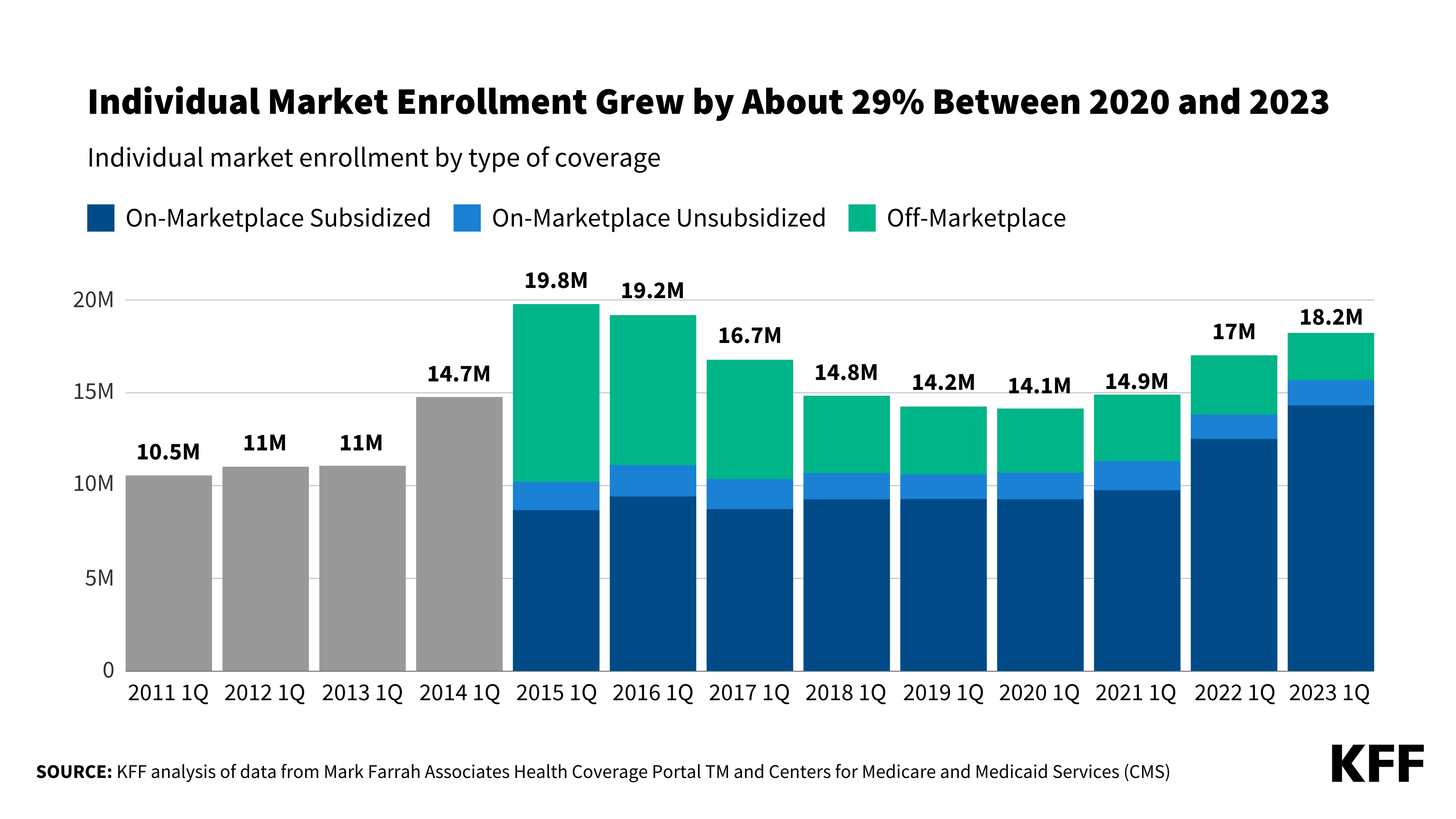
The number of people who qualify for subsidies continues to grow. For details on this, please refer to this chart and my feature article 2 below.

As to how much retail (gross) premiums are expected to grow from 2023 to 2024, estimates put the national average at 6%. (For the details on this, please refer to Feature Article 1 below.) Given the rate of core and real inflation, this should not come as a surprise. Acquisition of a subsidy will certainly offset ever-increasing premiums. 

As always, the greatest challenge to the consumer and their agent/broker is affordability or obtaining the desired benefits. Instead, it is finding their doctors in the networks of a health plan. In 2024, as it was this year, there will be over 100 different plans available from six to eight different companies, depending on where one resides. Dealing with this myriad of options is where my three decades specializing in health insurance in the Houston area is invaluable. I know which hospitals are in which plan networks, and my provider search tools scan all plans without you having to go from company to company for results. Because I represent every company doing business in Texas, you can acquire information on all of them with one call to me. 

Again, Open Enrollment begins November 1st, and for coverage during the entirety of 2024, it ends December 15th. Unlike going to the marketplace (Healthcare.gov) you will get me each time you call my local office with questions and for assistance and service–as opposed to an 800 number where you will get a different individual each time you call. My service is much more personalized and detailed than that of an hourly worker at the end of that toll-free number. If I don’t provide you with the level of service you deserve, I don’t have a client. And if I don’t have a client, I don’t earn a living. And it costs you no more to go through me than directly to the company whose policy you ultimately acquire. 

I look forward to working with you and providing the best of service. Please call me.

D. Kenton Henry

Office: 281-367-6565 Text me 24/7 @ 713-907-7984 Email: Allplanhealthinsurance.com@gmail.com

Leave a comment

Https://TheWoodlandsTXHealthinsurance.com Https://Allplanhealthinsurance.com Https://HealthandMedicareInsurance.com

*************************************************************************************************

FEATURE ARTICLE 1:

KFF The independent source for health policy research, polling, and news.

How much and why 2024 premiums are expected to grow in Affordable Care Act Marketplaces

Jared OrtalizaMatt McGough, Meghan Salaga, Krutika Amin, and Cynthia Cox
Published: 

Facebook Twitter LinkedIn Email Print

This analysis of insurers’ preliminary rate filings shows that ACA Marketplace insurers are requesting a median premium increase of 6% for 2024. Insurers cite price increases for medical care and prescription drugs as a key driver of premium growth in 2024, In addition to inflation’s impact on medical costs, insurers point to growth in the utilization of health care, which fell in 2020 but has since returned to more normal levels.

Insurers’ proposed rate changes – most of which fall between 2% and 10% – may change during the review process. Although most Marketplace enrollees receive subsidies and are not expected to face these added costs, premium increases could result in higher federal spending on subsidies.

The analysis can be found on the Peterson-KFF Health System Tracker, an information hub dedicated to monitoring and assessing the performance of the U.S. health system.

********************************************************************************************************

FEATURE ARTICLE 2:

KFF  The independent source for health policy research, polling, and news.

News Release

Already at Record High, ACA Marketplace Enrollment Could Increase Further

Enhanced Marketplace subsidies have continued to drive up enrollment in the individual market, and the loss of Medicaid coverage by millions of people could contribute to this trend, according to a new KFF analysis. Meanwhile, enrollment in non-ACA-compliant plans is at a record low.

As of early 2023, an estimated 18.2 million people have individual market coverage, the highest since 2016. Individual market enrollment grew by about 29% between early 2020 and early 2023 — a result of enhanced subsidies introduced by the Inflation Reduction Act, increased outreach, and an extended enrollment period.

This enrollment growth could continue in 2023 as states resume Medicaid disenrollments amid the unwinding of the continuous enrollment provision. Some of the people losing Medicaid coverage may be eligible for subsidies on the ACA Marketplaces.

Due in part to the enhanced subsidies, about 4 in 5 individual market enrollees have subsidized coverage — the highest share since the ACA was implemented.

The number of people in non-compliant plans has fallen each year and could decrease further due to the Biden Administration’s proposed rule that would reverse the expansion of short-term plans. An estimated 1.2 million people were in non-ACA-compliant plans in mid-2022, compared to 5.7 million in mid-2015. These short-term plans often do not include certain benefits or coverage for pre-existing conditions and can impose a dollar limit on insurance coverage.

If unsubsidized premiums rise in 2024 due to higher health care prices and utilization, enhanced subsidies could shield most individual market enrollees from increases in their monthly payments.

WHAT MAY BE THE MOST CONVENIENT MEDICARE ADVANTAGE PLAN TO DATE!

By D. Kenton Henry editor, agent

26 April 2022

There is good news in the SE Texas Medicare Advantage Market! It announces a new Medicare insurance plan which provides what is likely the greatest access to medical providers to date. It allows a member may go to any provider that sees Medicare patients. This equates access to that of the Medicare Supplement (Medigap) plans I typically encourage my clients to enroll in. And the out-of-pocket expenses are $0! There is not even the Part B annual out-patient deductible of $233 which applies to the most popular Medigap Plan G!

Additionally, it provides the convenience of Medicare Advantage Part D Drug (MAPD) plans because it includes Part D Prescription Drug coverage. This means one need not pay an additional premium for a standalone drug plan to accompany their medical coverage because your medical and drug coverage is included under the cover of one policy.

*(The details of this plan are described by the insurance company in the Feature Article below.)

FOR WHOM IS THIS PLAN BEST SUITED?

In my opinion, it is best suited for the older Medicare recipient for whom their Medigap and Part D drug plan premium now exceeds $215.40 – the monthly premium for this Medicare Advantage Plan. Someone who has just turned age 65 will find their Medigap premium combined with a low-cost Part D drug plan competitive for quite some time. However, as they get older, the total cost can greatly exceed the premium for this Advantage plan. Additionally, unless they have Medigap Plan F, they remain responsible for the annual Part B deductible noted above.

As we age, many of us acquire moderate to significant pre-existing medical conditions. In Texas, and most states, when their Medigap premium becomes burdensome, Texans cannot enroll in a new, and lower cost, Medigap plan and be guaranteed approval. They must go through underwriting and risk being declined due to their health history. With Medicare Advantage plans this cannot happen as approval is guaranteed during the eligible enrollment periods.

WHAT ARE THE DISADVANTAGES OF THIS MAPD PLAN?

First, as implied above, if someone is a relatively younger Medicare recipient – with little in the way of brand name drug usage – their combined premium for medical and drug coverage can be considerably lower than the premium for this MAPD plan.

Furthermore, because this plan combines one’s drug plan with their medical plan – one is tied, or captive to, its Part D drug coverage. Coverage which may not be the best drug coverage available to them in the Part D market.

Lastly, Medicare Supplement Plans (Medigap) are created by and standardized by the Centers for Medicaid and Medicare Services (CMS). They can only be changed by legislation. If legislation would result in a change in their benefits, the insured member would most likely be “grandfathered” or, otherwise, allowed to keep their existing coverage.

With this new “Flex PPO” plan from a major health insurance company, the company could decide to eliminate it in any new calendar year. CMS is not going to mandate an equivalent benefit Advantage Plan. And if none is available – the member is likely to find themselves with an alternative offering less access to providers and with out-of-pocket expenses. Or a member could move to a new area where equivalent coverage is not available.

These are all considerations that must be made before transitioning from Medigap – or another Medicare Advantage plan to this Advantage Plan. Regardless, unless one is just qualifying for Medicare due to age or disability – or losing access to another Medicare Advantage Plan – they will not be allowed to enroll in this new plan until this year’s Annual Election Period October 15th – December 7th.

When that time comes, do not hesitate to contact me for assistance in determining if this option is in your best interest and assistance in enrolling.

D. Kenton Henry

Office: 281-367-6565

TEXT my cell 24/7 @ 713-907-7984

Email: Allplanhealthinsurance.com@gmail.com

Https://TheWoodlandsTXHealthInsurance.com

Https://Allplanhealthinsurance.com              

Https://HealthandMedicareInsurance.com

*******************************************************************

FEATURE ARTICLE 1

**(Due to compliance concerns the company will not be identified at this time. You may contact me for that information as well as all details of the plan. The following is their notice to agents and brokers.)

We want to remind you of our new Medicare Advantage Flex (PPO)SM plan that’s currently available for Medicare age-ins or those eligible for Special Enrollment.  

Features include: $0 Copay/coinsurance, $0 deductible, no out-of-pocket costs – and it’s open access. Members can visit any provider nationwide who accepts Medicare. And it includes prescription drug coverage! 

NOTICE DATED 04.25.2022 FROM:

Important Information Regarding Your Provider Plan Coverage Thank you for enrolling in the Medicare Advantage Flex (PPO)SM plan.

With this plan you can:

• See any provider accepting Medicare whether inside or outside the plan service area.

• See any health care provider, at no additional cost, when traveling nationwide.

• Access care from any provider who accepts Medicare assignment and bills Blue Cross and Blue Shield.

• Find providers by going to http://www.medicare.gov/care-compare. A few things to keep in mind:

• You are not required to obtain authorization for out-of-network services, however, services must meet medical necessity criteria to be covered.

• We also offer a traveler benefit for members leaving the service area for six months or less. If you plan to travel and be away from home for up to six months, contact customer service. SAVE THIS Below is a provider notification card for you to keep and present when seeking care from a provider. This will ensure your medical claims are processed in a proper and timely manner. If you have any questions, please call the number on the back of your member ID card.

• Write your name and member ID number on the front of the provider notification card

• Carefully remove and fold card

• Keep this card with your member ID card

• Take both cards to all health care provider appointments Thank you for being a Medicare Advantage Flex (PPO) plan member. Carefully punch out and fold this card

Dear Provider:

• As a provider, you do not need to be a Medicare Advantage Flex (PPO)SM contracting provider to see and treat this member.

• Members can see any provider who accepts payment from Medicare.

• If you are a provider with any of our MA networks, authorization requirements apply.

• The member’s coverage level is the same whether or not a provider is in the network for the Medicare Advantage Flex (PPO).

• At a minimum, eligible claims will be reimbursed at the Medicare Allowed Amount.

ENTRY OF AETNA AND UNITEDHEALTHCARE IN 2022 ACA HEALTH INSURANCE MARKET; $ INCREASES IN MEDICARE PREMIUMS AND DEDUCTIBLE

TIME IS RUNNING OUT FOR A JANUARY 1 EFFECTIVE DATE!

Op-ed by D. Kenton Henry Editor, Broker 26 November 2021

In September, I learned Aetna and Unitedhealthcare would be reentering the Texas ACA Underage 65 health insurance market for the first time since 2015. Since then, BlueCross BlueShield has been the only “household name,” a large, financially sound insurance company in the southeast Texas market. This was most welcome news, and I was hopeful these additional peer companies would allow my clients and fellow Texans access to more doctors and hospitals. Finding my client’s preferred doctors and hospitals in a plan network has been my client’s and my greatest challenge since the departure of all PPO network options six years ago. Alas, the hoped-for provider expansion in 2022, at this point, has failed to materialize. From 2015 into 2021, the St. Lukes Hospital system has been the only major hospital system participating in most insurance companies’ HMO networks. Such will remain the case for 2022.

Additionally, the entry of Bright Insurance Company (for the first time) doesn’t even appear to do that. They will limit their policyholder’s access to hospitals will be limited to smaller HCA local community hospitals. At least for the time being.

Doctors have practicing privileges at one or more hospitals. Of course, it follows that when an insurance company has fewer hospitals in their network, they will have fewer participating doctors. And so it seems. Only one health insurance company in the southeast Texas ACA health insurance market allows its clients access to the three major hospital systems in the area. Those hospitals are St. Luke’s, Memorial Hermann, and Houston Methodist. And then, only if you acquire their more expensive Silver or Gold plans. 

However, there is a bit of good news for all Americans in the “Individual and Family” health insurance market. The federal government’s American Rescue Plan has increased the amount of Advance Premium Tax Credit (subsidy) and Cost Sharing Reduction (reduction of deductibles, copays, and coinsurance) available to a household. It also expanded the eligibility for these subsidies. As the feature article below explains, this will qualify more people for both types of savings.  

Furthermore, unemployment effects and increases your potential premium tax credit! The American Rescue Plan exempts up to $10,200 in UI benefits from federal income tax. People who receive UI benefits in 2020 will be able to reduce their adjusted gross income by up to that amount, and so reduce their federal income tax liability.

Please get in touch with me to learn the details on the aforementioned company providing the greatest access to providers and how the expanded subsidies and Cost-Sharing Reductions may improve your health insurance situation.

If you choose to be proactive and would like to do some reconnaissance before calling me for assistance and details, you may click on my quoting link immediately following. When the page opens, ignore the login button. You need not log in. Enter your information. I.e., birth date, zip code, etc. On the next page, click on the top box “SELECT ALL” to clear the selections. Then select “MEDICAL” only, to get started. Otherwise, you will be overwhelmed with options and information. You can always return for dental, etc.)

Click “YES” if you would like to estimate whether you qualify for a subsidy. If so, enter your estimated annual income in 2022 and click “CALCULATE”. It will estimate your subsidy. The estimates are usually accurate to within $3.00. From there, click “NEXT”. You will then see all your plan options and be able to LOOKUP PROVIDERS and see plan details. Or simply call me to do all this for you! 

CLICK HERE TO SEE ALL YOUR ACA HEALTH INSURANCE OPTIONS (IF NECESSARY, COPY THE LINK IN YOUR BROWSER AND HIT ENTER):

https://allplanhealthinsurance.insxcloud.com/

MEDICARE RECIPIENTS:

As the cost for everything, including medical treatment, is going up, so too are Medicare’s premiums and deductibles. As our second feature article below illustrates, the Medicare Part B (outpatient) basic premium is going from $148.50 to $170.10 and it’s calendar year deductible is going from $203.00 to $233.00! You can do the math, but, needless to say, so much for 5% inflation rate projected by the current administration which also does not appear to apply to our cost for gasoline, meat, and energy and food, in general! You’ve already spent the increase in your Social Security Benefit! 

The details of how your Medicare Part B basic premium will may titrate upward relative to your income are clearly outlined in Feature Article 2, just published by the Centers For Medicare and Medicaid Services.

Lastly, if you are making the decision whether to go with a Medicare Advantage Prescription Drug Health Plan vs. a Medicare Supplement policy coupled with a Part D Prescription Drug Plan – please read Feature Article 3 (say it ain’t so, Joe!) below, and carefully weigh your decision. 

Again, please contact me for guidance in how to minimize the impact of these changes and maximize your both your access to providers and quality health care. My 35 years specializing in the health and Medicare related insurance industry have provided me insights beyond that of the average agent/broker/generalist; and my clients access to a far greater number of products and solutions.

D. Kenton Henry TheWoodlandsTXHealthInsurance.com                                                              

Allplanhealthinsurance.com@gmail.com

Office: 281-367-6565

Text My Cell @ 713-907-7984

Https://TheWoodlandsTXHealthInsurance.com Https://Allplanhealthinsurance.com Https://HealthandMedicareInsurance.com

*********************************************************************************************************

FEATURE ARTICLE 1:

11.24.2021

Cost Sharing Reductions on Silver Plans

Two types of Marketplace subsidies:

Advanced Premium Tax Credits(APTC):Lowers the cost of premiums and can be used on any Marketplace plan except for catastrophic plans.

Cost Sharing Reductions(CSR):Lowers the cost of deductibles and can only be applied to Marketplace Silver plans.

This year, many people will qualify for both types of savings!

Why are subsidies more generous this year:

The American Rescue Plan Act increased the amount of APTC and CSR available to a household, and it also expanded the eligibility for these subsidies.

Silver plans vs. other metal levels:

All Marketplace health insurance plans are broken into five types: Platinum, Gold, Silver, Bronze and Catastrophic. You can expect the same level of care fromall metal levels. The difference is how your healthcare costs will be split between you and the insurance company. Metal levels Premium Platinum Highest Gold Silver Bronze Catastrophic Deductible Higher Middle Lower Lowest Lower Middle Higher Highest. If you are eligible for a CSR, you must choose a Silver plan!

*********************************************************************************************************

FEATURE ARTICLE 2:

Key Points:

Part B premium for 2022 is $170.10, up $21.60 from 2021.

The annual deductible for all Medicare Part B beneficiaries is $233 in 2022, an increase of $30 from the annual deductible of $203 in 2021.

Follow the link below for more information and the 2022 Medicare Part B Income-Related Monthly Adjustment Amounts

OR SIMPLY READ THE ARTICLE IMMEDIATELY BELOW 

https://www.cms.gov/newsroom/fact-sheets/2022-medicare-parts-b-premiums-and-deductibles2022-medicare-part-d-income-related-monthly-adjustment

Nov 12, 2021 

Centers for Medicare & Medicaid Services

Nov 12, 2021

Fact sheet


2022 Medicare Parts A & B Premiums and Deductibles/2022 Medicare Part D Income-Related Monthly Adjustment Amounts

Nov 12, 2021 

Share

 opens in new window opens in new window opens in new window

On November 12, 2021, the Centers for Medicare & Medicaid Services (CMS) released the 2022 premiums, deductibles, and coinsurance amounts for the Medicare Part A and Part B programs, and the 2022 Medicare Part D income-related monthly adjustment amounts.

Medicare Part B Premium and Deductible

Medicare Part B covers physician services, outpatient hospital services, certain home health services, durable medical equipment, and certain other medical and health services not covered by Medicare Part A. 

Each year the Medicare Part B premium, deductible, and coinsurance rates are determined according to the Social Security Act. The standard monthly premium for Medicare Part B enrollees will be $170.10 for 2022, an increase of $21.60 from $148.50 in 2021. The annual deductible for all Medicare Part B beneficiaries is $233 in 2022, an increase of $30 from the annual deductible of $203 in 2021.

The increases in the 2022 Medicare Part B premium and deductible are due to:

  • Rising prices and utilization across the health care system that drive higher premiums year-over-year alongside anticipated increases in the intensity of care provided.
  • Congressional action to significantly lower the increase in the 2021 Medicare Part B premium, which resulted in the $3.00 per beneficiary per month increase in the Medicare Part B premium (that would have ended in 2021) being continued through 2025.
  • Additional contingency reserves due to the uncertainty regarding the potential use of the Alzheimer’s drug, Aduhelm™, by people with Medicare. In July 2021, CMS began a National Coverage Determination analysis process to determine whether and how Medicare will cover Aduhelm™ and similar drugs used to treat Alzheimer’s disease. As that process is still underway, there is uncertainty regarding the coverage and use of such drugs by Medicare beneficiaries in 2022. While the outcome of the coverage determination is unknown, our projection in no way implies what the coverage determination will be, however, we must plan for the possibility of coverage for this high cost Alzheimer’s drug which could, if covered, result in significantly higher expenditures for the Medicare program.

Medicare Open Enrollment and Medicare Savings Programs

Medicare Open Enrollment for 2022 began on October 15, 2021, and ends on December 7, 2021. During this time, people eligible for Medicare can compare 2022 coverage options between Original Medicare, and Medicare Advantage, and Part D prescription drug plans. In addition to the recently released premiums and cost sharing information for 2022 Medicare Advantage and Part D plans, the Fee-for-Service Medicare premiums and cost sharing information released today will enable people with Medicare to understand all their Medicare coverage options for the year ahead. Medicare health and drug plan costs and covered benefits can change from year to year, so people with Medicare should look at their coverage choices annually and decide on the options that best meet their health needs.

To help with their Medicare costs, low-income seniors and adults with disabilities may qualify to receive financial assistance from the Medicare Savings Programs (MSPs). The MSPs help millions of Americans access high-quality health care at a reduced cost, yet only about half of eligible people are enrolled. The MSPs help pay Medicare premiums and may also pay Medicare deductibles, coinsurance, and copayments for those who meet the conditions of eligibility. Enrolling in an MSP offers relief from these Medicare costs, allowing people to spend that money on other vital needs, including food, housing, or transportation. People with Medicare interested in learning more can visit: https://www.medicare.gov/your-medicare-costs/get-help-paying-costs/medicare-savings-programs.

Medicare Part B Income-Related Monthly Adjustment Amounts

Since 2007, a beneficiary’s Part B monthly premium is based on his or her income. These income-related monthly adjustment amounts affect roughly 7 percent of people with Medicare Part B. The 2022 Part B total premiums for high-income beneficiaries are shown in the following table:

Beneficiaries who file individual tax returns with modified adjusted gross income:Beneficiaries who file joint tax returns with modified adjusted gross income:Income-related monthly adjustment amountTotal monthly premium amount
Less than or equal to $91,000Less than or equal to $182,000$0.00$170.10
Greater than $91,000 and less than or equal to $114,000Greater than $182,000 and less than or equal to $228,00068.00238.10
Greater than $114,000 and less than or equal to $142,000Greater than $228,000 and less than or equal to $284,000170.10340.20
Greater than $142,000 and less than or equal to $170,000Greater than $284,000 and less than or equal to $340,000272.20442.30
Greater than $170,000 and less than $500,000Greater than $340,000 and less than $750,000374.20544.30
Greater than or equal to $500,000Greater than or equal to $750,000408.20578.30

Premiums for high-income beneficiaries who are married and lived with their spouse at any time during the taxable year, but file a separate return, are as follows:

Beneficiaries who are married and lived with their spouses at any time during the year, but who file separate tax returns from their spouses, with modified adjusted gross income:Income-related monthly adjustment amountTotal monthly premium amount
Less than or equal to $91,000$0.00$170.10
Greater than $91,000 and less than $409,000374.20544.30
Greater than or equal to $409,000408.20578.30

Medicare Part A Premium and Deductible

Medicare Part A covers inpatient hospital, skilled nursing facility, hospice, inpatient rehabilitation, and some home health care services. About 99 percent of Medicare beneficiaries do not have a Part A premium since they have at least 40 quarters of Medicare-covered employment.

The Medicare Part A inpatient hospital deductible that beneficiaries pay if admitted to the hospital will be $1,556 in 2022, an increase of $72 from $1,484 in 2021. The Part A inpatient hospital deductible covers beneficiaries’ share of costs for the first 60 days of Medicare-covered inpatient hospital care in a benefit period. In 2022, beneficiaries must pay a coinsurance amount of $389 per day for the 61st through 90th day of a hospitalization ($371 in 2021) in a benefit period and $778 per day for lifetime reserve days ($742 in 2021). For beneficiaries in skilled nursing facilities, the daily coinsurance for days 21 through 100 of extended care services in a benefit period will be $194.50 in 2022 ($185.50 in 2021).

Part A Deductible and Coinsurance Amounts for Calendar Years 2021 and 2022
by Type of Cost Sharing
 20212022
Inpatient hospital deductible$1,484$1,556
Daily coinsurance for 61st-90th Day$371$389
Daily coinsurance for lifetime reserve days$742$778
Skilled Nursing Facility coinsurance$185.50$194.50

Enrollees age 65 and over who have fewer than 40 quarters of coverage and certain persons with disabilities pay a monthly premium in order to voluntarily enroll in Medicare Part A. Individuals who had at least 30 quarters of coverage or were married to someone with at least 30 quarters of coverage may buy into Part A at a reduced monthly premium rate, which will be $274 in 2022, a $15 increase from 2021. Certain uninsured aged individuals who have less than 30 quarters of coverage and certain individuals with disabilities who have exhausted other entitlement will pay the full premium, which will be $499 a month in 2022, a $28 increase from 2021.

For more information on the 2022 Medicare Parts A and B premiums and deductibles (CMS-8077-N, CMS-8078-N, CMS-8079-N), please visit https://www.federalregister.gov/public-inspection.

Medicare Part D Income-Related Monthly Adjustment Amounts

Since 2011, a beneficiary’s Part D monthly premium is based on his or her income. These income-related monthly adjustment amounts affect roughly 8 percent of people with Medicare Part D. These individuals will pay the income-related monthly adjustment amount in addition to their Part D premium. Part D premiums vary from plan to plan and roughly two-thirds are paid directly to the plan, with the remaining deducted from Social Security benefit checks. The Part D income-related monthly adjustment amounts are all deducted from Social Security benefit checks. The 2022 Part D income-related monthly adjustment amounts for high-income beneficiaries are shown in the following table:

Beneficiaries who file individual tax returns with modified adjusted gross income:Beneficiaries who file joint tax returns with modified adjusted gross income:Income-related monthly adjustment amount
Less than or equal to $91,000Less than or equal to $182,000$0.00
Greater than $91,000 and less than or equal to $114,000Greater than $182,000 and less than or equal to $228,00012.40
Greater than $114,000 and less than or equal to $142,000Greater than $228,000 and less than or equal to $284,00032.10
Greater than $142,000 and less than or equal to $170,000Greater than $284,000 and less than or equal to $340,00051.70
Greater than $170,000 and less than $500,000Greater than $340,000 and less than $750,00071.30
Greater than or equal to $500,000Greater than or equal to $750,00077.90

Premiums for high-income beneficiaries who are married and lived with their spouse at any time during the taxable year, but file a separate return, are as follows:

Beneficiaries who are married and lived with their spouses at any time during the year, but file separate tax returns from their spouses, with modified adjusted gross income:Income-related monthly adjustment amount
Less than or equal to $91,000$0.00
Greater than $91,000 and less than $409,00071.30
Greater than or equal to $409,00077.90

Oct 21, 2021

Oct 15, 2021

Oct 15, 2021

Oct 08, 2021

Sep 30, 2021

Contact us

CMS News and Media Group
Catherine Howden, Director
Jason Tross, Deputy Director

Media Inquiries Form
202-690-6145

*********************************************************************************************************

FEATURE ARTICLE 3:

11.08.2021

Medicare plans: Be wary of Joe Namath, other celebrity pitchmen | Steve Israel

  •  

Steve Israel for the Times Herald-Record

Mon, November 8, 2021, 7:24 AM·3 min read

In this article:

  •  

Joe Namath

American football player

Explore the topics mentioned in this article

Joe Namath may have delivered the New York Jets’ last Super Bowl championship, but the old quarterback is throwing a bunch of bull on his TV commercials for private Medicare plans.

He’s one of a slew of pitchmen and women selling Medicare Advantage plans to the more than 54 million Americans 65 or over eligible for Medicare. That includes more than 100,000 of us in Orange, Ulster and Sullivan counties.

Joe Namath may have delivered the New York Jets’ last Super Bowl championship, but the old quarterback is throwing a bunch of bull on his TV commercials for private Medicare plans.

Those pitches, which also flood our mailboxes during this enrollment period that ends Dec. 7, complicate what can be a mind-boggling array of insurance choices.

First, some basic facts:

Medicare Advantage is the all-in-one alternative to original Medicare health insurance. Original Medicare includes coverage for hospitalization (Part A), medical visits and procedures (Part B) and, at additional cost, prescription drugs (Part D). Before you enroll in Advantage plans, you must have original Medicare, and you still must pay the Part B premium of $148.50 (in 2021). While Medicare Advantage plans include medical, hospital and drug coverage, they can also feature extra benefits not offered by traditional Medicare, such as dental, hearing and vision coverage with no additional premium.

Especially in those pitches from celebrities like Namath, William Shatner and Jimmie Walker, they can also promise everything from free meal delivery to money deposited in your Social Security account.

But …

“Buyer beware,” says Erinn Braun, Orange County Office for the Aging’s Health Insurance Counseling and Assistance Program coordinator. She provided much information for this column.

Pitches like Namath’s can be misleading or downright deceptive, starting with the red, white and blue colors that insinuate the ads are from the government, as do the state logos on some mailers. While the plans themselves are perfectly legal and may be great for many of the 27 million Americans enrolled in them, they often don’t deliver everything those pitches seem to promise. Plus, those pitches don’t come close to telling the full story of the benefits of those plans – many of which aren’t even offered in your area.

For instance:

Unlike original Medicare, which is accepted by virtually all doctors and hospitals, Medicare Advantage plans include a network of doctors and hospitals you must visit to be insured. So if you hear about a great gastroenterologist in New York City and she isn’t in your Advantage plan’s network, your insurance may not cover your visit. Plus, unlike original Medicare, you may need prior approval for coverage of a medical procedure or equipment such as insulin pumps.

And while the dental and vision coverage of Medicare Advantage plans sounds great, some plans in your area may only include routine visits, not more expensive items like dental implants and eyeglasses. Plus, the average yearly coverage limit of Advantage dental plans ranges from about $1,000 to $1,300, according to the Kaiser Family Foundation. The dentists and eye doctors you visit must also be in the plan’s networks – meaning your eye doctor or dentist may not accept your plan.

Steve Israel

As for those meals and money Joe Willie is pitching?

Again, buyer beware.

A few Advantage plans may offer meal delivery for the qualified but only one or two plans in your county may offer those benefits. And your doctors or hospital may not accept those plans. Same thing goes for that money Namath says could go into your Social Security account. Not only does that money go toward the required payment for Part B of original Medicare, very few plans – if any – in your area may feature that benefit, and those plans may not include your doctors.

Finally, when you call the number provided by Namath and other pitch folks, you’ll reach a salesperson who’s in business to … you guessed it … sell you a Medicare Advantage plan.

For help selecting the right Medicare plan for you, contact your county’s Office of the Aging. Orange: 845-615-3710, Sullivan: 845-807-0241, Ulster: 845-340-3456. A trusted health insurance agent can also help. Medicare.gov and 1-800-Medicare provide a wealth of information.

steveisrael53@outlook.com

This article originally appeared on Times Herald-Record: Medicare pitches: Joe Namath, other celebrities don’t have best advice

MEDICARE ADVANTAGE, DRUG PLANS, AND ACA INDIVIDUAL AND FAMILY HEALTH INSURANCE OPENING FOR 2022 ENROLLMENT

(AETNA AND UNITEDHEALTHCARE RE-ENTER THE ACA INDIVIDUAL AND FAMILY HEALTH INSURANCE MARKET)

By Editor, Agent, Broker

D. Kenton Henry

It is that time of year and, once more, we find ourselves on the cusp of the “Annual Election Period” for Medicare Advantage and Part D Prescription Drug Plans. This is the period when any Medicare recipient may enroll or change their Advantage and / or drug plans for a January 1 effective date. The period runs from October 15th through December 7th.

As if this was not a busy enough time for Medicare insurance product brokers, many of us (like myself) must do “double duty”, during the holidays. This is because the “Open Enrollment Period” for those “Under the Age Of 65“, in need of Individual and Family health insurance, begins November 1 and runs through January 15th. This a one month extension from previous years. However, those wishing to have new coverage effective by January 1 must still enroll by December 15th.

In addition to the extension of the ACA enrollment period, an interesting and positive turn is that Aetna and Unitedhealthcare are re-entering the marketplace in SE Texas for 2022 after a six year hiatus! This brings welcome competition to a market which was vacated by every major carrier – other than BlueCross BlueShield – in January of 2016. While we will not have insight into the details of their health plan options until just before November 1, their names and reputation should garner a lot of attention, not only from consumers but medical providers. It is my hope that more high quality doctors and hospitals will elect to participate in the insurance companies’ provider networks. With Preferred Provider Organization (PPO) network plans eliminated, Health Maintenance Organization (HMO) network plans have been the consumer’s only option since 2016. And with the expansion in the availability of the Advance Premium Tax Credit and Cost Share Reductions, for many, their greatest challenge is no longer being able to afford health insurance but finding their providers in an insurance plan’s network.

And it is the same for me. As an agent / broker with 34 years in medical insurance, my greatest challenge isn’t finding a plan the consumer can afford or the benefits they’re seeking. It’s finding my client’s, and prospective client’s, medical providers participating in a network. While this isn’t a major issue to those new to the area, those of us who have resided here for years, have long established relationships with providers we are reluctant to part with.

I would be extremely pleased if some of the companies in the marketplace elect to offer PPO plans in 2022. But make no mistake, I in no way expect this to happen. The problem for a company considering offering PPO coverage is that if all their peers do not also, they “adversely select” against themselves. In other words, if they are the “only game in town” when it comes to PPO plans, they are going to attract, and garner, an inordinate number of “bad risks”. In other words, insured members with serious pre-existing conditions who need access to a greater number of providers will flock to them vs the insurance company offering access to an HMO network only. They will submit higher and more frequent claims, thereby compounding the potential for “loss” to the insurance company. This is why insurance companies ceased, in unison, offering PPO coverage, in most regions of the United States, in 2016. They want to limit your access to providers, and thereby limit your access to what is likely to be more expensive treatment. Enrolling people in HMO plans is the easiest way to do this. Regardless, my duty, as your agent, is to do my best to find your providers participating in the network of a plan whose benefits meet your needs.

The good news is – two new major carriers will uncertainly increase the number of options available to the consumer in terms of premiums, benefits, and providers. Additionally, several of the insurance companies are lowering copays and deductibles and the Department of Health and Human Services, which oversees the sale of all ACA health insurance, has made it much easier to qualify for a “subsidy” to reduce the policyholder’s share of the premium due, especially for anyone who claimed unemployment benefits any time during 2021.

******************************************************************************

MEDICARE IN 2022

In the Medicare related insurance market, increases in variables for 2022 are estimated to be higher than in recent years. Some were not definite as of the end of September. The Part A In-patient deductible is projected to increase but, as of this date, I have no definitive cost. The Part B Out-patient deductible is estimated to be going from $203 to $217 per calendar year and it’s premium is projected to go from $148.50 to $158.50 per month.

There are currently 30 different Part D Drug plans for Texans to choose from. Each covers some drugs but not others. The plan which is best for you is entirely dependent on the drugs you use. Not the drugs your spouse, neighbor, or I use – but the ones you use. The Part D deductible is going from $445 to $480 for the calendar year. A drug plan may choose to have deductible ranging from $0 all the way to$480 before your drugs become available for a copay. With many plans,  the deductible will not apply to Tier 1 and Tier 2 generic drugs. The threshold for entering the “GAP” will occur when the member and plan have paid $4,430. During this time, the member will pay 25% of the cost of their drugs. They will cross over into “CATASTROPHIC COVERAGE” if, and when, the member has personally expended $7,050. At this point, a member will pay $3.95 for a generic drug and $9.85 or 5% of the cost of a brand name drug – whichever is higher.

As a broker for my clients, and prospective clients, my goal is to identify the Medicare Plan, whether Medicare Supplement, Advantage or Part D Drug Plan which is most likely to result in their lowest total out of pocket cost for the calendar year while providing them access to all their providers. The “total cost” is the sum of their premium, any applicable deductible or deductibles, and copays or coinsurance. Our objective is the lowest sum and that plan, or plans, will usually be my recommendation.

To this end, I encourage anyone interested in enlisting my help, to contact me. If you would like me to identify your lowest total cost drug plan for 2022, based on your current or anticipated drug use, email me a list of your Rx drugs and, preferably, the dosages. The latter can make a difference. If you know you want Medicare Advantage, send me a list of doctors and hospitals you feel you must have access to. Please recall that with Medicare Supplement coverage you may obtain treatment from any doctor, hospital, lab, or medical provider, that sees Medicare patients. There are no networks with which to concern yourself. However, with Supplement, unlike most Medicare Advantage plans, you will have to acquire a Part D Prescription Drug Plan to accompany it.  For those using little or only low cost generic drugs, the lowest premium plan for Texans in 2022 will be $6.90 per month.

*(READ FEATURED ARTICLE BELOW ON WASHINGTON’S EFFORTS TO LOWER RX DRUG COST FOR MEDICARE RECIPIENTS)

The name of my insurance agency I opened in 1991, after being in the medical and life insurance industry since 1986, is All Plan Med Quote. It is located in The Woodlands, Texas. In 1995, I created one of the first websites in the country to market health insurance via the internet. It still exists as Allplanhealthinsurance.com. In 2015, I expanded my web presence with TheWoodlandsTXHealthInsurance.com. The primary objective in naming the first two was to convey that (while I work, for the consumer) I am appointed (contracted) with virtually every “A” rated, major and minor insurance company doing business in your geographic region. But the insurance companies do not pay me a guaranteed wage or salary. They compensate me fairly if, and only if, you elect to go through me to acquire their products. But, without my clients, I have no income. So certainly my clients are my priority. Not the insurance companies. And, as my client, you are charged no more by going through me to obtain their product then if you walked through their front door and acquired it directly from them.

Here is a partial list of the companies whose products may, or may not, be appropriate for you, I may introduce to you:

AARP Unitedhealthcare

Aetna

Ambetter

Anthem

BlueCross BlueShield of Texas

Caresource

Cigna

Community Health Choice

Friday

Humana

KelseyCare Advantage

Molina

Mutual of Omaha

Oscar

Scott and White

Unitedhealthcare

Wellcare

D. Kenton Henry Office: 281-367-6565 Text my cell 24/7: 713-907-7984 Email: Allplanhealthinsurance.com@gmail.com

https://thewoodlandstxhealthinsurance.com https://allplanhealthinsurance.com https://healthandmedicareinsurance.com

*********************************************************************************************************

*(FEATURE ARTICLE)

Democrats suffer blow on drug pricing as 3 moderates buck party

BY PETER SULLIVAN – 09/15/21 03:11 PM EDT

Democrats’ signature legislation to lower drug prices was defeated in a House committee on Wednesday as three moderate Democrats voted against their party.

Reps. Kurt Schrader (D-Ore.), Scott Peters (D-Calif.), and Kathleen Rice (D-N.Y.) voted against the measure to allow the secretary of Health and Human Services to negotiate lower drug prices, a long-held goal of Democrats.

The vote is a striking setback for Democrats’ $3.5 trillion package. Drug pricing is intended to be a key way to pay for the package. Leadership can still add a version of the provision back later in the process, but the move shows the depth of some moderate concerns.

The three moderates said they worried the measure would harm innovation from drug companies and pushed a scaled-back rival measure. The pharmaceutical industry has also attacked Democratic leaders’ measure, known as H.R. 3, as harming innovation.

The three lawmakers had long signaled their concerns with the drug pricing measure, but actually voting it down in the House Energy and Commerce Committee is an escalation.

A separate committee, the House Ways and Means Committee, did advance the drug pricing measures on Wednesday, keeping the provisions in play for later in the process.

Energy and Commerce Committee Chairman Frank Pallone Jr. (D-N.J.) had implored the three lawmakers to vote in favor of the measure to at least keep the process going. 

“Vote to move forward today,” he said to the moderates in his party. “Vote to continue the conversation.”

Still, Pallone said he is confident that some form of measure to lower drug prices will make it into the final package. The House legislation was already expected to change before the final version, given moderate Democratic concerns in the Senate as well. Senate Democrats are working on their own bill, which is not yet finalized but is expected to be less far-reaching. 

“I know it is going to have drug pricing reform,” Pallone said of the final bill, noting that negotiations with the Senate would continue over the coming weeks. 

Still, the move on Wednesday is a show of force from the moderates. 

Henry Connelly, a spokesman for Speaker Nancy Pelosi (D-Calif.), said Democrats were not giving up on including drug pricing measures. 

“Polling consistently shows immense bipartisan support for Democrats’ drug price negotiation legislation, including overwhelming majorities of Republicans and independents who are fed up with Big Pharma charging Americans so much more than they charge for the same medicines overseas,” he said in a statement after the vote. “Delivering lower drug costs is a top priority of the American people and will remain a cornerstone of the Build Back Better Act as work continues between the House, Senate and White House on the final bill.”

Peters and Schrader both cited concerns about harming drug companies’ ability to develop new drugs, citing the industry’s record during the COVID-19 crisis.

Peters warned that “government-dictated prices” under the bill would cause harm to the “private investment” that backs drug development.

Schrader said the bill would mean “killing jobs and innovation that drives cures for these rare diseases.”

Advocates said the lawmakers were simply beholden to the pharmaceutical industry.

“Reps. Peters, Rice, and Schrader are prioritizing drug company profits over lower drug prices for the American people, particularly for patients with chronic conditions such as diabetes and multiple sclerosis,” said Patrick Gaspard, president of the left-leaning Center for American Progress. “To the contrary of what they contend, their opposition to the drugs proposal threatens the entirety of President Joe Biden’s Build Back Better agenda, which Democrats have campaigned on for years and that they previously voted for.”

Savings from the drug pricing provisions are a key way of paying for other health care priorities in the $3.5 trillion package, including expanding Medicaid in the 12 GOP-led states that have so far refused, expanding financial assistance under ObamaCare, and adding dental, vision, and hearing benefits to Medicare.

The Congressional Budget Office found that H.R. 3 would save about $500 billion over 10 years. Depending on what Senate Democrats can find agreement on, the final drug pricing legislation is expected to be less far-reaching, meaning it will result in fewer savings, though how much less is unclear.

The Senate bill would still allow Medicare to negotiate lower drug prices, but it is expected not to include another provision that would cap drug prices based on the lower prices paid in other wealthy countries. That provision has drawn particular pushback from some moderate Democrats.

Allowing Medicare to negotiate drug prices is extremely popular with voters, with almost 90 percent support in a Kaiser Family Foundation poll earlier this year. Many vulnerable House Democrats support the idea.

https://thewoodlandstxhealthinsurance.com https://allplanhealthinsurance.com https://healthandmedicareinsurance.com

Go back

Your message has been sent

Warning
Warning
Warning
Warning.

MEDIA WARNS CONSUMERS THEY WILL HAVE LESS HELP SHOPPING FOR 2019 HEALTH INSURANCE

(BUT THEY DIDN’T ASK ALL PLAN MED QUOTE OF THE WOODLANDS, TEXAS)

Navigators in a boiler room

By D. Kenton Henry Editor, Agent, Broker
29 October 2018

The media is proffering all manner of good news when it comes to the Open Enrollment Period for purchasing 2019 individual and family health insurance, just three days away. The doors open this Thursday, November 1st and will remain so through December 15th. During this time you, the consumer, will be able to review your options and make a decision to renew your existing policy or select a new one to become effective January 1. Whichever, that policy will cover you the coming calendar year.

The feature article appearing below, states there will be ” . . . fewer sources of unbiased advice and assistance to guide them through the labyrinth of health insurance.” To wit, it cites, the budget for insurance counselors, known as navigators, has been cut by 80%, leaving over one-third of navigators in 2,400 counties served by Healthcare.gov, unfunded. Thank you very much, New York Times. Somehow, they neglected to consult with me and my agency, ALL PLAN MED QUOTE. Reading the article in full, one can infer they feel the only meaningful assistance can come from the government (at taxpayers’ expense) and fail to credit the private industry, which has provided counsel and enrollment assistance within the domestic insurance industry some two hundred years plus. One token sentence in the article acknowledges the private industry’s presence to assist the consumer with procuring health insurance. In my estimation, this reflects the media’s general opinion and thesis that the government is the end-all solution to every conceivable personal financial issue. Which, again, in the mind of this editor, is precisely the philosophy, the perpetuation of which got us into this fix in the first place. Moreover, what exactly is that fix?

Current pre-midterm election media coverage informs us premiums have stabilized and are, in many cases, going down in 2019. While that may be true in some localities, the recently released premiums in southeast Texas reflect increases of 20% or more. If you obtain a subsidy, wherein you get a tax credit for a portion of your premium, the subsidy itself may be larger, but the balance may be as well. Also, for those not obtaining a subsidy (the vast majority of us) the increase will be born entirely by ourselves. The situation has made healthcare the number one concern of Americans heading into next week’s midterm elections according to a Fox News Poll.

For the record, ALL PLAN MED QUOTE and I have never been subsidized by taxpayer dollars. As an independent, self-employed broker/agent I am compensated when I successfully enroll someone in health insurance. I am not compensated when I fail at such. That is fine by me. In spite of continual cuts in agent compensation. I prefer autonomy to bureaucracy. My advice and guidance are objective. My goal is to succeed it getting you enrolled in a policy which makes sure you have access to the care and treatment you need, when you need it and are not financially devastated in the process. All this for the lowest possible premium. I do not care which insurance company you contract with, as long as you are satisfied you have obtained the best coverage for your given situation and needs. Ideally, it would also provide you access to all the doctors and medical providers you choose to utilize. Regrettably, that latter objective has become my biggest challenge and is one every insurance agent and counselor faces. To say it can be overcome in every instance would be misleading but I do my best. All 2019 individual and family options are Health Maintenance Organizations (HMO) policies, and this has been so since 2016. The HMO networks are narrow in comparison to what one may typically have experienced with employer-based HMO coverage. However, there are a very few plans (3 in my primary region) which operate very similar to a traditional Exclusive Provider Organization (EPO) policy in that they do cover treatment at a provider outside the network. Benefits are paid up to a limited percentage, and there is no cap on your maximum annual out-of-pocket but―for someone who wants to be assured they can obtain coverage from the provider of their choice―it is better than no coverage whatsoever. If you feel you must learn more about this option, please contact me.

To assist me in these ends, I am appointed with every company providing Patient Protection and Affordable Care Act-compliant health insurance company doing business in Montgomery, Harris, Fort Bend, and Galveston counties. BlueCross BlueShield of Texas (to my knowledge) does business in every corner of Texas, and I have been appointed with them twenty-seven years. In addition to Texas, I am licensed in Indiana, Michigan, and Ohio.

I offer short-term health insurance for those who do not get a subsidy and those who, whether they do or not, cannot afford credible health insurance. However, I do not represent it as covering pre-existing health conditions, as it does not. Nor do I represent it as a substitute for credible, compliant coverage. It is a short-term bridge to a long-term solution.

As always, the Open Enrollment Period will be a very busy and hectic time for anyone in my profession. To make things proceed more smoothly, I would appreciate you visit my quoting site to obtain spreadsheet comparison of your options from all the health insurance companies offering coverage in your county. Attempt to narrow your selection down to those plans you feel most closely approximate the coverage you need. You can search for in-network providers from the search button directly next to the premium quoted. If you are so confident a plan is right for you, please feel free to apply straight from the quote. However, many of you will have questions or appreciate my insight and experience with the plan details and application process. Those in need of a subsidy will find my assistance especially helpful. If this is you, please do not hesitate to contact me.

Again, for quotes and applications, you may go to my website at Http://TheWoodlandsTXHealthInsurance.com and click on “Health” in the top menu.

Alternatively, you may go directly to my spreadsheet quotes and an application by clicking on this link:
https://allplanhealthinsurance.insxcloud.com
*(it is not necessary to log in or register to obtain quotes or apply)

If you already know your interest is a policy from BlueCross BlueShield of Texas, you may go directly to their quoting and application page by clicking here:
https://retailweb.hcsc.net/retailshoppingcart/TX/census?ExpressLinkedAgentId=2V0boERIKNxDSESKunpc/w==

**(if these links do not function from this text, please copy and paste or type in your browser and hit enter)

If you apply for coverage through these links, I will be your agent and available to assist and commit to providing the best of service throughout the year. I bring my entire thirty-two years in medical insurance to bear for this purpose. I look forward to hearing from you and assisting you. Regardless, I hope you succeed in obtaining health insurance which suffices until Congress puts their heads together and provides us with more reasonable options.

D. Kenton Henry                                                                                                              All Plan Med Quote                                                                                                    Office: 281.367.6565                                                                                                     Text my cell @ 713.907.7984                                                                                   Email: Allplanhealthinsurance.com
For the latest in health and Medicare-related insurance, news go to Https://HealthandMedicareInsurance.com

COMMENTS OR QUESTIONS:

Go back

Your message has been sent

Warning
Warning
Warning
Warning

Warning.

************************************************************************************************
FEATURED ARTICLE 

The New York Times
By Robert Pear
Oct. 27, 2018

Shopping for Insurance? Don’t Expect Much Help Navigating Plans

Affordable Care Act navigators helping patients during an enrollment event in 2016 at Southwest General Hospital in San Antonio.CreditCreditEric Gay/Associated Press
WASHINGTON — When the annual open enrollment period begins in a few days, consumers across the country will have more choices under the Affordable Care Act, but fewer sources of unbiased advice and assistance to guide them through the labyrinth of health insurance.
The Trump administration has opened the door to aggressive marketing of short-term insurance plans, which are not required to cover pre-existing medical conditions. Insurers are entering or returning to the Affordable Care Act marketplace, expanding their service areas and offering new products. But the budget for the insurance counselors known as navigators has been cut more than 80 percent, and in nearly one-third of the 2,400 counties served by HealthCare.gov, no navigators have been funded by the federal government.
“There is likely to be a lot of consumer confusion about the various plan options that may be available this year,” said Sabrina Corlette, a research professor at Georgetown University’s Health Policy Institute. “It will be a bit of a Wild West — buyer beware!”
“Obamacare health plans,” short-term plans and “Christian health sharing plans” are all displayed on the same page of some shopping sites like Affordable-Health-Insurance-Plans.org, which describes itself as a free referral service for insurance shoppers.
ADVERTISEMENT
Consumers may have difficulty sorting through their options after the administration sliced the budget last summer for insurance navigators to $10 million this year, from $36 million in 2017 and nearly $63 million in 2016.
“Navigators play a vital role in helping consumers prepare applications to establish eligibility and enroll in coverage through the marketplaces,” the Department of Health and Human Services says on its website.
But 797 counties served by HealthCare.gov will not have any navigators this year, according to a tabulation of federal data by the Kaiser Family Foundation. That is a sharp increase from 2016, when 127 counties lacked such assistance.
“If you are confused and you want somebody’s help to try to figure out what’s right for you — what’s junk and what is legitimate — there will be fewer people to help you in most states,” Ms. Corlette said.
Federal officials said they were not providing funds for navigators in Iowa, Montana or New Hampshire because no organizations had applied for the money in those states.
Cleveland, Dallas and large areas of Michigan and other states will also be without navigators.
Texas will be hit hard. The state has the largest number and the highest percentage of people who are uninsured, with 4.8 million people, or 17 percent of residents, lacking coverage, according to the Census Bureau.
“North Texas remains one of the most uninsured areas in the country,” said the chief executive of Dallas County, Judge Clay Lewis Jenkins. “The administration’s decision to defund all navigators across North Texas will hurt our ability to enroll individuals in health insurance and result in some working families losing coverage. Only 45 of Texas’ 254 counties have any navigator coverage.”
Seema Verma, the administrator of the Centers for Medicare and Medicaid Services, defended the cuts.
After five years, she said, “the public is more aware of the options for private coverage” available through the marketplace, so “it is appropriate to scale down the navigator program.” In addition, she said, information and assistance are available from other sources, including insurance agents and brokers.
Consumers can sign up for health insurance under the Affordable Care Act starting Thursday. Last year, 8.7 million people enrolled at HealthCare.gov, and three million more selected plans on insurance exchanges run by states.
Consumers can go without insurance next year without fear of a penalty, as Congress repealed the unpopular tax surcharge imposed on people who lack coverage.
Many health policy experts say that federal financial assistance is more important than the individual mandate in inducing people to buy insurance. Those subsidies will still be available to low- and moderate-income people for insurance that complies with the Affordable Care Act and is purchased through the public marketplace. The subsidies cannot be used for short-term policies.
The vast majority of the people we serve, over 90 percent, are motivated to have insurance because they want coverage for their family and themselves,” said Matthew Slonaker, the executive director of the Utah Health Policy Project, a nonprofit. “It’s not because they otherwise would have to pay a penalty.”
Average premiums for the most popular types of insurance purchased by individuals and families will be relatively stable next year and, in some states, will actually decline, the administration says.
Under new standards issued by the administration, navigators this year are encouraged to inform consumers of the full range of coverage options, including short-term plans that do not provide all of the benefits and consumer protections required by the Affordable Care Act.
President Trump has promoted the short-term policies as an inexpensive alternative to the Affordable Care Act, and he said those plans would be “much more widely available” as a result of an executive order he signed last year to overturn restrictions imposed by President Barack Obama.
Democrats have made health care a major theme in midterm election campaigns, and they say the short-term policies show how the Trump administration threatens protections for people with pre-existing conditions.
Short-term policies, which can extend up to 364 days and then be renewed for two additional years, often provide no coverage for pre-existing conditions, prescription drugs, pregnancy, maternity care or the treatment of mental disorders and drug abuse.
Indeed, Mr. Trump said, the short-term plans are cheaper because they are “not subject to any very expansive and expensive Obamacare coverage mandates and rules.”
ADVERTISEMENT
But, said Kirsten A. Sloan, a vice president of the American Cancer Society Cancer Action Network: “People may be attracted to short-term plans without understanding that the lower premiums come with less coverage. These plans may not cover the doctors and hospitals and drugs you need if you get sick.”
In another challenge this year, consumers may be deluged with robocalls offering cheap insurance.
Alex Quilici, the chief executive of YouMail, a company that offers software to combat robocalls, said he was seeing a huge increase in health insurance scams.
“Callers say ‘it’s open enrollment’ or ‘we can get you a better deal by looking at all the health insurance plans,’” Mr. Quilici said. “Callers ask for lots of personal information, and the unwitting consumer often gives their birth date, Social Security number and information for everybody in the family, in order to get a great deal. In reality, it’s identity theft or payment theft or both.”
Mr. Quilici’s company has recorded hundreds of robocalls. A typical call says that, with enrollment just “around the corner,” Mr. Trump has created short-term coverage options lasting up to three years, “so you and your family can get a great insurance plan at the price you can afford.”
It is difficult to identify the source of the robocalls, Mr. Quilici said, because callers often falsify information displayed on caller ID.
(A version of this article appears in print on Oct. 27, 2018, on Page A25 of the New York edition with the headline: Shopping for Health Insurance: Many Options but Little Guidance. Order Reprints | Today’s Paper | Subscribe)

HIGH SCHOOL CLASS OF ’72! – MEDICARE IS HERE FOR YOU!

By Don Kenton Henry – editor, broker

Fellow classmates of the High School Class of 1972! Congratulations! It’s been thirty-six years since we graduated and went on to build careers and raise families. During this time we dutifully paid into Social Security and paid Medicare taxes. Most of us will be turning age 65 during the next year if we have not already done so. As such, we will be “aging into Medicare”. Never, in my life, have I looked forward to getting older,―until now. Because―as such―I will be eligible for Medicare and finally have an alternative to the Under Age 65 Affordable Care Act (ACA) marketplace for health insurance purposes. As a Medicare-related, private insurance specialist,―knowing all my plan options―along with knowing which plans I will enroll in―I am elated to finally being able to take advantage of the following benefits not currently available to any of us not currently on Medicare:

I know I will I be able to go to any doctor or hospital that sees Medicare patients. Additionally, I will be out of nothing―or virtually nothing―for my Medicare eligible medical expenses, per se, throughout the calendar year! (By “per se”, I mean aside from the out-patient prescription drug costs I will pay at the pharmacy counter.)

Even those of you who have had the benefit of employer-based group health insurance through throughout your working career ― have to had to meet a significant deductible before insurance benefits apply to your major medical expenses. In recent years, that has probably been at least $1,000 and, probably, more. Then you have been responsible for additional costs (coinsurance) thereafter!  Compare that to your share of a maximum of $183 per calendar year, should you go with the plan option I will most likely recommend for you!

Regarding Part D prescription drug plans ― you will have approximately three dozen to choose from. Each of these covers some drugs but does not cover others. And vice versa. The plan that is best for your spouse or neighbor is not necessarily the best plan for you. Our objective is to: (1) cover all your prescription drugs and (2) do so at your lowest possible total cost for both the plan and your prescription drugs for the calendar year. “Total Cost” is the sum of your plan premium, any applicable deductible, and your copays or coinsurance for your Rx drugs.

*If you would like me to identify your lowest cost Part D Medicare Prescription Drug Plan for 2019 email me, at Allplanhealthinsurance.com, a list of your current drug regimen and dosages. I will do so in the order received and forward the results via email.  

CHANGES TO MEDICARE PART D DRUG PLANS IN 2019:

  1. A) Stage 1, the Medicare Part D “Yearly Deductible Stage” is going to require a Medicare recipient member meet as much as a $415 deductible, up from $405. This does not mean a drug plan will increase your deductible, or even charge one in the first place. It simply means the Center For Medicare Services has informed the drug plans they may charge as much as that amount.
  2. B) Stage 2, the “Initial Coverage Stage” is going to $3,820. This is the limit your, and the plan’s, drug cost must reach before you enter the “Coverage Gap”.
  3. C) Your liability for your drug costs has been diminishing each year since 2011. This year, you will pay 25% of the cost of brand-name drugs, plus a dispensing fee, and 37% of the price for generic drugs.
  4. D) When your year to date personal drug costs reach $5,100 you enter the “Catastrophic Coverage Stage”. Therein, you will pay $3.40 of a drug that is treated like a generic and $8.50 or 5% of the cost of the drugwhichever is higher for all other drugs.

*****

MEDICARE PART B 2019

There has been no announcement on whether Medicare Part B’s calendar year outpatient deductible of $183 will be changing.

****************************************************************************

CONSIDERING MEDICARE SUPPLEMENT VS MEDICARE ADVANTAGE to cover those medical expenses not paid by Medicare? Refer to today’s FEATURED ARTICLE 1 on “Denials of Care” below then call me for my opinion on one vs the other.

Should pharmacists be subject to a “gag” clause preventing them from telling you a lower cost for your drug is available at the pharmacy counter? See FEATURED ARTICLE 2, below:

******************************************************************************

THOUGHT FOR THE DAY:

******************************************************************************

Turning age 65 in April, I am right in this with you. I share a kinship, not only with my personal HS classmates, but everyone of my generation. I began my career out of college as social worker and then―believe it or not―a pharmaceutical sales person. I understand the perspective on brand name vs generic drugs, both from the drug companies’ and the consumer’s standpoint. (If you’d like to me to share this with you, off the record, please call me.)   I still like to help people and I get great satisfaction from ensuring I keep my client’s drug and medical costs to a minimum.

To assist you in this, I represent virtually every “A” rated (AM Best Rating) Medicare Supplement Plan and most of the Medicare Advantage and Part D Prescription plans I feel worthy of your consideration for 2019. I bring thirty-two years of experience in the industry to provide you an objective comparison of your options, simplify the enrollment process, and ensure you maintain the right plans for yourself, thereafter. I charge no fee for my services. I am compensated directly by the insurance company whose product you elect to utilize, and then―if, and only if―you elect to acquire that product through me. The key to you is―you are charged no more for that product than if went through the door of that insurance company to acquire it on your own. Additionally, when you call, text or email me, you know you are communicating with someone who knows your history and has a vested interest in keeping your business. Which means keeping you happy. This as opposed to a different faceless person at the other end of a toll-free number.

SoClass of ’72! Open enrollment begins October 15th for Medicare plans (and November 1st for your Under Age 65 family members in need of health insurance for 2019). Please call, text, email, or visit my websites for information and assistance. I’m certain our life experiences and objectives are much the same and I know peace of mind when it comes to our healthcare and costs is integral to our quality of life

Kenton Henry – Agent, broker, editor                                                                          Office: 281.367.6565                                                                                                  Text My Cell @ 713.907.7984                                                                                          Email: Allplanhealthinsurance.com@gmail.com                                  http://Allplanhealthinsurance.com                                  http://TheWoodlandsTXHealthInsurance.com          https://HealthandMedicareInsurance.com

Go back

Your message has been sent

Warning
Warning
Warning
Warning

Warning.

******************************************************************************

*FEATURED ARTICLE 1

BLOOMBERG

Private Medicare Plans Faulted by Watchdog Over Denials of Care

By  John Tozzi

September 26, 2018, 11:01 PM CDT

A new federal watchdog report warns that privately run Medicare health plans used by millions of older Americans may be improperly denying patients medical care.

Federal auditors have found “widespread and persistent problems related to denials of care and payment in Medicare Advantage,” the privately administered plans that insure more than 20 million people, according to the report from the Health and Human Services Office of Inspector General.

Medicare Advantage plans collect a fixed fee from the government for taking care of patients 65 or older who qualify for traditional Medicare coverage. The fixed per-patient rates the government pays may give plans “an incentive to deny preauthorization of services for beneficiaries, and payments to providers, in order to increase profits,” the report said.

Medicare Advantage plans have become popular with consumers because they combine traditional Medicare benefits with additional coverage, such as vision, dental care, and prescription drugs.

The program paid $210 billion to Medicare Advantage plans last year. Companies including UnitedHealth Group Inc.Humana Inc., and Aetna Inc.are the largest sellers of the coverage. Enrollment in Medicare Advantage has roughly doubled in the past decade, and one-third of Medicare patients are now covered by the private plans.

In 2016, Medicare Advantage plans denied 4 percent of requests to approve treatment before it was provided, known as prior authorization, and 8 percent of requests for payment after treatment, according to the report.

Only 1 percent of patients disputed the insurers’ denials, but in those cases, the decisions were overturned three-quarters of the time, according to the report.

Improper denials “may contribute to physical harm for beneficiaries if they’re not getting access to services that they need,” said Rosemary Rawlins, the inspector general’s team leader on the report. Patients and doctors can also be harmed financially if not reimbursed for appropriate care, she said.

If plans aren’t providing the care they’re contracted to, it risks wasting taxpayers’ money. The government “has already paid to cover beneficiaries’ health care,” Rawlins said. Not every denial is an indication that patients are being blocked from needed treatment, however.

“You wouldn’t expect the denial rate to be zero,” Rawlins said. “Part of managing care is denying care that’s not needed.”

There’s a lot of variation in how often Medicare Advantage plan denials were overturned. In 2016, seven Medicare Advantage contracts had almost all of their denials reversed on appeal — more than 98 percent. Another 69 contracts had denial rates above 90 percent. The report doesn’t name specific companies or plans. Individual insurers can have more than one Medicare Advantage contract with the government.

Problems with denials of care aren’t isolated to a few plans, however. The Centers for Medicare and Medicaid Services, or CMS, audits different organizations each year, “but consistently find problems related to denials of care and payment,” Rawlins said.

The CMS audits are one of many factors that affect health plans’ star ratings, which are intended to help Medicare patients shop for plans based on quality. But starting in 2019, as the result of a change by CMS, the audits will no longer be a factor in the ratings, “which diminishes the usefulness of the star ratings system as a tool for beneficiaries,” the report said.

The inspector general recommended that CMS increase its oversight of Medicare Advantage plans and give patients better information about violations. The agency concurred with the findings.

A CMS spokesperson said in an email that the agency is committed to “strong oversight and enforcement of the Medicare Advantage program to ensure that plans are delivering care to Medicare beneficiaries” as required.

*****

FEATURED ARTICLE 2

WASHINGTON EXAMINER

Senate unanimously passes bill banning pharmacy ‘gag clauses’ in Medicare

by Kimberly Leonard

 September 05, 2018 03:03 PM

The Senate unanimously passed a bill Wednesday that would ban Medicare insurers from enforcing “gag clauses” that forbid pharmacies from telling customers about cheaper ways to buy drugs.

The Know the Lowest Price Act is intended to help patients covered under Medicare to find out if their prescription would cost less if they were to pay for it out of pocket rather than through their insurance plan.

“Passing this bill and eliminating gag clauses gives patients more power to lower their healthcare costs,” Sen. Bill Cassidy, R-La., who helped introduce the plan, said in a statement. “It makes prices transparent so patients can save money with less expensive prescriptions.”

The new rules explicitly apply to Medicare Part D, which pays for prescription drugs, and to Medicare Advantage, a healthcare plan managed by private insurers. Medicare is the program covering adults 65 and older and people with disabilities.

In the complexity of the system that involves pharmaceutical companies, drug reimbursements, middlemen known as pharmacy benefits managers, and health insurance companies, patients can sometimes end up paying more while others in the chain pay less. Private health insurers and pharmacy benefits managers use “gag clauses” in their contracts to prohibit pharmacists from informing customers that they can save money if they don’t go through their health plans.

Another bill passed in committee, known as the Patient Right to Know Drug Prices Act, would provide the same protections for people who have private health insurance coverage. The Trump administration has called for Congress to undo the gag clauses and pass other measures to help reduce what patients pay for drugs.

MEDICARE RECIPIENTS DODGE A BULLET WHILE OBAMACARE INSUREDS PREPARE TO TAKE ONE!

By D. Kenton Henry

Perhaps a storm would be a better analogy but 2016 will deliver something more than a mild tropical depression to the coast of the “Individual and Family” health insurance market. At the same―the Cat 3 (minimum) hurricane projected to slam the Senior market of Medicare recipients appears to have been diverted. For now.

As we enter the third year of enrollment in health insurance plans compliant with the Affordable Care Act (ACA) the “Affordable” aspect of care or―more accurately―the cost of protecting oneself from the cost of health care―seems elusive and more and more a case of misrepresentation. As I have said many times in the past, if you qualify for a subsidy of your health insurance premiums you may find your options affordable. However, depending on where you live, you will surely be upset with the increasing cost of health insurance. 70% of all Obamacare members are enrolled in a Silver Plan. The Department of Health and Human Services (DHS), which oversees enforces the Act and oversees the health insurance industry, has designated the second lowest cost Silver Plan of any insurance company to be the default plan one must select in order to maximize the benefit of any subsidy. This could include a reduction in not only one’s premium but their deductibles and co-pays. As Fox News and the Washington Post report (see featured article below) the cost of these plans will rise by a national average of 7.5%. States such as Oklahoma will see an increase of 37.5%!

ACA ENROLLMENT 2016 2

In some states it is much worse.

ACA ENROLLMENT 2016 1

To add insult to injury many insurance companies, such as BlueCross BlueShield of Texas, have taken such losses―in spite of skyrocketing premiums―they have announced they are eliminating the Preferred Provider Organization (PPO) network option for their plans and member benefit. The only option will be to select a Health Maintenance Organization (HMO) network option wherein the company can ration your providers and treatment. While the young or otherwise very healthy may find this option acceptable, those of us who are older or dealing with existing illnesses or injuries are certain to be upset by this development. The insurance companies seem to be in agreement on the viability of PPOs and explain any premium increase necessary to assure they even break even on a PPO policy would be beyond the increase limit set by Obamacare. As such, it would therefore not be approved by their state insurance commissioner. So the question remains: what will your personal network and benefit options be for 2016 and what will they cost?

Virtually all insurance companies are keeping the answers close to their vest until this Sunday, November 1, the first day of OPEN ENROLLMENT wherein one may choose a health insurance plan for 2016. Enrollment will remain open until January 31st. Those without a plan at that time will be locked out for the remainder of the year and will pay a penalty equal to the higher of two amounts:

2.5% of your yearly household income (Only the amount of income above the tax filing threshold, about $10,150 for an individual in 2014, is used to calculate the penalty.) The maximum penalty is the national average premium for a Bronze plan

$695 per person ($347.50 per child under 18) The maximum penalty per family using this method is $2,085.

A banner follows which, as of Sunday, November 1st, you may click on and by simply entering your birth date, zip code and tobacco usage, obtain ALL your health insurance options from each and every insurance company issuing 2016 coverage in your state. It will also allow you to calculate what subsidy, if any, and enable you (if you choose) to log directly into the federal marketplace to acquire it and your insurance plan. If you have questions, as you most surely will, do not hesitate to contact me via my contact information via the link or below.

CLICK ON THIS BANNER TO OBTAIN 2016 HEALTH INSURANCE QUOTES:

Relative to Medicare recipients, it would appear a planned increase in the 2016 Medicare Part B premium and deductible has been taken off the table for the time being. The increase would have resulted in a huge spike in what higher income recipients and new enrollees in Part B Out-Patient coverage would pay in premium. The proposed premium increase would have been as presented here:

Income Limits, Medicare Part B Premiums for 2016

Single Married 2015 2016 Held Harmless 2016 Not Held Harmless
$85,000 or less $170,000 or less $104.90 $104.90 $159.30
$85,001 to $107,000 $170,001 to $214,000 $146.90 $223.00
$107,001 to $160,000 $214,001 to $320,000 $209.80 $318.60
$160,001 to $214,000 $320,001 to $428,000 $272.70 $414.20
Above $214,000 Above $428,000 $335.70 $509.80

The threat and legislation which averted this is described in detail in The Fiscal Times article below. As of today, it is still unclear to this editor whether the increase in the calendar year deductible has also been averted.

KENTON AT CAPITOL 2 (2)

Editor, Broker, Agent ― D. Kenton Henry

Office: 281.367.6565

Cell (call or text): 713.907.7984

http://allplanhealthinsurance.com

http://thewoodlandstxhealthinsurance.com

Blog: http://healthandmedicareinsurance.com

*******************************************************************

FEATURED ARTICLES:

Health & Science

THE WASHINGTON POST

26 October 2015

2016 Affordable Care Act insurance rates are climbing

By Amy Goldstein October 26

The prices for a popular and important group of health plans sold through the federal insurance exchange will climb by an average of 7.5 percent for the coming year, a jump nearly four times bigger than a year ago, according to new government figures.

The rate increase for 2016 compares with average growth of 2 percent, from 2014 to this year, in the monthly premiums for a level of coverage that serves as the benchmark for federal subsidies that help most consumers buying coverage under the Affordable Care Act.

A “snapshot” of insurance rates, released Monday by the Department of Health and Human Services, also shows that the rate increases for next year vary substantially around the country. Although there are exceptions, more populous states and metropolitan areas tend to have more modest premium increases for the coming year than smaller areas. 

The changes for next year have a wide range — from premium increases averaging 35 percent in Oklahoma and Montana to a decrease of nearly 13 percent in Indiana.

The analysis is based on hundreds of health plans sold in local markets within 37 states that use HealthCare.gov, the federal online insurance marketplace. It excludes plans in other states that have created separate ACA insurance marketplaces. The rates reflect the prices of the second-least expensive health plan in each market for 2016 in a tier of coverage known as silver. ACA health plans are divided into four tiers, all named for metals, depending on the amount of customers’ care that they cover. Silver plans have proven by far the most popular. Officials at HHS issued the analysis as less than a week remains before the start on Nov. 1 of a third open-enrollment season for Americans eligible to sign up for health plans under the insurance marketplaces created by the 2010 health-care law. The exchanges are intended for people who cannot get affordable health benefits through a job.

In their analysis, federal officials contend that the health plans sold through the exchanges will be affordable to people willing to shop for the best rates. The cost to consumers, HHS officials emphasize, is cushioned by the fact that nearly nine in 10 are eligible for tax credits.

Taking the subsidies into account, nearly four in five people who already have gotten insurance through these marketplaces will have access for 2016 to a health plan for which they could pay no more than $100 in monthly premiums, the analysis found. The analysis does not address other costs to consumers, such as co-payments and deductibles, which tend to be more expensive in ACA health plans than in employer-based health benefits.

The figures in the analysis reinforce a theme that Obama administration officials introduced last year and have revived as the third sign-up period approaches: the usefulness of researching the best and most affordable coverage, even if it means switching insurance from year to year. “If consumers come back to the Marketplace and shop, they may be able to find a plan that saves them money and meets their health needs,” Kevin Counihan, the HHS official who oversees the health exchanges, said in a statement.

The new figures show that existing customers who went back last fall to HealthCare.gov and picked a different plan at the same level of coverage saved an average of nearly $400 in premiums over the course of this year. Slightly fewer than one-third of those who bought such coverage for a second time switched health plans, according to the analysis. During this open enrollment, Obama administration officials are striving both to attract existing customers again and to ferret out Americans eligible for the exchanges who remain uninsured even though the law requires them to have coverage. Although many consumers can be largely shielded from rate jumps through subsidies and shopping around, the increases ratchet up the government’s expenditures on the tax credits that the law provides, health policy analysts point out.

Analysts have expected that premiums for the coming year would grow more rapidly than they did for 2015. “This is the first year that insurers actually have a full year of experience with how much care people use,” said Larry Levitt, senior vice president of the Kaiser Family Foundation, a health policy organization. “In the first two years of the program, insurers were essentially guessing.” In addition, Caroline Pearson, senior vice president at Avalere, a health-care consulting firm, said that, as some health plans have attracted a significant share of customers, “the need to price really low diminishes a little bit.” Clare Krusing, a spokeswoman for America’s Health Insurance Plans, the industry’s main trade group, said that “averages don’t tell the whole story” and that insurance rates hinge on “location and the cost of providing care to individuals in particular markets.” In particular, Krusing said, last year was “a record-breaking year for prescription drug prices. That trend is likely to continue.”

***********************************

Seniors Exhale as Congress Blocks Huge Medicare Increase

By Eric Pianin October 27, 2015 3:17 PM

Responding to pressure from seniors’ and labor groups as the 2016 campaign season heats up, congressional leaders and the White House have blocked a huge, 50 percent increase in the Medicare Part B premium for nearly one third of the 50 million elderly Americans who depend on the program for health services.

The bipartisan solution will block all but a tiny fraction of the premium increase. It is contained in the two-year budget and debt ceiling bill negotiated by House Speaker John Boehner (R-OH), House Minority Leader Nancy Pelosi (D-CA) and the White House and that awaits ratification by the two chambers – likely by the end of this week.

Related: Millions Facing a Hefty Increase in Medicare Premiums in 2016

The threatened sharp premium increase – reported back in August by The Fiscal Times – was triggered by a quirk in federal law that penalizes wealthier Medicare beneficiaries, newcomers to the program and lower income Americans with complicated chronic health problems. It kick in any time the Social Security Administration fails to approve an annual cost-of-living adjustment – as will be the case next year.

Medicare Part B and the Social Security trust fund are interconnected, and most seniors on Medicare have their monthly premiums deducted from their Social Security checks. Because the federal law “holds harmless” about 70 percent of Medicare recipients from premium increases to cover unexpected increases in healthcare costs, the remaining 30 percent of Medicare Part B beneficiaries suffer the consequences by being made to pay higher premiums.

Without intervention by Congress, roughly 15 million seniors and chronically ill people currently claiming both Medicare and Medicaid coverage would have seen their premiums increase from $104.90 per month to $159.30 for individuals, according to Medicare actuaries. The actuaries also predicted an increase in the annual deductible for Part B of Medicare, from $147 in 2015 to $223 next year.

Related: Social Security Ruling Drives Up Medicare Costs for Millions

Estimates of the cost of legislation to blunt or block a premium increase have ranged from $7.5 billion to $10 billion. Under the budget agreement unveiled late last night, that cost will be covered by a loan of general revenue from the U.S. Treasury to the Supplemental Medical Insurance Trust Fund.

In order to repay that loan, the 15 million people who are not subject to the “hold harmless” protection will be required to pay an additional $3 a month in premiums – a token amount — until the loan is repaid years from now, according to a House budget document describing the deal. Medicare beneficiaries who currently pay higher income-related premiums would pay more than $3, based on their income levels.

If there is no Social Security cost of living adjustment increase for 2017, this provision will apply again.

Go back

Your message has been sent

Warning
Warning
Warning
Warning

Warning.

http://Allplanhealthinsurance.com

http://TheWoodlandsTXHealthInsurance.com

BULLETIN: Second Round of Obamacare Breaks From The Gate Starting Now!

HEALTH INSURANCE PREMIUMS 2015

(Announcement by D. Kenton Henry and HealthandMedicareInsurance.com)

Who will end up the winner ― you ― the insured, the insurance companies or Uncle Sam?

As a health insurance broker of 27 years, I and my peers have waiting with baited breath all year to see two things:

First ― will enrollments in 2015 health insurance plans, which begin at midnight tonight, the 15th of November, go more smoothly than last year’s embarrassing debacle that was the glitch plagued Healthcare.gov website which floundered in the death throes of end-stage technology through the entire first year “open-enrollment” period?

Secondly ― what are 2015 premiums and benefits going to look like? By the time you read this, you are about to know. I hope you will be happy with the options available to you, however, I hate to say, I cannot guarantee that. Rumor has it that premiums will be going up at varying rates relative to each of the fifty states. In Texas they are projected to rise an average of 14%  above 2014 rates depending on your age. If this is the case and you have coverage you feel is adequate―along with the option of keeping it―that is exactly what you should do. But if you are like a great number of my clients, who have been told your current plan will terminate 12.31.2014,  your only options are to forego coverage and pay the penalty (excuse me “shared responsibility tax”) when you file your 2015 tax return. Or purchase one of the new compliant plans.

I cannot control the options you will have but I can present, simplify and guide you to your best value in 2015 health insurance coverage. My quoting link will not only determine if you qualify for and calculate the amount of your subsidy (utilizing the same algorithm employed by Healthcare.gov) but, in the event you do qualify, will allow you to seamlessly take advantage of the subsidy and apply for your health plan selection for the reduced (net) premium. It will illustrate all your options from every carrier both on and off the federal exchange.

I am certain that after reviewing your options you will have numerous questions. I encourage you to email or call me with them. I will answer them and once you have decided upon your best value, I can make the enrollment process go as smoothly and comfortably as possible. I intend to work all through the weekend and make myself available to be best of my ability.

It is currently 10 p.m. CST on the 14th. After midnight click on this link to begin exploring your options and know I greatly anticipate working with you and making this transition period in the health insurance consumer market go as smoothly as possible for you.

Sincerely,

Kenton Henry

Broker, Agent, Editor

Email: Quote@allplaninsurance.com

Phone: 281.367.6565

Toll Free: 800.856.6556

CLICK HERE FOR 2015 HEALTH INSURANCE OPTIONS: https://allplanhealthinsurance.insxcloud.com/my-quote/individual-info

*Please return to this page and give us your opinion of your options.

Go back

Your message has been sent

Warning
Warning
Warning
Warning

Warning.

***************************************************************************************************

FEATURE ARTICLES:

NEW YORK TIMES

14 November 2014

Cost of Coverage Under Affordable Care Act to Increase in 2015

By ROBERT PEAR, REED ABELSON and AGUSTIN ARMENDARIZNOV. 14, 2014

“Consumers should shop around,” said Marilyn B. Tavenner, administrator of the Centers for Medicare and Medicaid Services, which runs the federal insurance exchange serving three dozen states. “With new options available this year, they’re likely to find a better deal.” She asserted that the data showed that “the Affordable Care Act is working.”

But Republicans quickly pounced on the data as evidence of the opposite.

“Last year, many who liked their plan were surprised to learn they couldn’t keep it,” said Senator Orrin G. Hatch of Utah, who is in line to become chairman of the Senate Finance Committee. “This year, many who like their plan will likely have to pay more to keep it.”

The new data means that many of the seven million people who have bought insurance through federal and state exchanges will have to change to different health plans if they want to avoid paying more — an inconvenience for consumers just becoming accustomed to their coverage.

A new Gallup Poll suggests that seven in 10 Americans with insurance bought through the exchanges rate the coverage and the care as excellent or good, and most were planning to keep it.

In employer-sponsored health plans, employees tend to stay with the same insurer from year to year. But for consumers in the public insurance exchanges, that will often be a mistake, experts said.

Nashville illustrates the need for people with marketplace coverage to look closely at the alternatives available in 2015.

Marilyn B. Tavenner, administrator of the Centers for Medicare and Medicaid Services, which runs the federal health exchange. Credit Doug Mills/The New York Times

A 40-year-old in Nashville, with the cheapest midlevel, or silver plan, will pay $220 a month next year, compared to $181 a month this year, for the same plan.

The least expensive plan is offered by another insurer, Community Health Alliance, one of the so-called co-op plans created under the federal law. It offers coverage for a monthly premium of $194.

But the lower premium means that consumers will have to pay a much larger annual deductible, $4,000, rather than $2,000. A policyholder who becomes seriously ill or has a costly chronic condition could pay hundreds of dollars in out-of-pocket expenses.

In addition, different health plans often have different networks of doctors and hospitals and cover different drugs, meaning that consumers who change plans may have to pay more for the same medicines.

Another problem for consumers is that if the price for a low-cost benchmark plan in the area has dropped, the amount of federal subsidies provided by the law could be less, meaning that consumers may have to pay more unless they switch.

The data, released by the Centers for Medicare and Medicaid Services, indicates that price increases will be modest for many people willing to change plans. In a typical county, the price will rise 5 percent for the cheapest silver plan and 4 percent for the second cheapest.

************************************

NEW YORK TIMES

Estimate of Healthcare Enrollment Leaves Room to Grow

10 November 2014

WASHINGTON — The Obama administration on Monday offered a surprisingly modest estimate of the number of people who would sign up for health insurance in the second round of open enrollment, which begins on Saturday.

Sylvia Mathews Burwell, the secretary of health and human services, said she was working on the assumption that a total of 9.1 million people would have such coverage at the end of next year.

By contrast, the Congressional Budget Office had estimated that 13 million people would be enrolled next year, with the total rising to 24 million in 2016. In the past, the White House has used the budget office numbers as a benchmark for success under the Affordable Care Act.

This estimate appeared to be part of an effort by federal officials to lower public expectations, so the goal would be easier to meet and to surpass. In addition, the new number could indicate that administration officials believe it will be difficult to find and enroll many of the uninsured while retaining those who signed up in the last year.

“The number we are going to aim for this year is 9.1 million,” Ms. Burwell said on Monday during remarks at the Center for American Progress, a liberal research and advocacy group.

Ms. Burwell’s estimate was at the lower end of the range suggested by health policy experts in her department. In a report issued earlier Monday, the experts estimated that, at the end of next year, 9 million to 9.9 million people would have coverage purchased through insurance exchanges, or marketplaces.

Representative Marsha Blackburn, Republican of Tennessee, said the administration was “trying to manage expectations and rewrite its definition of success ahead of the second open-enrollment period.” Administration officials said they were just being realistic, in the light of experience with other health programs.

President Obama announced in April that eight million people had signed up for health insurance under the Affordable Care Act. Officials said Monday that enrollment had declined to 7.1 million after some people failed to pay their share of premiums and others were found to be ineligible because of unresolved questions about their citizenship or immigration status.

The Department of Health and Human Services estimated that enrollment, including renewals and new customers, would reach 10 million to 11 million by the end of the three-month sign-up period, which closes on Feb. 15.

However, if Ms. Burwell is right, the number would shrink to 9.1 million people at the end of next year. That would still be a 28 percent increase over the number believed to have marketplace coverage today.

Ms. Burwell’s estimate came as a surprise to insurance counselors, agents and brokers working with the Obama administration.

Anne Filipic, the president of Enroll America, a nonprofit group trying to expand coverage, said the goal of 9.1 million “seems reasonable.” She praised the administration for taking what she described as “a pragmatic, analytic approach” to setting a numeric goal.

Federal health officials said they had ended coverage for 112,000 people who could not demonstrate that they were United States citizens or legal immigrants entitled to insurance under the health care law.

In addition, they said, 120,000 households will lose some or all of the insurance subsidies they have been receiving because they could not adequately document their income. These households will face higher premiums.

In making their estimates, federal health officials said, they assumed that 83 percent of the people with marketplace coverage — 5.9 million of the 7.1 million people in “qualified health plans” — would renew their coverage.

The intense political debate swirling around the Affordable Care Act does not make the job of enrolling people any easier, officials said.

Republicans like Tom Cotton in Arkansas and Joni Ernst in Iowa won Senate races in which they emphasized opposition to the health care law, as did successful Republican House candidates like Mia Love in Utah and Ryan Zinke in Montana.

Senator John Barrasso of Wyoming, the chairman of the Senate Republican Policy Committee, said that people were skeptical of the law and “aren’t signing up because they realize it’s not a good deal for them.”

The Supreme Court said on Friday that it would consider a case challenging subsidies paid to more than four million people who obtained insurance through the federal marketplace.

Ms. Burwell said Monday that she did not see the legal challenge as a serious threat to the Affordable Care Act. “As we go into open enrollment,” she said, “nothing has changed.”

Federal health officials said they believed that marketplace enrollment would grow more slowly than projected by the Congressional Budget Office, which sees the total holding steady at 25 million from 2017 to 2024.

Administration officials noted that uninsured people could also get coverage by enrolling in Medicaid or by finding jobs with health benefits.

In a brief analysis of coverage trends, the Department of Health and Human Services said Monday that “most of the new marketplace enrollment for 2015 is likely to come from the ranks of the uninsured,” rather than from people who previously bought insurance on their own outside the exchanges.

ALL PLAN MED QUOTE LAUNCHES SISTER TO ORIGINAL WEBSITE!

ALLPLANHEALTHINSURANCE DOT COM LOGO

All Plan Med Quote has been providing the individuals, families and employer groups the lowest quotes and best value in health and Medicare related insurance in four different states since 1991. In 1998 we became one of the first insurance agencies in the country to begin marketing via the internet through our website AllplanHealthInsurance.com.

In an effort to respond more directly and with products tailored to our hometown, we have just launched a sister website: TheWoodlandsTXHealthInsurance.com http://thewoodlandstxhealthinsurance.com. Logos and customized marketing materials are still being designed but the website is online!

In addition to health, Medicare related, dental and life insurance we will be posting health care news relevant to residents of our great community. If you are a resident of The Woodlands or Montgomery County, Texas please visit our site and also follow my blog at http://healthandmedicareinsurance.com to stay abreast of the latest in consumer medical insurance and health related news.

Thanks so very much,

Kenton Henry

Owner; Broker; Editor

Go back

Your message has been sent

Warning
Warning
Warning
Warning

Warning.

http://allplanhealthinsurance.com