VOL I, ISSUE 1, 16 JULY 2013
THE MEDPLUS MESSENGER blog is for the dissemination and discussion of information regarding health, Medicare and life insurance legislation; laws; trends; products and related topics. It is intended to be of use to the general public; clients and prospective clients of ALL PLAN MED & LIFE QUOTE the parent company of ALLPLANINSURANCE.COM: http://allplaninsurance.com; ALLPLANHEALTHINSURANCE.COM; ALLPLANINTERNATIONALHEALTHINSURANCE.COM and IndianaHealthInsurance4U.com.
ADDRESSING: HEALTH AND MEDICARE RELATED INSURANCE ISSUES INCLUDING THE AFFORDABLE CARE ACT (ACA); COMPLIANCE WITH THE AFFORDABLE CARE ACT; STATE AND FEDERAL HEALTH INSURANCE EXCHANGES; CURRENT BEST VALUES IN HEALTH INSURANCE; IMPACT OF THE ACA ON EMPLOYERS; DECLINATION DUE TO PRE-EXISTING CONDITIONS; MEDICARE AND MEDICARE RELATED INSURANCE (MEDIGAP); PART D PRESCRIPTION DRUG PLANS
While The MedPlus Messenger has existed for sometime as an industry and marketing newsletter–today is the first time we have existed and published as a blog. The reasons for this are numerous but the greater ones are: the tremendous amount of confusion, on the part of the public, regarding the ACA and its implementation; the diverse opinions and perspectives on it; apprehension as to its effects on the quality of health care; the cost of insuring for medical expense and the options for doing so available to employer groups, individuals and families and Medicare recipients. Only through intelligent discourse of these topics can our subscribers transition through implementation into optimal utilization of health care, as well as protection against the cost for such, with as little inconvenience as possible. Only by discussing your concerns, , perspective, frustrations and opinion can Allplanhealthinsurance.com better meet your needs in this rapidly changing marketplace. Already the availability of health insurance has become an entitlement by law and its issue and administration may well be on the brink of falling within the exclusive confines of another federal program. For these reasons, not only are your insights and questions welcomed but your disagreements and protests encouraged as well.
OUR MISSION:
It has and will remain the goal of Allplaninsurance.com to provide the most objective health, Medicare related, life and dental insurance quotes–along with the very best of service to the our policyholders. We serve residents of all fifty states (US) and the international community. We see it as our responsibility to monitor the state of the national and international insurance and the political process as it relates to such. It is our objective and, we feel–our duty–to inform the public of such matters. ALL PLAN MED & LIFE QUOTE has been based in The Woodlands, Texas since 1991.
THE MEDPLUS MESSENGER is not copyrighted and articles and analysis presented in THE MEDPLUS MESSENGER may be reproduced at your discretion. However, articles and analysis should not be construed as representing the policy, endorsement or opinion of ALL PLAN MED & LIFE QUOTE, or its agents, unless so stated. Although carefully verified, data are not guaranteed as to accuracy or completeness. ALL PLAN MED & LIFE QUOTE cannot be held directly responsible for any direct or incidental loss incurred by applying any of the information in this publication.
DIRECT QUESTIONS OR SUGGESTIONS TO FIELD OFFICES:
TEXAS & ALL OTHERS: 800.856.6556; quote@allplaninsurance.com
CALIFORNIA: 800.200.5278; insurnet@snowcrest.net
NEW YORK: 888.766.6932; sonny@onestopinsuranceshopping.com
IMPORTANT PHONE NUMBERS AND LINKS:
THE AFFORDABLE CARE ACT, SECTION BY SECTION (U.S. Department of Health and Human Services Website): http://www.hhs.gov/healthcare/rights/law/index.html
CENTERS FOR MEDICARE & MEDICAID SERVICES: 1.800.633.4227: http://www.medicare.gov
U. S. (Federal) Pre-Existing Condition Health Insurance Plan: https://www.pcip.gov/
The United States Senate: http://www.senate.gov/general/contact_information/senators_cfm.cfm
Texas Department of Insurance: 800.252.3439: http://www.tdi.state.tx.us/
Texas Health Insurance Risk Pool (for those uninsurable by private health insurance):
888.398.3927; TDD 1.800.735.2989: http://txhealthpool.com/
New York Department of Insurance: 800.342.3736: http://www.ins.state.ny.us/
Illinois Department of Insurance: 217.782.4515: http://www.idfpr.com/
Indiana Department of Insurance: 317.232.2410: http://www.state.in.us/idoi/
California Department of Insurance: 916.322.3555: http://www.insurance.ca.gov/
United States Treasury Health Savings Account Guidelines: http://www.treasury.gov/
Doctor Comparison: http://www.bcbstx.com/bluecompare/tour/index.html
National Association of Health Insurance Underwriters: http://www.nahu.org/
VISIT OUR WEB SITES AT:
http://allplaninsurance.com
http://allplanhealthinsurance.com
http://allplaninternationalhealthinsurance.com
http://indianahealthinsurance4u.com
*************************************************************************************
TODAY’S ISSUE OF DISCUSSION:
The Affordable Care Act (ACA) and its current state of implementation; the impact of such on health insurance premiums and the delayed Employer Mandate.
*************************************************************************************
FEATURE ARTICLES:
Op-Ed:
The ensuing articles demonstrate that efforts to implement the Affordable Care Act remain behind schedule and the mechanisms in place to ensure such were never for this herculean task. It is logical to conclude this is, in large part, due to the burden of comprehending the content and demands of two thousand plus pages of the act itself and nine thousand plus pages of accompanying regulations. Both the public and private sector responsible for implementation are obviously overwhelmed with massive work this requires. This, along with the greatly underestimated costs of implementation and regulation, does not bode well for a smooth and efficient transition into compliance. Even less assured is the long term solvency of the ever-decreasing number of participating health plans or the feasibility of guaranteed health care.
Due to the minimal penalties for failing to purchase health insurance during the next two years, it is predicated participation by those currently choosing to be uninsured will be negligible. When compared to the cost of insuring which is predicted to increase in many cases by as much or more than 100%–it is reasonable to conclude most will simply choose to pay the penalty. This will disprove the assumption that a huge influx of young, healthy insured members will subsidize the cost of insuring the older, and generally less healthy, individuals which the was the main premise on which feasibility arguments were based.
We can see from recent legislative action that portions of the bill which would impede implementation have been suspended. This, at worst, appears politically motivated and, at best, an effort to make certain as many as possible sign up for individual and family coverage through an exchange. Whether or not you are in favor of the latter is probably dependent on whether you would like to see a “single payer” health insurance system in place as, I feel, this will be the ultimate result of the exchanges and their plan mandates. In the meantime, The ACA is law. Suspension of portions of a passed act inconvenient to implementation of the act itself is unprecedented to my knowledge and there appears no legal basis for doing so.
The featured articles below begin with an overview of the distinction between “Minimum Essential Coverage” and “Essential Health Benefits” and conclude with recent abatements in enforcement of certain portions of the law. That these abatements, suspensions, moratoriums are convenient is unquestionable. The question remains, “for whom?”
Kenton Henry
Administrator, Editor: The MedPlan Messenger
********************************
OVERVIEW MINIMAL REQUIRED COVERAGE AND PENALTIES FOR NON-COMPLIANCE
Beginning in 2014, the Affordable Care Act includes a mandate for most individuals to have health insurance or potentially pay a penalty for noncompliance. Individuals will be required to maintain minimum essential coverage for themselves and their dependents. Some individuals will be exempt from the mandate or the penalty, while others may be given financial assistance to help them pay for the cost of health insurance.
What type of coverage satisfies the individual mandate?
“Minimum essential coverage”
What is minimum essential coverage?
Minimum essential coverage is defined as:
- Coverage under certain government-sponsored plans
- Employer-sponsored plans, with respect to any employee
- Plans in the individual market,
- Grandfathered health plans; and
- Any other health benefits coverage, such as a state health benefits risk pool, as recognized by the HHS Secretary.
Minimum essential coverage does not include health insurance coverage consisting of excepted benefits, such as dental-only coverage.
How does “Minimum Essential Coverage” differ from “Essential Health Benefits”?
Essential health benefits are required to be offered by certain plans starting in 2014 as a component of the essential health benefit package. They are also the benefits that are subject to the annual and lifetime dollar limit requirements.
This is different than minimum essential coverage, which refers to the coverage needed to avoid the individual mandate penalty. Coverage does not have to include essential benefits to be minimum essential coverage.
What is the penalty for noncompliance?
The penalty is the greater of:
- For 2014, $95 per uninsured person or 1 percent of household income over the filing threshold – whichever is greater
- For 2015, $325 per uninsured person or 2 percent of household income over the filing threshold – whichever is greater
- For 2016 and beyond, $695 per uninsured person or 2.5 percent of household income over the filing threshold –whichever is greater
There is a family cap on the flat dollar amount (but not the percentage of income test) of 300 percent, and the overall penalty is capped at the national average premium of a bronze level plan purchases through an exchange. For individuals under 18 years old, the applicable per person penalty is one-half of the amounts listed above.
Beginning in 2017, the penalties will be increased by the cost-of-living adjustment.
Who will be exempt from the mandate?
Individuals who have a religious exemption, those not lawfully present in the United States, and incarcerated individuals are exempt from the minimum essential coverage requirement.
Are there other exceptions to when the penalty may apply?
Yes. A penalty will not be assessed on individuals who:
- cannot afford coverage based on formulas contained in the law,
- have income below the federal income tax filing threshold,
- are members of Indian tribes,
- were uninsured for short coverage gaps of less than three months;
- have received a hardship waiver from the Secretary, or are residing outside of the United States, or are bona fide residents of any possession of the United States.
*Further Clarification of the Applicable penalty
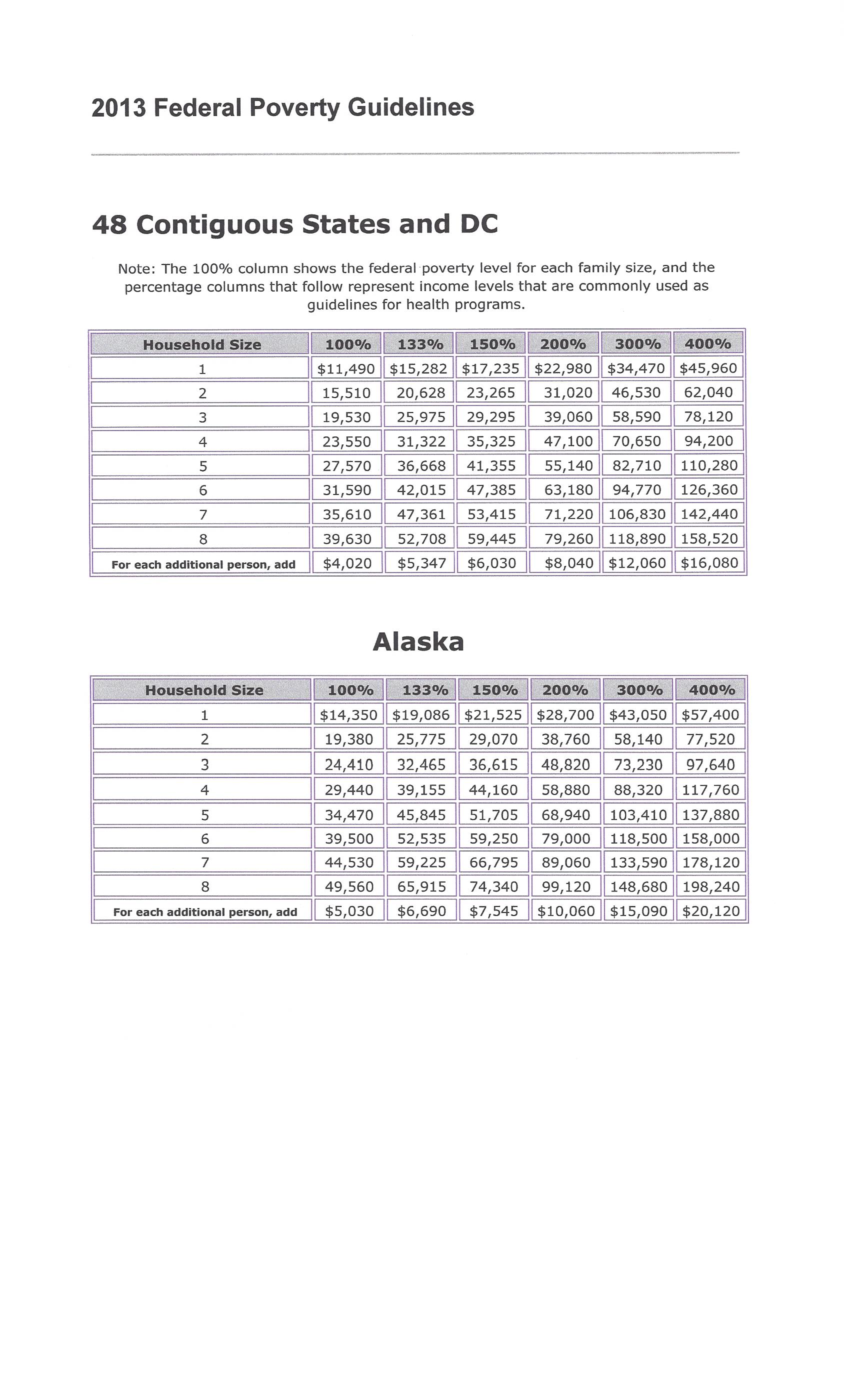
The individual one-time penalty under ACA in 2014 will be $95 per adult, or one percent of your income, whichever is greater. So say your annual income is $50,000, you’d pay $500. For every uninsured child, the penalty is $47.50. The family maximum is $285.
Coverage is assessed on a monthly basis, So if you were uninsured for six months, you’d owe half the otherwise applicable penalty.”
She said that the government has given a wide window – from Oct. 1, 2013 to March 31, 2014 – for enrollment this time, but from next year on there will only be a three-month window to sign up.
Will people take the gamble and skip coverage, hoping that their youth or good health will protect them?
If the state of Massachusetts, which passed a landmark health care law in 2006, which became the blueprint for the 2010 ACA, is any indication the number of people who will refuse to get some form of coverage will be low.
In Massachusetts, “there’s a culture of coverage. Most people want to comply with the law.”
********************************************
FORBES
Pharma & Healthcare |
7/06/2013 @ 6:25PM |290,284 views
Not Qualified For Obamacare’s Subsidies? Just Lie — Govt. To Use ‘Honor System’ Without Verifying Your Eligibility
If you thought the delay in the employer mandate was bad news for Obamacare, just wait. On Friday, Sarah Kliff and Sandhya Somashekhar of the Washington Post discovered that the Obama administration had buried in the Federal Register the announcement that the government won’t be able to verify whether or not applicants for Obamacare’s insurance exchange subsidies are actually qualified for the aid, in the 16 states that are setting up their own exchanges. Instead, until at least 2015, these states will be able to “accept the applicant’s attestation [regarding eligibility] without further verification.”
Without employer mandate, Feds to rely on applicant ‘attestations’
If you’ve been following the latest news around Obamacare, you know that on Tuesday evening, just before the Independence Day holiday, the White House announced that it would be delaying the implementation of the health law’s employer mandate—requiring all firms with more than 50 employees to provide health coverage to their workers—until 2015.
I, and several others at the time, said “wait a minute.” According to the law, you aren’t eligible for Obamacare’s subsidies if your employer has offered you what the government considers “affordable” coverage. But if employers are no longer going to report whether or not they’ve offered “affordable” coverage, how can the government verify whether or not workers are eligible for subsidies?
***********************************************
DELAYED EMPLOYER MANDATE THE LATEST CHANGE FOR INCREASINGLY UNSTEADY HEALTH-CARE LAW
July 4, 2013 | Washington Post
The Obama administration has postponed one of the fundamental provisions of the health-care reform law, responding to mounting concerns from business owners who would have been required to start providing health coverage to their employees next year. On Tuesday evening, Treasury Department officials announced the government would not penalize businesses that fail to provide health insurance next year, delaying what is known as the “employer mandate” component of the law until 2015. Starting then, firms with more than 50 employees will be required to provide at least a minimum level coverage to their workers or pay a steep fine to the federal government. Officials made the decision to push the requirement back after fielding a flood of complaints from business owners about its implementation. “We have heard concerns about the complexity of the requirements and the need for more time to implement them effectively,” Mark Mazur, assistant secretary for tax policy, wrote in a blog post announcing the postponement, later adding that the administration plans to use the additional time to “consider ways to simplify the new reporting requirements” for business owners. The newly delayed mandate has been a major point of contention for small business owners and lobbyists since it was approved as part of the Affordable Care Act in 2010. Many warned that it would cause administrative nightmares for small employers and discourage those near the cutline from expanding beyond 50 workers. Meanwhile, some firms have started scaling back their payrolls to get underneath the cap. “Small companies have told us they are confused by the law and are simply finding it difficult to comply with, no matter when it goes into effect,” Rep. Sam Graves, chairman of the House Small Business Committee, said in an email to The Washington Post. “Instead of providing relief for businesses, this simply kicks the can down the road.” A White House official said the added time would help small business owners adapt to the changes, arguing that the law will still drive down prices for coverage on Main Street. “This allows employers the time to .?.?. make any necessary adaptations to their health benefits while staying the course toward making health coverage more affordable and accessible for their workers,” Valerie Jarrett, an adviser to Obama, wrote in a blog post on Tuesday. This latest delay is the most consequential in a series of setbacks for the president’s signature law, which has shown signs of fragility as the initial deadline for full implementation approaches at the end of the year. In April, the administration announced it would delay for one year a key cost-cutting feature of the law’s new small business health insurance marketplaces. Initially, the exchanges were supposed to allow employers to choose different plans for different workers; now, for the first year, they must select only one plan from a single carrier for their entire business. More recently, the Government Accountability Office announced that federal and state officials have fallen well behind schedule setting up the marketplaces, which are scheduled to open for enrollment in October. “This is simply the latest evidence that implementation of this terrible law is going to be difficult if not impossible, and the burden is going to fall on the people who create American jobs,” Amanda Austin, director of federal public policy at the National Federation of Independent Business, said in a statement. The NFIB, a small business lobbying group, has pushed back against the health care law since it was making its way through Congress, later spearheading an effort to repeal the legislation that ended at the hands of the Supreme Court. The group has since focused on repealing some of the provisions it considers most detrimental to businesses on Main Street, including the employer mandate and a new tax on insurers. Instead of delayed, Austin argued the mandate should be eliminated altogether. “Temporary relief is small consolation,” she said. “We need a permanent fix to this provision to provide long term relief for small employers.” – See more at: http://congress.org/2013/07/04/delayed-employer-mandate-the-latest-change-for-increasingly-unsteady-health-care-law/#sthash.JwCb3wWY.dpuf
************************************************************************************************************************
Now is a good time to remind you, if you do not like the options and laws as they apply to insurance consumers, the time to vote your opinions is nigh. For a continually updated list of legislative and state-wide candidates, or to view more election information such as where to vote, visit: http://www.sos.state.tx.us/elections/index.shtml
To let your opinion be known to your Senators go to: http://www.senate.gov/general/contact_information/senators_cfm.cfm
_____________________________________________________________________________________
ALL PLAN MED & LIFE QUOTE and ALLPLANINSURANCE.COM sincerely appreciate your participation.
Please take care and voice your concerns and opinion here.
Sincerely,
Kenton Henry
Administrator; Editor
PHONE: 800.856.6556
http://allplanhealthinsurance.com