D. Kenton Henry Editor, agent, broker 30 SEPTEMBER 2025
Medicare 2026: Welcome clients and prospective clients! Before reading this (if you have not already), you should go to your mail box and retrieve your 2026 Annual Notice of Change from Medicare. You were due to receive it no later than today per Center For Medicare Rules and Regulations. If will give you a good idea if you need to re-shop your Medicare Advantage or Part D Drug plan for the coming calendar year. If not, the following changes may.
10 changes to review before the Annual Election period, often referred to as the Open Enrollment (Oct 15–Dec 7)
If you’re on Medicare, 2026 brings important updates—especially to prescription drug coverage. The Part D out-of-pocket cap rises to $2,100, the standard deductible becomes $615, and Medicare’s first negotiated drug prices start on January 1, 2026. Medicare Advantage also gets new guardrails around prior authorization and appeals, and some supplemental “perks” are being narrowed. Check your Annual Notice of Change (ANOC) (it should arrive by Sept 30) and compare your plan options—small differences can mean big savings. If you’d like help, I’ll review your medications, doctors, and benefits to make sure you’re in the right fit for January 1.
Here is an itemized list of the 10 Key Changes:
Medicare changes your 2026 plan review should cover
1) Part D’s annual out-of-pocket cap rises to $2,100. Once a member’s 2026 Part D out-of-pocket spending reaches $2,100, they’ll pay $0 for covered Part D drugs for the rest of the calendar year.
2) The standard Part D deductible increases to $615. Plans can’t set a deductible higher than $615 in 2026 under the redesigned Part D rules.
3) Drug price negotiations start showing up at the counter. Medicare’s first set of negotiated Maximum Fair Prices (MFPs) for 10 widely used Part D drugs take effect January 1, 2026. Members should review their ANOC and plan formularies to determine how these prices impact their medications.
4) Insulin and adult vaccines: protections continue. Part D insulin remains capped and no-deductible; starting in 2026, the cap is the lesser of $35, 25% of the MFP, or 25% of the negotiated price. ACIP-recommended adult vaccines remain $0 under Part D.
5) “Pay-over-time” for prescriptions auto-renews. The Medicare Prescription Payment Plan (monthly billing instead of paying large amounts at the pharmacy) auto-renews in 2026 unless the member opts out. It smooths payments but doesn’t lower total costs—good to remind clients who tried it in 2025.
6) Medicare Advantage prior-auth and appeals guardrails tighten. For 2026, CMS says MA plans must honor previously approved inpatient admissions (can only reopen for obvious error or fraud), and CMS closes appeals loopholes so members and providers receive required notices and can appeal adverse coverage decisions. Expect fewer mid-stay reversals. Centers for Medicare & Medicaid Services
7) Limits on certain “extra perks” in MA (SSBCI) take effect. CMS codified non-allowable Special Supplemental Benefits for the Chronically Ill—examples include non-healthy food, alcohol, tobacco, and life insurance. Some plans may rebalance extras as a result.
8) Star Ratings update: new/returning measures. 2026 Stars add or reintroduce measures like Kidney Health Evaluation for Patients with Diabetes plus Improving/Maintaining Physical and Mental Health (weight = 1). Tougher cut points in 2026 may shift plan bonuses and benefit richness—worth watching locally.
9) Part D benefit design shifts behind the scenes. Liability shares change across phases (plans, manufacturers, CMS), and there’s a new subsidy for selected (negotiated) drugs. Members may see formulary/tier adjustments—another reason to compare plans.
10) ANOC timing: what to tell clients. Remind everyone: Annual Notice of Change (ANOC) letters arrive by September 30 each year; if they didn’t see one, call the plan. Open Enrollment runs Oct 15 – Dec 7 for Jan 1 effective dates.
Check your Annual Notice of Change (ANOC) (it should arrive by Sept 30) and compare your plan options—small differences can mean big savings. If you’d like help, I’ll review your medications, doctors, and benefits to make sure you’re in the right fit for January 1.
Other Developments
Some Medicare Advantage supplemental benefits (i.e. nutrition support, OTC medicine) may be reduced in favor of core services.
In six states, prior authorizations for certain Original Medicare services will be tested.
Part B and Part D premiums and deductibles are both set to increase—Part B premium up ~11.6%, and Part D premium by about 6%.
Who Am I?
In addition to being the editor of this blog I have has been helping individuals and families navigate the health and Medicare insurance landscape since 1986. With nearly four decades of experience, he specializes in Medicare Supplement, Medicare Advantage, and Medicare Part D prescription drug plans.
As an independent broker, I am appointed with virtually every competitive, A-rated Medicare insurance company in Texas, Indiana, Ohio, and Michigan. This broad access allows him to recommend the plan that truly best fits each client’s needs.
Above all, I work for my clients—not the insurance companies. You will never pay more by enrolling through me than you would if you purchased an insurance product directly from the carrier. My mission is to provide clear guidance, personalized recommendations, and ongoing support to ensure my clients get the coverage and peace of mind they deserve.
If you have any questions about 2026 Medicare Part D prescription drug plans, Medicare Advantage, or Medicare Supplement (Medi-Gap) policies, please give me a call.
Average premiums, benefits and plan choices for Medicare Advantage and the Medicare Part D prescription drug program should remain relatively stable next year, CMS said in a Sept. 26 news release. But MA enrollment is projected to decrease 900,000 in 2026.
Despite a slight dip in available MA plans nationally, over 99% of Medicare beneficiaries will still be able to access an MA plan.
The agency estimates the premiums for MA plans to drop from $16.40 to $14.00. On average, the total premium for standalone Part D is estimated to fall $3.81. CMS’ July forecast predicted elevated Medicare Part D base premium increases in the neighborhood of 6%.
By D. Kenton Henry Editor, Broker, Agent 9 August 2024
For all Americans seeking to obtain or renew “Individual and Family” health insurance in 2025, there are (as always) certain changes to be anticipated.
Open Enrollment Period (OEP)—the period when all U.S. citizens may purchase health insurance for a January 1 effective date of the coming calendar year—runs from November 1st to December 15th. For those who, for whatever reason, want a February 1 effective date—the cutoff is January 15th. After that, a person must qualify for a Special Election Period (SEP). The most common of these is “loss of coverage through no fault of one’s own. During a SEP, an individual has 60 days to pick a plan. That plan will become effective on the first of the month after the date of the application.
To begin, let’s get the negatives out of the way.
THE NEGATIVE:
In 2025, ACA (Affordable Care Act) individual and family health insurance premiums are expected to increase by a median of 7%. This rise is driven by several key factors, including the increasing costs of hospital services, workforce shortages, and growing demand for high-cost specialty medications like GLP-1 drugs commonly used for weight loss and diabetes management (such as Ozempic). General inflation and healthcare provider consolidation are also contributing to these hikes.
Although most enrollees in ACA plans receive subsidies that will mitigate the impact of these increases, the cost burden on the federal government will grow as more funds will be needed to cover the subsidies. Insurers across the country are proposing premium increases that vary significantly, ranging from 5% to 10% on average, with some areas seeing rates fluctuate outside this range.
THE POSITIVE:
As we approach 2025, the Affordable Care Act (ACA) continues to evolve, aiming to address the shifting landscape of healthcare needs and to improve the accessibility and affordability of health insurance for individuals and families. The upcoming changes reflect ongoing efforts to enhance coverage, reduce costs, and ensure that more Americans have access to quality care. Here’s a comprehensive look at what you can expect from the ACA’s individual and family health insurance provisions in 2025.
1. Expanded Subsidies and Enhanced Affordability
One of the most significant changes coming in 2025 is the expansion of subsidies for health insurance premiums. Building on previous enhancements, such as those from the American Rescue Plan Act and the Inflation Reduction Act, the ACA will offer even more robust premium assistance. These expanded subsidies are designed to make health insurance more affordable for a broader range of income levels, particularly benefiting middle-income families who previously struggled with premium costs.
For 2025, the eligibility for premium tax credits will be extended, and the income thresholds for receiving assistance will be adjusted to account for inflation and rising living costs. This means that more individuals and families will qualify for financial help, reducing the burden of monthly premiums and making comprehensive coverage more accessible.
2. Increased Cost-Sharing Reductions
In addition to expanding premium subsidies, the ACA will also introduce enhanced cost-sharing reductions (CSRs). These reductions will lower out-of-pocket costs such as copayments, coinsurance, and deductibles for low- and moderate-income families. The aim is to make healthcare services more affordable at the point of care, not just in terms of monthly premiums.
The improved CSRs will be particularly beneficial for those who purchase coverage through the ACA marketplaces, ensuring that even the most essential health services, like prescription drugs and specialist visits, are within reach for more Americans.
3. Broader Coverage Options and Flexibility
The ACA will introduce more flexibility in plan design and coverage options starting in 2025. Health insurance plans available through the ACA marketplaces will offer a wider variety of coverage levels and network options, allowing individuals and families to choose plans that better match their specific needs and preferences.
For example, there will be more options for plans that cater to different health conditions or provide enhanced preventive care services. This diversification aims to address the diverse needs of the population and provide more tailored solutions to meet individual health requirements.
4. Enhanced Support for Mental Health and Substance Use Treatment
Recognizing the growing importance of mental health and substance use treatment, the ACA will place a stronger emphasis on coverage for these services in 2025. Insurance plans will be required to offer more comprehensive mental health benefits, including increased access to therapy, counseling, and substance use disorder treatment.
This change reflects a broader understanding of the integral role mental health plays in overall well-being and aims to reduce the barriers to accessing necessary mental health services.
5. Strengthened Protections Against Discrimination
The ACA will bolster protections against discrimination in health insurance. New regulations will ensure that insurers cannot deny coverage or charge higher premiums based on pre-existing conditions, gender, or other personal factors. Additionally, there will be greater oversight to ensure that insurance plans adhere to these non-discrimination policies.
These protections aim to create a more equitable healthcare system and to ensure that all individuals have fair access to health insurance, regardless of their personal circumstances.
6. Improvements to the Enrollment Process
The enrollment process for ACA health insurance plans will become more streamlined and user-friendly. In 2025, the federal and state-based marketplaces will introduce enhanced digital tools and support services to assist individuals and families with plan selection and enrollment. This includes improved online interfaces, more robust customer support, and clearer guidance throughout the enrollment period.
The goal is to reduce barriers to accessing coverage and to make it easier for people to navigate their options and secure the insurance that best fits their needs.
7. Emphasis on Preventive and Wellness Services
The ACA will continue to focus on preventive care and wellness services. In 2025, there will be increased incentives for health plans to cover preventive services without cost-sharing and to provide additional resources for wellness programs. This shift aims to encourage healthier lifestyles and early detection of potential health issues, ultimately reducing long-term healthcare costs and improving overall public health.
Conclusion:
The changes to the ACA’s individual and family health insurance provisions in 2025 represent a significant step forward in making healthcare more affordable, accessible, and equitable. With expanded subsidies, increased cost-sharing reductions, broader coverage options, and enhanced support for mental health, the ACA is set to offer even greater support to those in need. As these changes are implemented, individuals and families can expect a more supportive and responsive healthcare system that better meets their needs and helps them achieve better health outcomes.
*Please refer to Feature Articles 1 and 2 below the comments box for details on upcoming changes.
Whether you feel you qualify for an “Advanced Premium Tax Credit” (premium subsidy) or not, I can guide you through the process of determining such and enrolling in the plan of your choice for 2025. My years of experience specializing in medical insurance, including ever since ACA compliant plans became available on January 1, 2014, make the process go as quickly and smoothly as possible. Please contact me. There is no obligation to utilize my service and no charge for doing so. If you elect to acquire a policy I introduced you to, I only ask that you go through me to do so. You will be charged no more for the policy than if you walked through the front door of the insurance company and acquired it directly. I am currently appointed with every insurance company doing business in SE Texas; however, I represent you and your interests first and foremost.
THE KAISER FAMILY FOUNDATION (KFF) – The independent source for health policy research, polling, and news.
The independent source for health policy research, polling, and news.
Tammie Smith August 5th, 2024
Marketplace Insurers are Proposing a 7% Average Premium Hike for 2025 and Pointing to Rising Hospital Prices and GLP-1 Drugs as Key Drivers of Costs
ACA Marketplace insurers are proposing a median premium increase of 7% for 2025, similar to the 6% premium increase filed for 2024, according to a new KFF analysis of the preliminary rate filings. Insurers’ proposed rate changes – most of which fall between 2% and 10% – may change during the review process.
Although the vast majority of Marketplace enrollees receive subsidies and are not expected to face these added costs, premium increases generally result in higher federal spending on subsidies. The justifications insurers provide for these premium changes also shed light on what is driving health spending more broadly.
Insurers cite growing health care prices – particularly for hospital care – as a key driver of premium growth in 2025, as well as growing use of weight loss and other specialty drugs, according to KFF’s examination of publicly-available documents.
This year, increases in the prices insurers are paying for medical care tend to affect premiums more than growth in the utilization of care. Insurers say workforce shortages and hospital market consolidation, which can put upward pressure on health care costs and prices, are increasing 2025 health insurance premiums.
Meanwhile, growing demand for Ozempic, Wegovy, and other costly GLP-1 drugs, which are used to treat diabetes and obesity, is increasing prescription drug spending.
The full analysis and other data on health costs are available on the Peterson-KFF Health System Tracker, an online information hub dedicated to monitoring and assessing the performance of the U.S. health system.
One way insurers seek to control costs is to limit the size of the physician networks serving their plans. Providers agree to lower fees and other terms with insurers in order to be included in one or more of the networks they offer. Insurers then either limit coverage to services provided by network providers or encourage enrollees to use network providers through lower cost sharing. Reducing the number of providers in-network can effectively reduce plan costs, but it also limits enrollees’ choices, increases wait times, and can complicate the continuity of care for those switching plans. Enrollees receiving care from out-of-network providers often face coverage denials or substantially higher out-of-pocket expenses. These factors highlight how the size and composition of provider networks impact access to care and the financial protection insurance provides enrollees.
The breadth of provider networks in the Affordable Care Act (ACA) Marketplaces has been the subject of significant policy interest. Insurers often compete aggressively to be among the lowest-cost plans, potentially leaving enrollees with poor access. According to the 2023 KFF Survey of Consumer Experiences with Health Insurance, one in five (20%) consumers with Marketplace plans reported that in the past year, a provider they needed was not covered by their insurance, and nearly one in four (23%) said a provider they needed to see that was covered by their insurance did not have appointments available. Enrollees with Marketplace coverage were more likely than those with employer coverage to face these challenges. While the Centers for Medicare and Medicaid Services (CMS) establishes minimum standards for the adequacy of provider networks for Marketplace plans, insurers retain considerable flexibility in how they design networks and how many providers they include. As a result, the breadth of plan networks varies considerably within counties, presenting challenges for consumers who need to select a plan with little information on the network breadth of their options.
This brief examines the share of doctors participating in the provider networks of Qualified Health Plans (QHPs) offered in the individual market in the federal and state Marketplaces in 2021, and how network breadth affected costs for enrollees. The analysis uses data on the physician workforce, from 2021, matching that to provider networks in marketplace plans from the same year. Doctors filing Medicare Part B claims in or near each county are considered to be part of the active workforce available to Marketplace enrollees. Only doctors filing a claim and therefore known to have engaged in patient care in 2021 were included. The share of local physicians participating in a network is a rough measure of how much access enrollees have; depending on the number of providers in the area and the workloads of those physicians, enrollees in plans with similar breadths may face different wait times to book appointments. The share of local physicians participating in-network distinguishes whether enrollees have a broad or narrow choice of local doctors. Those in plans including a small share of doctors have fewer options when trying to find a provider with available appointments. See the Methods section for more details.
Key Findings
On average, Marketplace enrollees had access to 40% of the doctors near their home through their plan’s network, with considerable variation around the average. Twenty-three percent of Marketplace enrollees were in a plan with a network that included a quarter or fewer of the doctors in their area, while only 4% were in a plan that included more than three-quarters of the area doctors in their network.
Some of the narrowest network plans were found in large metro counties, where enrollees on average had access to 34% of doctors through their plan networks. Marketplace enrollees in Cook County, IL (Chicago) and Lee County, FL (Fort Myers) were enrolled in some of the narrowest networks (with average physician participation rates of 14% and 23%, respectively). Plans in rural counties tended to include a larger share of the doctors in the area, though rural counties had fewer doctors overall relative to the population compared to large metro counties.
On average, more than one-quarter (27%) of actively practicing physicians were not included in any Marketplace plan network.
On average, Silver plans with higher shares of participating doctors had higher total premiums. Compared to plans where 25% or fewer of doctors participated in-network, those with participation rates between 25% and 50% cost 3% more while those with participation rates of more than 50% cost 8% more. (Silver plans are midlevel plans in terms of patient cost-sharing and are particularly significant because they are the benchmark for federal premium subsidies.)
More than 4 million enrollees (37% of all enrollees) lived in a county in which the two lowest-cost Silver plans included fewer than half of the doctors in the area and a broader plan was available. In order for these enrollees to enroll in the cheapest Silver plan that included at least half the doctors, they would have needed to spend an additional $88 per month.
How Broad are Marketplace Plan Physician Networks?
On average, enrollees in the ACA Marketplaces had access to 40% of the doctors near their homes through their plan’s network. This share was similar for pediatric and non-pediatric doctors.
A quarter of enrollees were in plans where fewer than 26% of the local doctors participated in their plan’s network, while another quarter were in plans where at least 54% of local doctors participated.
There is no formal definition of what constitutes a narrow network plan. Some researchers have labeled plans covering fewer than a quarter of the physicians in an area as narrow. Under this definition, 23% of Marketplace enrollees were in a narrow network plan. About seven in ten enrollees (70%) were in a plan that included half or fewer of the doctors near their home. Only 4% of enrollees were in a plan that included at least three-quarters of local doctors, and 1% of enrollees were in a plan that included at least 85% of local doctors.
How Broad Are Plan Networks for Primary Care and Physician Specialties?
Even a plan with a relatively large share of local doctors participating in its network may not have enough doctors in different specialties to meet the needs of plan enrollees. In particular, enrollees with chronic conditions may look for plans that include their doctors across multiple specialties.
Primary Care Physicians: Marketplace enrollees, on average, had plan networks that included 43% of the primary care doctors in their area. A quarter of Marketplace enrollees had plan networks that included fewer than 25% of primary care doctors. More than half a million Marketplace enrollees were in a plan with fewer than 50 in-network primary care doctors near their homes. As is the case for physician networks overall, primary care physician networks tended to be narrower in large metro counties, where the average enrollee had a plan network that included 35% of local primary care doctors. While primary care doctors account for a smaller share of spending than specialists, they play an important role in insurers’ network design either by acting as gatekeepers to specialty care and referring patients to specialists.
Specialists: Marketplace plan networks tended to include a larger share of practicing medical and surgical specialists than primary care physicians. The average Marketplace enrollee had a plan network that included 52% of medical specialists and 53% of surgical specialists in their area; however, one-quarter of Marketplace enrollees had access to fewer than 34% of the medical specialists and 32% of the surgical specialists. On average, Marketplace enrollees had plan networks that included 21% of hospital-based physicians, which may include anesthesiologists, radiologists, pathologists, and emergency physicians.1 Information on additional specialties is available in the appendix.
Psychiatrists: Marketplace networks for psychiatrists were smaller. On average, Marketplace enrollees had access to 37% of the psychiatrists in their area through their plan.2 Twenty-five percent of Marketplace enrollees were in a plan that included 16% or fewer of the psychiatrists near their homes.
How Does Network Breadth Vary by Location?
Network breadth varied based on where plans were offered, with those in urban areas having lower physician participation rates, on average. In 2021, CMS designated county types based on their population and density; there are 78 Large Metro counties and 723 Metro counties. Most Marketplace enrollees lived in one of these urban county designations, including 38% in Large Metro counties and 48% in Metro counties.
Urban Counties: While Large Metro and Metro counties had more doctors, smaller shares of them participated in Marketplace plan networks compared to doctors in more rural areas. Marketplace enrollees in Large Metro counties, on average, had access to 34% of the doctors in their area through their plan networks, with a quarter enrolled in a plan whose network included fewer than 23% of local doctors. Marketplace enrollees in Metro counties, on average, had access to 42% of local doctors through their plan networks, while those in Rural counties, on average, had access to 52% of local doctors.
The 30 counties with the highest enrollment in the Marketplaces collectively represented 34% of all Marketplace enrollees and 21% of the U.S. population. These counties are typically urban and disproportionately in states that have not expanded Medicaid under the ACA.3
There was significant variation in network breadth across these 30 counties. Differences in average network breadth across these counties are the result of a combination of factors including the physician workforce, market characteristics, and insurer strategies. With networks with low provider participation rates, most Marketplace enrollees in Cook County, IL (Chicago) had access to fewer than one in six (14%) doctors in their area on average. Similarly, Marketplace enrollees in Lee County, FL (Fort Myers) and Fort Bend County, TX (outside Houston) had in-network access to less than a quarter of local doctors (23% and 24%, respectively). In contrast, some larger US cities had broader networks than those available in Houston and Chicago. For example, enrollees in Middlesex County, MA (outside Boston), Gwinette County, GA (outside Atlanta), and Travis County, TX (Austin) had in-network access to almost half of the doctors in their areas on average (46%, 46%, and 49%, respectively).
In 2021, 14% of Marketplace enrollees (1.6 million people) lived in four counties: Los Angeles, CA; Miami-Dade, FL; Broward, FL (Fort Lauderdale); and Harris, TX (Houston). On average, enrollees in each of these counties had in-network access to less than 4-in-10 local doctors (25%, 36%, 38%, and 25%, respectively).
High physician participation rates may not result in meaningful choice if there are few doctors in the area in the first place. For example, enrollees in Hidalgo County, TX (McAllen), on average, had access to 61% of local doctors through their plan networks, but this may have reflected chronic shortages in the number of practicing doctors in the county.4
Rural Areas: On average, Marketplace enrollees in Rural counties had access to about half (52%) of local doctors through their plan networks, higher than the average in more urban counties. The higher provider participation rates in rural areas, however, need to be considered in the context of the small number of primary care doctors and specialists practicing in these areas. For example, 2.9 million Marketplace enrollees in Rural counties had fewer than 10 dermatologists in their local area, 2.5 million had fewer than 10 gynecologists, and 1.7 million had fewer than 10 cardiologists in their plan networks. In some cases, these providers may already have full panels, and an enrollee’s choice may be even more limited than the number of physicians who accept the plan.
County Demographics: On average, Marketplace enrollees living in counties with a higher share of people of color had narrower networks than counties with a smaller share.5 The quarter of Marketplace enrollees living in the counties with the highest share of people of color had access to 34% of doctors in-network, on average, compared to 42% in counties with a smaller share of people of color. This difference may reflect the higher concentration of people of color in large metro counties, where plans typically had narrower networks.
How Much Choice Do Consumers Have Over Networks in the County Where They Live?
Provider networks vary within counties, meaning that individuals shopping for a Marketplace plan may have the option to enroll in plans with vastly different network breadths. In 2021, 70% of enrollees (nearly 8 million people) lived in a county where one or more plans covered fewer than a quarter of the doctors in the area. Among these enrollees, nearly 4.3 million (54%) also had the opportunity to enroll in a plan that included more than half the doctors in the area.
In the 30 counties with the most enrollment, enrollees could choose from about 8 distinct plan networks, on average. Even within the same county, enrollees may have access to vastly different shares of physicians in-network. For example, in Lee County, FL (Fort Myers), a quarter of Marketplace enrollees were enrolled in plans with networks that included fewer than 5% of local doctors, while a quarter were enrolled in plans with networks that included more than 45%. Similarly, in Travis County, TX (Austin), a quarter of Marketplace enrollees were enrolled in a plan with a network that included fewer than 36% of local doctors, while a quarter were enrolled in plans that included at least 70%. Consumers in these counties have the opportunity to enroll in plans with vastly different physician networks but often face higher premiums to do so. (See section “How is Network Breadth Related to Plan Premiums?” for details.)
Access to a “Broad” Network Plan: A large share of Marketplace enrollees (91%) lived in a county in 2021 where they could not choose a plan with a network that included at least 75% of doctors in their areas. Among the 30 counties with the most Marketplace enrollment, only two—Middlesex County, MA (outside Boston) and Hidalgo County, TX (McAllen)—had at least one plan network choice with a physician participation rate of 75% or more. In most cases, the broadest Marketplace plan network offered in these 30 counties was much narrower than this. For example, the physician participation rate for the broadest Marketplace plan network offered was 22% in Cook County, IL (Chicago), 38% in Hillsborough County, FL (Tampa), and 40% in Maricopa County, AZ (Phoenix). In these counties, shoppers were unable to enroll in a plan that covered at least half of the doctors in their community, even if they were willing and able to pay more.
Doctors Not Participating in Any Marketplace Network: Some doctors did not participate in any Marketplace plan network in 2021. On average, 27% of actively practicing physicians who submitted Medicare claims were not included in any Marketplace plan network offered to enrollees that year. This means that people transitioning to a Marketplace plan from another coverage source may not have been able to find any plan that included their doctor. In some counties, a much higher share of doctors did not participate in any Marketplace network, including Cook County, IL (Chicago), where 60% of doctors did not participate in any Marketplace plan networks, Dallas County, TX (36%), and Lee County, FL (Fort Myers) (41%).
How Visible Are Differences in Network Breadth to Plan Shoppers?
The difficulty of selecting an appropriate plan for a consumer’s health needs is heightened by the tremendous number of choices in many counties. The average Marketplace consumer had a choice of more than 58 plans (including 23 Silver plans) in 2021, a number that has since grown.6
Plan choices can involve different provider networks. For example, in Harris County, TX (Houston), consumers in 2021 had a choice of 87 plans that used seven different provider networks, with physician participation rates that ranged from 9% to 52%. However, these network differences are largely invisible to consumers. The lack of consumer tools to evaluate and measure plan networks can make it more challenging to choose a plan. Other than in a limited pilot operating in two states (Tennessee and Texas), the only tool available for HealthCare.gov consumers to evaluate a plan’s network is to search for individual providers, one by one, in directories, which may not always be up to date.
Further complicating the challenges of selecting plans, the marketing names of plans offered by the same insurer using different provider networks do not clearly indicate network differences. For example, AmeriHealth of New Jersey offers multiple Silver plans in Camden County, NJ. The narrow plan was marketed as “IHC Silver EPO AmeriHealth Advantage” (with a physician participation rate of 40%), while the broader network Silver plan was marketed as “IHC Silver EPO Regional Preferred” (with a physician participation rate of 74%). Based on these names, shoppers may not be able to discern that these plans had different networks with very different participation rates.
Shoppers can also search by plan type. The vast majority of Marketplace enrollees (84%) were in HMO or EPO plans in 2021, which have closed networks that generally do not cover non-emergency services provided outside of their provider network. A smaller share of Marketplace enrollees were in PPO plans (13%) and POS plans (4%), which provide some coverage for out-of-network care. The cost for such care can be quite expensive because out-of-network providers can sometimes balance bill and cost sharing for their services is typically higher and not subject to the annual out-of-pocket maximum.
Marketplace consumers seeking access to a broader choice of physicians and who have the choice of a PPO plan might assume such plan networks are analogous to the broad PPO networks offered to many in the employer market. On average in 2021, Marketplace enrollees who signed up for PPO plans had access to 53% of local doctors through their plan networks, compared to 37% for those enrolled in HMOs and 38% for those enrolled in EPO plans. However, plan type is not necessarily reflective of network breadth. In almost half (46%) of counties with both a PPO and either an HMO or EPO Marketplace plan, at least one HMO or EPO plan had a broader network than a PPO plan. Many Marketplace enrollees also did not have the option to choose a PPO plan: 60% of enrollees lived in a county in which only closed-network (HMO and/or EPO) plans were available.
Marketplace plans are categorized into metal levels based on the overall level of cost sharing required by the plans (deductibles, copays, etc.). In 2021, enrollees in Bronze, Silver, and Gold plans had access to similar shares of physicians in their areas (41%, 39%, and 44%, respectively). This is the result of issuers utilizing the same networks across metal levels within a county. In only 1% of counties did an insurer’s broadest Silver plan use a different network than its broadest Bronze plan.
HealthCare.gov has not yet widely released a consumer assistance tool to aid shoppers in filtering options by network breadth. Since 2017, CMS has operated a limited pilot with information on network breadth for consumers in Tennessee and Texas.7 Under this network transparency pilot, CMS provides measures of plan network breadth for hospitals, primary care providers, and pediatricians as an aid to Marketplace shoppers in those states. CMS calculates a participation rate by determining the share of providers participating in any Marketplace networks in the area. CMS then categorizes plan networks as “Basic” (0%-29%), “Standard” (30%-69%), or “Broad” (70%+), based on how many physicians participate in at least one QHP network. Whereas the denominator used throughout this analysis is physicians who submitted claims to Medicare, the CMS tool only considers providers that participate in Marketplace plans. Therefore, even plans with narrow networks in areas where most doctors do not participate in Marketplace plans could be labeled “standard” or “broad” using this method. For example, whereas 90% of physicians in Travis County, TX (Austin) who take Medicare participated in at least one Marketplace plan in 2021, only 64% of doctors in Dallas County, TX did. Therefore, a plan covering a quarter of all the available doctors in both counties would be considered a “basic” plan in Travis County, TX but a “standard” plan in Dallas County.
Generally, the method used in the CMS “network transparency” tool does not seem to facilitate comparing plan networks across counties and may exaggerate the breadth of plan networks, potentially leading some consumers to believe that their plan includes a larger share of local providers than it actually does. Under the CMS pilot method, only 16% of Marketplace enrollees in 2021 were enrolled in a plan that would be considered “basic”; this compares to 33% of Marketplace enrollees would be considered to be in a basic plan if the definition of local doctors used in this paper were applied.
Network Breadth by Plan Insurer
Marketplace shoppers may consider who the insurer is when making inferences about plan networks.
Blue Cross and/or Blue Shield (BCBS) plans are sponsored by a mixture of for-profit and tax-exempt insurers. While these companies are run independently, they are affiliated through an association, and many share a common heritage. In many states, the BCBS affiliates are the largest insurers participating in the Marketplace and may in some cases also be the largest insurers or administrators for employer-sponsored coverage as well. On average, enrollees in BCBS Marketplace plans in 2021 had access to 49% of doctors in their areas through their plan networks, a larger share than enrollees in plans offered by other insurers (35%).8 Even so, BCBS Marketplace plan networks, on average, excluded about half of the doctors available to those in traditional Medicare. Further, there was considerable variation in participation rates by doctors among plans sponsored by BCBS insurers, sometimes even within the same county. For example, in Wayne County, MI (Detroit), the Blue Care Network and Blue Cross/BlueShield plan network participation rates ranged from 20% to 59% across plan options. Similarly, in Camden County, NJ, Independence Blue Cross offered two networks, with physician participation rates of 40% and 74%. Florida Blue in Miami-Dade County, FL offered multiple plan networks with participation rates ranging from 25% to 51%.
Insurers Also Participating in Medicaid Managed Care: Insurers with a large presence in the Medicaid managed care organization (MCO) market also have a solid footprint in the Marketplaces. Overall, the breadth of Marketplace plan networks sponsored by MCO insurers was similar to that of insurers overall (41% vs. 40%, respectively).9 One of the largest MCOs that expanded into the Marketplaces is Centene Corporation, which sponsors plans under Ambetter, Health Net, and other brand names. The average participation rate for doctors in plan networks offered by Centene was lower than the overall Marketplace average (33% vs. 40%). Molina, another major MCO insurer offering Marketplace plans, had an average physician participation rate of 35% in its plan networks.
Integrated Delivery Systems: Integrated delivery systems, such as Kaiser Permanente, Geisinger Health Plan, and the Chinese Community Health Plan, institute a different approach to network design. Under these plans, health care financing and delivery are conducted by the same organization. Providers are typically employees of the plan or an affiliated medical group, and these plans generally do not cover non-emergency care provided by doctors outside of the network. Although enrollees in these plans may not have a wide choice of physicians in the area, these integrated models strive to improve access through care coordination and may be less complex for patients to navigate which providers are in and out of their networks. Enrollees in Kaiser plans, by far the largest integrated delivery system, on average, had access to about one in five (19%) doctors in their area. Of note, the breadth of Kaiser physician networks does not lower the overall Marketplace average substantially because only 7% of Marketplace enrollees nationally were enrolled in Kaiser plans.
Non-profit Insurers: On average, Marketplace enrollees covered by plans sponsored by non-profit insurers in 2021 had in-network access to 43% of the doctors in their areas, compared to 38% for those covered by for-profit insurers. Excluding enrollees in Kaiser health plans, enrollees covered by non-profit insurers had access to 47% of local doctors on an in-network basis on average.
How is Network Breadth Related to Plan Premiums?
On average, Silver plans with higher shares of participating doctors had higher total premiums. When compared to plans where fewer than 25% of doctors participated in-network, those with participation rates between 25% and 50% cost 3% more while those with participation rates of more than 50% cost 8% more. While other factors also contribute to plan premiums, including the breadth of hospital networks and the plan design, narrow physician networks were associated with meaningfully lower total costs. The average total premium for a 40-year-old enrolled in a Silver Marketplace plan in 2021 was $466 a month. For these enrollees to sign up for a Silver plan that included more than 50% of area physicians, their premiums would have increased $37 per month. The statistical model used to estimate these premium differences is described in the methods.
Enrollee Cost to Purchase a Broader Plan
Consumers with private health insurance generally consider the breadth of provider networks very important when choosing a plan, yet many remain price-sensitive when selecting plans with higher costs. A 2019 KFF/LA Times survey found that 36% of adults with employer coverage said the cost of the plan (premiums and cost sharing) was the main reason they chose their plan, while 20% cited the choice of providers.
One way to illustrate how the cost of broader plans is passed on to consumers is to consider the counties where enrollees face higher premiums for a broader plan. Most (90%) of Marketplace enrollees receive a tax credit to offset all or part of the cost of the monthly premium. The size of the premium tax credit available to enrollees is based on both household income and the cost of the benchmark plan, defined as the second-lowest-cost Silver plan. ACA enrollees are responsible for paying the entire amount between the cost of the benchmark plan and a higher-cost plan. Enrollees in counties where the benchmark plans have relatively low physician participation rates may need to pay a significant amount to enroll in a broad network plan.
Among Marketplace enrollees, 74% percent, or 8.5 million enrollees, were in a county where the two lowest-cost Silver plans had fewer than 50% of physicians participating in their networks. Of these, about half, or 4.3 million enrollees, did not have a Silver plan available to them that included at least half of the local physicians in its network; 4.2 million enrollees did have at least one such plan available to them. For those 4.2 million people, the average additional cost to enroll in a Silver plan with at least half the local doctors participating was $88 (for a 40-year-old).
One in five Marketplace enrollees (19%, or 2 million enrollees) lived in a county where the two lowest-cost Silver plans included fewer than 25% of local physicians in-network. Fifty percent of these enrollees, or 1 million enrollees, lived in a county where at least one plan included at least half the doctors. Among these enrollees, the cost to enroll in a plan with at least half the local doctors would have cost $95 more than the benchmark plan each month.
Implications for Consumers and Potential Federal Efforts to Increase Access to Care
Having a plan with a narrow network increases the chances that an enrollee receives care out-of-network, either inadvertently (e.g., receiving care from an out-of-network provider they did not choose at an in-network facility), or because they are unable to find an in-network physician at the time and place they need. It can also have consequences for enrollees’ ability to seek care in a timely fashion and their health. The 2023 KFF Survey of Consumer Experiences with Health Insurance found that 20% of adults with Marketplace coverage said that in the past year, a particular doctor or hospital they needed was not covered by their insurance. Among Marketplace enrollees who experienced this problem, 34% said that needed care was delayed, 34% said they were unable to get needed care, and 25% experienced a decline in health status.
Additionally, going out-of-network can be costly for enrollees. Enrollees using out-of-network providers may face higher cost sharing and balance billing if the services provided are not regulated by the No Surprises Act. Among those who indicated experiencing a network adequacy problem in the consumer survey, almost half (47%) said they ended up paying more out of pocket for care than expected, including 22% who said the additional cost was $500 or more.
Some have suggested that the design of the Marketplace encourages insurers to offer narrower networks compared to those included in employer plans in order to keep premiums down. Employers use health benefits to attract and retain workers and have an incentive to create broader networks that appeal to their workforce. One analysis found that primary care networks for large group plans were 25% larger than those found on the Marketplaces.10 The higher prevalence of narrow network plans corresponds to a greater share of enrollees facing challenges finding in-network providers. The 2023 KFF Survey of Consumer Experiences with Health Insurance found that adults with Marketplace coverage were more likely than those with employer-sponsored health insurance to report that a particular doctor or hospital they needed was not covered by their insurance (20% vs. 13%) (Figure 14). Additionally, 34% of Marketplace enrollees in fair or poor health reported that a particular doctor or hospital they needed was not covered by their plan, nearly two times more than those with an employer plan (16%). Similarly, a forthcoming KFF analysis of the 2022 National Health Interview Survey found that challenges finding doctors led some adults to delay or skip care (Appendix Figure 7). Those with non-group coverage, such as Marketplace plans, were twice as likely as those with employer plans to indicate that they had delayed or skipped care in the past year because they couldn’t find a doctor who accepted their plan (7% vs. 3%). Among those who visited a hospital or emergency room during the past year, 11% of non-group enrollees reported skipping or delaying care, compared to 5% of those with employer coverage.
Even still, network breadth is only one component of access to care and may not always gauge how well enrollees are served. There are many aspects consumers consider when selecting a plan. This analysis examines network breadth but does not address other standards that health plans, physician networks, and physicians are required to meet. Enrollees in plans with broad networks may still face challenges scheduling appointments and considerable wait times. For some specialties, such as psychiatry, workforce shortages make it hard for enrollees to find providers even in plans that include a broad swath of physicians. Workforce shortages in many rural areas mean that even if a plan has a broad provider network, there still may be an insufficient number of providers to meet the needs of that community. Furthermore, many enrollees face additional challenges using their plan, including stringent prior authorization requirements.
Similarly, a plan with a narrow network—measured as the share of physicians in the area participating—may still provide adequate access to care, just not necessarily with a broad choice of providers. States use a range of network adequacy rules, with many requiring the inclusion of different types of providers, but only ten evaluate wait times to determine if a network meets minimum standards. The ACA requires that Marketplace plans maintain networks sufficient in number and types of providers for the purpose of ensuring that all services will be accessible without unreasonable delay. Currently, federal network adequacy standards require that plans provide access to at least one in-network provider for 90% of plan enrollees living within certain time/distance thresholds (for example, in large metro areas, no more than 10 minutes or 5 miles from a primary care provider, or no more than 30 minutes or 10 miles from an oncologist.) Although these standards measure geographic proximity to in-network care, they do not measure network breadth. Additionally, starting in 2025, federal Marketplace plans will be required to meet maximum appointment wait-time standards (e.g., no more than a 15-calendar day wait for routine primary care appointments or 30 days for non-urgent specialty care appointments).
A central challenge in analyzing network breadth is the quality of available data. The inclusion of so-called “phantom providers”—physicians listed in the network but who are not actually available to plan enrollees at the location or in the specialty they are listed—may increase the apparent breadth of plan networks without actually increasing access to care. Federal laws and regulations require Marketplace plans to publish online an up-to-date and complete provider directory. However, CMS has found high rates of incomplete and inaccurate information in these directories. Additionally, the No Surprises Act Improvements in plan directory data would facilitate regulation and decrease the burden on consumers comparing and using the plan. In 2022, CMS solicited public comment on establishing a national provider directory that private plans could use as a database for their own plan directories. Further action on this proposal is still pending, but this could improve available information about the landscape of available providers, allowing for the development of improved consumer information about provider ratios that show the share of practicing area providers (overall and by specialty) included in the provider network of each QHP.
In addition to owning the first insurance agency in The Woodlands, Texas, and most of the United States, to create a website (Allplaninsurance.com) in 1995, I was among the first to offer Medicare Advantage and Medicare Part D Prescription Drug Plans (MAPD plans) to Medicare recipients following their creation by the Medicare Modernization Act of 2003. Congress created them to provide a lower premium insurance product as an alternative to Medicare Supplement policies, which has been the standard insurance product to serve as secondary insurance covering medical expenses not paid by Original Medicare. And—with premiums as low as $0—they have certainly done that. Contrary to what may be the common perception of the public, every good agent has a little bit of social worker in them and wants to think they have really helped a person and improved their situation. As an agent (before the advent of Medicare Advantage plans), I would sit across coffee tables from prospective clients living in single-wide trailers and subsisting on social security income alone. I would watch tears come in their eyes as they told me they simply did not have another dime to spend on insurance, leaving me to drive off and them no better off for my visit. So, from that standpoint, they have been a source of great relief for me as well as my clients.
In addition to lower premiums, MAPD plans offer other advantages. Specifically, they are:
The convenience of combining medical coverage with prescription drug coverage under the cover of one policy. Effectively eliminating the necessity of paying a second premium for the latter.
The provision of “extra” benefits such as dental, vision, and hearing benefits
“Guaranteed Approval” during the Annual Election Period October 15th and December 7th and the option of changing your plan each January 1 as the plans and your needs change.
Premiums are not age-based and do not increase due to age as one gets older.
Seniors are inundated with seemingly endless television and radio commercials promoting Medicare Advantage plans ad infinitum. But while they drive home the advantages mentioned above, they virtually never mention the disadvantages or compromises that come with electing them over a Medicare Supplement policy. There are many reasons for this, but this is the one most relevant to you:
Medicare, like Social Security, is hemorrhaging dollars. Please don’t take it from me. Google it. Financial prognosticators project it will enter a default position by 2031. Medicare trustees say the Part A (Hospital and Skilled Nursing coverage) program will begin running deficits again in 2025, drawing down the trust fund until it depletes in 2031. After that date, the program will not bring in enough money to fully pay out Part A benefits. *(See Feature Article 2 below.)
Now, we all know our government will just tax us more, and our treasury will print enough more money to keep things going. But the bottom line is that Medicare is seeking any way of saving money and limiting its losses. The easiest way to do this is to lower its share of claims. The easiest way to lower its share of claims is to increase enrollment in Medicare Advantage plans relative to Medicare Supplement. And why is that?
Opposed to Supplement, Advantage plans . . .
1)Force the insured member to share in more expenses as the medical claims come in.
2) They influence the member to utilize a limited network of providers or pay a higher cost for not.
3) They subject the member to preauthorization of medical tests and procedures, often resulting in significant delays in treatment. *(See Feature Article 1, 2 and 3 below.)
4)Advantage plans that combine prescription drug coverage with medical coverage (MAPD plans) lock the member into a drug plan that may not provide the lowest total cost for drugs or cover them in the first place.
5)Once a member foregoes Medicare Supplement in favor of an Advantage plan beyond 12 months, they may find themselves locked into an Advantage plan—and out of a Medicare Supplement plan—due to preexisting medical conditions for the remainder of their lives.
One reason for these differences in how things are covered is that when a person elects Medicare Advantage, their benefits and administration are assigned to the insurance plan and company issuing it and away from Medicare. Medicare no longer plays a role in your coverage. As Advantage plans are allocated a limited amount of dollars per plan member, the companies will seek to limit expenditures. Recent adjustments in budgets for the plans will result in more of this. *(See Feature Articles below.)
And now, we learn that in addition to the increasing number of denials for tests and procedures by Advantage plans, Medicare is allocating less money to cover benefits, resulting in an actual reduction in benefits in 2025. Depending on the Medicare Supplement plan option (A-N) one elects, these compromises seldom, if ever, apply to their coverage.
All this being said, we get back to affordability and the reality that Medicare Supplement premiums will increase due to the member’s age as the member ages. This could bring me back to that coffee table where clients simply can no longer afford their premiums. While their costs for treatment may increase, some will need a lower premium to afford some type of coverage. Those people should know I offer Medicare Advantage plans from virtually every major carrier in one’s county or region. These include (among others) Aetna, Anthem, AARP Unitedhealthcare, BlueCross BlueShield, Cigna, Kelseycare Advantage, and Wellcare.
Regardless of your situation, I offer whatever product is appropriate and best suited to meet your Medicare-related insurance needs. When you work with me, I will be an advocate on your behalf. I represent you over the insurance company. Yes, I still have a little bit of social work in me.
Please get in touch with me. I am waiting to answer your questions and assist you with your coverage.
Hospitals’ Medicare Advantage problem hits an inflection point
Jakob Emerson – 5 April 2024
The tensions between hospitals and Medicare Advantage plans continue to grow. With the program hitting nearly 34 million enrollees in March, paired with recent policy moves by the federal government, the scene has been set for those relations to worsen.
“The relationship between hospitals and managed care is strained at best right now,” Chip Kahn, president and CEO of the Federation of American Hospitals, told Becker’s. “[Insurers] are finding every way to not pay for the care that Medicare beneficiaries should receive. I don’t know how the issue gets worse — we’re at a critical stage, and I think CMS is sending those signals.”
On April 1, CMS finalized a slight decrease in MA benchmark payments for 2025. The agency has also issued more strict prior authorization rules this year and cracked down on when MA plans must cover inpatient care.
The health insurance industry has said the new rates will “put even more pressure on the benefits and premiums” of MA beneficiaries, a warning that individual insurers have also issued in recent months.
“Payers know that they’re going to have to cut supplemental benefits, and premiums may even have to go up, but I wouldn’t want to be the first one to do it,” Scott Ellsworth, founder and president at Ellsworth Consulting, told Becker’s. Mr. Ellsworth is a former insurance executive, overseeing entire divisions at Centene, Optum and a BCBS plan throughout his career.
“Seniors have seen their benefits get better every year, but now we’re at an inflection point and the free lunch is over,” he said. “There is going to be a sharing of the pain. Providers have disproportionately shared the pain and now you’re seeing many of them say ‘enough is enough, we’re out.'”
In 2023, Becker’sreported on at least 15 hospitals and health systems nationwide that dropped some or all of their Medicare Advantage contracts. Among the most commonly cited reasons are excessive prior authorization denial rates and slow payments from insurers. Some systems have noted that most MA carriers have faced allegations of billing fraud from the federal government and are being probed by lawmakers over their high denial rates.
“It’s become a game of delay, deny and not pay,” Chris Van Gorder, president and CEO of San Diego-based Scripps Health, told Becker’s in September. “Providers are going to have to get out of full-risk capitation because it just doesn’t work — we’re the bottom of the food chain, and the food chain is not being fed.”
Scripps terminated MA contracts in January for its integrated medical groups, citing an annual loss of $75 million on its contracts with insurers.
In March, Bristol (Conn.) Health announced it was eliminating 60 positions, 21 of which are occupied and will result in layoffs. Its CEO, Kurt Barwis, laid blame on Medicare Advantage saying, “All the nice-to-haves are being taken out by the lack of insurance payment and the lack of reimbursement.”
In January, the Healthcare Financial Management Association released a survey of 135 health system CFOs, which found that 16% of systems are planning to stop accepting one or more MA plans in the next two years. Another 45% said they are considering the same but have not made a final decision. The report also found that 62% of CFOs believe collecting from MA is “significantly more difficult” than it was two years ago.
“Medicare Advantage net reimbursement right now is terrible for hospitals — our clients average about 85 cents on the dollar, and it’s only getting worse,” Mr. Ellsworth said. “MA is a race to the bottom, and I would argue that we’ve hit that bottom. Payers are going to struggle with this too, but no one wants to be the first to blink.”
Medicare Advantage denials increased almost 56% for the average hospital from January 2022 to July 2023, according to data from a joint American Hospital Association and Syntellis report. The denials and inconsistent reimbursement led to a 28% drop in hospital cash reserves.
Both Mr. Ellsworth and Mr. Kahn noted that it isn’t feasible for most health systems to completely walk away from Medicare Advantage, given that it now makes up more than half of the Medicare population. Instead, many hospitals are paring down contracts and looking for payer partners that align best with their financial objectives. Some systems are even exploring launching their own MA plan built in tandem with one insurer. Others have partnered with grocers or other health systems.
“We will ultimately pick a couple of partners going forward, and I think a lot of health systems are going to do this,” Will Bryant, CFO of Chapel Hill, N.C.-based UNC Health, told Becker’s in November. “They’re going to be the partners who act like partners and not who deny care in order to bolster their billions of dollars of quarterly earnings.”
Sachin Jain, MD, CEO of SCAN Group — one of the nation’s largest nonprofit Medicare Advantage companies — cautioned hospitals that dropping MA plans is a short-term trend that is “going to backfire in a big way for these large health systems.”
“You’re a nonprofit system saying you’re no longer going to accept the insurance that low-income people actually have,” he said. “We’ll see how that works out for you.”
Dr. Jain said any public policy program is going to create unintended consequences, adding, “What I would say to anybody who’s critical about the program is that you’re right, but let’s fix that.”
Former CMS Administrator Don Berwick, MD, toldBecker’s in February that the battle between hospitals and Medicare Advantage is a “manifestation of an underlying broken system in which everyone that gives care wants to give more, and everyone that pays for care wants to pay less.”
“To me, the untold story yet is about the physicians and nurses who don’t feel directly tied to ongoing Medicare Advantage trends, but they are certainly immersed in a changing financial landscape,” Dr. Berwick said. “As venture capital, private equity and ownership of healthcare by private interests increases, it changes their worlds, what it’s like to practice, their feelings about themselves, and the degrees of freedom they have to care for their patients. That chicken is going to come home to roost.”
Despite the tensions with hospitals, the MA program has bipartisan support in Congress and a 95% quality satisfaction rating among enrolled members in 2023. There are about 4,000 MA plans being offered this year nationwide, and MA members spend an average of $2,434 less on out-of-pocket costs and premiums per year compared to traditional Medicare enrollees.
“Medicare Advantage is very important, especially for low-income seniors,” Mr. Ellsworth said. “Hospitals need to acknowledge the reimbursement problem and proactively address their relationships [with payers] head-on.”
The fund covering Medicare‘s hospital-insurance benefits is now projected to run out of money in 2031, according to a new report by Medicare trustees.
This new insolvency date gives policymakers three more years than previously estimated to address impending financial setbacks that are facing the social safety net program, which provides health care benefits to tens of millions of Americans.
The ultimate insolvency date will likely change, the trustees say, due to difficulties in accurately projecting program expenditures. That leaves the exact timeline unclear for lawmakers to hash out a plan to mend Medicare’s finances, which could require an increase in taxes, a cut in benefits or a combination of both to keep benefits paying out in full.
What the report says
In a report released Friday, Medicare’s Board of Trustees provided the latest snapshot of the program’s finances. On the whole, Medicare is on sounder financial footing than indicated in last year’s trustee report, though financial shortfalls still loom.
Medicare hospital insurance benefits, aka Medicare Part A, are expected to fully pay out until 2031, a three-year improvement from the last trustee report.
Medicare Part B and Part D do not face insolvency, the report said, because they are funded separately — partially by premiums and general revenue from the U.S. Department of the Treasury. These benefits help cover typical health-insurance and prescription-drug expenses, respectively.
By contrast, Medicare Part A, which generally covers inpatient hospital care, skilled-nursing facility care, home-health care and hospice care, uses a separate reserve that’s funded by a 2.9% Medicare payroll tax. This is the trust fund at risk of insolvency.
In 2022, Medicare’s balance sheet looked better than previous years, the report shows. The hospital-insurance trust fund had a surplus of $54 billion, and Medicare overall brought in about $84 billion more than it paid out.
Nearly every year since 2008, the Part A trust fund has run a deficit, the report notes, with the exception of 2021 and 2022. The fund ran a steep shortfall in 2020 of more than $60 billion, largely because Medicare began making loans to health care providers to increase their cash flow as they grappled with the COVID-19 crisis. Then in 2021, providers began to repay Medicare, leading to the current surpluses.
The surpluses aren’t expected to last, however. Medicare trustees say the Part A program will begin running deficits again in 2025, drawing down the trust fund until it depletes in 2031. After that date, the program would not be bringing in enough money to fully pay out Part A benefits.
Key context
Medicare covered 65 million Americans last year. The vast majority of those people, about 88%, were 65 or older, though the program also provides health coverage to millions of disabled Americans.
Medicare — particularly Part A — has long faced financial issues. The nation’s changing demographic makeup is a big reason why. Because Medicare Part A relies on payroll taxes, it is more susceptible to insolvency when a growing share of the population is older, ultimately changing the worker-to-beneficiary ratio. In other words: less money coming in and more money going out. These demographic changes are also leading to insolvency issues for Social Security.
Compared to Social Security, projections for Medicare’s insolvency are less certain because it’s difficult for the trustees to accurately predict future health care expenditures. This can lead to some larger swings in the predicted insolvency date. By contrast to the trustee’s estimate, the Congressional Budget Office estimates the fund will remain solvent until 2033.
According to the nonprofit Center on Budget and Policy Priorities (CBPP), if Medicare Part A went insolvent, it would still be able to pay out almost all benefits. This leads some experts to call for tempered reactions to the newly projected insolvency date.
“Medicare does not face a financing ‘crisis’ and is not ‘bankrupt,’ as some critics charge,” tweeted Paul Van de Water, a senior fellow at the CBPP who specializes in Medicare. “Even if policymakers took no further action … tax revenues would still cover 89 percent of scheduled benefits” after the insolvency date.
Avoiding Medicare insolvency
Policymakers have several options to avoid impending insolvency headed for Medicare Part A. The trustees note two options that could immediately solve the issue:
The standard 2.9% payroll tax could be immediately raised to 3.52%, which would be enough to plug any financial shortfalls over the next 75 years.
In lieu of a tax increase, expenditures (read: benefits) would need to be reduced immediately by 13%, the trustees say.
Realistically, a combination of the two could work and the benefits cuts and/or tax increases could be implemented over a longer period of time.
Additionally, President Joe Biden released a plan last month to push the insolvency date back by 25 years.
The central change under the president’s plan would be a Medicare payroll tax increase on Americans earning more than $400,000.
Currently, earnings over $200,000 for individuals are taxed at 3.8% (while income under that amount is taxed at the standard 2.9% rate). These rates are split 50-50 between employees and employers.
The president’s plan introduces a new tier for income over $400,000, a tax rate of 5%.
The president’s Medicare proposal — part of a larger 2024 budget plan — is not expected to make it through the Republican-controlled House of Representatives.
Dozens of health systems ask CMS to crack down on Medicare Advantage Denials
Becker’s Hospital CFO Report
Rylee Wilson – Friday, March 22nd, 2024
Over 100 hospitals, health systems and providers signed on to a call for CMS to do more on Medicare Advantage denials.
Members of Premier, a healthcare services company, penned a letter to CMS administrator Chiquita Brooks-LaSure on March 21, requesting CMS collect more data on claims denied by Medicare Advantage plans and take enforcement action against plans not following the coverage rules set out by Medicare.
A survey of Premier’s member hospitals and health systems found 15% of claims to private payers are denied. A slightly higher portion of Medicare Advantage claims, 15.7%, are denied, according to the survey.
On average, hospitals spend $47.77 in administrative costs to appeal a denied Medicare Advantage claim, according to the Premier survey.
In the letter, the health systems asked CMS to monitor how much MA plans spent on direct patient care to address “potentially dire impacts on Medicare beneficiaries and providers.”
“It is imperative that CMS leverage its full authority to ensure that MA plans’ medical loss ratio (MLR) requirements for revenue used for patient care are satisfied in alignment with the benefits to which Medicare beneficiaries are entitled,” the providers wrote.
Dozens of health systems signed the letter, including CommonSpirit Health, Ascension, Advocate Health, AdventHealth and Providence.
The providers also asked CMS to bar MA plans from delaying or denying claims approved through electronic prior authorization and weight patient experience more heavily in its ratings of MA plans.
A growing number of hospital executives have criticized Medicare Advantage, often citing excessive prior authorization hurdles and delayed payments. A handful of systems have moved to drop the program entirely.
FEATURE ARTICLE 3
Nearly 15% of claims submitted to private payers are initially denied
Nearly 15% of medical claims submitted to private payers for reimbursement are initially denied, according to new survey data released Thursday.
Denied claims are more prevalent for high-cost treatments, with the average rejected charges at $14,000 and up, Premier Inc. reported. Medicare Advantage and other private payers eventually overturned more than half (54%) of denials, with the claims paid, but only after “multiple, costly rounds of provider appeals.”
The findings are from a national survey of hospitals, health systems and post-acute providers, conducted by the Charlotte-based healthcare improvement company.
“To address these potentially dire impacts on Medicare beneficiaries and providers, we urge CMS to stringently monitor MA plans’ reporting of expenditures on direct patient care,” Premier and 118 member organizations wrote in a March 21 letter to the head of the Centers for Medicare & Medicaid Services. “It is imperative that CMS leverage its full authority to ensure that MA plans’ medical loss ratio requirements for revenue used for patient care are satisfied in alignment with the benefits to which Medicare beneficiaries are entitled.”
Premier partnered with member hospitals to conduct the survey from October to December 2023. A total of 516 hospitals across 36 states, representing 52,123 acute care beds responded. Answers were based on claims submitted to private payers in 2022.
On average, hospitals and other providers incurred a cost of $43.84 per claim to fight denials. With insurers processing about 3 billion claims per year, this equates to $19.7 billion per year in expenses for these reviews. An average of about 3% of all claims denied included those that were already preapproved via prior authorization, Premier noted.
The continued burden from these delays and denials has impacted hospital finances. During the past year, average days of cash on hand at hospitals declined by 44 days or 17%. Meanwhile, days of cash on hand increased among insurers such as UnitedHealth Group (up 25.5% on average since 2019) and Cigna (24.4% on average).
The letter writers—who included numerous large health systems and other provider organizations—want CMS to take enforcement action against MA plans that “fail to abide by the coverage rules of Medicare.”
“Additionally, we note that CMS has moved away from holding MA plans accountable for [Consumer Assessment of Healthcare Providers and Systems] and other patient experience measures in recent rulemaking by reducing the weighting of patient experience and access measures in the Star Ratings program. We recommend that CMS return to its past policy of weighting patient experience and access measures more heavily in the MA Star Ratings methodology, empowering beneficiaries to hold their health plans financially accountable,” the letter stated.
The analysis does not specifically mention radiology services, but it mirrors ongoing problems imaging providers have had with prior authorization and the No Surprises Act (links to previous coverage below).
TIME IS RUNNING OUT FOR A JANUARY 1 EFFECTIVE DATE!
Op-ed by D. Kenton Henry Editor, Broker 26 November 2021
In September, I learned Aetna and Unitedhealthcare would be reentering the Texas ACA Underage 65 health insurance market for the first time since 2015. Since then, BlueCross BlueShield has been the only “household name,” a large, financially sound insurance company in the southeast Texas market. This was most welcome news, and I was hopeful these additional peer companies would allow my clients and fellow Texans access to more doctors and hospitals. Finding my client’s preferred doctors and hospitals in a plan network has been my client’s and my greatest challenge since the departure of all PPO network options six years ago. Alas, the hoped-for provider expansion in 2022, at this point, has failed to materialize. From 2015 into 2021, the St. Lukes Hospital system has been the only major hospital system participating in most insurance companies’ HMO networks. Such will remain the case for 2022.
Additionally, the entry of Bright Insurance Company (for the first time) doesn’t even appear to do that. They will limit their policyholder’s access to hospitals will be limited to smaller HCA local community hospitals. At least for the time being.
Doctors have practicing privileges at one or more hospitals. Of course, it follows that when an insurance company has fewer hospitals in their network, they will have fewer participating doctors. And so it seems. Only one health insurance company in the southeast Texas ACA health insurance market allows its clients access to the three major hospital systems in the area. Those hospitals are St. Luke’s, Memorial Hermann, and Houston Methodist. And then, only if you acquire their more expensive Silver or Gold plans.
However, there is a bit of good news for all Americans in the “Individual and Family” health insurance market. The federal government’s American Rescue Plan has increased the amount of Advance Premium Tax Credit (subsidy) and Cost Sharing Reduction (reduction of deductibles, copays, and coinsurance) available to a household. It also expanded the eligibility for these subsidies. As the feature article below explains, this will qualify more people for both types of savings.
Furthermore, unemployment effects and increases your potential premium tax credit! The American Rescue Plan exempts up to $10,200 in UI benefits from federal income tax. People who receive UI benefits in 2020 will be able to reduce their adjusted gross income by up to that amount, and so reduce their federal income tax liability.
Please get in touch with me to learn the details on the aforementioned company providing the greatest access to providers and how the expanded subsidies and Cost-Sharing Reductions may improve your health insurance situation.
If you choose to be proactive and would like to do some reconnaissance before calling me for assistance and details, you may click on my quoting link immediately following. When the page opens, ignore the login button. You need not log in. Enter your information. I.e., birth date, zip code, etc. On the next page, click on the top box “SELECT ALL” to clear the selections. Then select “MEDICAL” only, to get started. Otherwise, you will be overwhelmed with options and information. You can always return for dental, etc.)
Click “YES” if you would like to estimate whether you qualify for a subsidy. If so, enter your estimated annual income in 2022 and click “CALCULATE”. It will estimate your subsidy. The estimates are usually accurate to within $3.00. From there, click “NEXT”. You will then see all your plan options and be able to LOOKUP PROVIDERS and see plan details. Or simply call me to do all this for you!
CLICK HERE TO SEE ALL YOUR ACA HEALTH INSURANCE OPTIONS (IF NECESSARY, COPY THE LINK IN YOUR BROWSER AND HIT ENTER):
As the cost for everything, including medical treatment, is going up, so too are Medicare’s premiums and deductibles. As our second feature article below illustrates, the Medicare Part B (outpatient) basic premium is going from $148.50 to $170.10 and it’s calendar year deductible is going from $203.00 to $233.00! You can do the math, but, needless to say, so much for 5% inflation rate projected by the current administration which also does not appear to apply to our cost for gasoline, meat, and energy and food, in general! You’ve already spent the increase in your Social Security Benefit!
The details of how your Medicare Part B basic premium will may titrate upward relative to your income are clearly outlined in Feature Article 2, just published by the Centers For Medicare and Medicaid Services.
Lastly, if you are making the decision whether to go with a Medicare Advantage Prescription Drug Health Plan vs. a Medicare Supplement policy coupled with a Part D Prescription Drug Plan – please read Feature Article 3 (say it ain’t so, Joe!) below, and carefully weigh your decision.
Again, please contact me for guidance in how to minimize the impact of these changes and maximize your both your access to providers and quality health care. My 35 years specializing in the health and Medicare related insurance industry have provided me insights beyond that of the average agent/broker/generalist; and my clients access to a far greater number of products and solutions.
Advanced Premium Tax Credits(APTC):Lowers the cost of premiums and can be used on any Marketplace plan except for catastrophic plans.
Cost Sharing Reductions(CSR):Lowers the cost of deductibles and can only be applied to Marketplace Silver plans.
This year, many people will qualify for both types of savings!
Why are subsidies more generous this year:
The American Rescue Plan Act increased the amount of APTC and CSR available to a household, and it also expanded the eligibility for these subsidies.
Silver plans vs. other metal levels:
All Marketplace health insurance plans are broken into five types: Platinum, Gold, Silver, Bronze and Catastrophic. You can expect the same level of care fromall metal levels. The difference is how your healthcare costs will be split between you and the insurance company. Metal levels Premium Platinum Highest Gold Silver Bronze Catastrophic Deductible Higher Middle Lower Lowest Lower Middle Higher Highest. If you are eligible for a CSR, you must choose a Silver plan!
On November 12, 2021, the Centers for Medicare & Medicaid Services (CMS) released the 2022 premiums, deductibles, and coinsurance amounts for the Medicare Part A and Part B programs, and the 2022 Medicare Part D income-related monthly adjustment amounts.
Medicare Part B Premium and Deductible
Medicare Part B covers physician services, outpatient hospital services, certain home health services, durable medical equipment, and certain other medical and health services not covered by Medicare Part A.
Each year the Medicare Part B premium, deductible, and coinsurance rates are determined according to the Social Security Act. The standard monthly premium for Medicare Part B enrollees will be $170.10 for 2022, an increase of $21.60 from $148.50 in 2021. The annual deductible for all Medicare Part B beneficiaries is $233 in 2022, an increase of $30 from the annual deductible of $203 in 2021.
The increases in the 2022 Medicare Part B premium and deductible are due to:
Rising prices and utilization across the health care system that drive higher premiums year-over-year alongside anticipated increases in the intensity of care provided.
Congressional action to significantly lower the increase in the 2021 Medicare Part B premium, which resulted in the $3.00 per beneficiary per month increase in the Medicare Part B premium (that would have ended in 2021) being continued through 2025.
Additional contingency reserves due to the uncertainty regarding the potential use of the Alzheimer’s drug, Aduhelm™, by people with Medicare. In July 2021, CMS began a National Coverage Determination analysis process to determine whether and how Medicare will cover Aduhelm™ and similar drugs used to treat Alzheimer’s disease. As that process is still underway, there is uncertainty regarding the coverage and use of such drugs by Medicare beneficiaries in 2022. While the outcome of the coverage determination is unknown, our projection in no way implies what the coverage determination will be, however, we must plan for the possibility of coverage for this high cost Alzheimer’s drug which could, if covered, result in significantly higher expenditures for the Medicare program.
Medicare Open Enrollment and Medicare Savings Programs
Medicare Open Enrollment for 2022 began on October 15, 2021, and ends on December 7, 2021. During this time, people eligible for Medicare can compare 2022 coverage options between Original Medicare, and Medicare Advantage, and Part D prescription drug plans. In addition to the recently released premiums and cost sharing information for 2022 Medicare Advantage and Part D plans, the Fee-for-Service Medicare premiums and cost sharing information released today will enable people with Medicare to understand all their Medicare coverage options for the year ahead. Medicare health and drug plan costs and covered benefits can change from year to year, so people with Medicare should look at their coverage choices annually and decide on the options that best meet their health needs.
To help with their Medicare costs, low-income seniors and adults with disabilities may qualify to receive financial assistance from the Medicare Savings Programs (MSPs). The MSPs help millions of Americans access high-quality health care at a reduced cost, yet only about half of eligible people are enrolled. The MSPs help pay Medicare premiums and may also pay Medicare deductibles, coinsurance, and copayments for those who meet the conditions of eligibility. Enrolling in an MSP offers relief from these Medicare costs, allowing people to spend that money on other vital needs, including food, housing, or transportation. People with Medicare interested in learning more can visit: https://www.medicare.gov/your-medicare-costs/get-help-paying-costs/medicare-savings-programs.
Medicare Part B Income-Related Monthly Adjustment Amounts
Since 2007, a beneficiary’s Part B monthly premium is based on his or her income. These income-related monthly adjustment amounts affect roughly 7 percent of people with Medicare Part B. The 2022 Part B total premiums for high-income beneficiaries are shown in the following table:
Beneficiaries who file individual tax returns with modified adjusted gross income:
Beneficiaries who file joint tax returns with modified adjusted gross income:
Income-related monthly adjustment amount
Total monthly premium amount
Less than or equal to $91,000
Less than or equal to $182,000
$0.00
$170.10
Greater than $91,000 and less than or equal to $114,000
Greater than $182,000 and less than or equal to $228,000
68.00
238.10
Greater than $114,000 and less than or equal to $142,000
Greater than $228,000 and less than or equal to $284,000
170.10
340.20
Greater than $142,000 and less than or equal to $170,000
Greater than $284,000 and less than or equal to $340,000
272.20
442.30
Greater than $170,000 and less than $500,000
Greater than $340,000 and less than $750,000
374.20
544.30
Greater than or equal to $500,000
Greater than or equal to $750,000
408.20
578.30
Premiums for high-income beneficiaries who are married and lived with their spouse at any time during the taxable year, but file a separate return, are as follows:
Beneficiaries who are married and lived with their spouses at any time during the year, but who file separate tax returns from their spouses, with modified adjusted gross income:
Income-related monthly adjustment amount
Total monthly premium amount
Less than or equal to $91,000
$0.00
$170.10
Greater than $91,000 and less than $409,000
374.20
544.30
Greater than or equal to $409,000
408.20
578.30
Medicare Part A Premium and Deductible
Medicare Part A covers inpatient hospital, skilled nursing facility, hospice, inpatient rehabilitation, and some home health care services. About 99 percent of Medicare beneficiaries do not have a Part A premium since they have at least 40 quarters of Medicare-covered employment.
The Medicare Part A inpatient hospital deductible that beneficiaries pay if admitted to the hospital will be $1,556 in 2022, an increase of $72 from $1,484 in 2021. The Part A inpatient hospital deductible covers beneficiaries’ share of costs for the first 60 days of Medicare-covered inpatient hospital care in a benefit period. In 2022, beneficiaries must pay a coinsurance amount of $389 per day for the 61st through 90th day of a hospitalization ($371 in 2021) in a benefit period and $778 per day for lifetime reserve days ($742 in 2021). For beneficiaries in skilled nursing facilities, the daily coinsurance for days 21 through 100 of extended care services in a benefit period will be $194.50 in 2022 ($185.50 in 2021).
Part A Deductible and Coinsurance Amounts for Calendar Years 2021 and 2022 by Type of Cost Sharing
2021
2022
Inpatient hospital deductible
$1,484
$1,556
Daily coinsurance for 61st-90th Day
$371
$389
Daily coinsurance for lifetime reserve days
$742
$778
Skilled Nursing Facility coinsurance
$185.50
$194.50
Enrollees age 65 and over who have fewer than 40 quarters of coverage and certain persons with disabilities pay a monthly premium in order to voluntarily enroll in Medicare Part A. Individuals who had at least 30 quarters of coverage or were married to someone with at least 30 quarters of coverage may buy into Part A at a reduced monthly premium rate, which will be $274 in 2022, a $15 increase from 2021. Certain uninsured aged individuals who have less than 30 quarters of coverage and certain individuals with disabilities who have exhausted other entitlement will pay the full premium, which will be $499 a month in 2022, a $28 increase from 2021.
Medicare Part D Income-Related Monthly Adjustment Amounts
Since 2011, a beneficiary’s Part D monthly premium is based on his or her income. These income-related monthly adjustment amounts affect roughly 8 percent of people with Medicare Part D. These individuals will pay the income-related monthly adjustment amount in addition to their Part D premium. Part D premiums vary from plan to plan and roughly two-thirds are paid directly to the plan, with the remaining deducted from Social Security benefit checks. The Part D income-related monthly adjustment amounts are all deducted from Social Security benefit checks. The 2022 Part D income-related monthly adjustment amounts for high-income beneficiaries are shown in the following table:
Beneficiaries who file individual tax returns with modified adjusted gross income:
Beneficiaries who file joint tax returns with modified adjusted gross income:
Income-related monthly adjustment amount
Less than or equal to $91,000
Less than or equal to $182,000
$0.00
Greater than $91,000 and less than or equal to $114,000
Greater than $182,000 and less than or equal to $228,000
12.40
Greater than $114,000 and less than or equal to $142,000
Greater than $228,000 and less than or equal to $284,000
32.10
Greater than $142,000 and less than or equal to $170,000
Greater than $284,000 and less than or equal to $340,000
51.70
Greater than $170,000 and less than $500,000
Greater than $340,000 and less than $750,000
71.30
Greater than or equal to $500,000
Greater than or equal to $750,000
77.90
Premiums for high-income beneficiaries who are married and lived with their spouse at any time during the taxable year, but file a separate return, are as follows:
Beneficiaries who are married and lived with their spouses at any time during the year, but file separate tax returns from their spouses, with modified adjusted gross income:
Joe Namath may have delivered the New York Jets’ last Super Bowl championship, but the old quarterback is throwing a bunch of bull on his TV commercials for private Medicare plans.
He’s one of a slew of pitchmen and women selling Medicare Advantage plans to the more than 54 million Americans 65 or over eligible for Medicare. That includes more than 100,000 of us in Orange, Ulster and Sullivan counties.
Joe Namath may have delivered the New York Jets’ last Super Bowl championship, but the old quarterback is throwing a bunch of bull on his TV commercials for private Medicare plans.
Those pitches, which also flood our mailboxes during this enrollment period that ends Dec. 7, complicate what can be a mind-boggling array of insurance choices.
First, some basic facts:
Medicare Advantage is the all-in-one alternative to original Medicare health insurance. Original Medicare includes coverage for hospitalization (Part A), medical visits and procedures (Part B) and, at additional cost, prescription drugs (Part D). Before you enroll in Advantage plans, you must have original Medicare, and you still must pay the Part B premium of $148.50 (in 2021). While Medicare Advantage plans include medical, hospital and drug coverage, they can also feature extra benefits not offered by traditional Medicare, such as dental, hearing and vision coverage with no additional premium.
Especially in those pitches from celebrities like Namath, William Shatner and Jimmie Walker, they can also promise everything from free meal delivery to money deposited in your Social Security account.
But …
“Buyer beware,” says Erinn Braun, Orange County Office for the Aging’s Health Insurance Counseling and Assistance Program coordinator. She provided much information for this column.
Pitches like Namath’s can be misleading or downright deceptive, starting with the red, white and blue colors that insinuate the ads are from the government, as do the state logos on some mailers. While the plans themselves are perfectly legal and may be great for many of the 27 million Americans enrolled in them, they often don’t deliver everything those pitches seem to promise. Plus, those pitches don’t come close to telling the full story of the benefits of those plans – many of which aren’t even offered in your area.
For instance:
Unlike original Medicare, which is accepted by virtually all doctors and hospitals, Medicare Advantage plans include a network of doctors and hospitals you must visit to be insured. So if you hear about a great gastroenterologist in New York City and she isn’t in your Advantage plan’s network, your insurance may not cover your visit. Plus, unlike original Medicare, you may need prior approval for coverage of a medical procedure or equipment such as insulin pumps.
And while the dental and vision coverage of Medicare Advantage plans sounds great, some plans in your area may only include routine visits, not more expensive items like dental implants and eyeglasses. Plus, the average yearly coverage limit of Advantage dental plans ranges from about $1,000 to $1,300, according to the Kaiser Family Foundation. The dentists and eye doctors you visit must also be in the plan’s networks – meaning your eye doctor or dentist may not accept your plan.
Steve Israel
As for those meals and money Joe Willie is pitching?
Again, buyer beware.
A few Advantage plans may offer meal delivery for the qualified but only one or two plans in your county may offer those benefits. And your doctors or hospital may not accept those plans. Same thing goes for that money Namath says could go into your Social Security account. Not only does that money go toward the required payment for Part B of original Medicare, very few plans – if any – in your area may feature that benefit, and those plans may not include your doctors.
Finally, when you call the number provided by Namath and other pitch folks, you’ll reach a salesperson who’s in business to … you guessed it … sell you a Medicare Advantage plan.
For help selecting the right Medicare plan for you, contact your county’s Office of the Aging. Orange: 845-615-3710, Sullivan: 845-807-0241, Ulster: 845-340-3456. A trusted health insurance agent can also help. Medicare.gov and 1-800-Medicare provide a wealth of information.
By D. Kenton Henry Editor, Agent, Broker 29 October 2018
The media is proffering all manner of good news when it comes to the Open Enrollment Period for purchasing 2019 individual and family health insurance, just three days away. The doors open this Thursday, November 1st and will remain so through December 15th. During this time you, the consumer, will be able to review your options and make a decision to renew your existing policy or select a new one to become effective January 1. Whichever, that policy will cover you the coming calendar year.
The feature article appearing below, states there will be ” . . . fewer sources of unbiased advice and assistance to guide them through the labyrinth of health insurance.” To wit, it cites, the budget for insurance counselors, known as navigators, has been cut by 80%, leaving over one-third of navigators in 2,400 counties served by Healthcare.gov, unfunded. Thank you very much, New York Times. Somehow, they neglected to consult with me and my agency, ALL PLAN MED QUOTE. Reading the article in full, one can infer they feel the only meaningful assistance can come from the government (at taxpayers’ expense) and fail to credit the private industry, which has provided counsel and enrollment assistance within the domestic insurance industry some two hundred years plus. One token sentence in the article acknowledges the private industry’s presence to assist the consumer with procuring health insurance. In my estimation, this reflects the media’s general opinion and thesis that the government is the end-all solution to every conceivable personal financial issue. Which, again, in the mind of this editor, is precisely the philosophy, the perpetuation of which got us into this fix in the first place. Moreover, what exactly is that fix?
Current pre-midterm election media coverage informs us premiums have stabilized and are, in many cases, going down in 2019. While that may be true in some localities, the recently released premiums in southeast Texas reflect increases of 20% or more. If you obtain a subsidy, wherein you get a tax credit for a portion of your premium, the subsidy itself may be larger, but the balance may be as well. Also, for those not obtaining a subsidy (the vast majority of us) the increase will be born entirely by ourselves. The situation has made healthcare the number one concern of Americans heading into next week’s midterm elections according to a Fox News Poll.
For the record, ALL PLAN MED QUOTE and I have never been subsidized by taxpayer dollars. As an independent, self-employed broker/agent I am compensated when I successfully enroll someone in health insurance. I am not compensated when I fail at such. That is fine by me. In spite of continual cuts in agent compensation. I prefer autonomy to bureaucracy. My advice and guidance are objective. My goal is to succeed it getting you enrolled in a policy which makes sure you have access to the care and treatment you need, when you need it and are not financially devastated in the process. All this for the lowest possible premium. I do not care which insurance company you contract with, as long as you are satisfied you have obtained the best coverage for your given situation and needs. Ideally, it would also provide you access to all the doctors and medical providers you choose to utilize. Regrettably, that latter objective has become my biggest challenge and is one every insurance agent and counselor faces. To say it can be overcome in every instance would be misleading but I do my best. All 2019 individual and family options are Health Maintenance Organizations (HMO) policies, and this has been so since 2016. The HMO networks are narrow in comparison to what one may typically have experienced with employer-based HMO coverage. However, there are a very few plans (3 in my primary region) which operate very similar to a traditional Exclusive Provider Organization (EPO) policy in that they do cover treatment at a provider outside the network. Benefits are paid up to a limited percentage, and there is no cap on your maximum annual out-of-pocket but―for someone who wants to be assured they can obtain coverage from the provider of their choice―it is better than no coverage whatsoever. If you feel you must learn more about this option, please contact me.
To assist me in these ends, I am appointed with every company providing Patient Protection and Affordable Care Act-compliant health insurance company doing business in Montgomery, Harris, Fort Bend, and Galveston counties. BlueCross BlueShield of Texas (to my knowledge) does business in every corner of Texas, and I have been appointed with them twenty-seven years. In addition to Texas, I am licensed in Indiana, Michigan, and Ohio.
I offer short-term health insurance for those who do not get a subsidy and those who, whether they do or not, cannot afford credible health insurance. However, I do not represent it as covering pre-existing health conditions, as it does not. Nor do I represent it as a substitute for credible, compliant coverage. It is a short-term bridge to a long-term solution.
As always, the Open Enrollment Period will be a very busy and hectic time for anyone in my profession. To make things proceed more smoothly, I would appreciate you visit my quoting site to obtain spreadsheet comparison of your options from all the health insurance companies offering coverage in your county. Attempt to narrow your selection down to those plans you feel most closely approximate the coverage you need. You can search for in-network providers from the search button directly next to the premium quoted. If you are so confident a plan is right for you, please feel free to apply straight from the quote. However, many of you will have questions or appreciate my insight and experience with the plan details and application process. Those in need of a subsidy will find my assistance especially helpful. If this is you, please do not hesitate to contact me.
Again, for quotes and applications, you may go to my website at Http://TheWoodlandsTXHealthInsurance.com and click on “Health” in the top menu.
Alternatively, you may go directly to my spreadsheet quotes and an application by clicking on this link: https://allplanhealthinsurance.insxcloud.com
*(it is not necessary to log in or register to obtain quotes or apply)
**(if these links do not function from this text, please copy and paste or type in your browser and hit enter)
If you apply for coverage through these links, I will be your agent and available to assist and commit to providing the best of service throughout the year. I bring my entire thirty-two years in medical insurance to bear for this purpose. I look forward to hearing from you and assisting you. Regardless, I hope you succeed in obtaining health insurance which suffices until Congress puts their heads together and provides us with more reasonable options.
D. Kenton Henry All Plan Med Quote Office: 281.367.6565 Text my cell @ 713.907.7984 Email: Allplanhealthinsurance.com For the latest in health and Medicare-related insurance, news go to Https://HealthandMedicareInsurance.com
************************************************************************************************ FEATURED ARTICLE
The New York Times By Robert Pear Oct. 27, 2018
Shopping for Insurance? Don’t Expect Much Help Navigating Plans
Affordable Care Act navigators helping patients during an enrollment event in 2016 at Southwest General Hospital in San Antonio.CreditCreditEric Gay/Associated Press
WASHINGTON — When the annual open enrollment period begins in a few days, consumers across the country will have more choices under the Affordable Care Act, but fewer sources of unbiased advice and assistance to guide them through the labyrinth of health insurance.
The Trump administration has opened the door to aggressive marketing of short-term insurance plans, which are not required to cover pre-existing medical conditions. Insurers are entering or returning to the Affordable Care Act marketplace, expanding their service areas and offering new products. But the budget for the insurance counselors known as navigators has been cut more than 80 percent, and in nearly one-third of the 2,400 counties served by HealthCare.gov, no navigators have been funded by the federal government.
“There is likely to be a lot of consumer confusion about the various plan options that may be available this year,” said Sabrina Corlette, a research professor at Georgetown University’s Health Policy Institute. “It will be a bit of a Wild West — buyer beware!”
“Obamacare health plans,” short-term plans and “Christian health sharing plans” are all displayed on the same page of some shopping sites like Affordable-Health-Insurance-Plans.org, which describes itself as a free referral service for insurance shoppers.
ADVERTISEMENT
Consumers may have difficulty sorting through their options after the administration sliced the budget last summer for insurance navigators to $10 million this year, from $36 million in 2017 and nearly $63 million in 2016.
“Navigators play a vital role in helping consumers prepare applications to establish eligibility and enroll in coverage through the marketplaces,” the Department of Health and Human Services says on its website.
But 797 counties served by HealthCare.gov will not have any navigators this year, according to a tabulation of federal data by the Kaiser Family Foundation. That is a sharp increase from 2016, when 127 counties lacked such assistance.
“If you are confused and you want somebody’s help to try to figure out what’s right for you — what’s junk and what is legitimate — there will be fewer people to help you in most states,” Ms. Corlette said.
Federal officials said they were not providing funds for navigators in Iowa, Montana or New Hampshire because no organizations had applied for the money in those states.
Cleveland, Dallas and large areas of Michigan and other states will also be without navigators.
Texas will be hit hard. The state has the largest number and the highest percentage of people who are uninsured, with 4.8 million people, or 17 percent of residents, lacking coverage, according to the Census Bureau.
“North Texas remains one of the most uninsured areas in the country,” said the chief executive of Dallas County, Judge Clay Lewis Jenkins. “The administration’s decision to defund all navigators across North Texas will hurt our ability to enroll individuals in health insurance and result in some working families losing coverage. Only 45 of Texas’ 254 counties have any navigator coverage.”
Seema Verma, the administrator of the Centers for Medicare and Medicaid Services, defended the cuts.
After five years, she said, “the public is more aware of the options for private coverage” available through the marketplace, so “it is appropriate to scale down the navigator program.” In addition, she said, information and assistance are available from other sources, including insurance agents and brokers.
Consumers can sign up for health insurance under the Affordable Care Act starting Thursday. Last year, 8.7 million people enrolled at HealthCare.gov, and three million more selected plans on insurance exchanges run by states.
Consumers can go without insurance next year without fear of a penalty, as Congress repealed the unpopular tax surcharge imposed on people who lack coverage.
Many health policy experts say that federal financial assistance is more important than the individual mandate in inducing people to buy insurance. Those subsidies will still be available to low- and moderate-income people for insurance that complies with the Affordable Care Act and is purchased through the public marketplace. The subsidies cannot be used for short-term policies.
The vast majority of the people we serve, over 90 percent, are motivated to have insurance because they want coverage for their family and themselves,” said Matthew Slonaker, the executive director of the Utah Health Policy Project, a nonprofit. “It’s not because they otherwise would have to pay a penalty.”
Average premiums for the most popular types of insurance purchased by individuals and families will be relatively stable next year and, in some states, will actually decline, the administration says.
Under new standards issued by the administration, navigators this year are encouraged to inform consumers of the full range of coverage options, including short-term plans that do not provide all of the benefits and consumer protections required by the Affordable Care Act.
President Trump has promoted the short-term policies as an inexpensive alternative to the Affordable Care Act, and he said those plans would be “much more widely available” as a result of an executive order he signed last year to overturn restrictions imposed by President Barack Obama.
Democrats have made health care a major theme in midterm election campaigns, and they say the short-term policies show how the Trump administration threatens protections for people with pre-existing conditions.
Short-term policies, which can extend up to 364 days and then be renewed for two additional years, often provide no coverage for pre-existing conditions, prescription drugs, pregnancy, maternity care or the treatment of mental disorders and drug abuse.
Indeed, Mr. Trump said, the short-term plans are cheaper because they are “not subject to any very expansive and expensive Obamacare coverage mandates and rules.”
ADVERTISEMENT
But, said Kirsten A. Sloan, a vice president of the American Cancer Society Cancer Action Network: “People may be attracted to short-term plans without understanding that the lower premiums come with less coverage. These plans may not cover the doctors and hospitals and drugs you need if you get sick.”
In another challenge this year, consumers may be deluged with robocalls offering cheap insurance.
Alex Quilici, the chief executive of YouMail, a company that offers software to combat robocalls, said he was seeing a huge increase in health insurance scams.
“Callers say ‘it’s open enrollment’ or ‘we can get you a better deal by looking at all the health insurance plans,’” Mr. Quilici said. “Callers ask for lots of personal information, and the unwitting consumer often gives their birth date, Social Security number and information for everybody in the family, in order to get a great deal. In reality, it’s identity theft or payment theft or both.”
Mr. Quilici’s company has recorded hundreds of robocalls. A typical call says that, with enrollment just “around the corner,” Mr. Trump has created short-term coverage options lasting up to three years, “so you and your family can get a great insurance plan at the price you can afford.”
It is difficult to identify the source of the robocalls, Mr. Quilici said, because callers often falsify information displayed on caller ID.
(A version of this article appears in print on Oct. 27, 2018, on Page A25 of the New York edition with the headline: Shopping for Health Insurance: Many Options but Little Guidance. Order Reprints | Today’s Paper | Subscribe)
The Open Enrollment Period (OEP) when individuals and families can select and enroll in health insurance plans for the calendar year 2018 is, just around the corner, beginning, as usual, November 1. What is different this year is, the Department of Health and Human Services (DHS), which oversees Obamacare (the Patient Protection and Affordable Care Act ― ACA), has proposed ending it December 15th ― a period half as long as in all previous years. OEP historically ends January 31st. If this proposed change is effected, consumers, and agents and brokers on their behalf, will be under considerably more pressure to bind coverage during a period which has always been fraught with confusion and frustration. Expected to heighten the latter, are increasing premiums and less participation by insurance companies and providers. Increasing premiums (which have only accelerated during Obamacare) speak for themselves. Less participation by insurance companies means less competition and fewer plans from which consumers may choose. Less participation by providers means it will be even harder to find your doctor or hospital in the Health Maintenance Network (HMO) plans we Texans are forced to choose from since January 2016. Do not expect Preferred Provider Organization (PPO) plans to return for 2018. The reason behind this deliberate trend is the unstated agenda of the industry to accustom each of us to have our providers―and thereby our treatment―rationed. The stated agenda is an attempt to mitigate financial losses by the insurance companies. Those in office who would replace Obamacare, and our current insurance system, with a “Single-Payer” system have no problem, whatsoever, with this trend. This, because restrictions on providers and treatment will be inherent in any single-payer program.There are many in Washington who believe the solution to healthcare insurance is to add all of us to Medicare.Those who share in the belief the single-payer system is the solution should consider the reality that Medicare is 50 trillion is debt and predicted to be insolvent 12 years from now. (That is according to the Trump administration. Obama’s predicted it to be insolvent one year earlier, the Congressional Budget Office three years earlier) http://www.modernhealthcare.com/article/20170713/NEWS/170719951
And this is the reality with current members having paid into it their entire working careers. How do you think that is going to work when you add every other American, a great many of which are not contributing to Medicare and never have? In my mind, that will expedite the path to insolvency exponentially. Consider a true single-payer program which serves as an example: Veteran’s Administration Health Care. A beacon of mismanagement resulting in waiting lines, provider rationing, and, in many parts of the country, long travel distances for care.
To exacerbate the difficulty in predicting premiums, and budgeting accordingly, President Trump has stated he is considering withholding federal subsidies to insurance companies. Historically, these have bought down the retail premiums the consumer must pay. Here we are halfway through September, and we still do not know if Trump will do so. Now―here is the real wrench in the grist mill ― the insurance companies must submit their 2018 premiums to the State Insurance Regulators by September 30th!
“If there’s no deal on the subsidies within the next five weeks, states will have no choice but to approve rate increases that include surcharges and go with those rates for the start of open enrollment on Nov. 1. On average that would mean consumers would see an extra 20 percent price hike next year.” ― 20 August 2017, CNBC.COM
“In many ways, the die has already been cast… if nothing changes before the end of September, we’re pretty much looking at those rates being locked in for 2018,” said Wisconsin insurance commissioner Ted Nickel, who is also president of the National Association of Insurance Commissioners. ― 20 August 2017, CNBC.COM
That is 20 percent on top of general premium increases predicted to be in the 12 to 15% range.
Once again, whether you feel you need assistance in coping with these issues in electing your 2018 coverage and protecting yourself and family from the sky-rocketing cost of health care, please call me at 281.367.6565. I have been specializing in health insurance for 26 of my 31 years in insurance. I have assisted my clients in coping with Obamacare since its passage in March of 2010.
For those of you enrolled in Medicare ― Open Enrollment for election of your 2018 Part D Drug Plan begins, as usual, October 15th. Current clients should email me a list of your current drug regimen at allplanhealthinsurance.com@gmail.com. Upon receipt, I will provide you my recommendation your lowest out of pocket cost Part D plan in 2018. Those of you not currently my clients are encouraged to do the same.
Governors Tell Congress to Stabilize Individual Health Insurance Market
Michael Collins, USA TODAYPublished 1:25 p.m. ET Sept. 7, 2017 | Updated 5:45 p.m. ET Sept. 7, 2017
WASHINGTON — Governors from five states called Thursday on Congress to move quickly to stabilize the individual health insurance market and then embark on a serious effort to deal with skyrocketing health care costs.
“All of us — Republicans, Democrats and independents — should agree that our current path is not a sustainable one,” Tennessee Gov. Bill Haslam told a Senate panel.
The governors — three Republicans and two Democrats — testified during the second of four bipartisan hearings before the Senate Health, Education, Labor and Pensions Committee.
The panel is looking for a short-term fix to stabilize the individual market after the collapse of GOP efforts to repeal and replace the Affordable Care Act, or Obamacare.
The committee’s chairman, Sen. Lamar Alexander, R-Tenn., said he hopes senators can forge a bipartisan agreement by the end of next week and pass limited legislation by the end of the month to keep prices down and make it possible for everyone in the individual market to be able to afford insurance.
Congress must act quickly. New insurance rates for 2018 must be posted on the government’s website, healthcare.gov., by Sept. 27.
At Thursday’s hearing, the committee heard from Republican Govs. Haslam, Charlie Baker of Massachusetts and Gary Herbert of Utah and Democratic Govs. Steve Bullock of Montana and John Hickenlooper of Colorado.
A key issue is the future of federal cost-sharing payments to insurers that help them provide affordable coverage for low- and moderate-income families.
President Trump has threatened to end the payments, worth about $7 billion this year.
Read more:
With Obamacare in limbo, senators look for fix to stabilize health insurance market
Trump says GOP senators ‘look like fools’ on health care, warns of ‘imploding ObamaCare’
Congress has a crucial to-do list in September: Here’s what lawmakers must accomplish
All five governors testifying Thursday urged Congress to continue the payments, echoing the pleas of state insurance commissioners who appeared before the panel a day earlier.
The governors also called for creation of a reinsurance program that would limit losses to carriers that provide coverage in the marketplace and for the federal government to give states more flexibility to design and regulate insurance plans more suited to their own needs.
“It’s time for the federal government to work with us, not against us,” said Hickenlooper, arguing that state efforts to bring down premiums have been frequently undermined.
Without the federal government’s help, trying to keep insurance affordable is “like climbing one of Colorado’s famous 14,000-foot mountains in winter without crampons,” Hickenloopper said. “It can’t be done.”
Alexander said one option for giving states flexibility would be to allow the governor or state insurance commissioner to apply for a waiver from Obamacare’s rules, instead of waiting for the state legislature to act. He also suggested a “copycat” provision so that when one state wins federal approval for a program or initiative, other states could quickly follow suit.
Senators most likely will fashion a short-term stabilization plan that includes continuing cost-sharing for a limited period of time and gives states significantly more flexibility through Obamacare’s waiver process, Alexander said.
Once a short-term fix is enacted to stabilize the individual market, lawmakers can then move quickly to focus on how to make the market vibrant in the long run, Alexander said.
“I hope we can begin to spend most of our time on the larger issue of health care costs,” he said.
Two more hearings are planned next week. The committee will hear Tuesday from various health policy experts. Health care providers and other stakeholders will appear before the panel next Thursday.
Health Insurance
If Congress doesn’t fund Obamacare subsidies next month it could get pretty complicated
Insurers can’t wait past a Sept. 30 deadline to set key insurance rates for next year.
However, the fate of key subsidy payments under the Affordable Care Act is still unknown.
State health insurance regulators expect that subsidies could remain in limbo past key deadlines, and are making plans for that possibility.
Bertha Coombs | @BerthaCoombs
Published 8:01 AM ET Sun, 20 Aug 2017 | Updated 4 Hours Ago CNBC.com
State health insurance regulators have been hoping for the best when it comes to 2018 exchange enrollment, but are now bracing for the worst-case scenario — that the fate of key health insurance subsidies will remain in limbo past key deadlines next month.
“We have a way to protect consumers, but it is complicated and will cause unnecessary confusion and anxiety,” said Diana Dooley, chair of Covered California, the state’s Obamacare exchange, in a statement Friday.
California officials say they will wait until the end of September to decide whether to let insurers impose a 12.8 percent surcharge on 2018 exchange premiums to account for the potential loss of cost-reduction subsidies that reduce out-of-pocket costs for low-income enrollees.
“We are extending our deadline to give Congress time to act when they return in September,” Dooley explained. “We are heartened by the bipartisan discussion that put consumers first, but we can’t wait past Sept. 30.”
Some Republican lawmakers have proposed passing a short-term funding bill next month to authorize 2018 reimbursements for cost-reduction subsidies insurers are required to make under the Affordable Care Act.
However, if there’s no deal on the subsidies within the next five weeks, states will have no choice but to approve rate increases that include surcharges and go with those rates for the start of open enrollment on Nov. 1. On average that would mean consumers would see an extra 20 percent price hike next year.
“In many ways the die has already been cast… if nothing changes before the end of September, we’re pretty much looking at those rates being locked in for 2018,” said Wisconsin insurance commissioner Ted Nickel, who is also president of the National Association of Insurance Commissioners.
Pressure to act fast
State insurance commissioners, insurers and most of the major health industry groups have been urging Congressional leaders to fund the so-called cost-reduction subsidies for months, but politically it puts Republicans in a difficult spot after their failure to repeal the Affordable Care Act.
A federal judge ruled in favor of House Republicans last year, after they sued the Obama administration arguing that funding for the subsidies was never authorized by Congress. That lawsuit has been put on hold three times since last fall, and is due back in court this week.
President Donald Trump has repeatedly threatened to pull the plug on the insurer reimbursements citing the ruling, though the administration has continued to make the payments on a month-to-month basis, and will make them for August.
“What’s likely to happen is that Congress will pass some kind of interim funding, which negates the lawsuit,” said Julius Hobson, senior policy advisor at the Polsinelli law firm, adding that barring congressional authorization “it’s difficult to get a remedy that forces the government to spend the money.”
One thing that could help tip the balance for reaching a deal is the Congressional Budget Office’s report, which estimated that cutting the subsidies would increase the deficit by $194 billion over 10 years, in part because higher premium rates would result in more people qualifying for tax credits.
But Congress also has a number of key deals it has to reach next month, including raising the deficit and reaching an agreement to fund the government in order to avoid a shutdown.
What if the payments get funded after the rate hikes?
If funding for cost-reduction subsidies were approved after rates are locked in for open enrollment, consumers would not likely get relief from the price hikes right away.
“The Medical Loss Ratio that was instituted by the ACA will still be in place, meaning that consumers will be reimbursed [if] insures are not spending an 80% minimum on [health] care costs,” said Christina Cousart, senior policy associate at National Academy for State Health Policy, but she added those rebates would happen retroactively.
Some consumers might not be made whole for the premium surcharges. The higher rates would likely result in even fewer healthy unsubsidized consumers signing up for coverage. While the rate increases should be high enough to shield insurers from losses on sicker enrollees, they would not necessarily result in big rebates for consumers.
“There’s no way we can back out these higher rates that the companies put in… We’re going to have more expensive health insurance plans, we’re going to have fewer people enrolled,” said insurance industry consultant Robert Laszewski, president of Health Policy and Strategy associates.
What’s also unclear is whether consumers who receive larger tax credits would have to pay them back at tax time, if insurers do provide premium surcharge rebates.
“This is really hard to say at this point, without knowing how it will all play out — which is why we believe that the best solution is for Congress and the administration to resolve this issue now,” said Covered California spokesman James Scullary. “A resolution now eliminates the need for all of these workarounds to protect consumers.”
If Congress manages to come up with a funding deal to keep the subsidies in place, Wisconsin’s insurance commissioner says they should not stop there. He says the current problems underscore the need to give states more flexibility to stabilize their exchange markets than they have under current Obamacare rules.
“We have so little control now, so much of it is coming from the federal government through more of a central planning function rather than letting states engage in ways that best needs of their consumers,” said Nickel. “We do find ourselves in very difficult straights.”
*********************************
Changes Coming for Next Year’s Obamacare Open Enrollment Period
The Trump administration is working to make changes to the Affordable Care Act (ACA)
With the confirmation of Tom Price as Secretary of Health and Human Services, the Trump administration is already working to make changes to President Obama’s health reform law, the Affordable Care Act (ACA).
No, the promised “repeal and replace” of the ACA (also known as Obamacare) hasn’t happened yet, but Mr Price’s Department of Health and Human Services (DHS) has issued proposed guidelines that would affect consumers during 2018’s Obamacare open enrollment period.
The 2018 open enrollment period is not scheduled to begin until the fall of 2017. If the ACA is repealed, this next open enrollment period may be Obamacare’s last.
Let’s take a look at some of the proposed changes:
Shorter open enrollment period for 2018 – The 2018 Obamacare open enrollment period is currently scheduled to run from November 1, 2017 through January 31, 2018. DHS’s proposed change cut the duration of the the open enrollment period by half so that it runs from November 1 through December 15, 2017.
Some loosening of benefit requirements – The Obamacare law sets strict guidelines for “minimum essential coverage” that all major medical health insurance plans must provide. Though details are not yet available, DHS is proposing to loosen these rules somewhat, allowing insurers to offer plans with a broader range of coverage options.
More supporting documentation required for special enrollment periods – Outside of the nationwide open enrollment period, consumers can only purchase coverage on their own when they experience a major life change, such as marriage or divorce, or the birth or adoption of a baby, etc. A proposed revision of rules would tighten the requirements for applicants to provide documentation proving their eligibility for a special enrollment period.
Changes to doctor network rules – Under Obamacare, the federal government sets standards for what constitutes an adequate network of participating doctors and medical facilities for major medical plans. A proposed change from DHS would allow states to set these limits for themselves instead.
Collection of overdue premiums – In a move designed to discourage applicants from neglecting to pay their monthly premiums near year’s end and simply re-enrolling with the same plan for January, a proposed DHS rule would allow insurers to collect overdue premiums before extending coverage to such applicants in the next year.
**************************************
Trustees’ report says Medicare will be insolvent by 2029
Modern Healthcare
By Virgil Dickson | July 13, 2017
The Medicare trust fund will be insolvent by 2029, the program’s trustees reported today.
The prediction is a year later than the 2028 date the Obama administration outlined in last year’s report. The Congressional Budget Office in January 2016 estimated the program would be solvent only until 2026.
Based on the new findings, the feared Independent Payment Advisory Board, which was designated by the Affordable Care Act to rein in Medicare costs if they grew faster than a set rate, will not be activated.
That’s likely good news as the board, called a death panel by ACA opponents, has never had to be formed. There hasn’t been the need, and some say, the willingness to expend the political capital. With midterm elections coming and possible fallout likely if Republicans repeal the ACA, this is one less possible political headache to worry about. Also of note, 2029 is 12 years longer than projected estimates before the Affordable Care Act become law.
However, trustees are worried doctors will exit the program anyway. The report contained new concerns about access to physicians in the coming years due to the Medicare Access and CHIP Reauthorization Act.
MACRA replaced the physician payment updates under the sustainable growth rate formula, which clinicians were paid under for years.
Under MACRA the annual physician payment update for 2017 through 2019 will be 0.5%. For 2020 through 2025, there will be no payment update, which alarmed the trustees.
“These amounts do not vary based on underlying economic conditions, nor are they expected to keep pace with the average rate of physician cost increases,” the report said. “Absent a change in the delivery system or level of update by subsequent legislation, access to Medicare-participating physicians may become a significant issue in the long term under current law.”
The new insolvency date does incorporate modest savings from the agency’s move to value-based care, including accountable care organizations. However, exact figures were not broken out.
“The innovations being tested under the ACA, such as bundled payments or accountable care organizations, could reduce incentives to adopt new cost-increasing technologies and could contribute to greater efforts to avoid services of limited or no value within the service bundle,” the report says.
Medicare Part D expenditures per enrollee are estimated to increase by an average of 6.4% annually over the next five years; that’s higher than the projected average annual rate of growth for the U.S. economy, which is 5.2 % during that period.
The report found that these costs are trending higher than previously predicted, particularly for specialty drugs.
In 2016, Medicare covered 56.8 million people and expenditures were $678.7 billion up from $647.6 billion and 55.3 million beneficiaries in 2015.
We are more than half-way through 2016 and three months away from the scheduled beginning of the 2017 Affordable Care Act (ACA) individual and family health insurance Open Enrollment Period (OEP). All of which finds this broker and many of his clients still reeling from the this year’s OEP which ended in February.
By last September, the rumor was health insurance premiums would not be inflating. That was quite encouraging to myself and to my clients who inquired as to such. However, what was unsaid―and to our shock―was what we learned with the commencement of OEP, November 1. Specifically, all carriers in southeast Texas (my major market) were eliminating Preferred Provider Organization (PPO) plans and forcing all new policyholders to accept Health Maintenance Organization (HMO) plans in their place. Anyone who knows anything about the latter knows that, with this type of plan, the patient must obtain treatment within the network or have no coverage whatsoever. For the young and bulletproof this seemed no great compromise. But to the middle-aged and older, whose health problems are moderate to very serious, it was a huge one. My existing PPO plan clients who were not grandfathered, including myself, were forced by the state’s largest insurance carrier (among others) to accept HMO coverage as a substitute or lose coverage altogether effective January 1, 2016. I scrambled to find acceptable replacement coverage for over 150 of my clients from the 2017 HMO plan options. This endeavor materialized into a “Mission Impossible” style nightmare as the HMO networks made available to them had nothing approaching the larger number of provider doctors and hospitals to which the employees and dependents of large employer plans had access. My clients learned they would be unable to utilize the providers in their current (and now former) PPO plans. It was mostly an exercise in futility attempting to find all of a person’s providers in any one network and, even if that person were so lucky, the inconvenience of getting their Primary Care Physician to refer them to a specialist was another cumbersome hurdle most considered an unwanted liability. After first enrolling in a higher cost Silver Plan offering doctor’s office copays, I myself, before the close of OEP, switched to a lower cost Bronze (non-copay plan) with another company. This after realizing it was virtually impossible for my physician to successfully maneuver the referral process. I made the decision it was best to take the premium savings involved in the benefit downgrade and have it for the occasional doctor’s visit which I have found to average $150. I save much more than this by having gone with a Bronze plan and―so far―it has worked out for me.
Since the close of OEP my phone rings throughout the week with people pleading with me to get them out of their HMO plan and into PPO coverage so they may see the doctor of their choice. I have only one PPO medical plan I can refer them to. This plan made itself available after the close of OEP but it is a hospital system plan which requires the patient remain in the system or face high out-of-network expenses. Furthermore, if the prospect has not had what the Department of Health and Human Services and ACA call a “Life Changing Event” they cannot change to a new plan at this time and must wait until October to enroll for a January 1 effective date. To add personal insult to injury, the plan does not even allow brokers and agents to be appointed with them for the purpose of doing business. Any business we refer or submit to them is done strictly on a “pro bono” basis. The only good news to be had for the consumer is that premiums not only stabilized but, in the case of those forced to migrate to HMO coverage, may have even gone down. Of course. Why shouldn’t they? The forced migration took client/patients from a position of having the final say on who their provider was to a position of having their providers, and therefore, treatment rationed. Most do not consider the trade off a worthy one. I know I do not. Of all my clients on individual and family PPO plans, forced to exchange such, some were small business owners. Those that had the minimum two W2 employees were able to switch to “Group” (employer based coverage) and maintain a PPO plan and provider network. If you fit this profile, please contact me. I can assist you in acquiring group coverage at any time throughout the calendar year.
My clients ask me if I expect PPO plans to re-enter the individual and family market in 2017. I tell them we will have to wait until the beginning of the OEP October 15th. But I advise them not to bet the ranch on it. If insurance companies do reintroduce PPOs, it will be only to entice policyholders to make a plan switch which would require a new contract (policy) in which brokers and agents would be excluded from compensation. This would be done in an effort to wipe the insurance companies books clean of the liability for our compensation. Their rationale is they can now put a great deal of the cost of enrolling people on the American taxpayer by directing prospective enrollees to the state and federal health insurance exchanges. The lion’s share will be directed to Healthcare.gov.
But what of the financial health and solvency of the insurance companies and their plans? Today’s feature article, from the New York Times (below) describes the push to ration provider access and treatment. Of course, they do not use those words, choosing instead to describe it as a move to “curb” cost in an effort to stabilize premiums. In spite of such, the insurers, for the most part, still struggle for solvency. The article explains that companies overestimated the number of ultimate enrollees and underestimated the cost of providing all the mandated care. To exacerbate their generally thin to negative profit margin, they did not receive all the government subsidies originally promised. Like so many programs, it would appear they cannot approach solvency without tax-payer funded subsidies.
Given all this, most of the insurance co-ops have failed and even major carriers are announcing withdrawal from the market. UnitedHealthcare, the nation’s largest health insurance carrier, has announced it will be pulling out of 90% of its current market in 2017. Anthem seeks to buy Cigna and Aetna seeks to merge with Humana. All this results in far less competition and . . . less competition means higher premiums for the consumer.
Stay tuned to see what the market offers us during this fall’s OEP. I will be focusing more and more on my “Medicare” clients who, much to my regret, were somewhat neglected during last fall’s scramble on my part to find new policies for 150 plus under-age 65 health insurance clients. Medicare recipients will be a priority this fall during their own OEP for Medicare Advantage and Part D Prescription Drug Plans. I hope the market allows me to play an active role in assisting families in obtaining health insurance. . . . We shall see. Predicting what is going to happen next in terms of what the general public refers to as “Obamacare” is a lot like walking into a swamp. You’re not quite certain if your next step will land in quicksand or on top of an alligator. Terra firma would be a welcome and unexpected change for the consumer and this agent / broker.
Oscar Health was going to be a new kind of insurance company. Started in 2012, just in time to offer plans to people buying insurance under the new federal health care law, the business promised to use technology to push less costly care and more consumer-friendly coverage.
“We’re trying to build something that’s going to turn the industry on its head,” Joshua Kushner, one of the company’s founders, said in 2014, as Oscar began to enroll its first customers.
These days, though, Oscar is more of a case study in how brutally tough it is to keep a business above water in the state marketplaces created under the Affordable Care Act. And its struggles highlight a critical question about the act: Can insurance companies run a viable business in the individual market?
Oscar has attracted 135,000 customers, about half of them in New York State. And some of its efforts with technology have been successful. But for every dollar of premium Oscar collects in New York, the company is losing 15 cents. It lost $92 million in the state last year and another $39 million in the first three months of 2016.
“That’s not a sustainable position,” said Mario Schlosser, chief executive at Oscar.
Companies like Oscar were initially attracted by the potential of millions of new customers added to the individual market by the health law. But the reality has been far messier.
In an effort to attract customers, insurers put prices on their plans that have turned out to be too low to make a profit. The companies also assumed they could offer the same sort of plans as they do through employer-based coverage, including broad networks of doctors and hospitals.
But the market has turned out to be smaller than they hoped, with 12 million signed up for coverage in 2016. Fewer employers have dropped health insurance than expected, for example, keeping many healthy adults out of the individual market.
And among the remaining population, the insurers cannot pick and choose their customers. The law forces them to insure people with pre-existing conditions, no matter how expensive those conditions may be.
As a result, most insurers are still trying to develop a successful business model. Last year, only a quarter of the insurers appear to have made money selling individual policies, according to a preliminary analysis from McKinsey, the consulting firm. Giant insurers like UnitedHealth Group have stopped offering individual coverage through the public exchanges in some states. And most of the new insurance co-ops, which were founded to create more competition, have failed.
A few times a week, Oscar Health serves a catered lunch for employees. The company has attracted 135,000 customers, but it is losing money. Credit Richard Perry/The New York Times
The heavy losses do not necessarily mean that the individual market is ready to implode. Some insurers, including large companies like Anthem, say they remain committed to the market, and some insurers have made money.
But the turbulence is certainly greater than expected. And it may well lead many insurers to seek double-digit percentage rate increases and tighten their networks.
“There was tremendous uncertainty that even the very established companies were flummoxed by,” said Larry Levitt, an executive with the Kaiser Family Foundation, which has been closely following the insurers’ progress.
Over all, insurance companies continue to make profits. The dearth of profits from the individual markets, though, show how challenging it is to make insurance affordable when it is not subsidized by the government or an employer.
The troubles in the individual market also underscore how some of the law’s provisions meant to protect the insurers have not worked as well as desired. Insurers did not receive all the payments they were due under one of the law’s provisions, and another provision, meant to even out the risk among companies to protect those that enroll sicker individuals, has been described as flawed by many health care experts. Federal officials have said they would tweak those formulas.
The companies that have fared best so far are those that have kept the tightest control over their costs, by working closely with low-cost providers or a limited group of hospitals and doctors. Many have abandoned the idea of offering the kind of access available through many employer plans. The successful companies have also avoided the very low prices found in some of the co-ops.
For most of the insurers, though, the math has just not added up, which is the case with Oscar.
In New York State, where Oscar is based, the company recently filed eye-catching requests to raise rates by a weighted average of nearly 20 percent for 2017. Regulators will make a decision in August.
“The market is over all too low in price,” Mr. Schlosser said. “We, like everybody else, have priced in a very aggressive way.”
Many of the big insurers, like Anthem, can rely on their other businesses to generate profits while they wait for this market to stabilize. Oscar does not have that luxury; it is focused on individual marketplaces. (In addition to New York, Oscar operates in California, New Jersey and Texas.)
Other new insurers that sell plans to employers or under government programs like Medicare have been a little more insulated. When Northwell Health, the system in New York previously known as North Shore-LIJ Health System, entered the insurance market, it created a new company. That company, CareConnect, has 100,000 customers, most of them individuals insured through both large and small employers.
“If we only had the individual market, we would have taken undue risk because we would not have understood that market,” said Alan J. Murray, CareConnect’s chief executive. He said the company is close to turning a profit.
Oscar says it plans to begin offering coverage to small businesses, but Mr. Schlosser was adamant that individuals will eventually be buying their own coverage, rather than relying on employers. The company is also racing to incorporate plans with smaller networks.
Bright Health, another start-up, also plans to work closely with health systems to offer consumer-friendly plans.
While Oscar has had to use another insurer’s network in New York, the company’s goal is to form partnerships with systems to create networks that specialize in managing care. The company began experimenting with these networks this year in Texas and California.
“Oscar talks about narrow networks like no one has seen one before,” said Dr. Sanjay B. Saxena, who works with insurers and health systems at the Boston Consulting Group.
Oscar has received $750 million from its investors, and Mr. Schlosser insists that the company understood how long it would take for the new insurance marketplaces to develop, calling these “very, very early days.”
Oscar points to its technological edge as a way to manage patients’ health better than the established insurers. It has created teams, including nurses, who are assigned to groups of patients and can intervene when its data flags a potentially worrisome condition like a high blood sugar level.
Promoting itself as a consumer-friendly alternative to the other insurers also has its risks. While Oscar has loyal customers, others say they are disappointed to find the insurer behaving like everyone else. Cosmin Bita, a real estate broker in New York, switched to Oscar from an insurer that had given him the runaround about whether it would pay for blood tests as part of his annual physical. Although Oscar said when he enrolled that the tests would be covered, he said, he found himself fighting with the company over whether everything was covered.
“The exact same thing happened,” Mr. Bita said.
Oscar executives said the company works hard to keep customers satisfied.
But so far, it has not proved that it has created a better model than the rest of the industry.
As Darren Walsh, a principal at Power & Walsh Insurance Advisors, said: “They haven’t invented a new mousetrap.”
Perhaps a storm would be a better analogy but 2016 will deliver something more than a mild tropical depression to the coast of the “Individual and Family” health insurance market. At the same―the Cat 3 (minimum) hurricane projected to slam the Senior market of Medicare recipients appears to have been diverted. For now.
As we enter the third year of enrollment in health insurance plans compliant with the Affordable Care Act (ACA) the “Affordable” aspect of care or―more accurately―the cost of protecting oneself from the cost of health care―seems elusive and more and more a case of misrepresentation. As I have said many times in the past, if you qualify for a subsidy of your health insurance premiums you may find your options affordable. However, depending on where you live, you will surely be upset with the increasing cost of health insurance. 70% of all Obamacare members are enrolled in a Silver Plan. The Department of Health and Human Services (DHS), which oversees enforces the Act and oversees the health insurance industry, has designated the second lowest cost Silver Plan of any insurance company to be the default plan one must select in order to maximize the benefit of any subsidy. This could include a reduction in not only one’s premium but their deductibles and co-pays. As Fox News and the Washington Post report (see featured article below) the cost of these plans will rise by a national average of 7.5%. States such as Oklahoma will see an increase of 37.5%!
In some states it is much worse.
To add insult to injury many insurance companies, such as BlueCross BlueShield of Texas, have taken such losses―in spite of skyrocketing premiums―they have announced they are eliminating the Preferred Provider Organization (PPO) network option for their plans and member benefit. The only option will be to select a Health Maintenance Organization (HMO) network option wherein the company can ration your providers and treatment. While the young or otherwise very healthy may find this option acceptable, those of us who are older or dealing with existing illnesses or injuries are certain to be upset by this development. The insurance companies seem to be in agreement on the viability of PPOs and explain any premium increase necessary to assure they even break even on a PPO policy would be beyond the increase limit set by Obamacare. As such, it would therefore not be approved by their state insurance commissioner. So the question remains: what will your personal network and benefit options be for 2016 and what will they cost?
Virtually all insurance companies are keeping the answers close to their vest until this Sunday, November 1, the first day of OPEN ENROLLMENT wherein one may choose a health insurance plan for 2016. Enrollment will remain open until January 31st. Those without a plan at that time will be locked out for the remainder of the year and will pay a penalty equal to the higher of two amounts:
2.5% of your yearly household income (Only the amount of income above the tax filing threshold, about $10,150 for an individual in 2014, is used to calculate the penalty.) The maximum penalty is the national average premium for a Bronze plan
$695 per person ($347.50 per child under 18) The maximum penalty per family using this method is $2,085.
A banner follows which, as of Sunday, November 1st, you may click on and by simply entering your birth date, zip code and tobacco usage, obtain ALL your health insurance options from each and every insurance company issuing 2016 coverage in your state. It will also allow you to calculate what subsidy, if any, and enable you (if you choose) to log directly into the federal marketplace to acquire it and your insurance plan. If you have questions, as you most surely will, do not hesitate to contact me via my contact information via the link or below.
CLICK ON THIS BANNER TO OBTAIN 2016 HEALTH INSURANCE QUOTES:
Relative to Medicare recipients, it would appear a planned increase in the 2016 Medicare Part B premium and deductible has been taken off the table for the time being. The increase would have resulted in a huge spike in what higher income recipients and new enrollees in Part B Out-Patient coverage would pay in premium. The proposed premium increase would have been as presented here:
Income Limits, Medicare Part B Premiums for 2016
Single
Married
2015
2016 Held Harmless
2016 Not Held Harmless
$85,000 or less
$170,000 or less
$104.90
$104.90
$159.30
$85,001 to $107,000
$170,001 to $214,000
$146.90
$223.00
$107,001 to $160,000
$214,001 to $320,000
$209.80
$318.60
$160,001 to $214,000
$320,001 to $428,000
$272.70
$414.20
Above $214,000
Above $428,000
$335.70
$509.80
The threat and legislation which averted this is described in detail in The Fiscal Times article below. As of today, it is still unclear to this editor whether the increase in the calendar year deductible has also been averted.
The prices for a popular and important group of health plans sold through the federal insurance exchange will climb by an average of 7.5 percent for the coming year, a jump nearly four times bigger than a year ago, according to new government figures.
The rate increase for 2016 compares with average growth of 2 percent, from 2014 to this year, in the monthly premiums for a level of coverage that serves as the benchmark for federal subsidies that help most consumers buying coverage under the Affordable Care Act.
A “snapshot” of insurance rates, released Monday by the Department of Health and Human Services, also shows that the rate increases for next year vary substantially around the country. Although there are exceptions, more populous states and metropolitan areas tend to have more modest premium increases for the coming year than smaller areas.
The changes for next year have a wide range — from premium increases averaging 35 percent in Oklahoma and Montana to a decrease of nearly 13 percent in Indiana.
The analysis is based on hundreds of health plans sold in local markets within 37 states that use HealthCare.gov, the federal online insurance marketplace. It excludes plans in other states that have created separate ACA insurance marketplaces. The rates reflect the prices of the second-least expensive health plan in each market for 2016 in a tier of coverage known as silver. ACA health plans are divided into four tiers, all named for metals, depending on the amount of customers’ care that they cover. Silver plans have proven by far the most popular. Officials at HHS issued the analysis as less than a week remains before the start on Nov. 1 of a third open-enrollment season for Americans eligible to sign up for health plans under the insurance marketplaces created by the 2010 health-care law. The exchanges are intended for people who cannot get affordable health benefits through a job.
In their analysis, federal officials contend that the health plans sold through the exchanges will be affordable to people willing to shop for the best rates. The cost to consumers, HHS officials emphasize, is cushioned by the fact that nearly nine in 10 are eligible for tax credits.
Taking the subsidies into account, nearly four in five people who already have gotten insurance through these marketplaces will have access for 2016 to a health plan for which they could pay no more than $100 in monthly premiums, the analysis found. The analysis does not address other costs to consumers, such as co-payments and deductibles, which tend to be more expensive in ACA health plans than in employer-based health benefits.
The figures in the analysis reinforce a theme that Obama administration officials introduced last year and have revived as the third sign-up period approaches: the usefulness of researching the best and most affordable coverage, even if it means switching insurance from year to year. “If consumers come back to the Marketplace and shop, they may be able to find a plan that saves them money and meets their health needs,” Kevin Counihan, the HHS official who oversees the health exchanges, said in a statement.
The new figures show that existing customers who went back last fall to HealthCare.gov and picked a different plan at the same level of coverage saved an average of nearly $400 in premiums over the course of this year. Slightly fewer than one-third of those who bought such coverage for a second time switched health plans, according to the analysis. During this open enrollment, Obama administration officials are striving both to attract existing customers again and to ferret out Americans eligible for the exchanges who remain uninsured even though the law requires them to have coverage. Although many consumers can be largely shielded from rate jumps through subsidies and shopping around, the increases ratchet up the government’s expenditures on the tax credits that the law provides, health policy analysts point out.
Analysts have expected that premiums for the coming year would grow more rapidly than they did for 2015. “This is the first year that insurers actually have a full year of experience with how much care people use,” said Larry Levitt, senior vice president of the Kaiser Family Foundation, a health policy organization. “In the first two years of the program, insurers were essentially guessing.” In addition, Caroline Pearson, senior vice president at Avalere, a health-care consulting firm, said that, as some health plans have attracted a significant share of customers, “the need to price really low diminishes a little bit.” Clare Krusing, a spokeswoman for America’s Health Insurance Plans, the industry’s main trade group, said that “averages don’t tell the whole story” and that insurance rates hinge on “location and the cost of providing care to individuals in particular markets.” In particular, Krusing said, last year was “a record-breaking year for prescription drug prices. That trend is likely to continue.”
***********************************
Seniors Exhale as Congress Blocks Huge Medicare Increase
By Eric Pianin October 27, 2015 3:17 PM
Responding to pressure from seniors’ and labor groups as the 2016 campaign season heats up, congressional leaders and the White House have blocked a huge, 50 percent increase in the Medicare Part B premium for nearly one third of the 50 million elderly Americans who depend on the program for health services.
The bipartisan solution will block all but a tiny fraction of the premium increase. It is contained in the two-year budget and debt ceiling bill negotiated by House Speaker John Boehner (R-OH), House Minority Leader Nancy Pelosi (D-CA) and the White House and that awaits ratification by the two chambers – likely by the end of this week.
The threatened sharp premium increase – reported back in August by The Fiscal Times – was triggered by a quirk in federal law that penalizes wealthier Medicare beneficiaries, newcomers to the program and lower income Americans with complicated chronic health problems. It kick in any time the Social Security Administration fails to approve an annual cost-of-living adjustment – as will be the case next year.
Medicare Part B and the Social Security trust fund are interconnected, and most seniors on Medicare have their monthly premiums deducted from their Social Security checks. Because the federal law “holds harmless” about 70 percent of Medicare recipients from premium increases to cover unexpected increases in healthcare costs, the remaining 30 percent of Medicare Part B beneficiaries suffer the consequences by being made to pay higher premiums.
Without intervention by Congress, roughly 15 million seniors and chronically ill people currently claiming both Medicare and Medicaid coverage would have seen their premiums increase from $104.90 per month to $159.30 for individuals, according to Medicare actuaries. The actuaries also predicted an increase in the annual deductible for Part B of Medicare, from $147 in 2015 to $223 next year.
Estimates of the cost of legislation to blunt or block a premium increase have ranged from $7.5 billion to $10 billion. Under the budget agreement unveiled late last night, that cost will be covered by a loan of general revenue from the U.S. Treasury to the Supplemental Medical Insurance Trust Fund.
In order to repay that loan, the 15 million people who are not subject to the “hold harmless” protection will be required to pay an additional $3 a month in premiums – a token amount — until the loan is repaid years from now, according to a House budget document describing the deal. Medicare beneficiaries who currently pay higher income-related premiums would pay more than $3, based on their income levels.
If there is no Social Security cost of living adjustment increase for 2017, this provision will apply again.
Don’t worry. This doesn’t apply to you if you have coverage through an employer’s group plan. But if you (like myself) are one of 370,000 insured members with an individual or family health insurance plan―be prepared to choose your provider from a different menu. And rest assured it will be portion controlled.
BlueCross will continue to offer Health Maintenance Organization (HMO) Plans where you must elect and utilize a provider within their HMO network or you will have no coverage whatsoever. This is where rationing begins. With your provider. You can expect the number of doctors and hospitals to be significantly limited relative to the selection currently available to you in the Preferred Provider Organization (PPO) network where you may go in or out of the network at your discretion and still be covered. Although details are yet to be unveiled, these HMO plans will most likely require you to select a “Primary Care Physician” with whom all medical care must be initiated. If so, you will have to obtain a referral from that primary care provider in order to see a specialist. And that is where rationing of care continues. With your treatment. HMO providers have contractually agreed to accept a lower payment in return for providing you treatment in the first place. Referring you (away) to a specialist results in a total loss of payment.
BlueCross explains they paid $400,000,000 more in claims then they collected in premium from their PPO members in 2014. And they add (exclamation point mine) “that is unsustainable!” Their rationale is―the insurance company will be better able to “manage” the care we members receive and what we are charged for care, helping to reduce health insurance premiums. Those currently enrolled in a “grandfathered” (written prior to the March 2010 passage of the Affordable Care Act) plan or HMO network policy will be happy to know you will probably be able to maintain your coverage option (deductible, co-pays) into 2016, assuming the premium remains affordable. Those, like myself, who want total discretion as to our providers are certain to be disappointed.
This begs the question: What will our options be with other insurance companies? Unfortunately, like BlueCross, most companies are yet to reveal the details of their policies. I will be introduced to these changes over the remainder of October and―rest assured―whatever your best options are for 2016―I will have them. And you will be able to elect them with the beginning of OPEN ENROLLMENT (OE) November 1st―through the end January 31st. If you involve me, I will take into consideration your providers and do my best to find an affordable plan which allows you to continue to utilize them. If this entails you qualifying for and needing a premium subsidy from Healthcare.gov―I will assist you in navigating that process and serve as an advocate in your behalf. As I have done for 29 years this month, my objective is to ensure you obtain and maintain your best possible health care coverage at the lowest cost. Even in this age of increasing insurance premiums and less provider options.
Please refer to the featured article below and, lastly, to the Questions And Answers at the end of today’s post. Additionally, do not hesitate to call me or email me in order to prepare for these coming changes.
Blue Cross Blue Shield of Texas is eliminating in 2016 its…
Health insurance carrier Blue Cross Blue Shield of Texas next year will eliminate a PPO health plan that 367,000 consumers statewide now depend on for health benefits.
The company’s decision to drop its Blue Choice PPO plan will affect only customers in the individual market — not those covered by Blue Cross PPO group plans through their employers. About 148,000 consumers whose PPO plans were grandfathered in 2010 also won’t be affected.
The change is being made because the insurance company paid out $400 million more in claims than it collected in premiums for its Blue Choice PPO product in 2014.
“We felt like the PPO was not going to be a sustainable option,” said Dr. Dan McCoy, chief medical officer and divisional senior vice president for Blue Cross Blue Shield of Texas.
The move will not interrupt customers’ coverage before the end of the year.
The insurance carrier expects to offer another product when open enrollment for 2016 begins Nov. 1 in the individual market. No details on that new product were available Monday since it still is awaiting federal approval. Consumers won’t be able to view and compare their options on the federal exchange until Oct. 10, the company said.
“A new product has been filed that we believe will give you a flexible choice for your clients,” Blue Cross Blue Shield of Texas said in a communication to insurance brokers last week. “We will be able to share information about that product if and when it is approved by the Centers for Medicare & Medicaid Services closer to open enrollment.”
The carrier has not yet started sending notices to customers affected by the change, aside from posting a general notice on its website, a spokeswoman said. However, they should receive notices by early October.
Only a small fraction of the carrier’s total 5.5 million customers in Texas are covered by individual Blue Choice PPO plans, but the product has proven popular with consumers who want flexibility on which doctors they can visit.
Loretta Camp, an independent health insurance agent at Davidson Camp Insurance Services and a member of the San Antonio Association of Health Underwriters, said she is bracing for a flood of questions from consumers.
“We pretty much expected there to be just a huge amount of feedback,” Camp said of Blue Cross’ announcement, “and we’ve gotten hardly any. I don’t think people have really grasped what that means.
“It‘s a huge impact to my client base,” Camp said, noting that 88 percent of her customers buying health plans for themselves or their families inside or outside the federal exchange selected PPOs — preferred provider organization plans that allow consumers greater freedom on which doctors to visit.
Customers with PPOs pay lower rates if they use doctors or hospitals considered to be “in network” and incur additional costs if they see providers “out of network.”
Such plans are generally pricier than the more restrictive HMOs — health maintenance organization plans that only cover care from doctors and hospitals “in network” and won’t cover services outside the network at all unless it’s an emergency.
“We have a number of clients that moved … to a PPO plan because they were having difficulty finding providers that would take the HMO plans,” Camp said.
In its communication to brokers last week, Blue Cross acknowledged there will be some physicians and providers no longer considered “in network” as a result of individual Blue Choice PPO plans being discontinued.
“The number of providers not in network due to the discontinuance may be greater in 2016,” said the notice to brokers. “We have ensured that we have an adequate network to provide the physicians and hospitals needed to serve our retail members in each market, and we continue to have discussions with additional providers.”
Keeping the individual PPO plans intact and raising the price would have forced the insurance company to raise everyone’s rates in the individual market.
Under the Affordable Care Act, “individual business is rated using a single risk pool, meaning all individual plans had to be looked at together,” the carrier said in its notice to brokers last week.
Like most carriers, Blue Cross was venturing into uncertain territory when the Affordable Care Act made health insurance available to everyone beginning in 2014, McCoy said.
“This is really a new era in American insurance,” McCoy said Monday. “And clearly we entered this marketplace with not a lot of information.”
That meant serving a large number of new customers and complying with the new federal law. “This was a group of people, many of which had never had health insurance before,” McCoy said of the new beneficiaries, “coupled with the Affordable Care Act that contained a lot of new provisions and additions to care.”
“You combine that with the fact that health care costs in the United States have continued to grow. So clearly the premiums were not enough to make up for the health care expenditures that occurred.”
Blue Cross officials sidestepped questions Monday about whether it will continue selling its Blue Advantage HMO plans in the individual market in Texas next year. The company also declined to say how many consumers now now covered by Blue Advantage HMO plans, calling that proprietary information.
However, the federal HealthCare.gov website shows the carrier requested a rate increase of almost 20 percent for its Blue Advantage HMO plans in 2016. That proposal is still under review by the Centers for Medicare & Medicaid Services. Blue Cross officials wouldn’t comment.
Blue Cross Blue Shield of Texas noted it was the only insurance carrier to offer a PPO product in all 254 counties in Texas during the first two years of open enrollment in 2014 and 2015. Company officials said they will continue to offer other options in all 254 counties both inside and outside of the marketplace.
We’re getting ready for Open Enrollment for 2016. Blue Cross and Blue Shield of Texas (BCBSTX) will offer individual coverage options in every market in the state, both on and off the exchange. If you have an individual health plan or are looking to buy one in 2016, here are some of the changes you need to know.
When is Open Enrollment?
Open Enrollment for individuals runs from November 1, 2015 through January 31, 2016. If you are looking to buy your own health insurance plan for 2016, you can do so during this time.
If you already have health insurance, this is also the time you can:
Look at other plan choices
Compare plans and prices
See if you can get financial help
You’ll be able to see what plans will be available starting in October, when the “window shopping” period begins. This will give you time to weigh your options, ask questions and decide what will work best for you – before it’s time to sign up.
What will be different for individual plans in 2016?
There are some changes in the plans we intend to offer in the individual market in 2016. We won’t be offering PPO insurance plans in the individual, retail market. However, we intend to continue to offer HMO plans. This change does not affect our employer group customers or the grandfathered PPO individual plan members.
Why is Blue Choice PPO going away?
BCBSTX was the only insurer to offer an individual PPO insurance plan across the state to individuals in 2014 and 2015. Since the Affordable Care Act began, the market has changed. We found that the individual PPO plan was no longer sustainable at the cost it was being offered. Because we want to make sure that our plans are affordable, we decided to not offer individual PPO plans in 2016.
Why couldn’t you just keep offering the individual PPO plans and raise the rate for them?
The law requires that we set our individual plan rates based on all of our individual members’ claims history. This means that if the costs of one plan are high, it will raise the rates of all other plans, not just the high-cost plan. If we kept the Blue Choice PPO, this would have raised the rates so much for all our other plans that most people wouldn’t be able to afford them. By dropping the PPO, we can still offer our other plans at reasonable rates.
I have a PPO plan. What will this mean for me?
If you have an employer group PPO plan, this will not affect you. If you enrolled in the individual Blue Choice PPO plan last year, you won’t be able to keep your PPO plan in 2016. We’re sharing this information well in advance of the required notification date so that you have plenty of time to research the plan options that best suit your needs. We will work with you and your doctors to lessen the impact of this change to your ongoing care.
My Blue Choice PPO plan is “grandfathered.” Is it being discontinued too?
No. If you have a grandfathered individual PPO plan, it will still be available in 2016. Grandfathered individual plans are plans that existed on March 23, 2010, when the Affordable Care Act became law. If you don’t know if your plan is grandfathered, check your plan details or call the customer service number on the back of your BCBSTX member ID card.
Will I be able to keep my doctor and/or hospital if I switch plans?
Currently, we have two provider networks for our individual plans: Blue Choice PPO and Blue Advantage HMO. Some providers are only in the Blue Choice network, and some of them have decided not to join the Blue Advantage HMO network in 2016. So, with the Blue Choice PPO individual plans going away, these providers will no longer be an in-network option for most of our individual members. If you have a grandfathered plan, you will still have access to the Blue Choice network.
If your doctor is not in the Blue Advantage network, we will work with you and your doctor to lessen the impact of this change to your ongoing care.
When can I see 2016 plan details and rates?
Individual plan details and rates will be available in October 2015. Open Enrollment begins November 1, 2015
So you thought last year’s open enrollment period (the limited time frame in which an individual may enroll in a health insurance plan for the coming calendar year) was a fiasco? Consider the words of Kevin Counihan, head of the federal insurance marketplace who says 2015’s hurdles may outstrip 2014’s. “Part of me thinks that this year is going to make last year look like the good old days,” said Counihan in an interview with the New York Times. Now that’s a scary thought indeed.
No one expects the Federal Health Insurance Marketplace website, Healthcare.gov, to have all the technological problems it had last year. (Although this agent and editor experienced an exasperating number in attempting to enroll clients through the website just in the last six weeks.) Rather the problems will result from, among others, two things:
1) Price matters. And, in large part, premiums will not be going down. BlueCross Association plans, for instance, have requested steep increases in general, up to 17.6% for Florida Blue. Double-digit―up to 30% increases may be common among those competitive last year and others, previously not competitive, may offer equally lower premiums. In those states where prices will increase predominately, and the consumer does not qualify for a subsidy, affordability will be an issue and cost a deterrent to enrollment in spite of the penalty for not purchasing health insurance. The penalty will increase to 2% of family income or $325 per adult and $162.50 per child, whichever is higher. The reality is most insurers are filing their proposed 2015 health insurance premiums for approval now, even though claims experience for the current year remains unknown with four months remaining. Will premiums increases be warranted? Will decreases be mere wishful thinking? The good news is, the number of companies participating in the market is going up and there will be 1.6 times more plans to choose from.
2) The open enrollment period will be cut in half. Three months down from six to be exact. This period will run from November 15th to Febraury15th. What this means is, not only will all those who wish to enroll in a plan for the first time be attempting to navigate the system, but all those who wish to change plans will also. With the administration’s objective of signing up an additional 5 million subscribers this year, the process may end up resembling a stampede of cows all trying to enter the Fort Worth stock yard chute simultaneously. Let us hope the end result is more pleasant for the participants.
Actuarial concerns relative to the fiscal viability of the Affordable Care Act (of great concern to this editor) aside, the consumer can expect this fall, through February 15th, to present a host of challenges from knowing which plan is best for them to being able to afford it. All the more reason for the consumer to seek the counsel of an independent health insurance specialist who is licensed (passed their state’s insurance exam); maintains errors and omissions insurance for your protection; has met his or her state’s continuing education classes and may have (as in the case of this agent) decades of experience in the health insurance market. These qualifications as opposed to government enrollers or “navigators” for whom none of this may apply.
The first year of enrollment under the federal health care law was marred by the troubled start of HealthCare.gov, rampant confusion among consumers and a steep learning curve for insurers and government officials alike.
But insurance executives and managers of the online marketplaces are already girding for the coming open enrollment period, saying they fear it could be even more difficult than the last.
One challenge facing consumers will be wide swings in prices. Some insurers are seeking double-digit price increases, while others are hoping to snare more of the market by lowering premiums for the coming year. At the same time, the Obama administration is expected to try to persuade about five million more people to sign up while also trying to ensure that eight million people who now have coverage renew for another year.
Adding to the complexity is the shorter time frame for choosing a new policy: three months instead of six.
“In some respects, it’s going to be more complicated,” said Kevin Counihan, the former chief executive of Access Health CT, Connecticut’s online marketplace, who was just named as the head of the insurance marketplaces for the federal government. Connecticut’s marketplace was among the most successful state-based exchanges, sharply reducing the number of uninsured in the state. “Part of me thinks that this year is going to make last year look like the good old days.”
Kevin Counihan, head of the federal insurance marketplaces, says 2015’s hurdles may outstrip 2014’s. Credit Christopher Capozziello for The New York Times
No one expects to face last year’s technological hurdles, in which consumers sometimes could not navigate the federal or state websites to buy a policy. HealthCare.gov is running relatively smoothly, and the states have been working to address technical problems with their marketplaces.
“The exchange can’t work worse than it did last year,” said Dr. Peter Beilenson, chief executive of Evergreen Health Co-op, an insurer in Maryland, where a faulty state-run marketplace prevented many people from signing up.
But the upheaval in insurance markets, with new carriers entering and the price of plans changing significantly, may make the coming year no easier than the last. While federal rules allow people to renew their coverage automatically for the next year in the same plan, many customers, especially if they were eligible for federal tax credits, will want to resurvey the landscape.
Just as there was an uproar when some people found out last year that their policies had been canceled, individuals this year may be surprised to find that they could be asked to pay much more for the same plan because their carrier is raising its prices or the amount of the federal tax credit they will receive is changing.
People will be renewing at the same time that others are enrolling for the first time, starting a week and a half before Thanksgiving, on Nov. 15. To ensure that they have a new plan by the beginning of the year, those who renew will have to sign up by Dec. 15. Exactly how the renewal process will work has not yet been determined.
“We’re still waiting on the details of the process,” said Paula Steiner, chief strategy officer for Health Care Service Corporation, which offers Blue Cross plans in five states. “We haven’t gone through any testing yet of any changes to the system for 2015.”
“I think there’s a possibility that there’s equal or more confusion this fall,” she said.
Those responsible for the federal marketplace say they are working hard to make the process as easy as possible. “We’re putting in place the simplest path for consumers this year to renew their coverage,” said Andrew Slavitt, principal deputy administrator for Medicare, which oversees the insurance marketplaces. Those who prefer to stay with the same plan will be able to renew their coverage automatically, as many do with employer coverage. People can renew by doing “absolutely nothing,” he said.
The federal online marketplace is being continuously improved, according to Mr. Slavitt, who said the government was updating the website to allow renewals. “We’re in a very different position than we were last year,” he said.
Dunia Padrino, left, with her sons Rolando Vega and Hanoy Castellon, learning about insurance under the Affordable Care Act last November in Hialeah, Fla. Credit Joe Raedle/Getty Images
Compared with this year, from the 19 states for which information is available, 30 carriers have requested entrance into the marketplaces for 2015 and 1.6 times more plans are being offered, with prices for 2015 likely to remain varied, as they were the previous year, according to McKinsey & Company’s Center for US Health System Reform, which is analyzing the insurance filings as they become available. Prices are rising about 30 percent for some plans, while decreasing by the same amount for others, depending on the market and policy. “We are definitely seeing a lot of volatility in pricing,” said Erica Hutchins Coe, a McKinsey expert.
Some of the large insurers, like some of the Blue Cross plans, have requested steep increases. Florida Blue, for example, expects to raise its rates by an average of 17.6 percent for 2015. Others, like some of the co-op plans, have been keeping prices low or even reducing rates.
Molina Healthcare, a company that has traditionally offered Medicaid coverage and now sells exchange policies, says its renewal strategy for the coming year is to emphasize that its members need not be concerned that the plan they selected will be more expensive. “One thing you can count on is the rates are flat or down,” said Lisa Rubino, senior vice president of exchanges for Molina.
In California, the state exchange is trying to get a step ahead by allowing people to begin renewing their plans Oct. 1. But anyone who wants to switch plans will still have to wait until Nov. 15, and many individuals may well want to shop around. In the Sacramento area, for example, someone who selected an H.M.O. plan from Anthem for 2014 faces a possible increase of nearly 17 percent, compared with a 2 percent increase for an H.M.O. plan from Kaiser Permanente in the same area.
Consumer advocates and others say nearly everyone with coverage should review their options ( https://www.brokeroffice.com/quote/quoteengine.jsp?login=insurnet) as well as whether their federal tax subsidy is likely to shift — either because their income may have changed or because the cost of the benchmark plan used to calculate the tax credit has changed.
Experts like Sabrina Corlette, a policy expert at Georgetown University’s Center on Health Insurance Reforms, say persuading those who did not sign up for coverage during the last open enrollment period to get coverage for 2015 will also present a significant challenge. People in this group were unaware they could get assistance with the cost of their premiums, decided the coverage was not worth the cost or simply found the process of enrolling too challenging.
“Most people assume in the first year they got the low-lying fruit,” Ms. Corlette said. Insurers and others “do have to widen the net,” she said, targeting hard-to-reach populations with what in the second year will often be “fewer resources and less time.”
Dr. Martin E. Hickey, chief executive of New Mexico Health Connections, a co-op that will rely on low prices to continue to attract members, said it was “a lot easier to retain a consumer than chase a new one.” In his state, many individuals failed to take advantage of the subsidies that reduced the cost of coverage substantially. “We didn’t communicate the affordability,” he said.
Even in California, which enrolled nearly 1.4 million people in its first open enrollment, there is acknowledgment that more effort is needed.
“We have a heavy lift again,” said Dana Howard, a spokesman for the state’s exchange, Covered California.
The newly appointed CEO of HealthCare.gov is predicting fresh challenges for the system’s second enrollment period this November. Kevin Counihan, former head of Connecticut’s exchange, cited concerns such as the shorter sign-up period for 2015 plans that could create problems for officials and consumers alike.
“In some respects, it’s going to be more complicated,” Counihan toldThe New York Times in an interview. “Part of me thinks that this year is going to make last year look like the good old days.” The comment highlights the heady task facing federal health officials as they work to prevent a repeat of last year’s first enrollment period. Last year, technical flaws at HealthCare.gov and other exchanges plunged the enrollment process into chaos and created an enormous political headache for the Obama administration. Counihan did not indicate that his fears related to the technology, which has undergone extensive repairs since last October. The 2014 sign-up period was six months long, but with just three months to enroll more consumers, this year’s process could prove a tough climb as insurers and the government seek to convince hard-to-reach populations to buy health plans.
Existing policyholders are likely to encounter changes in their premium prices that could also cause confusion.












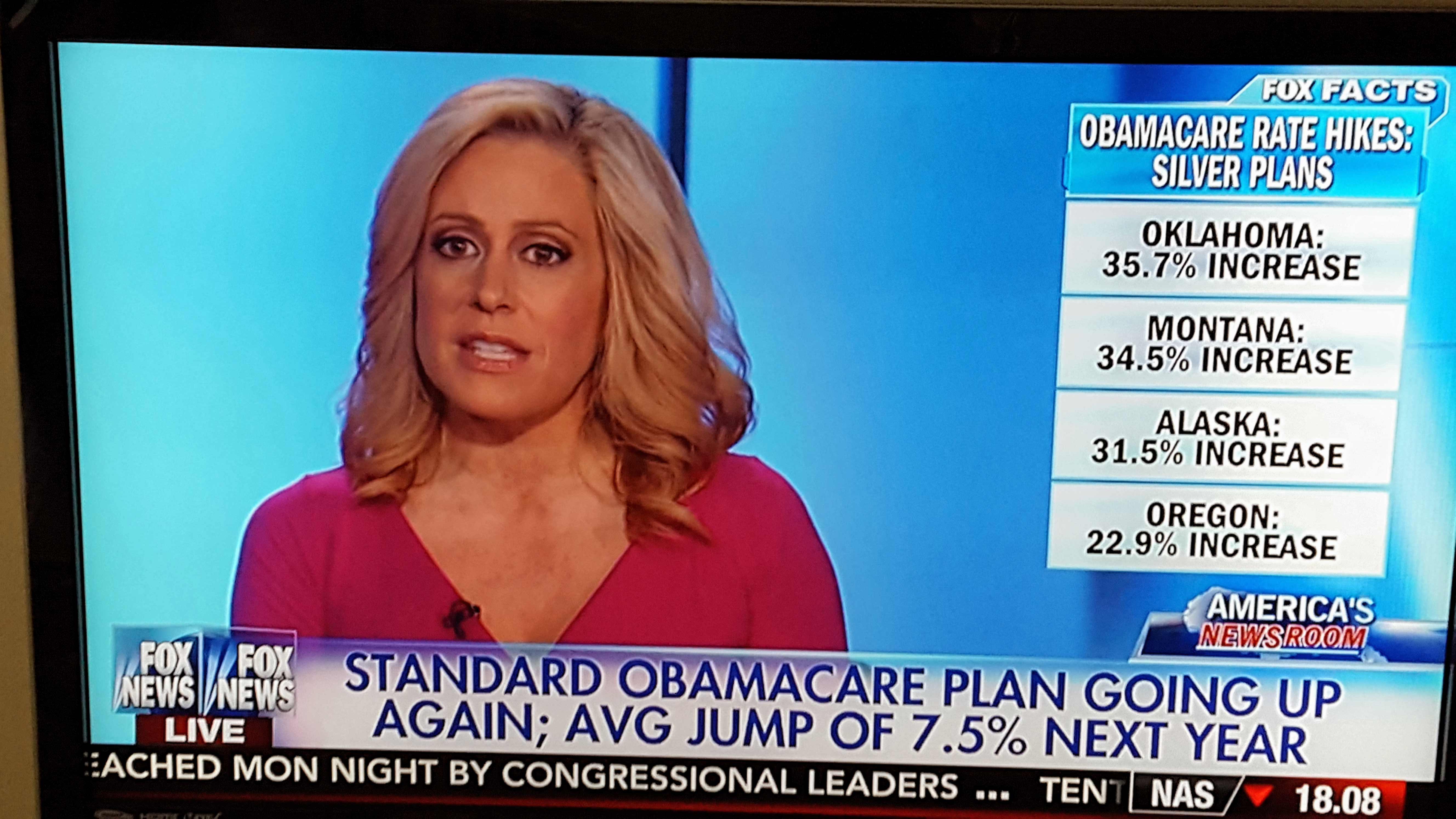


 healthandmedicareinsurance.com

Leave a comment