Medicare Part B Premiums Projected To Go Up For 2017 ― Insurance Companies Participating In Obamacare Going Down

By Kenton Henry, editor

A double whammy is expected to impact the medical insurance market for 2017. There is bad news for the consumer on both the Medicare and the Under Age 65 ends of the medical insurance spectrum.

One positive note ― more than 60 million Medicare recipients are projected to receive a cost of living adjustment in their Social Security Benefit! But if you’re part of this group … don’t spend all your new found increase in one place. It’s projected to be a minuscule 0.2 percent! What the government giveth . . .  (well, you can see this coming!) The flip side is, their monthly Part B premiums would go to $107.60 in 2017 ― a $2.70 increase.

On the other hand, 30% of recipients, which includes those new to Medicare in 2017; those who do not have their Part B premiums deducted from their Social Security Income Account in 2016; and those with higher incomes may see increases in premium to $149.00 for the lowest tax bracket; from $166.30 ― to $204.40 per month for the next; and from $380.20 to $467.20 in the highest bracket. Whether these projections―which amount to as much as a 22% increase for the highest income earners―are realized will not be known until October.

Part B premiums are extremely relevant when one has the option of remaining on one’s (or one’s spouse’s) company group health insurance beyond age 65 and into retirement and is weighing the cost of such against the cost of transitioning fully to Medicare Part A and B.

For guidance in this consideration please feel free to consult with the author / editor. *(see featured article from the Wall Street Journal below)

And for those still not age 65, or otherwise eligible for Medicare―and not covered by an employer’s group health insurance plan―your options for coverage are scheduled to diminish along with competition in the individual and family Affordable Care Act (ACA) compliant insurance market. If realized, the  proposed mergers between Anthem and Cigna and between Aetna and Humana would reduce your options. This on top of Unitedhealthcare’s (America’s largest insurer) announcement it is pulling out of 90% of its current markets in 2017. Furthermore, BlueCross BlueShield Association announced they may also decline or diminish  participation in the marketplace. Lastly (until our next episode), to cast further doubts on what options will remain for the consumer, both Aetna and Humana have announced they may pull out of the majority of their individual and family markets regardless of whether their proposed merger is approved. Humana issued a statement just last week to the effect they would be limiting coverage to 156 counties this month compared the 1,351 they participate in currently. **(please refer to feature article on Humana below)

For these reasons, and because the majority of my individual and family clients have been forced to migrate to Health Maintenance Organization plans (where their providers and treatment are rationed) I have been advising those who are business owners to transition to group health insurance where they not only have more options relative to benefits but can still benefit from Preferred Provider Organization (PPO) coverage. With the PPO plans, they have the final say on their providers and, thereby, better control the quality of their treatment. Small Business (less than 50 employees) owners should take note that if they enroll during the Small Business Open Enrollment Period (November 15th ― December 15th) they will not have to meet the 75% full-time employee participation rate or the 50% of employee premium contribution requirement. The only requirement is that a minimum of 2 full time, W-2 employees be covered on the plan. This is an excellent opportunity for small, closely held companies who want to improve their family’s health insurance but cannot afford coverage for all employees.

Again, please feel free to contact our office for further insight and guidance on this issue.

*******************************************************************

Feature Article #1

WALL STREET JOURNAL

By Anne Tergesen

Updated June 22, 2016 5:12 p.m. ET    

Nearly a third of all Medicare beneficiaries face a steep increase in their premiums next year, the result of a policy that in certain circumstances requires some beneficiaries, including higher earners, to shoulder the burden of rising costs.

The government health-care plan’s trustees projected in a report Wednesday that premiums would rise by as much as 22% for wealthier beneficiaries of Medicare Part B, which covers doctor visits and other types of outpatient care.

The projected increase results from an intersection of the rules governing Medicare and Social Security, said Tricia Neuman, senior vice president and an expert on Medicare at the Kaiser Family Foundation.

Under the Social Security Act’s “hold harmless” provision, Medicare can’t pass along premium increases greater than what most participants would receive through Social Security’s annual cost-of-living adjustment. That adjustment is expected to be just 0.2% in 2017 thanks to low inflation. As a result, Medicare couldn’t pass along any premium increase greater than the dollar increase in Social Security payments to the estimated 70% of beneficiaries who will qualify for hold harmless treatment in 2017, Ms. Neuman said.

Instead, Medicare must spread much of the projected increase in its costs across the remaining 30%. Those who are paying the standard $121.80 a month for Medicare Part B this year would be charged $149 a month in 2017 if the trustees’ predictions come to pass.

Higher earners would pay more. The trustees project individuals earning between $85,001 and $107,000 and couples earning between $170,001 and $214,000 would have their 2016 monthly premiums rise from $170.50 a person this year to about $204.40 in 2017. For those earning more than $214,000, or $428,000 for couples, the projected increase is to about $467.20 a month, from $389.00 in 2016.

This isn’t the first time there has been such a disparity in Part B premiums between Medicare recipients.

Last year, Congress staved off a 52% premium increase for Medicare beneficiaries not covered by the hold harmless provision via a deal in the budget agreement that raised premiums by 16% for them instead. Those covered by the hold harmless provision, in contrast, pay $104.90 a month—the same amount they paid in 2014 due to the fact that there was no Social Security cost-of-living increase in 2016.

The projected increase in Part B premiums affects several other groups of Medicare beneficiaries, including those who receive Medicare but have deferred or aren’t eligible for Social Security benefits. It also would apply to those who are new to Medicare in 2017 and lower-income Medicare beneficiaries whose premiums are paid by state Medicaid programs.

In the latter case, the increase would be paid by Medicaid, Ms. Neuman said.

Paul Van de Water, senior fellow at the nonprofit Center on Budget and Policy Priorities, said the final Social Security cost-of-living adjustment won’t be known until October. If inflation rises by more than the trustees expect between now and then, it could “reduce the spike in the premium” for those who aren’t held harmless, he said.

Acting Administrator for the Centers for Medicare and Medicaid Services Andy Slavitt said at a news conference Wednesday, “We will continue to monitor the data and explore administrative options as needed.”

The Medicare trustees are projecting that the base Medicare Part B premium will reset for everyone at $124.40 a month in 2018, because they expect higher Social Security cost-of-living increases.

Medicare covered 55 million people last year, according to the trustees’ report. Part B covered nearly 51 million. In 2017 Medicare is expected to have 58.7 million total participants and 53.5 million in Part B.

******************************************************

Feature Article # 2

Humana beats 2Q forecasts, details ACA-related scale back

Tom Murphy, AP Health Writer

Published 9:09 am, Wednesday, August 3, 2016

Humana beat second-quarter earnings expectations and reaffirmed its forecast for 2016, even as the health insurer set aside an additional $208 million to cover expenses in its individual, commercial coverage.

The company also said Wednesday it was scaling back that individual business for next year and would only offer it in 156 counties, compared to 1,351 this year. The insurer also said it will sell coverage on Affordable Care Act individual exchanges in 11 states next year, down from 15 this year.

Humana, based in Louisville, Kentucky, provides individual coverage for nearly 500,000 people through the exchanges. It covers an additional 200,000 individual customers off the exchanges, a small slice of its total medical membership of 14.2 million.

Other major insurers like UnitedHealth Group and Anthem also have recently detailed struggles with coverage they sell on the ACA’s state-based exchanges, which have helped millions of consumers gain insurance since they opened for enrollment in the fall of 2013. Aetna, which is trying to buy Humana, said Tuesday that it cancelled its exchange expansion plans for 2017 and was taking a hard look at the markets in which it is currently participating.

Insurers have been struggling with higher-than-expected claims on the exchanges and lower-than-expected support from government programs, among other issues.

Humana also is one of the nation’s largest providers of Medicare Advantage plans, which are privately run versions of the government’s Medicare program for people over age 65 or disabled. The company said Wednesday that its core businesses remained strong in the second quarter.

Overall, Humana earnings plunged 28 percent to $311 million compared to last year’s quarter, when it booked a $267 million gain from a business sale.

Earnings, adjusted for non-recurring costs and amortization costs, came to $2.30 per share.

Analysts expected, on average, earnings of $2.22 per share, according to Zacks Investment Research.

The health insurer posted revenue of $14.01 billion in the period, which topped the average Wall Street forecast for $13.63 billion.

The company also said Wednesday that it still expects full-year earnings to total at least $9.25 per share.

Shares of Humana edged up 52 cents to $170.09 Wednesday morning while broader indexes were flat.

Humana shares have decreased 5 percent since the beginning of the year, while the Standard & Poor’s 500 index has climbed 5.5 percent.

Go back

Your message has been sent

Warning
Warning
Warning
Warning

Warning.

https://healthandmedicareinsurance.com

https://allplanhealthinsurance.com

https://thewoodlandstxhealthinsurance.com

MEDICARE RECIPIENTS DODGE A BULLET WHILE OBAMACARE INSUREDS PREPARE TO TAKE ONE!

By D. Kenton Henry

Perhaps a storm would be a better analogy but 2016 will deliver something more than a mild tropical depression to the coast of the “Individual and Family” health insurance market. At the same―the Cat 3 (minimum) hurricane projected to slam the Senior market of Medicare recipients appears to have been diverted. For now.

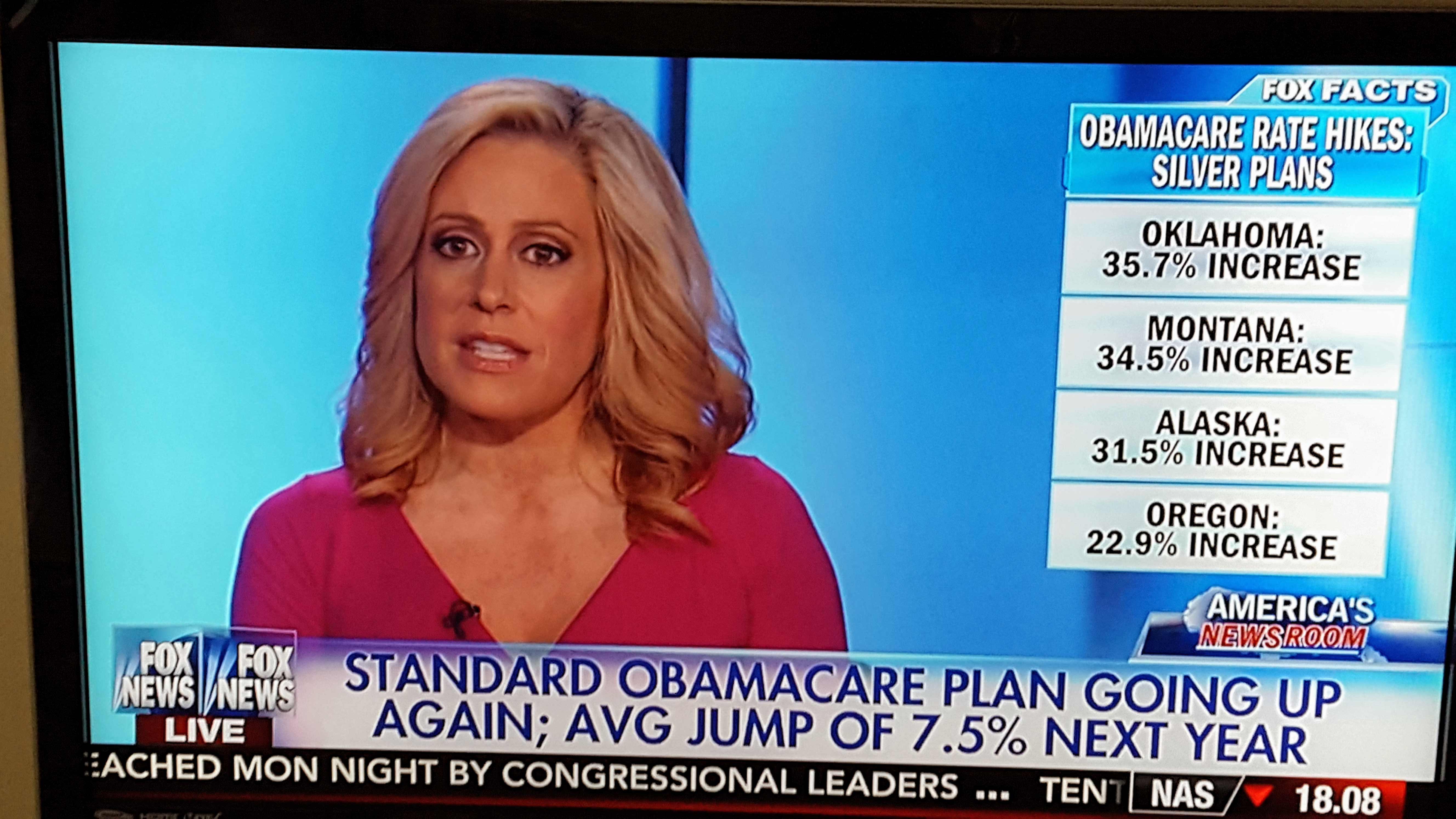
As we enter the third year of enrollment in health insurance plans compliant with the Affordable Care Act (ACA) the “Affordable” aspect of care or―more accurately―the cost of protecting oneself from the cost of health care―seems elusive and more and more a case of misrepresentation. As I have said many times in the past, if you qualify for a subsidy of your health insurance premiums you may find your options affordable. However, depending on where you live, you will surely be upset with the increasing cost of health insurance. 70% of all Obamacare members are enrolled in a Silver Plan. The Department of Health and Human Services (DHS), which oversees enforces the Act and oversees the health insurance industry, has designated the second lowest cost Silver Plan of any insurance company to be the default plan one must select in order to maximize the benefit of any subsidy. This could include a reduction in not only one’s premium but their deductibles and co-pays. As Fox News and the Washington Post report (see featured article below) the cost of these plans will rise by a national average of 7.5%. States such as Oklahoma will see an increase of 37.5%!

ACA ENROLLMENT 2016 2

In some states it is much worse.

ACA ENROLLMENT 2016 1

To add insult to injury many insurance companies, such as BlueCross BlueShield of Texas, have taken such losses―in spite of skyrocketing premiums―they have announced they are eliminating the Preferred Provider Organization (PPO) network option for their plans and member benefit. The only option will be to select a Health Maintenance Organization (HMO) network option wherein the company can ration your providers and treatment. While the young or otherwise very healthy may find this option acceptable, those of us who are older or dealing with existing illnesses or injuries are certain to be upset by this development. The insurance companies seem to be in agreement on the viability of PPOs and explain any premium increase necessary to assure they even break even on a PPO policy would be beyond the increase limit set by Obamacare. As such, it would therefore not be approved by their state insurance commissioner. So the question remains: what will your personal network and benefit options be for 2016 and what will they cost?

Virtually all insurance companies are keeping the answers close to their vest until this Sunday, November 1, the first day of OPEN ENROLLMENT wherein one may choose a health insurance plan for 2016. Enrollment will remain open until January 31st. Those without a plan at that time will be locked out for the remainder of the year and will pay a penalty equal to the higher of two amounts:

2.5% of your yearly household income (Only the amount of income above the tax filing threshold, about $10,150 for an individual in 2014, is used to calculate the penalty.) The maximum penalty is the national average premium for a Bronze plan

$695 per person ($347.50 per child under 18) The maximum penalty per family using this method is $2,085.

A banner follows which, as of Sunday, November 1st, you may click on and by simply entering your birth date, zip code and tobacco usage, obtain ALL your health insurance options from each and every insurance company issuing 2016 coverage in your state. It will also allow you to calculate what subsidy, if any, and enable you (if you choose) to log directly into the federal marketplace to acquire it and your insurance plan. If you have questions, as you most surely will, do not hesitate to contact me via my contact information via the link or below.

CLICK ON THIS BANNER TO OBTAIN 2016 HEALTH INSURANCE QUOTES:

Relative to Medicare recipients, it would appear a planned increase in the 2016 Medicare Part B premium and deductible has been taken off the table for the time being. The increase would have resulted in a huge spike in what higher income recipients and new enrollees in Part B Out-Patient coverage would pay in premium. The proposed premium increase would have been as presented here:

Income Limits, Medicare Part B Premiums for 2016

Single Married 2015 2016 Held Harmless 2016 Not Held Harmless
$85,000 or less $170,000 or less $104.90 $104.90 $159.30
$85,001 to $107,000 $170,001 to $214,000 $146.90 $223.00
$107,001 to $160,000 $214,001 to $320,000 $209.80 $318.60
$160,001 to $214,000 $320,001 to $428,000 $272.70 $414.20
Above $214,000 Above $428,000 $335.70 $509.80

The threat and legislation which averted this is described in detail in The Fiscal Times article below. As of today, it is still unclear to this editor whether the increase in the calendar year deductible has also been averted.

KENTON AT CAPITOL 2 (2)

Editor, Broker, Agent ― D. Kenton Henry

Office: 281.367.6565

Cell (call or text): 713.907.7984

http://allplanhealthinsurance.com

http://thewoodlandstxhealthinsurance.com

Blog: http://healthandmedicareinsurance.com
*******************************************************************

FEATURED ARTICLES:

Health & Science

THE WASHINGTON POST

26 October 2015

2016 Affordable Care Act insurance rates are climbing

By Amy Goldstein October 26

The prices for a popular and important group of health plans sold through the federal insurance exchange will climb by an average of 7.5 percent for the coming year, a jump nearly four times bigger than a year ago, according to new government figures.

The rate increase for 2016 compares with average growth of 2 percent, from 2014 to this year, in the monthly premiums for a level of coverage that serves as the benchmark for federal subsidies that help most consumers buying coverage under the Affordable Care Act.

A “snapshot” of insurance rates, released Monday by the Department of Health and Human Services, also shows that the rate increases for next year vary substantially around the country. Although there are exceptions, more populous states and metropolitan areas tend to have more modest premium increases for the coming year than smaller areas. 

The changes for next year have a wide range — from premium increases averaging 35 percent in Oklahoma and Montana to a decrease of nearly 13 percent in Indiana.

The analysis is based on hundreds of health plans sold in local markets within 37 states that use HealthCare.gov, the federal online insurance marketplace. It excludes plans in other states that have created separate ACA insurance marketplaces. The rates reflect the prices of the second-least expensive health plan in each market for 2016 in a tier of coverage known as silver. ACA health plans are divided into four tiers, all named for metals, depending on the amount of customers’ care that they cover. Silver plans have proven by far the most popular. Officials at HHS issued the analysis as less than a week remains before the start on Nov. 1 of a third open-enrollment season for Americans eligible to sign up for health plans under the insurance marketplaces created by the 2010 health-care law. The exchanges are intended for people who cannot get affordable health benefits through a job.

In their analysis, federal officials contend that the health plans sold through the exchanges will be affordable to people willing to shop for the best rates. The cost to consumers, HHS officials emphasize, is cushioned by the fact that nearly nine in 10 are eligible for tax credits.

Taking the subsidies into account, nearly four in five people who already have gotten insurance through these marketplaces will have access for 2016 to a health plan for which they could pay no more than $100 in monthly premiums, the analysis found. The analysis does not address other costs to consumers, such as co-payments and deductibles, which tend to be more expensive in ACA health plans than in employer-based health benefits.

The figures in the analysis reinforce a theme that Obama administration officials introduced last year and have revived as the third sign-up period approaches: the usefulness of researching the best and most affordable coverage, even if it means switching insurance from year to year. “If consumers come back to the Marketplace and shop, they may be able to find a plan that saves them money and meets their health needs,” Kevin Counihan, the HHS official who oversees the health exchanges, said in a statement.

The new figures show that existing customers who went back last fall to HealthCare.gov and picked a different plan at the same level of coverage saved an average of nearly $400 in premiums over the course of this year. Slightly fewer than one-third of those who bought such coverage for a second time switched health plans, according to the analysis. During this open enrollment, Obama administration officials are striving both to attract existing customers again and to ferret out Americans eligible for the exchanges who remain uninsured even though the law requires them to have coverage. Although many consumers can be largely shielded from rate jumps through subsidies and shopping around, the increases ratchet up the government’s expenditures on the tax credits that the law provides, health policy analysts point out.

Analysts have expected that premiums for the coming year would grow more rapidly than they did for 2015. “This is the first year that insurers actually have a full year of experience with how much care people use,” said Larry Levitt, senior vice president of the Kaiser Family Foundation, a health policy organization. “In the first two years of the program, insurers were essentially guessing.” In addition, Caroline Pearson, senior vice president at Avalere, a health-care consulting firm, said that, as some health plans have attracted a significant share of customers, “the need to price really low diminishes a little bit.” Clare Krusing, a spokeswoman for America’s Health Insurance Plans, the industry’s main trade group, said that “averages don’t tell the whole story” and that insurance rates hinge on “location and the cost of providing care to individuals in particular markets.” In particular, Krusing said, last year was “a record-breaking year for prescription drug prices. That trend is likely to continue.”

***********************************

Seniors Exhale as Congress Blocks Huge Medicare Increase

By Eric Pianin October 27, 2015 3:17 PM

Responding to pressure from seniors’ and labor groups as the 2016 campaign season heats up, congressional leaders and the White House have blocked a huge, 50 percent increase in the Medicare Part B premium for nearly one third of the 50 million elderly Americans who depend on the program for health services.

The bipartisan solution will block all but a tiny fraction of the premium increase. It is contained in the two-year budget and debt ceiling bill negotiated by House Speaker John Boehner (R-OH), House Minority Leader Nancy Pelosi (D-CA) and the White House and that awaits ratification by the two chambers – likely by the end of this week.

Related: Millions Facing a Hefty Increase in Medicare Premiums in 2016

The threatened sharp premium increase – reported back in August by The Fiscal Times – was triggered by a quirk in federal law that penalizes wealthier Medicare beneficiaries, newcomers to the program and lower income Americans with complicated chronic health problems. It kick in any time the Social Security Administration fails to approve an annual cost-of-living adjustment – as will be the case next year.

Medicare Part B and the Social Security trust fund are interconnected, and most seniors on Medicare have their monthly premiums deducted from their Social Security checks. Because the federal law “holds harmless” about 70 percent of Medicare recipients from premium increases to cover unexpected increases in healthcare costs, the remaining 30 percent of Medicare Part B beneficiaries suffer the consequences by being made to pay higher premiums.

Without intervention by Congress, roughly 15 million seniors and chronically ill people currently claiming both Medicare and Medicaid coverage would have seen their premiums increase from $104.90 per month to $159.30 for individuals, according to Medicare actuaries. The actuaries also predicted an increase in the annual deductible for Part B of Medicare, from $147 in 2015 to $223 next year.

Related: Social Security Ruling Drives Up Medicare Costs for Millions

Estimates of the cost of legislation to blunt or block a premium increase have ranged from $7.5 billion to $10 billion. Under the budget agreement unveiled late last night, that cost will be covered by a loan of general revenue from the U.S. Treasury to the Supplemental Medical Insurance Trust Fund.

In order to repay that loan, the 15 million people who are not subject to the “hold harmless” protection will be required to pay an additional $3 a month in premiums – a token amount — until the loan is repaid years from now, according to a House budget document describing the deal. Medicare beneficiaries who currently pay higher income-related premiums would pay more than $3, based on their income levels.

If there is no Social Security cost of living adjustment increase for 2017, this provision will apply again.

Go back

Your message has been sent

Warning
Warning
Warning
Warning

Warning.

http://Allplanhealthinsurance.com

http://TheWoodlandsTXHealthInsurance.com

Cost of Obamacare Borne On The Back Of Seniors

SENIORS ANGRY 1

To say that President Obama is not an enthusiastic backer of the two Medicare programs that offer seniors private insurance options would be something of an understatement.

Over the years, Obama has repeatedly derided Medicare Advantage — the program that lets seniors enroll in subsidized, private insurance. He once called it “wasteful,” and said it amounted to “giveaways that boost insurance company profits but don’t make (seniors) any healthier.”

Obama has been equally harsh when it comes to Medicare Part D — the prescription drug benefit President Bush signed into law that relies on privately run plans.

In his 2006 book, “The Audacity of Hope,” Obama blasted the program, saying it “somehow managed to combine the worst aspects of the public and private sectors.” As president, he said it gave overly generous “taxpayer subsidies to prescription drug companies.”

Both programs, it turns out, have been wildly popular with seniors and, by most measures, big successes. But Obama nevertheless appears determined to undermine them with sharp cuts in payments and sweeping new regulations.

Started back in 1997 — and initially called Medicare+Choice — the Medicare Advantage program pays private insurers a set amount per enrollee to provide comprehensive benefits and anything else they can afford to offer.

The idea was that private insurers could better co-ordinate care and manage health costs than the old fee-for-service Medicare, and so provide more comprehensive benefits.

While enrollment in these private plans was flat for the first several years, it has skyrocketed since 2005, to the point where almost one in three seniors are covered by a private health plan. As long as it is affordable, this editor considers Medicare Supplement the ideal way for a Medicare recipient to be covered for medical expenses. Not because selection of Supplement Plan F or G will cover all or virtually all of your expenses but because ALL Medicare Supplement options allow you to visit any doctor, hospital or medical provider that sees Medicare Patient. This as opposed to Medicare Advantage Plans most of which have evolved to significantly limiting your choice of providers. This being said, Medicare Advantage has been a savior to those who simply cannot afford Medicare Supplement. And contrary to Obama’s claim, seniors selecting Medicare Advantage tend to get better quality health care than those in traditional Medicare.

Critics, however, point to studies showing that the government pays Medicare Advantage more per enrollee than it would cost if these seniors had enrolled in the old Medicare program.

Obama tried to remedy this by cutting Medicare funding by $716 billion over the next ten years with payments to Medicare Advantage totaling $200 billion. The purpose of which is to help pay for ObamaCare (while providing “bonus” payments to plans that score high on a quality rating). An official analysis from Medicare’s actuary concluded, however, that such cuts would drive millions seniors out of their Advantage plans and back into the government-run program.

Recognizing political risks of these payment cuts, the administration put them off until AFTER the presidential elections, shoveling $8 billion into a bogus “demonstration project” that offset almost all the scheduled Medicare Advantage cuts implemented in 2012.

Question: What are your thoughts about President Obama’s cuts to the Medicare Advantage and Part D Prescription Drug Programs?

Admin. – Kenton Henry

http://TheWoodlandsTXHealthInsurance.com

*******************************************************************

FEATURE ARTICLE:

THE HILL

February 25, 2014, 10:58 am

GOP leaders to HHS: Call off Medicare changes

By Elise Viebeck

Republican Senate leaders criticized the Obama administration Tuesday for proposed changes to Medicare Advantage (MA) and Part D they say would weaken the two programs.

Led by Minority Leader Mitch McConnell (R-Ky.), the lawmakers called on Health and Human Services (HHS) Secretary Kathleen Sebelius to suspend proposed cuts to Medicare Advantage and reforms in Part D that would allow regulators to participate in negotiations between insurance companies and pharmacies for the first time.

“Unlike ObamaCare, the Medicare prescription drug benefit is wildly popular and it has cost less than initial projections,” the letter stated.

“At a time when HHS is struggling on basic implementation tasks on many fronts, we cannot understand the logic behind the department’s interest in further undermining one of the few success stories under its purview.”

The administration argues that cuts in Medicare Advantage would reduce waste within the program and bring its per-patient funding in line with traditional Medicare, which currently receives less money on average.

In Part D, federal health officials say regulators need new authority to ensure the market for prescription drugs works well for seniors.

The proposed rules would also open drug plans’ preferred networks to a wider range of pharmacies, limit plan bids within a region and remove “protected class” designations for certain types of drugs.

But Republicans say the changes will harm Medicare Advantage beneficiaries and potentially raise premiums on Part D plans or force seniors out of their current coverage.

Both issues are rearing their heads in the midterm elections, as the GOP seeks to broaden its healthcare attacks to include more than ObamaCare.

Tuesday’s letter to Sebelius was signed by McConnell, GOP Whip John Cornyn (Texas), GOP Conference Chairman John Thune (S.D.), GOP Policy Committee Chairman John Barrasso (Wyo.), Conference Vice Chair Roy Blunt (Mo.) and National Republican Senatorial Committee Chairman Jerry Moran (Kan.).

Go back

Your message has been sent

Warning
Warning
Warning
Warning

Warning.

http://TheWoodlandsTXHealthInsurance.com

http://allplanhealthinsurance.com

Who Needs the Healthcare.gov Website?

HEALTHCARE DOT GOV 2

Op-ed by Kenton Henry

If the administration and main stream media will not tell you–I will:

You can go through me–or any licensed health insurance agent or broker to acquire health insurance. NOW. And this is whether you qualify for a subsidy or not. And, importantly, there will be no, I repeat – $0 difference in your cost (premium) for doing so vs. the government website Healthcare.gov or a private insurance company’s. Period. Now where have you heard “Period” before and it turned out to be true? Well . . . in this case it is.

There is only ONE reason to go to the still basically inoperable, security in doubt, aforementioned federal government health insurance website known as The Marketplace:

1) You qualify for a subsidy of your 2014 health insurance premium and you would like to take advantage of that subsidy as you pay your premiums. I.e., you qualify and would like the premium you pay to your insurance company to be reduced by the amount of your subsidy as you pay the premium. (This as opposed to paying the gross premium (cost before your subsidy is applied) then declaring your subsidy on your 2014 tax return and having your tax liability reduced accordingly.)

If you this does not describe you – there is absolutely no reason to go to healthcare.gov!

Neither do you need to go through a state appointed, federally funded Navigator, hired by the State and required to complete only 20 hours of online education and be subjected to no background check. Why replicate and risk the possible insecurity of your personal information which includes your address; birth date; social security number and reported income by going through someone not even vetted by the Department of Health and Human Services (HHS) or the Center for Medicare Services (CMS)? As the Secretary for HHS, Kathleen Sebelius, admitted under oath and questioning from Texas Senator John Cornyn during Congressional, hearings just last week – “It is possible (for a convicted felon to be hired as a Navigator and take your personal and vital information).”

This begs the question: Why is the administration and main stream media not advertising, and barely mentioning, that a health insurance shopper can go through a licensed and vetted insurance agent who has passed a background check with every company with whom they are appointed and do so at no additional cost? Or that the shopper can then have all the expertise that that agent’s time in the industry (27 years in my case) brings to bear on their needs and situation? Or how about a “go to” advocate in their behalf they can call whenever there is an issue relating to claims; rates or general service related issues such as changes in address or dependents. This as opposed to a different unknown service rep at the end of a toll free number each time they call an insurance company directly?

I will let you speculate on the answers to these questions but (while the purpose of this blog is to educate the follower on issues relating to health and Medicare insurance) indulge me while I for once engage in a little shameless self-promotion on behalf of myself and all licensed agents and brokers:

If you reside in Texas; Indiana; or Ohio – please visit my website at http://allplaninsurance.com and click on the bold red “Get A Quote!” button on the home page or–better yet–call me toll free @ 800.856.6556 and let’s have an intelligent dialogue about your true wants and needs relative to coverage and then get some meaningful quotes and information for you. All without submitting the equivalent of a home mortgage application!

If you reside in any other state – do yourself a favor and call a well recommended licensed health insurance agent or broker in your community.

Again, call me even if you do qualify for a subsidy. I can help you just the same and–as without a subsidy–your cost for insurance will be the same. If you do not want to take the subsidy now but would rather take it on your 2014 tax return (when you actually know what your income will have been) we can apply for you now and have your coverage issued immediately.

If you want the subsidy applied upfront, to reduce the premium you pay each month, we will still have to enter the healthcare.gov website. But we will do so only after we have obtained your gross quotes via my website. I know the formula and can do a pretty fair job of estimating your net premium (after your subsidy is applied). If this scenario describes you,  as the federal website is still inoperable, we should wait and see if HHS and CMS have the site fixed and secure by November 30th as promised. Let’s keep our fingers crossed and–if so–we should sail (wink, wink) through the application and have your coverage issued by January 1. But remember, if all government deadlines remain as now, we will need to complete your application no later than December 15th!

Admin. – Kenton Henry

Go back

Your message has been sent

Warning
Warning
Warning
Warning

Warning.

http://allplanhealthinsurance.com

That Giant “Sucking Sound” Is Your Providers Exiting Your Preferred Provider Network!

Op-Ed by Kenton Henry, Administrator

I have just completed my Affordable Care Act (ACA) training and certification in order to offer ACA compliant plans to my clients, and the public in general, beginning October 1. However, even in this final hour with only eight days until the new plans are to be available – the insurance companies have still not released the premiums the insure will pay for these options. “Any day now” is what I am being told. However, I will share with you a thing or two I do know based on what I have studied.

Most of it came as no surprise to me. One major company (whose name I cannot divulge as the information they provided was yet to be approved by the Department of Health and Human Services (HHS) who will be in charge of the Federal-Run Exchange–Marketplace–in Texas, Indiana and Ohio–where I have clients) previewed plans. The lowest plan deductible available was $1,500. All plans will be limited to a maximum out-of-pocket of $6,350 per individual and $12,700 per family. While older people will probably find a $1,500 deductible acceptable in terms of affordability, I am not certain how twenty year olds are going to feel about that. I certainly don’t think that and higher deductible options will be an incentive for them to enroll even with the convenience of doctor’s office co-pays and prescription drug cards. I can almost guarantee you that unless they receive a subsidy – they won’t be signing up.

Beyond that, the benefits sounded perfectly acceptable until I came to the part about “special care centers”. It turns out, at least with this company (which happens to be a very large, conspicuous player in the Texas health insurance market we’ll just refer to as company XYZ)when you are in need of a special surgical procedure such as a hip or knee replacement: “You may only receive one by going to an ‘XYZ Approved Hip and Knee Replacement Center'”. I have had a hip replacement and had it at the relatively young age of 49 and I don’t know about you but I didn’t want just anyone performing mine. I still had dreams of remaining very active and athletic to the point of partaking in very aggressive martial arts training among other activities such as mountain biking. Fortunately, I have been able to do so but would I had I gone to some “Preferred” (discount) provider who agreed to accept lesser fees for greater patient volume?

To underscore my concern relative to an obvious attempt to ration our selection of providers, if not the procedures themselves, I received an email today informing me the primary Medicare Advantage Plan I enrolled my clients in last year is having an inordinate number of Primary Care Physicians drop out of its network and that I should be prepared to re-shop their Advantage Plan. The problem is, if this very large nationally recognized plan is experiencing this kind of “provider drop-out” – what can I expect from smaller companies with less capital? Again, I have had to delete their name as the information was proprietary and for “agent use only” but the letter they sent their clients is attached below. If you are one of my current Medicare clients I placed with this plan – you may have already read this. Otherwise, I apologize for breaking the news to you like this.

Our feature article appeared in today’s New York Times (September 23rd) and describes how patient options will be restricted as a result of the ACA. Think about it. If the insurance companies have no choice in who they insure and must cover any and all pre-existing conditions . . . and if they are informed by the Department of Health and Human Services their profit and, more specifically, the ratio of claims they must pay relative to the premium they take in, i.e., 80% to 20% – how else can they manage losses except to restrict access to procedures, providers and what your providers are paid? Something had to give.

****************************************************************

Letter to Medicare Advantage Clients

Update to Physician Network Changes

At  ————- , we manage the physician networks for our plans to help meet the evolving needs of health care consumers. This includes adjusting the size and composition of our physician network as we strive to meet the specific needs of Medicare Advantage and/or Medicaid plan members.

As a result, in the coming months, select physicians for one or more of your Medicare Advantage and/or Medicaid members will no longer participate in our Medicare and Medicaid plan networks. Please note: these changes do not affect members enrolled in Medicare Supplement or commercial plans.

Member transitions
We know that members are impacted when we make changes to our network, and are taking steps to support members with smooth transitions to new care providers as appropriate to help ensure continuity of care.

We will be sending letters to affected members to notify them of care providers that will no longer participate in the —————– Medicare and Medicaid plan network as early as January 1, 2014 (network changes for New Jersey Medicaid plans have an October, 2013 effective date.) When appropriate, letters will suggest new care providers for members to consider for their ongoing care. Members are encouraged to call the number on their member ID card if they need help with identifying a new care provider.

In some plans, members may choose to continue seeing their current care providers on an out-of-network basis, in accordance with their out-of-network benefits. These changes have no impact on plan benefits, and members undergoing a treatment plan will be able to continue seeing out-of-network care providers consistent with federal requirements.

Provider directories
These network changes will be reflected in our online provider directory as of October 1, 2013. It is highly encouraged to refer to the online provider directory in all cases to confirm care provider network and panel status for all potential enrollees, as changes may not be reflected in previously printed and/or downloaded directories.

It is important to note that when searching for an in-network provider on the online directory, a provider’s “Accepting New Patients” status must indicate “OPEN“, even if the potential enrollee is an existing patient.

Talking points for member inquiries
Please refer to the Physician Network Changes – Frequently Asked Questions for Member Discussions that provide additional information and may be used in the event you receive any member inquiries.

****************************************************************

Lower Health Insurance Premiums to Come at Cost of Fewer Choices

By ROBERT PEAR

Published: September 22, 2013

WASHINGTON — Federal officials often say that health insurance will cost consumers less than expected under President Obama’s health care law. But they rarely mention one big reason: many insurers are significantly limiting the choices of doctors and hospitals available to consumers.                        

From California to Illinois to New Hampshire, and in many states in between, insurers are driving down premiums by restricting the number of providers who will treat patients in their new health plans.

When insurance marketplaces open on Oct. 1, most of those shopping for coverage will be low- and moderate-income people for whom price is paramount. To hold down costs, insurers say, they have created smaller networks of doctors and hospitals than are typically found in commercial insurance. And those health care providers will, in many cases, be paid less than what they have been receiving from commercial insurers.

Some consumer advocates and health care providers are increasingly concerned. Decades of experience with Medicaid, the program for low-income people, show that having an insurance card does not guarantee access to specialists or other providers.

Consumers should be prepared for “much tighter, narrower networks” of doctors and hospitals, said Adam M. Linker, a health policy analyst at the North Carolina Justice Center, a statewide advocacy group.

“That can be positive for consumers if it holds down premiums and drives people to higher-quality providers,” Mr. Linker said. “But there is also a risk because, under some health plans, consumers can end up with astronomical costs if they go to providers outside the network.”

Insurers say that with a smaller array of doctors and hospitals, they can offer lower-cost policies and have more control over the quality of health care providers. They also say that having insurance with a limited network of providers is better than having no coverage at all.

Cigna illustrates the strategy of many insurers. It intends to participate next year in the insurance marketplaces, or exchanges, in Arizona, Colorado, Florida, Tennessee and Texas.

“The networks will be narrower than the networks typically offered to large groups of employees in the commercial market,” said Joseph Mondy, a spokesman for Cigna.

The current concerns echo some of the criticism that sank the Clinton administration’s plan for universal coverage in 1993-94. Republicans said the Clinton proposals threatened to limit patients’ options, their access to care and their choice of doctors.

At the same time, House
Republicans are continuing to attack the new health law and are threatening to hold up a spending bill unless money is taken away from the health care program.

Dr. Bruce Siegel, the president of America’s Essential Hospitals, formerly known as the National Association of Public Hospitals and Health Systems, said insurers were telling his members: “We don’t want you in our network. We are worried about having your patients, who are sick and have complicated conditions.”

In some cases, Dr. Siegel said, “health plans will cover only selected services at our hospitals, like trauma care, or they offer rock-bottom payment rates.”

In New Hampshire, Anthem Blue Cross and Blue Shield, a unit of WellPoint, one of the nation’s largest insurers, has touched off a furor by excluding 10 of the state’s 26 hospitals from the health plans that it will sell through the insurance exchange.

Christopher R. Dugan, a spokesman for Anthem, said that premiums for this “select provider network” were about 25 percent lower than they would have been for a product using a broad network of doctors and hospitals.

Anthem is the only commercial carrier offering health plans in the New Hampshire exchange.

Peter L. Gosline, the chief executive of Monadnock Community Hospital in Peterborough, N.H., said his hospital had been excluded from the network without any discussions or negotiations.

“Many consumers will have to drive 30 minutes to an hour to reach other doctors and hospitals,” Mr. Gosline said. “It’s very inconvenient for patients, and at times it’s a hardship.”

State Senator Andy Sanborn, a Republican who is chairman of the Senate Commerce Committee, said, “The people of New Hampshire are really upset about this.”

Many physician groups in New Hampshire are owned by hospitals, so when an insurer excludes a hospital from its network, it often excludes the doctors as well.

David Sandor, a vice president of the Health Care Service Corporation, which offers Blue Cross and Blue Shield plans in Illinois, Montana, New Mexico, Oklahoma and Texas, said: “In the health insurance exchange, most individuals will be making choices based on costs. Our exchange products will have smaller provider networks that cost less than bigger plans with a larger selection of doctors and hospitals.”

Premiums will vary across the country, but federal officials said that consumers in many states would be able to buy insurance on the exchange for less than $300 a month — and less than $100 a month per person after taking account of federal subsidies.

“Competition and consumer choice are actually making insurance affordable,” Mr. Obama said recently.

Many insurers are cutting costs by slicing doctors’ fees.

Dr. Barbara L. McAneny, a cancer specialist in Albuquerque, said that insurers in the New Mexico exchange were generally paying doctors at Medicare levels, which she said were “often below our cost of doing business, and definitely below commercial rates.”

Outsiders might expect insurance companies to expand their networks to treat additional patients next year. But many insurers see advantages in narrow networks, saying they can steer patients to less expensive doctors and hospitals that provide high-quality care.

Even though insurers will be forbidden to discriminate against people with pre-existing conditions, they could subtly discourage the enrollment of sicker patients by limiting the size of their provider networks.

“If a health plan has a narrow network that excludes many doctors, that may shoo away patients with expensive pre-existing conditions who have established relationships with doctors,” said Mark E. Rust, the chairman of the national health care practice at Barnes & Thornburg, a law firm. “Some insurers do not want those patients who, for medical reasons, require a broad network of providers.”

In a new study, the Health Research Institute of PricewaterhouseCoopers, the consulting company, says that “insurers passed over major medical centers” when selecting providers in California, Illinois, Indiana, Kentucky and Tennessee, among other states.

“Doing so enables health plans to offer lower premiums,” the study said. “But the use of narrow networks may also lead to higher out-of-pocket expenses, especially if a patient has a complex medical problem that’s being treated at a hospital that has been excluded from their health plan.”

In California, the statewide Blue Shield plan has developed a network specifically for consumers shopping in the insurance exchange.

Juan Carlos Davila, an executive vice president of Blue Shield of California, said the network for its exchange plans had 30,000 doctors, or 53 percent of the 57,000 doctors in its broadest commercial network, and 235 hospitals, or 78 percent of the 302 hospitals in its broadest network.

Mr. Davila said the new network did not include the five medical centers of the University of California or the Cedars-Sinai Medical Center near Beverly Hills.

“We expect to have the broadest and deepest network of any plan in California,” Mr. Davila said. “But not many folks who are uninsured or near the poverty line live in wealthy communities like Beverly Hills.”

Daniel R. Hawkins Jr., a senior vice president of the National Association of Community Health Centers, which represents 9,000 clinics around the country, said: “We serve the very population that will gain coverage — low-income, working class uninsured people. But insurers have shown little interest in including us in their provider networks.”

***************************************************************************************************

Go back

Your message has been sent

Warning
Warning
Warning
Warning

Warning.

http://allplanhealthinsurance.com

Medicare Recipients Get Short End of the “Affordable Care Act” Stick

Op-Ed

Admin. – Kenton Henry


It seems to me, Medicare recipients are forfeiting the most benefit and assuming the greatest liability as a direct result of the Patient Protection and Affordable Care Act (ACA) of any group of Americans. This opinion is based, in part, on two traps recipients can fall into which can significantly compromise their financial and physical well-being. To appreciate them, you must first understand:


What is this new Center for Medicare Services Re-admission program and what is the purpose of it?


The Affordable Care Act of 2010 requires HHS to establish a readmission reduction program. This program, effective October 1, 2012, was designed to provide incentives for hospitals to implement strategies to reduce the number of costly and unnecessary hospital readmissions. CMS defines a readmission in this context as “an admission to a subsection(d) hospital within 30 days of a discharge from the same or another subsection(d) hospital.” Subsection(d) hospitals, per the Social Security Act, include short term inpatient acute care hospitals excluding critical access, psychiatric, rehabilitation, long term care, children’s, and cancer hospitals. http://www.acep.org/Legislation-and-Advocacy/Practice-Management-Issues/Physician-Payment-Reform/Medicare-s-Hospital-Readmission-Reduction-Program-FAQ/


What this gets down to is–if a hospital readmits a patient within 30 days of a prior hospitalization–they pay a penalty. What is the Center’s motivation? We already know that last year the administration authorized the transfer of approximately $716 billion from Medicare to fund Obamacare. Medicare is projected to be on the path to insolvency around 2023. A Medicare recipient (or his private insurance plan) is charged a $1,184 deductible per hospital stay for each medical condition or for the same medical condition separated by 60 days or more. Therefore, if a patient is readmitted within 30 days for the same medical condition – no deductible is due. Medicare pays the full cost for the stay. On track to be broke (and having shifted dollars to those under the age of 65 in need of health care) Medicare has created a disincentive to readmit patients by fining the hospital when this takes place. The objective is to encourage alternative methods and venues for treatment.

 
If you are, or will someday be, a Medicare recipient – how do you feel about this? If you think you really would like to be more closely monitored because of your fragile heart – do you really want your provider saying, “There is a pill for that!” and sending you home with your spouse? Certainly readmissions have been unnecessary in the past. Certainly, some were ill advised. But don’t you think the decision whether to readmit you should be left to your doctor free of considerations of poor job performance. Free of concern about the hospital blaming him or her for any penalties they must pay?
The second trap lies in failure to know whether your hospital admission is classified as for “medical observation” or “in-patient”?
The difference in terminology is not a mere technicality. The distinction can make all the difference in terms of your financial liability and leave you with a huge hospital bill. The trap is set when the hospital does not inform you or your guardian of your status upon admission. If you are not an in-patient–guess what? You are an out-patient. Without supplemental coverage, you will be responsible for the 20% (plus excess charges) of your out-patient medical expenses Medicare does not pay. People kept in the hospital beyond the usual 24-48 hours for observation can find themselves responsible for tens of thousands of dollars depending on the length of their stay.
Now . . . follow the bouncing ball on this. If a hospital does not code a stay an admission – it does not get penalized if, within 30 days, it then does admit the patient. Hence, a hospital has in essence double dipped. It’s billed you and Medicare both as an out-patient and an in-patient while avoiding penalties. Is it simply smart business or do the Medicare regulations and their accompanying financial incentives / disincentives affect the decision making process of your doctor? A more detailed analysis of these issues is outlined in the feature articles below. Mine is just an opinion piece but . . . methinks something may be rotten in Denmark.
Your counter points are welcomed.
****************************************************************
FEATURE ARTICLES:
NEW BEDFORD (MA) STANDARD TIMES
By BEVERLY FORD
NEW ENGLAND CENTER FOR INVESTIGATIVE REPORTING
August 25, 2013 12:00 AM
Massachusetts hospitals will lose millions of dollars in funding this year — and perhaps tens of millions more in the future — because of penalties imposed by the federal Medicare program on hospitals that excessively readmit some of the state’s sickest patients, the New England Center for Investigative Reporting has found.
“In Massachusetts, we’re facing approximately $5 billion in cuts to Medicare over 10 years,” said Tim Gens, executive vice president with the Massachusetts Hospital Association. Add to that an anticipated $1.5 billion in sequestration cutbacks due to be imposed in January along with other potential funding cuts, and “it’s a very scary time for hospitals,” Gens notes.
A provision of the Affordable Care Act of 2012, the Hospital Readmission Reduction Program was designed to force hospitals to change the way they treat elderly patients by keeping them out of the hospital and in their own homes. To realize that goal, Medicare imposed penalties that increase annually from less than one percent in fiscal 2012 to a top rate of three percent by 2014, based on a hospital’s total Medicare payments
“In the long run, it will reduce per patient cost because if a patient isn’t going back into the hospital to have the same treatment done, we’re not going to be paying for those same treatments twice,” Ray Hurd, regional administrator of the Centers for Medicare and Medicaid Services, said of the penalties.
It’s not that Medicare is against readmissions, Hurd said. Patients who need hospital care will still be able to get it. The policy only aims to cut unnecessary readmissions.
With Medicare’s penalty program in its early stages, however, it’s still too soon to tell whether reducing readmissions will actually result in better patient care, said Katherine Baicker, a professor of Health Economics at Harvard.
“The goal is to reduce patients from coming back to hospitals because it’s not good for patients and it’s not good for Medicare,” said Baicker.
Nationally, one in five Medicare patients is readmitted to a hospital annually at an estimated cost of $17.5 billion. Under its new program, Medicare expects to save about $280 million in the first year alone.
In Massachusetts, of the 61 hospitals that accept Medicare payments, 54, or 88 percent, were penalized during fiscal 2012 under the readmission reduction program, according to Medicare statistics. That program targets seniors who are most likely to be re-hospitalized within 30 days for pneumonia, heart failure and heart attacks, the three ailments Washington claims are responsible for 30 percent of all elderly readmissions.
Of those 54 penalized hospitals, 12 received the severest penalties which require them to pay back between 0.90 and 1 percent of all Medicare funds received during fiscal 2012. Many of those penalties, health officials said, were imposed against “safety net hospitals” that treat poor and minority communities and teaching hospitals, where mortality rates are often low.
“We all agree readmissions are an important thing we need to work on, but the concern about the penalty is that it really penalizes hospitals for things that are out of their control,” said Karen Joynt a cardiologist and instructor in health policy at Harvard School of Public Health who has studied readmission rates.
The data, she says, shows outside factors such as access to outpatient care, patients with mental health or substance abuse issues, seniors with chronic health conditions and a transient patient population dramatically affect the number of patients hospitals readmit.
Yet, while many larger hospitals are feeling the pinch, others aren’t getting penalized at all, Joynt said.
“The bad part is that the penalties seem so unfair,” she said.
The Massachusetts Hospital Association agrees.
“The penalties are flawed,” said Gens, whose organization has been working with Bay State hospitals to reduce readmission rates since 2009. “The time has come for policymakers to realize this (policy) was not a good decision.”
A congressional advisory committee concurred.
In June the Medicare Payment Advisory Committee suggested that Congress change the penalty formula by setting annual target readmission rates and exempt from penalties those hospitals that reach those targets.
Dr. Robert Klugman, chief quality officer for UMass Memorial Health Care system, the largest healthcare system in Central and Western Massachusetts, said the real worry, however, is that the pressure put on hospitals will cause some medical facilities to turn away patients that really do need to be readmitted.
“We clearly have to change the trajectory of healthcare costs,” Klugman said. “The problem is when you look at Medicare, they place rules to penalize the bad people but sometimes it hurts the innocent people too.”
Whether the penalties are unfair or not, hospitals still find them to be burdensome, taking away money that would generally be used for equipment, programs and treatments that could benefit Medicare patients and others as well.
At Beth Israel Deaconess Medical Center in Boston, Dr. Kenneth Sands, senior vice president of Health Care Quality, said the hospital expects to lose $2 million in Medicare funding in the fiscal year that began Oct. 1, 2012.
“It’s a relatively big portion of our budget,” Sands said of the Harvard-affiliated teaching hospital, one of several teaching facilities affected by the Medicare penalties. Because Beth Israel Deaconess operates on “very low margins” of about 2 percent annually, the impact is noticeable, Sands said.
It also means there will be less money for capital outlay, infrastructure improvements and new programs — “all the things that keep us one of the better medical centers nationally,” he said, adding that the cutbacks should have no affect on patient care or result in additional patient charges.
Klugman said he too worries that the $1.5 million in penalties imposed on the UMass Memorial Health Care system this fiscal year may impact the six hospitals served under the UMass system.
“If we have less income, we can’t invest in necessary equipment. We’ll be forced to reduce programs and services,” Klugmen said.
Toby Edelman, a senior policy attorney for the non-profit Center for Medical Advocacy in Washington, DC, says Medicare’s mandate may also be too daunting for some hospitals, forcing them to look to alternative measures to meet the government’s new standards.
To skirt Medicare’s readmission rules, she said, more hospitals may begin classifying returning patients as “outpatients” even though the patients may spend the same amount of time in the hospital and get the same tests, medications and other care given to admitted patients.
The problem with outpatient status, however, is that patients who need additional care outside of a hospital — in a nursing home for example — may end up paying for that care out of their own pocket since Medicare reimburses for outside costs only when admitted patients transition into a nursing home or rehabilitation center setting, Edelman explained. Patients classified as “outpatients” just don’t qualify.
Take, for example, the 86-year-old woman who was listed as an outpatient during her hospital stay and ended up with a nursing home bill of more than $17,000. Another family cashed in an elderly relative’s life insurance policy to pay for nursing home care after their loved one was hospitalized as an outpatient instead of being listed as admitted.
“It’s very frightening,” said Edelman. “People assume when they’re in a hospital bed they’re an admitted patient. (But) a lot of people are listed as observation status for much of their stay.”
Yet, hospitals say they are making progress.
At Beth Israel Deaconess and at other medical facilities, new programs are being implemented that help Medicare patients deal with their own healthcare after they are discharged. By hiring nurses to check on patients, forging partnerships with doctors, nursing homes and other facilities and installing software that can predict which patients will need more help after leaving the hospital, Beth Israel Deaconess has cut readmission rates by between 15 and 20 percent, Sands said.
Helping to fund that program is a $5 million federal grant that will allow the hospital to add seven transition councilors to help patients make the move from hospital to home. The grant will also place four pharmacists in the community and employ nurse practitioners to work with family members and primary care physicians to ensure that post-discharge plans are followed.
At UMass Memorial and its sister hospitals, staff members work closely with high-risk patients to ensure that once discharged, they have ample outside resources to help in their recovery.
“We do everything we can to make sure they have a soft landing,” said Klugman.
That includes contacting patients within 24-hours after they are discharged to see if they need further assistance from a nurse. The hospital also is implementing software to identify patients who may require frequent hospitalizations. The measures have already helped the hospital system cut readmission rates by about 20 percent. Whether that’s enough to reduce next year’s Medicare penalty, remains to be seen, says Klugman..
Yet, Baicker remains optimistic.
“The hope is that this improves the quality of care,” she said.
Now that’s something just about everyone — even Medicare — can agree on.
The New England Center for Investigative Reporting (www.necir-bu.org) is a nonprofit newsroom based at Boston University. NECIR intern Anais Vaillant contributed to this report.
***************************************************************
Medicare Billing Practices Detailed.
On its front page, the Boston Globe (8/25, Kowalczyk) details how Medicare patients can face higher hospitalization costs depending on whether their stay is classified as “medical observation” or “inpatient.” Medicare patients who are under “observation” receive “a huge bill” even though they “usually share rooms with regular inpatients and receive care from the same doctors and nurses, making their status invisible to them.” Although “hospitals say it’s not their fault,” facilities “are increasingly keeping patients in observation status longer” than the usual 24 to 48 hours. Some claim that the growing trend is “a response to aggressive reviews of hospital billing practices in recent years.”
The Cleveland Plain Dealer (8/24, Harris) reported on the case of an 83-year-old woman who is being sued by a nursing home for a $6,000 bill that went unpaid because she was admitted after nine days of “observation” at a hospital instead of the three days of inpatient care required by Medicare. The Plain Dealer says that the Center for Medicare Advocacy is suing HHS on behalf of Theresa McGarry and other Medicare patients who face bills that are $10,000 on average for being transferred to another facility without the in-patient classification. The Plain Dealer says it “may take an act of Congress” to help McGarry.
In a similar article, the Pittsburgh Tribune-Review (8/25, Nixon) reported on the case of an 85-year-old woman who “was surprised by a $15,000 nursing home bill after spending three days in a hospital for a broken ankle in 2009,” only to find out that she was “under observation” at the hospital, which “doesn’t count toward the three-day minimum needed for Medicare coverage.” The Tribune-Review says that Betty Rickett eventually filed for bankruptcy and is among the “estimated 600,000 Medicare beneficiaries” similarly affected by being admitted for observation. It says that “like Rickett, most people who are hospitalized never know they are under observation and not admitted.”

***************************************
BOSTON GLOBE

Status of Medicare patients can result in huge bills
Elderly patients hospitalized but not ‘admitted’ can face higher costs
By Liz Kowalczyk
| Globe Staff
August 25, 2013
Harold Engler recently spent 10 days in a Boston teaching hospital, trying to snap back from complications after urgent hernia surgery. Nurses provided around-the-clock treatment, changing the 91-year-old’s catheter, for example, and pumping him with intravenous drugs for suspected pneumonia.
It all seemed like textbook hospital care to his wife, Sylvia. So she was shocked to learn that Beth Israel Deaconess Medical Center had never “admitted” her husband at all.
“Mrs. Engler, we have bad news for you. This was marked ‘medical observation,’ ” said a nurse at the nursing home where her husband was sent for rehabilitation. The hospital had decided Harold Engler was not sick enough to qualify as an official “inpatient.”
The difference in terminology was not a mere technicality: the observation classification left the Englers with a huge bill. It triggered a mystifying Medicare rule that required the Framingham couple to pay the entire $7,859 cost of his rehabilitation care and the medications he needed while at the nursing facility. If Harold Engler, a retired sales executive, had been admitted to the hospital, they would have likely paid nothing.
It is a striking example of just how impenetrable the US health care system can be for those who use it. Thousands of Medicare enrollees in Massachusetts and across the country are finding themselves caught in the same perplexing bind: Despite long hospital stays, they have been deemed observation patients or outpatients whose follow-up care is not covered. They also can face higher costs for the hospital stay itself when they are not officially admitted.

These observation patients usually share rooms with regular inpatients and receive care from the same doctors and nurses, making their status invisible to them. “I just assumed he was an inpatient. He was on a medical floor,’’ Sylvia Engler said.
Hospitals say it’s not their fault. Executives at Beth Israel Deaconess and other institutions say they are just trying to follow Medicare billing rules that even they don’t always fully understand.
Medicare originally intended observation care as a way to give doctors time to evaluate whether a patient should be admitted to the hospital or is stable enough to go home, usually within 24 to 48 hours. But hospitals are increasingly keeping patients in observation status longer: 8 percent of Medicare recipients had observation stays longer than 48 hours in 2011, up from 3 percent in 2006.
That increase may partly be a response to aggressive reviews of hospital billing practices in recent years. Medicare contractors have demanded refunds from hospitals that admit patients the government believes should have been treated as observation patients or outpatients. Medicare pays hospitals less for those patients.
Medicare officials said they could not comment, in part because the American Hospital Association last year filed a lawsuit against the federal government over the issue.
Beth Israel Deaconess reached a $5.3 million settlement with the government last month over allegations that it improperly admitted patients between 2004 and 2008. And while the hospital denied any wrongdoing, investigators implied the hospital was motivated by profit.
Sylvia Engler believes the hospital has now gone too far in the other direction. She cashed in a money market account to pay the nursing home bill, and took her case to Diane Paulson, a senior attorney at the Medicare Advocacy Project of Greater Boston Legal Services. Paulson plans to appeal to Medicare.
Toby Edelman, senior policy attorney at the Center for Medicare Advocacy in Washington, D.C., said she believes hospitals also could be trying to avoid readmission penalties, which are assessed if too many patients are readmitted within 30 days. Harold Engler, for example, went home after five days, grew sicker, and then returned for another five-day observation stay. If he had been an inpatient, he would have counted as a readmission within 30 days.
Dr. James Hart, who heads a Beth Israel Deaconess committee that makes sure the hospital follows Medicare rules, said he could not comment on Engler’s case. But he said the hospital uses a sophisticated computer program that tries to match patients with the correct Medicare designation based on their illness and the intensity of hospital services required. “We are very focused on getting the level of care accurate,’’ he said.
JONATHAN WIGGS/GLOBE STAFF
Ann Gillis paid a $7,100 rehabilitation bill after a stay at Milton Hospital, where she wasn’t considered an inpatient.
Case managers generally inform patients of their status, especially if they require skilled nursing care, he said. But that doesn’t mean patients digest the information, at a time when they have so much to focus on. “Part of the challenge from a patient perspective is there really is an information overload,’’ Hart said.
Ann Gillis also was surprised to learn she wasn’t a hospital inpatient. At age 83, she fell in her Milton home in February. An ambulance sped her to Milton Hospital, where doctors discovered she had broken her pelvis in two places. “The doctor said, ‘We are going to send you upstairs,’ ’’ she recalled.
Gillis was in terrible pain but doctors decided she didn’t need surgery. Instead, they provided pain medication and advised her to lay absolutely still. On the fourth day, a hospital social worker said she would require rehabilitation at a nursing home. To her surprise, the social worker said she’d have to pay herself.
“I was not admitted and I didn’t know that,’’ Gillis said. “I was in a regular bed and a regular room.’’ Gillis used part of her IRA to pay $7,100 for two weeks of rehabilitation. Medicare publishes a pamphlet titled “Are You a Hospital Inpatient or Outpatient? If You Have Medicare — Ask!” but she never saw it.
Since becoming aware of Gillis’s case, Milton Hospital executives said they have scheduled talks on navigating the health care system. Gillis’s first appeal to Medicare was rejected but she plans to file another.
In a letter to Medicare, Paulson described another case she is fighting. A 90-year-old Lynn woman with numerous medical problems fell and broke her shoulder and was rushed by ambulance to North Shore Medical Center. Two doctors and a caseworker recommended that she be admitted as an inpatient, but the caseworker’s supervisor overruled them. The patient had to pay $40,000 for rehabilitation in a nursing home.
“Our clinical staff and case managers do what is in the best interest of the patient, working within existing Medicare guidelines,’’ said Rich Copp, spokesman for Partners HealthCare, the hospital’s parent company. “However, it is no secret that current Medicare policy is not perfect.’’
If hospitals determined that these patients were not sick enough for inpatient care, who would be?
Hart said that Medicare lists operations that are always inpatient, including heart bypass and valve surgery and many neurosurgical procedures.
Beyond that, hospital doctors and managers decide case by case. A heart failure patient with fluid in the lungs and trouble breathing might feel better with a single dose of a diuretic. That patient likely would be listed as outpatient or observation. But if the patient required a longer round of medications to become stable, the patient probably would be admitted, he said.
“Medicare isn’t making this easy for patients,’’ he said.
Medicare officials have said they are concerned about patients being observed for days in the hospital without being admitted, and issued regulations this summer they believe will help provide clarity to hospitals. But advocates for the elderly are not so sure.
“They’re contradictory and unclear,’’ Edelman said.
The rules, which take effect Oct. 1, allow hospitals to change a patient’s care level up to a year after discharge. One worry is that patients will be switched from inpatient to observation status months after they leave the hospital — and get socked retroactively with a rehabilitation bill.
Instead, patient advocates back federal legislation that would require Medicare to pay for nursing home care after three days in the hospital — no matter what those three days are called. Medicare now requires a three-day inpatient stay before it will pay for nursing home care.
At the very least, Paulson said, patients should receive immediate written notice of observation status and the chance to appeal while they are still in the hospital. For now, she and Edelman recommend that patients and families always ask — and push back if needed.
Edelman said one patient’s son and her lawyer met with a hospital chief executive and convinced him to change the patient from observation to inpatient.
“Do anything you can to get the hospital to change your status,’’ she said.
**************************************************************************************************************************************************************

Go back

Your message has been sent

Warning
Warning
Warning
Warning

Warning.


http://thewoodlandstxhealthinsurance.com

Can we really say we didn’t see the cuts to Medicare Part B coming? (These are described in the Houston Chronicle, our feature article below.) Last year the administration made the decision to cut $716 billion from Medicare over the next ten years. $156 billion of this is predicted to come from Medicare Advantage. If you are a Medicare Advantage policyholder, did this news somehow fail to appear in your “Annual Notice of Change” which arrived last October? If so–could this be because we were in the middle of a Presidential election and cuts to your Medicare Advantage Plan might not have helped someone’s re-election? Fortunately for me, I have always encouraged my clients to enroll in Medicare Supplement to fill in their gaps in Medicare if it was at all affordable.
Admin. – Kenton Henry

*OBAMACARE CUTS

****************************************************
Feature Article:
Houston Chronicle Medicare Part B, life and death
By Michael Hazel | July 19, 2013 | Updated: July 21, 2013 7:04pm
Across Texas, seniors with serious medical conditions could soon lose access to the medical treatments they need.
Right now, in an effort to trim federal spending, lawmakers are considering cuts to Medicare Part B, the component of Medicare that covers cancer treatments and other medicines that are administered by physicians. Lawmakers must reject this proposal and work to balance the budget without restricting access to medical care.
Under Medicare Part B, health care providers purchase drugs that require administration by the provider and are later reimbursed by Medicare, after administering the treatments in their office, according to a preset formula.
For almost a decade, physicians have been reimbursed the average sales price (ASP) of each medicine plus an additional 6 percent. That extra 6 percent helps to cover costs related to the shipping, handling and storage of the drugs, in addition to health care providers’ other overhead and administrative costs.
The federal “sequester,” which took effect in April, has in effect reduced Medicare Part B’s payment formula for drugs from ASP, plus 6 percent, to ASP, plus 4 percent. Now, some lawmakers want to cut that reimbursement rate even further. Such reductions could mean big problems for Medicare patients.
Medicare patients in Texas are understandably worried. John Peterson, a patient at Texas Oncology who’s been battling leukemia for 12 years, is concerned about future treatments. “I have a lot of exotic drugs that we have Medicare pick up the cost … it’s been a life saver,” Peterson told News Channel 25 in Waco. He fears Part B reductions will make continuing treatments at his current cancer center impossible.
Such reservations are not unfounded. Further Medicare Part B cuts could very well force cancer clinics to start closing. According to the Community Oncology Alliance, approximately 240 oncology clinics have closed in the past four and a half years and another 400 are struggling financially.
“Without adequate reimbursement, providers will close their doors, forcing patients to either forgo treatment or be relocated to inpatient facilities, many outside their communities or region,” reports the National Patient Advocate Foundation.
Such closures are particularly problematic in states like Texas, because our state is home to so many rural residents. With fewer community clinics available, rural Texans will have to travel far distances to other centers or hospitals for treatment. For those suffering from life-threatening illnesses, unnecessary travel is exactly what they should be avoiding.
Treating patients in hospitals instead of doctors’ offices is also far more expensive. Milliman, a respected actuarial firm, found that a chemotherapy patient who receives treatment at a hospital costs Medicare about $600 more per month than a patient who is seen at a physician’s office.
For Texans like John Peterson, Medicare Part B is a matter of life and death. It’s unacceptable that politicians in Washington are considering further reductions to the program’s payments for Part B drugs.
Texas’ representatives should make certain that patients can continue to access the medical care they need.

Michael Hazel is the incoming president of Texas Nurse Practitioners.

Go back

Your message has been sent

Warning
Warning
Warning
Warning

Warning.


http://allplanhealthinsurance.com

Welcome to The MedPlus Messenger Blog!

THE MEDPLUS MESSENGER

VOL I, ISSUE 1, 16 JULY 2013

THE MEDPLUS MESSENGER blog is for the dissemination and discussion of information regarding health, Medicare and life insurance legislation; laws; trends; products and related topics. It is intended to be of use to the general public; clients and prospective clients of ALL PLAN MED & LIFE QUOTE the parent company of ALLPLANINSURANCE.COM: http://allplaninsurance.com; ALLPLANHEALTHINSURANCE.COM; ALLPLANINTERNATIONALHEALTHINSURANCE.COM and IndianaHealthInsurance4U.com.

ADDRESSING: HEALTH AND MEDICARE RELATED INSURANCE ISSUES INCLUDING THE AFFORDABLE CARE ACT (ACA); COMPLIANCE WITH THE AFFORDABLE CARE ACT; STATE AND FEDERAL HEALTH INSURANCE EXCHANGES; CURRENT BEST VALUES IN HEALTH INSURANCE; IMPACT OF THE ACA ON EMPLOYERS; DECLINATION DUE TO PRE-EXISTING CONDITIONS; MEDICARE AND MEDICARE RELATED INSURANCE (MEDIGAP); PART D PRESCRIPTION DRUG PLANS

While The MedPlus Messenger has existed for sometime as an industry and marketing newsletter–today is the first time we have existed and published as a blog. The reasons for this are numerous but the greater ones are: the tremendous amount of confusion, on the part of the public, regarding the ACA and its implementation; the diverse opinions and perspectives on it; apprehension as to its effects on the quality of health care; the cost of insuring for medical expense and the options for doing so available to employer groups, individuals and families and Medicare recipients. Only through intelligent discourse of these topics can our subscribers transition through implementation into optimal utilization of health care, as well as protection against the cost for such, with as little inconvenience as possible. Only by discussing your concerns, , perspective, frustrations and opinion can Allplanhealthinsurance.com better meet your needs in this rapidly changing marketplace. Already the availability of health insurance has become an entitlement by law and its issue and administration may well be on the brink of falling within the exclusive confines of another federal program. For these reasons, not only are your insights and questions welcomed but your disagreements and protests encouraged as well.    

OUR MISSION:

It has and will remain the goal of Allplaninsurance.com to provide the most objective health, Medicare related, life and dental insurance quotes–along with the very best of service to the our policyholders. We serve residents of all fifty states (US) and the international community. We see it as our responsibility to monitor the state of the national and international insurance and the political process as it relates to such. It is our objective and, we feel–our duty–to inform the public of such matters. ALL PLAN MED & LIFE QUOTE has been based in The Woodlands, Texas since 1991.

THE MEDPLUS MESSENGER is not copyrighted and articles and analysis presented in THE MEDPLUS MESSENGER may be reproduced at your discretion. However, articles and analysis should not be construed as representing the policy, endorsement or opinion of ALL PLAN MED & LIFE QUOTE, or its agents, unless so stated. Although carefully verified, data are not guaranteed as to accuracy or completeness. ALL PLAN MED & LIFE QUOTE cannot be held directly responsible for any direct or incidental loss incurred by applying any of the information in this publication.

DIRECT QUESTIONS OR SUGGESTIONS TO FIELD OFFICES:

TEXAS & ALL OTHERS: 800.856.6556; quote@allplaninsurance.com

CALIFORNIA: 800.200.5278; insurnet@snowcrest.net

NEW YORK: 888.766.6932; sonny@onestopinsuranceshopping.com

IMPORTANT PHONE NUMBERS AND LINKS:

THE AFFORDABLE CARE ACT, SECTION BY SECTION (U.S. Department of Health and Human Services Website): http://www.hhs.gov/healthcare/rights/law/index.html

CENTERS FOR MEDICARE & MEDICAID SERVICES: 1.800.633.4227: http://www.medicare.gov

U. S. (Federal) Pre-Existing Condition Health Insurance Plan:  https://www.pcip.gov/

The United States Senate: http://www.senate.gov/general/contact_information/senators_cfm.cfm

Texas Department of Insurance: 800.252.3439: http://www.tdi.state.tx.us/

Texas Health Insurance Risk Pool (for those uninsurable by private health insurance):

888.398.3927; TDD 1.800.735.2989: http://txhealthpool.com/

New York Department of Insurance: 800.342.3736: http://www.ins.state.ny.us/

Illinois Department of Insurance: 217.782.4515: http://www.idfpr.com/

Indiana Department of Insurance: 317.232.2410: http://www.state.in.us/idoi/

California Department of Insurance: 916.322.3555: http://www.insurance.ca.gov/

United States Treasury Health Savings Account Guidelines:  http://www.treasury.gov/

Doctor Comparison:  http://www.bcbstx.com/bluecompare/tour/index.html

National Association of Health Insurance Underwriters:  http://www.nahu.org/

VISIT OUR WEB SITES AT:

http://allplaninsurance.com

http://allplanhealthinsurance.com

http://allplaninternationalhealthinsurance.com

http://indianahealthinsurance4u.com

*************************************************************************************

TODAY’S ISSUE OF DISCUSSION:

The Affordable Care Act (ACA) and its current state of implementation; the impact of such on health insurance premiums and the delayed Employer Mandate.

*************************************************************************************

FEATURE ARTICLES:

Op-Ed:

The ensuing articles demonstrate that efforts to implement the Affordable Care Act remain behind schedule and the mechanisms in place to ensure such were never for this herculean task. It is logical to conclude this is, in large part, due to the burden of  comprehending the content and demands of two thousand plus pages of the act itself and nine thousand plus pages of accompanying regulations. Both the public and private sector responsible for implementation are obviously overwhelmed with massive work this requires. This, along with the greatly underestimated costs of implementation and regulation, does not bode well for a smooth and efficient transition into compliance. Even less assured is  the long term solvency of the ever-decreasing number of participating health plans or the feasibility of guaranteed health care.

Due to the minimal penalties for failing to purchase health insurance during the next two years, it is predicated participation by those currently choosing to be uninsured will be negligible. When compared to the cost of insuring which is predicted to increase in many cases by as much or more than 100%–it is reasonable to conclude most will simply choose to pay the penalty. This will disprove the assumption that a huge influx of young, healthy insured members will subsidize the cost of insuring the older, and generally less healthy, individuals which the was the main premise on which feasibility arguments were based.

We can see from recent legislative action that portions of the bill which would impede implementation have been suspended. This, at worst, appears politically motivated and, at best, an effort to make certain as many as possible sign up for individual and family coverage through an exchange. Whether or not you are in favor of the latter is probably dependent on whether you would like to see a “single payer” health insurance system in place as, I feel, this will be the ultimate result of the exchanges and their plan mandates. In the meantime, The ACA is law. Suspension of portions of a passed act inconvenient to implementation of the act itself is unprecedented to my knowledge and there appears no legal basis for doing so.

The featured articles below begin with an overview of the distinction between “Minimum Essential Coverage” and “Essential Health Benefits” and conclude with recent abatements in enforcement of certain portions of the law. That these abatements, suspensions, moratoriums are convenient is unquestionable. The question remains, “for whom?”

Kenton Henry

Administrator, Editor: The MedPlan Messenger

********************************

OVERVIEW MINIMAL REQUIRED COVERAGE AND PENALTIES FOR NON-COMPLIANCE

Beginning in 2014, the Affordable Care Act includes a mandate for most individuals to have health insurance or potentially pay a penalty for noncompliance. Individuals will be required to maintain minimum essential coverage for themselves and their dependents. Some individuals will be exempt from the mandate or the penalty, while others may be given financial assistance to help them pay for the cost of health insurance.

What type of coverage satisfies the individual mandate?

“Minimum essential coverage”

What is minimum essential coverage?

Minimum essential coverage is defined as:

  • Coverage under certain      government-sponsored plans
  • Employer-sponsored      plans, with respect to any employee
  • Plans in the individual      market,
  • Grandfathered health      plans; and
  • Any other health      benefits coverage, such as a state health benefits risk pool, as      recognized by the HHS Secretary.

Minimum essential coverage does not include health insurance coverage consisting of excepted benefits, such as dental-only coverage.

How does “Minimum Essential Coverage” differ from “Essential Health Benefits”?

Essential health benefits are required to be offered by certain plans starting in 2014 as a component of the essential health benefit package.  They are also the benefits that are subject to the annual and lifetime dollar limit requirements.

This is different than minimum essential coverage, which refers to the coverage needed to avoid the individual mandate penalty.  Coverage does not have to include essential benefits to be minimum essential coverage.

What is the penalty for noncompliance?

The penalty is the greater of:

  • For 2014, $95 per      uninsured person or 1 percent of household income over the filing      threshold – whichever is greater
  • For 2015, $325 per      uninsured person or 2 percent of household income over the filing      threshold – whichever is greater
  • For 2016 and beyond,      $695 per uninsured person or 2.5 percent of household income over the      filing threshold –whichever is      greater

There is a family cap on the flat dollar amount (but not the percentage of income test) of 300 percent, and the overall penalty is capped at the national average premium of a bronze level plan purchases through an exchange.  For individuals under 18 years old, the applicable per person penalty is one-half of the amounts listed above.

Beginning in 2017, the penalties will be increased by the cost-of-living adjustment.

Who will be exempt from the mandate?

Individuals who have a religious exemption, those not lawfully present in the United States, and incarcerated individuals are exempt from the minimum essential coverage requirement.

Are there other exceptions to when the penalty may apply?

Yes.  A penalty will not be assessed on individuals who:

  1. cannot afford coverage      based on formulas contained in the law,
  2. have income below the      federal income tax filing threshold,
  3. are members of Indian      tribes,
  4. were uninsured for      short coverage gaps of less than three months;
  5. have received a      hardship waiver from the Secretary, or are residing outside of the United      States, or are bona fide residents of any possession of the United States.

*Further Clarification of the Applicable penalty
The individual one-time penalty under ACA in 2014 will be $95 per adult, or one percent of your income, whichever is greater. So say your annual income is $50,000, you’d pay $500. For every uninsured child, the penalty is $47.50. The family maximum is $285.
Coverage is assessed on a monthly basis, So if you were uninsured for six months, you’d owe half the otherwise applicable penalty.”
She said that the government has given a wide window – from Oct. 1, 2013 to March 31, 2014 – for enrollment this time, but from next year on there will only be a three-month window to sign up.
Will people take the gamble and skip coverage, hoping that their youth or good health will protect them?
If the state of Massachusetts, which passed a landmark health care law in 2006, which became the blueprint for the 2010 ACA, is any indication the number of people who will refuse to get some form of coverage will be low.
In Massachusetts, “there’s a culture of coverage. Most people want to comply with the law.”

********************************************

FORBES

Pharma & Healthcare |

7/06/2013 @ 6:25PM |290,284 views

Not Qualified For Obamacare’s Subsidies? Just Lie — Govt. To Use ‘Honor System’ Without Verifying Your Eligibility

If you thought the delay in the employer mandate was bad news for Obamacare, just wait. On Friday, Sarah Kliff and Sandhya Somashekhar of the Washington Post discovered that the Obama administration had buried in the Federal Register the announcement that the government won’t be able to verify whether or not applicants for Obamacare’s insurance exchange subsidies are actually qualified for the aid, in the 16 states that are setting up their own exchanges. Instead, until at least 2015, these states will be able to “accept the applicant’s attestation [regarding eligibility] without further verification.”

Without employer mandate, Feds to rely on applicant ‘attestations’

If you’ve been following the latest news around Obamacare, you know that on Tuesday evening, just before the Independence Day holiday, the White House announced that it would be delaying the implementation of the health law’s employer mandate—requiring all firms with more than 50 employees to provide health coverage to their workers—until 2015.

I, and several others at the time, said “wait a minute.” According to the law, you aren’t eligible for Obamacare’s subsidies if your employer has offered you what the government considers “affordable” coverage. But if employers are no longer going to report whether or not they’ve offered “affordable” coverage, how can the government verify whether or not workers are eligible for subsidies?

***********************************************

DELAYED EMPLOYER MANDATE THE LATEST CHANGE FOR INCREASINGLY UNSTEADY HEALTH-CARE LAW

July 4, 2013 | Washington Post

The Obama administration has postponed one of the fundamental provisions of the health-care reform law, responding to mounting concerns from business owners who would have been required to start providing health coverage to their employees next year. On Tuesday evening, Treasury Department officials announced the government would not penalize businesses that fail to provide health insurance next year, delaying what is known as the “employer mandate” component of the law until 2015. Starting then, firms with more than 50 employees will be required to provide at least a minimum level coverage to their workers or pay a steep fine to the federal government. Officials made the decision to push the requirement back after fielding a flood of complaints from business owners about its implementation. “We have heard concerns about the complexity of the requirements and the need for more time to implement them effectively,” Mark Mazur, assistant secretary for tax policy, wrote in a blog post announcing the postponement, later adding that the administration plans to use the additional time to “consider ways to simplify the new reporting requirements” for business owners. The newly delayed mandate has been a major point of contention for small business owners and lobbyists since it was approved as part of the Affordable Care Act in 2010. Many warned that it would cause administrative nightmares for small employers and discourage those near the cutline from expanding beyond 50 workers. Meanwhile, some firms have started scaling back their payrolls to get underneath the cap. “Small companies have told us they are confused by the law and are simply finding it difficult to comply with, no matter when it goes into effect,” Rep. Sam Graves, chairman of the House Small Business Committee, said in an email to The Washington Post. “Instead of providing relief for businesses, this simply kicks the can down the road.” A White House official said the added time would help small business owners adapt to the changes, arguing that the law will still drive down prices for coverage on Main Street. “This allows employers the time to .?.?. make any necessary adaptations to their health benefits while staying the course toward making health coverage more affordable and accessible for their workers,” Valerie Jarrett, an adviser to Obama, wrote in a blog post on Tuesday. This latest delay is the most consequential in a series of setbacks for the president’s signature law, which has shown signs of fragility as the initial deadline for full implementation approaches at the end of the year. In April, the administration announced it would delay for one year a key cost-cutting feature of the law’s new small business health insurance marketplaces. Initially, the exchanges were supposed to allow employers to choose different plans for different workers; now, for the first year, they must select only one plan from a single carrier for their entire business. More recently, the Government Accountability Office announced that federal and state officials have fallen well behind schedule setting up the marketplaces, which are scheduled to open for enrollment in October. “This is simply the latest evidence that implementation of this terrible law is going to be difficult if not impossible, and the burden is going to fall on the people who create American jobs,” Amanda Austin, director of federal public policy at the National Federation of Independent Business, said in a statement. The NFIB, a small business lobbying group, has pushed back against the health care law since it was making its way through Congress, later spearheading an effort to repeal the legislation that ended at the hands of the Supreme Court. The group has since focused on repealing some of the provisions it considers most detrimental to businesses on Main Street, including the employer mandate and a new tax on insurers. Instead of delayed, Austin argued the mandate should be eliminated altogether. “Temporary relief is small consolation,” she said. “We need a permanent fix to this provision to provide long term relief for small employers.” – See more at: http://congress.org/2013/07/04/delayed-employer-mandate-the-latest-change-for-increasingly-unsteady-health-care-law/#sthash.JwCb3wWY.dpuf

************************************************************************************************************************

Now is a good time to remind you, if you do not like the options and laws as they apply to insurance consumers, the time to vote your opinions is nigh. For a continually updated list of legislative and state-wide candidates, or to view more election information such as where to vote, visit: http://www.sos.state.tx.us/elections/index.shtml

To let your opinion be known to your Senators go to: http://www.senate.gov/general/contact_information/senators_cfm.cfm

_____________________________________________________________________________________

ALL PLAN MED & LIFE QUOTE and ALLPLANINSURANCE.COM sincerely appreciate your participation.

Please take care and voice your concerns and opinion here.

Sincerely,

Kenton Henry

Administrator; Editor

PHONE: 800.856.6556

http://allplanhealthinsurance.com

Go back

Your message has been sent

Warning
Warning
Warning
Warning

Warning.