(What Consumers Need to Know for the 2026 Marketplace)
D. Kenton Henry – editor, agent, broker
As we approach the 2026 plan year, one of the biggest questions in individual and family health insurance is what will happen to Advance Premium Tax Credits (APTCs)—the subsidies that lower monthly premiums for millions of Marketplace enrollees.
Why This Is Happening
During the COVID era, Congress passed temporary legislation — most recently extended under the Inflation Reduction Act (IRA) — which made Marketplace subsidies more generous and available to more households. These enhanced subsidies are scheduled to expire at the end of 2025, unless Congress acts to extend them.
If they expire, the Marketplace will revert to pre-COVID subsidy rules, which means:
1. Lower income thresholds for subsidy eligibility
Some households who qualified for subsidies under the temporary rules will no longer qualify at all.
2. Smaller subsidies for many who remain eligible
People who received very large subsidies during 2021–2025 would see higher net premiums for 2026, even if their income has not changed.
3. The return of the “subsidy cliff”
Under pre-COVID rules, households with income even slightly above 400% of the Federal Poverty Level received no subsidy. The COVID-era rules removed that cliff. If not renewed, the cliff returns.
This is why some people are seeing early projections showing their 2026 premiums rising sharply.
Where Things Stand in Congress
Both parties publicly acknowledge that the expiration would lead to large premium increases for many families. As of today:
There is broad interest in finding a solution, but
No final legislation has been passed,
No guarantee exists that the enhanced subsidies will continue, and
Any resolution will likely be tied to larger budget negotiations.
In short: Congress is still debating it, and the outcome directly affects what consumers will pay for Marketplace coverage in 2026.
What Consumers Should Expect
Until Congress acts, the Marketplace must begin preparing 2026 rates under the assumption that the enhanced subsidies expire. This means:
Preliminary quotes may show dramatically higher net premiums
Some currently subsidized families may temporarily appear ineligible for assistance
Final 2026 subsidy amounts cannot be known until legislation is passed — if it is passed
It is important to remember that this may change, depending on Congressional action in the coming months.
Practical Guidance for Individuals and Families
Don’t panic if early projections show large increases.
Stay informed — subsidy rules may be extended or modified.
Review your 2026 options with a licensed, experienced broker who can calculate subsidies under both scenarios.
Update income estimates accurately during Open Enrollment; small changes can affect substantial tax credit differences.
Bottom Line
The enhanced ACA subsidies that helped make Marketplace coverage more affordable since 2021 are set to expire after 2025, and Congress has not yet determined whether they will be renewed. Until a resolution is reached, 2026 Marketplace premiums may appear significantly higher for many Americans.
I will continue to monitor developments closely and provide updates as soon as new information becomes available.
Additionally—
It has come to my attention that my clients have been told the First Health PPO network plan is being mistakenly interpreted by them as being an Affordable Care Act (ACA) compliant PPO network. As such, they incorrectly believe any and all of their pre-existing health conditions will be covered and that all preventive exams and medicine will be covered at no out-of-pocket cost to them. This is wrong and here is the truth, as confirmed by me and ChatGPT:
✅ 1. There are no ACA-compliant PPO plans available in Texas individual/family (On- or Off-Exchange)
Texas has not had a true ACA-compliant individual market PPO option for several years. All carriers (BCBSTX, Ambetter, United/Optum, Aetna CVS, Oscar, Cigna, Moda, etc.) offer only:
EPOs
HMOs
These networks limit out-of-network benefits and require referrals or tighter network management.
A PPO requires:
National or multi-state contracted provider access
True out-of-network benefits
No referral requirement
No carrier has offered this in the ACA individual Texas market since around 2017–2018.
✅ 2. Aetna is not selling ACA individual/family plans in Texas for 2026 (and has already exited)
Your clients may be confused because Aetna offers:
Medicare Advantage PPOs
Employer-based PPOs
First Health networks tied to group/other products
But Aetna does NOT offer ACA individual/family plans in Texas for 2026.
So if someone believes they have an “Aetna PPO” under an ACA plan, they are mistaken. It is either not an ACA plan, or they are misinterpreting the network type.
✅ 3. If their plan is marketed as “PPO-like,” it is almost certainly:
a) A short-term medical plan
These frequently use PPO networks—including Aetna’s First Health—but they are:
NOT ACA-compliant
Do NOT cover pre-existing conditions
Can cap benefits
Can deny claims based on underwriting
b) A health-sharing ministry
Often marketed as “PPO plans” because they use rented networks, but also:
Not insurance
Not regulated as insurance
No claim guarantees
No ACA protections
c) A fixed-benefit plan that uses First Health or MultiPlan PPO
Again:
Not insurance
No ACA protections
No out-of-pocket maximums
No guaranteed coverage
d) A direct primary care + medical indemnity bundle
These are sometimes misrepresented as “PPO plans,” but they are not.
✅ 4. How to confirm instantly whether the client is on ACA-compliant coverage
Ask for one of the following:
A) The name of the carrier.
If it’s not:
BCBSTX
Cigna
Ambetter
UnitedHealthcare (UHC Marketplace)
Aetna CVS (in some states, but NOT Texas 2026)
Moda
Oscar (until exit)
…then it’s almost certainly not ACA-compliant.
B) A copy of the Summary of Benefits & Coverage (SBC).
All ACA plans must include an SBC — short-term plans and sharing ministries do not.
C) Their monthly bill or ID card.
If it says things like:
First Health Network
MultiPlan PPO
PHCS PPO
Aetna PPO
United Healthcare Choice/Choice Plus PPO
…that is almost certainly a non-ACA plan.
✅ 5. Bottom line for you:
If you believe you they are on an ACA-compliant “Aetna PPO” for individual/family coverage:
You are not. No such product exists in the Texas ACA market. You are almost certainly on a short-term plan, health-sharing product, or fixed-benefit plan using a rented PPO network.
This is an excellent opportunity for ne to help you transition to true ACA coverage, where you will regain:
Pre-existing condition protection
Essential health benefits
No annual/lifetime caps
And – perhaps most importantly – Out-of-pocket maximum protection
Please feel free to call me with any questions you may have or for assistance in obtaining 2026 ACA compliant health insurance. I will make the quoting and application process go as quickly and smoothly as possible whether you quailify for a subsidy or not.
The Open Enrollment Period for a January 1 effective date ends December 15th. You have until January 15th to obtain an effective date of February 1.
D. Kenton Henry Office: 281-367-6565 Text my cell 24/7@ 713-907-7984 Email: Allplanhealthinsurance.com@gmail.com
By D. Kenton Henry, Editor / Agent / Broker — TheWoodlandsTXHealthInsurance.com, AllPlanHealthInsurance.com, HealthandMedicareInsurance.com 30 October 2025
Each November in Texas marks more than just the start of the new health insurance year—it’s your gateway to securing coverage for the year ahead. This time around, the 2026 individual and family health insurance market is undergoing noticeable changes. Here’s what you need to know—and how you can be ready.
1. Why 2026 matters
Open enrollment for 2026 policies begins November 1, 2025, and runs until January 15, 2026 for most Texas consumers. If you don’t act in this window, you could be locked out of making changes until next year unless a qualifying life event occurs. Given major shifts among carriers and plan options, early action is more important than ever.
2. Carrier changes you should track
One of the major headlines: Aetna will exit the Texas individual and family market beginning in 2026. That means if you currently have an Aetna plan, your policy will not renew for 2026. You’ll need to select a different carrier in the upcoming enrollment period.
Other carriers are repositioning their offerings, adjusting networks, benefits, and rates. Even if your carrier is staying, plan names and design may change. As your broker, I’ll review all available options from multiple carriers and ensure you’re not simply renewing by default.
3. What this means for you
No automatic renewal: If your carrier exits the market, your current plan will not carry over. You’ll receive a Notice of Change—or termination—and need to select a new plan.
Shop your options: Differences between plans are not only about monthly premiums. Review networks, cost-sharing, deductibles, out-of-pocket maximums, and whether benefits match your healthcare needs.
Subsidy changes: The federal subsidy rules continue to evolve. Even small changes in income, household, or eligibility can shift your subsidy level. I’ll help you analyse eligibility for Advance Premium Tax Credits (APTC) and other cost-saving tools.
Timing matters: Beginning November 1, I’ll be available to assist you through the selection process—not just on carriers and plans, but on ensuring accurate enrollment to avoid coverage gaps.
4. Why working with a broker matters
As an independent broker specializing in medical insurance since 1986, I work with virtually every major carrier licensed in Texas. My services to you are free of charge. My goal is to ensure you get the best plan that fits your health needs, budget, and preferences—especially in a year of significant market change. Rather than navigating dozens of plan names on your own, let me do the heavy lifting and help you make an informed choice.
5. What to do now
Gather your information – your current health plan, recent premium receipts, summary of benefits, and any health changes.
Schedule your review – open enrollment kicks off November 1. If you’d like early preparation, I’m available now to pre-review your situation so you’re ready to act.
Act during the window – November 1 through January 15 is your open period. Plans go into effect January 1, 2026, or, depending on carrier rules, as early as December 1, 2025.
Don’t wait – with carrier exits and plan redesigns in motion, the sooner you start the review, the better your chance of finding the optimal match.
Working together, we’ll turn these market shifts into an advantage—so instead of scrambling when notices arrive, you’ll move confidently into 2026 with coverage aligned to your needs.Let me handle the complexity so you can focus on your life, your health, and your goals.
If it’s after hours, or you simply prefer, you can do preliminary research before calling me by obtaining quotes from my quoting engine. You do NOT have to log in to obtain them but be certain to call me afterwards with questions, and assistance in finding your providers within the networks, as well as applying. CLICK HERE: https://allplaninsurance.insxcloud.com/get-a-quote
D. Kenton Henry Editor · Agent · Broker TheWoodlandsTXHealthInsurance.com * AllPlanHealthInsurance.com * HealthandMedicareInsurance.com
D. Kenton Henry Editor, agent, broker 30 SEPTEMBER 2025
Medicare 2026: Welcome clients and prospective clients! Before reading this (if you have not already), you should go to your mail box and retrieve your 2026 Annual Notice of Change from Medicare. You were due to receive it no later than today per Center For Medicare Rules and Regulations. If will give you a good idea if you need to re-shop your Medicare Advantage or Part D Drug plan for the coming calendar year. If not, the following changes may.
10 changes to review before the Annual Election period, often referred to as the Open Enrollment (Oct 15–Dec 7)
If you’re on Medicare, 2026 brings important updates—especially to prescription drug coverage. The Part D out-of-pocket cap rises to $2,100, the standard deductible becomes $615, and Medicare’s first negotiated drug prices start on January 1, 2026. Medicare Advantage also gets new guardrails around prior authorization and appeals, and some supplemental “perks” are being narrowed. Check your Annual Notice of Change (ANOC) (it should arrive by Sept 30) and compare your plan options—small differences can mean big savings. If you’d like help, I’ll review your medications, doctors, and benefits to make sure you’re in the right fit for January 1.
Here is an itemized list of the 10 Key Changes:
Medicare changes your 2026 plan review should cover
1) Part D’s annual out-of-pocket cap rises to $2,100. Once a member’s 2026 Part D out-of-pocket spending reaches $2,100, they’ll pay $0 for covered Part D drugs for the rest of the calendar year.
2) The standard Part D deductible increases to $615. Plans can’t set a deductible higher than $615 in 2026 under the redesigned Part D rules.
3) Drug price negotiations start showing up at the counter. Medicare’s first set of negotiated Maximum Fair Prices (MFPs) for 10 widely used Part D drugs take effect January 1, 2026. Members should review their ANOC and plan formularies to determine how these prices impact their medications.
4) Insulin and adult vaccines: protections continue. Part D insulin remains capped and no-deductible; starting in 2026, the cap is the lesser of $35, 25% of the MFP, or 25% of the negotiated price. ACIP-recommended adult vaccines remain $0 under Part D.
5) “Pay-over-time” for prescriptions auto-renews. The Medicare Prescription Payment Plan (monthly billing instead of paying large amounts at the pharmacy) auto-renews in 2026 unless the member opts out. It smooths payments but doesn’t lower total costs—good to remind clients who tried it in 2025.
6) Medicare Advantage prior-auth and appeals guardrails tighten. For 2026, CMS says MA plans must honor previously approved inpatient admissions (can only reopen for obvious error or fraud), and CMS closes appeals loopholes so members and providers receive required notices and can appeal adverse coverage decisions. Expect fewer mid-stay reversals. Centers for Medicare & Medicaid Services
7) Limits on certain “extra perks” in MA (SSBCI) take effect. CMS codified non-allowable Special Supplemental Benefits for the Chronically Ill—examples include non-healthy food, alcohol, tobacco, and life insurance. Some plans may rebalance extras as a result.
8) Star Ratings update: new/returning measures. 2026 Stars add or reintroduce measures like Kidney Health Evaluation for Patients with Diabetes plus Improving/Maintaining Physical and Mental Health (weight = 1). Tougher cut points in 2026 may shift plan bonuses and benefit richness—worth watching locally.
9) Part D benefit design shifts behind the scenes. Liability shares change across phases (plans, manufacturers, CMS), and there’s a new subsidy for selected (negotiated) drugs. Members may see formulary/tier adjustments—another reason to compare plans.
10) ANOC timing: what to tell clients. Remind everyone: Annual Notice of Change (ANOC) letters arrive by September 30 each year; if they didn’t see one, call the plan. Open Enrollment runs Oct 15 – Dec 7 for Jan 1 effective dates.
Check your Annual Notice of Change (ANOC) (it should arrive by Sept 30) and compare your plan options—small differences can mean big savings. If you’d like help, I’ll review your medications, doctors, and benefits to make sure you’re in the right fit for January 1.
Other Developments
Some Medicare Advantage supplemental benefits (i.e. nutrition support, OTC medicine) may be reduced in favor of core services.
In six states, prior authorizations for certain Original Medicare services will be tested.
Part B and Part D premiums and deductibles are both set to increase—Part B premium up ~11.6%, and Part D premium by about 6%.
Who Am I?
In addition to being the editor of this blog I have has been helping individuals and families navigate the health and Medicare insurance landscape since 1986. With nearly four decades of experience, he specializes in Medicare Supplement, Medicare Advantage, and Medicare Part D prescription drug plans.
As an independent broker, I am appointed with virtually every competitive, A-rated Medicare insurance company in Texas, Indiana, Ohio, and Michigan. This broad access allows him to recommend the plan that truly best fits each client’s needs.
Above all, I work for my clients—not the insurance companies. You will never pay more by enrolling through me than you would if you purchased an insurance product directly from the carrier. My mission is to provide clear guidance, personalized recommendations, and ongoing support to ensure my clients get the coverage and peace of mind they deserve.
If you have any questions about 2026 Medicare Part D prescription drug plans, Medicare Advantage, or Medicare Supplement (Medi-Gap) policies, please give me a call.
Average premiums, benefits and plan choices for Medicare Advantage and the Medicare Part D prescription drug program should remain relatively stable next year, CMS said in a Sept. 26 news release. But MA enrollment is projected to decrease 900,000 in 2026.
Despite a slight dip in available MA plans nationally, over 99% of Medicare beneficiaries will still be able to access an MA plan.
The agency estimates the premiums for MA plans to drop from $16.40 to $14.00. On average, the total premium for standalone Part D is estimated to fall $3.81. CMS’ July forecast predicted elevated Medicare Part D base premium increases in the neighborhood of 6%.
Finding Your Doctor and Understanding Subsidies in HMO Plans
Shopping for individual or family health insurance can feel like navigating a maze—with dead ends, confusing signs, and few clear answers. Two of the most common pain points for shoppers are (1) trying to keep your current doctor while limited to an HMO network and (2) figuring out whether you qualify for a subsidy, known as an advance premium tax credit (APTC). Both challenges can make the process frustrating and overwhelming, especially during open enrollment when time is limited.
The HMO Headache: “Will My Doctor Be Covered?”
One of the biggest shocks people face when shopping for health insurance is realizing that their trusted doctor or medical provider might not be covered under a new plan—especially if it’s an HMO (Health Maintenance Organization). Unlike PPOs (Preferred Provider Organizations), which offer broader provider access and out-of-network options, HMO plans restrict coverage to a specific network of doctors and hospitals. If your doctor isn’t in the network, you may have to pay the full cost of your visit out of pocket—or switch doctors entirely.
Unfortunately, trying to find this information is often easier said than done.
Outdated or Inaccurate Provider Directories: Online directories can be incomplete or outdated. It’s not uncommon for a provider to be listed as “in-network” only for you to find out later they’ve left the plan.
Hard-to-Navigate Insurance Websites: Many insurance carrier sites don’t make it easy to search by doctor name, location, or specialty. Even worse, each plan may have its own “network tier,” adding another layer of complexity.
No Universal Search: There’s no centralized tool that lets you enter your doctor’s name and see every marketplace plan that includes them. You have to check each insurance company or plan individually.
For people with ongoing care needs—like managing chronic conditions or continuing with a trusted pediatrician or specialist—the possibility of switching providers isn’t just inconvenient, it can feel risky.
The Subsidy Puzzle: “Do I Qualify for Help Paying My Premium?”
The Affordable Care Act (ACA) made health insurance more accessible by offering subsidies for people who meet certain income guidelines. These subsidies, officially called advance premium tax credits, lower your monthly premium based on your household size and income.
The good news is that many people qualify.
The bad news is that determining whether you qualify can feel like filling out a tax return just to get a quote.
Income Guesswork: Subsidy eligibility is based on your estimated household income for the upcoming year. That’s right—you must predict your future income, even if you’re self-employed or work variable hours.
Family Dynamics Matter: Your household size includes dependents—even if they don’t need insurance—and income from every working member. This means getting it right often requires gathering data from multiple people.
Mid-Year Changes Complicate Things: If your income or family size changes mid-year, you may need to report it or risk having to repay part of your subsidy at tax time.
The ACA “Cliff” and “Glide Path”: Previously, you could lose your subsidy entirely if your income was even $1 over the limit. Recent changes have smoothed this out, but they are still complicated and frequently misunderstood.
And while tools like Healthcare.gov’s calculator are helpful, they often rely on broad estimates. They can’t account for all variables, such as gig work, investment income, or multiple part-time jobs.
Why It Feels So Frustrating
When you shop for health insurance, you’re not just picking a product—you’re making decisions that affect your finances, your family’s well-being, and your access to care. The stakes are high, yet the process often feels opaque and unnecessarily complicated.
You’re expected to:
Compare dozens of plans with unfamiliar terms,
Check if your providers are covered (without reliable tools),
Predict your income a year in advance,
And hope you don’t make a mistake that costs you money or coverage.
Tips for a Smoother Experience
While the system isn’t perfect, there are ways to reduce frustration:
Use a Licensed Agent or Broker: Agents specializing in ACA plans can often help you find plans that include your provider and determine if you qualify for subsidies—all at no extra cost.
Call Your Doctor’s Office: Don’t rely solely on insurance directories. Call your provider’s office directly to confirm if they accept a specific plan.
Keep Documentation: If your income fluctuates, keep clear records. This will help you provide accurate estimates and support your case in the event of an audit or dispute.
Update Changes Promptly: If your income or household size changes mid-year, report it on your health insurance marketplace to avoid surprise bills or tax penalties.
In Summary
Shopping for individual or family health insurance can be a stressful process—especially when you’re trying to keep your doctor and figure out if you qualify for financial help. Between restrictive HMO networks and confusing subsidy rules, it’s easy to feel stuck. But with a little extra diligence, some expert help, and the right questions, you can find a plan that fits your needs without sacrificing peace of mind.
If the process still feels overwhelming, you’re not alone. Many Americans share the same frustrations—and continue to hope for a more user-friendly system in the future.
Below is a chart outlining estimated income thresholds for qualifying for an Advance Premium Tax Credit (APTC) in 2025. These thresholds are based on a percentage of the Federal Poverty Level (FPL), which is adjusted annually. For simplicity, the chart includes 2024 FPL figures (used for 2025 coverage) and the income ranges (100%–400%+ of FPL) where most people qualify for subsidies under the ACA.
📝 Note: Due to the American Rescue Plan and Inflation Reduction Act, subsidies may extend beyond 400% of the FPL, with a sliding scale that caps the percentage of income spent on premiums. These extended subsidies are currently in place through 2025.
2024 Federal Poverty Level (FPL) and APTC Income Guidelines for 2025 Coverage
Household Size100% / FPL400% / FPLTypical APTC Eligibility Range
Minimum Income: You must earn at least 100% of the FPL to qualify for a subsidy in most states. In Medicaid expansion states, if you earn less than 138% FPL, you may qualify for Medicaid instead.
Upper Limit Removed: Thanks to temporary reforms, people earning above 400% FPL may still qualify for a subsidy if the cost of the benchmark plan exceeds ~8.5% of their income.
Household Size: Includes you, your spouse, and any dependents claimed on your tax return.
💡 What This Means for You
If your estimated annual income falls between the ranges shown above, you likely qualify for help paying your monthly health insurance premium.
Households earning more than 400% of the FPL may still qualify if their premiums exceed about 8.5% of income, thanks to current federal subsidy expansions.
Eligibility is based on your tax household — including you, your spouse, and dependents you claim on your tax return.
If your income is below 138% FPL, you may qualify for Medicaid (in most states).
DO NOT CALL AN 800 NUMBER and talk to some anonymous employee of an insurance company. Not only are they restricted to limiting you exclusively to their company’s options—but your personal information will be instantly sold and shared. Your phone is going to begin ringing off the hook!
I’ve been specializing in Medicare-related insurance for over thirty years, right here in The Woodlands, Texas, USA! I represent every Medicare-related product, including Supplement, Advantage, and Part D Drug plans, from virtually every “A” rated company doing Medicare-related business in Texas. And I CHARGE NO FEE for my services! Deal with a local agent/broker who values your business enough not to share it with anyone!
D. Kenton Henry Editor, Agent, Broker Office: 281.367.6565 Text my cell 24/7 @713.907.7984 Email: Allplanhealthinsurance.com@gmail.com
By D. Kenton Henry Editor, HealthandMedicareRelatedInsurance.com Agent, Broker 28 January 2025
Hello again, and welcome to 2025! Early last October, just prior to the Medicare Annual Election Period (AE), I informed you of the many changes coming to Medicare Part D Prescription Drug Plans in the coming calendar year in which we now find ourselves. I explained the pros and cons that many of you are now experiencing in real time. On the positive side, I am certain many are celebrating that their annual drug costs (for Part D covered drugs) can never go beyond the new annual maximum out-of-pocket (OOP) of $2,000! And, hopefully, you are not experiencing the negatives—such as learning your Rx drug (which was previously covered) is no longer or its price has increased dramatically! Once again, we realize the government can giveth or taketh away.
But there is one thing in which you have a certain amount of control, and this is the ideal time of year to exercise that control. During the AEP, insurance companies, agents, and brokers work overtime seven days a week to see that their clients, and prospective clients, are guided to the Medicare Advantage and Part D Drug plans that best meet their needs. To do this correctly, an agent must understand the client’s needs and objectives and then do, what is often, extensive research to ensure a person’s drugsare covered and they have access to their preferred providers. In some cases, this can take minutes and, in others, hours over repeated phone calls. In most cases, you won’t get the latter from a company employee on the end of an 800 number, but you will get it from me.
Now that the AEP ended December 7th, agents have much more time to assist you in improving the cost of your Medicare Supplement coverage. As you may know, Medicare Supplement is not subject to annual enrollment periods in Texas or most states. What this means, is you can re-shop your Supplement coverage to find identical (or improved) coverage 365 days per year. The incentive for doing so is that you may save 30% or more in premiums. Because Medicare Supplement premiums go up each year as we age, it doesn’t take too many years before most of us begin to wonder if our premium is still reasonable or competitive. The reality is, if your policy is three years or older, you will indeed safe significantly by switching to a policy with the same letter designation, e.g., Plan G. I have many clients whose policy premiums had increased to well over $300 per month that I was able to lower (with new coverage) to less than $200 per month!
Additional reasons to re-shop now are that a few “A” rated companies are particularly interested in expanding their block of business. This does not imply a compromise in the quality of their customer service or rate stability. It simply means that through prudent management and staff expansion, they can be more competitive, significantly lowering your premium. Additionally, you may now have a spouse, or in some cases, simply another adult living with you—making your new policy available for a “Household Discount”. Typically, these discounts can lower your premium 7-12%, and—if the other person is covered by the same company—that discount will apply to their existing policy also!
So what is the catch? The catch is that now that you have been in Medicare Part B 6 months or more, you must go through underwriting and be approved for the new coverage based on your current health and relatively recent health history. The bottom line is, if your current conditions are well controlled with medication, you do not suffer from any chronic condition that poses a long-term liability to the insurance company, and you have no pending surgeries or hospitalizations—you are a good candidate for replacement coverage. The worst scenario is you are declined. In this case, all you are out of is the small amount of time you took to complete the application.
THE FOLLOWING IS A SYNOPSIS OF THE PROS AND CONS OF RE-SHOPPING YOUR COVERAGE:
Re-shopping a Medicare Supplement (Medigap) policy can provide several advantages for recipients, especially if their needs or circumstances have changed since they first enrolled. Here are the key benefits:
1. Cost Savings
Premium Reduction: Medigap premiums can vary significantly between providers for the same coverage. Shopping around may uncover lower premiums for the same plan (e.g., Plan G or Plan N).
Health Status Discounts: If your health has improved since your initial enrollment, you might qualify for a lower premium rate with another insurer.
Household Discounts: Some insurers offer discounts if multiple members of the household enroll in their Medigap plans.
2. Better Coverage Options
Change in Needs: If your healthcare needs have increased or decreased, you might find a plan that better aligns with your current situation, such as switching from a high-deductible plan to one with lower out-of-pocket costs.
Additional Benefits: New Medigap plans might include perks like fitness programs, telehealth, or wellness benefits that weren’t available when you initially enrolled.
3. Access to New Insurers
Competitive Market: New insurers entering the market may offer attractive rates or better customer service than your current provider.
Provider Reputation: Switching to a more reputable insurer can improve your overall satisfaction and ensure reliable claims processing.
4. Avoiding Rate Increases
Age-Based Increases: Some policies increase rates as you age. Shopping around may allow you to switch to a community-rated policy where premiums are based on a group average rather than individual age.
Annual Adjustments: If your current insurer has raised premiums significantly, exploring alternatives can help you lock in a more stable rate.
5. Improved Customer Service
If your current insurer has poor customer service or limited support, switching to a provider with higher satisfaction ratings can enhance your overall experience.
6. Medicare Advantage Comparison
While re-shopping Medigap policies, some recipients may realize that a Medicare Advantage (Part C) plan is more cost-effective or suitable for their needs. These plans often include additional benefits like dental, vision, and hearing coverage.
7. Regulatory Benefits
Guaranteed Issue Rights: In some situations (e.g., losing coverage or moving), recipients have guaranteed issue rights, allowing them to switch Medigap plans without medical underwriting.
Trial Rights: If you tried a Medicare Advantage plan for less than 12 months and decide to switch back to Original Medicare, you may have a guaranteed right to re-enroll in a Medigap plan.
8. Customizing for Future Needs
Planning ahead for potential healthcare changes can ensure that you are prepared for costs that might arise later, such as skilled nursing care or extensive outpatient services.
Considerations When Re-Shopping
Medical Underwriting: Outside of guaranteed issue periods, you may need to answer health questions, which could affect your eligibility or rates.
Plan Standardization: All Medigap plans with the same letter (e.g., Plan G) offer identical core benefits, regardless of the insurer, making it easier to compare prices.
Timing: The best time to switch is typically during your open enrollment period or when you have guaranteed issue rights.
By re-shopping their Medigap policy, Medicare recipients can ensure they are getting the best value and coverage for their evolving needs.
I am an independent agent with more than three decades in the medical insurance industry. As I have aged, so have my clients, and Medicare-related insurance (Supplement, Advantage, Part D) has become my specialty. I represent virtually every “A” rated insurance company in Texas as well as three others. I provide objective advice based on empirical numbers inclusive of costs and satisfaction surveys.
Significantly, I do not charge a fee for my service. You are charged no more for acquiring a product through me than if you went in the front door of the insurance company whose product you elected and acquired it directly from them!
Please allow me to assist you in lowering the cost of your Medicare-related insurance. I look forward to working with you!
If the administration and main stream media will not tell you–I will:
You can go through me–or any licensed health insurance agent or broker to acquire health insurance. NOW. And this is whether you qualify for a subsidy or not. And, importantly, there will be no, I repeat – $0 difference in your cost (premium) for doing so vs. the government website Healthcare.gov or a private insurance company’s. Period. Now where have you heard “Period” before and it turned out to be true? Well . . . in this case it is.
There is only ONE reason to go to the still basically inoperable, security in doubt, aforementioned federal government health insurance website known as The Marketplace:
1) You qualify for a subsidy of your 2014 health insurance premium and you would like to take advantage of that subsidy as you pay your premiums. I.e., you qualify and would like the premium you pay to your insurance company to be reduced by the amount of your subsidy as you pay the premium. (This as opposed to paying the gross premium (cost before your subsidy is applied) then declaring your subsidy on your 2014 tax return and having your tax liability reduced accordingly.)
If you this does not describe you – there is absolutely no reason to go to healthcare.gov!
Neither do you need to go through a state appointed, federally funded Navigator, hired by the State and required to complete only 20 hours of online education and be subjected to no background check. Why replicate and risk the possible insecurity of your personal information which includes your address; birth date; social security number and reported income by going through someone not even vetted by the Department of Health and Human Services (HHS) or the Center for Medicare Services (CMS)? As the Secretary for HHS, Kathleen Sebelius, admitted under oath and questioning from Texas Senator John Cornyn during Congressional, hearings just last week – “It is possible (for a convicted felon to be hired as a Navigator and take your personal and vital information).”
This begs the question: Why is the administration and main stream media not advertising, and barely mentioning, that a health insurance shopper can go through a licensed and vetted insurance agent who has passed a background check with every company with whom they are appointed and do so at no additional cost? Or that the shopper can then have all the expertise that that agent’s time in the industry (27 years in my case) brings to bear on their needs and situation? Or how about a “go to” advocate in their behalf they can call whenever there is an issue relating to claims; rates or general service related issues such as changes in address or dependents. This as opposed to a different unknown service rep at the end of a toll free number each time they call an insurance company directly?
I will let you speculate on the answers to these questions but (while the purpose of this blog is to educate the follower on issues relating to health and Medicare insurance) indulge me while I for once engage in a little shameless self-promotion on behalf of myself and all licensed agents and brokers:
If you reside in Texas; Indiana; or Ohio – please visit my website at http://allplaninsurance.com and click on the bold red “Get A Quote!” button on the home page or–better yet–call me toll free @ 800.856.6556 and let’s have an intelligent dialogue about your true wants and needs relative to coverage and then get some meaningful quotes and information for you. All without submitting the equivalent of a home mortgage application!
If you reside in any other state – do yourself a favor and call a well recommended licensed health insurance agent or broker in your community.
Again, call me even if you do qualify for a subsidy. I can help you just the same and–as without a subsidy–your cost for insurance will be the same. If you do not want to take the subsidy now but would rather take it on your 2014 tax return (when you actually know what your income will have been) we can apply for you now and have your coverage issued immediately.
If you want the subsidy applied upfront, to reduce the premium you pay each month, we will still have to enter the healthcare.gov website. But we will do so only after we have obtained your gross quotes via my website. I know the formula and can do a pretty fair job of estimating your net premium (after your subsidy is applied). If this scenario describes you, as the federal website is still inoperable, we should wait and see if HHS and CMS have the site fixed and secure by November 30th as promised. Let’s keep our fingers crossed and–if so–we should sail (wink, wink) through the application and have your coverage issued by January 1. But remember, if all government deadlines remain as now, we will need to complete your application no later than December 15th!
Well folks, here we are into the third week since the highly touted, much anticipated opening of the federal and state exchanges for purposes of enrolling in a health care act compliant insurance plan for 2014. And guess what? While a few state exchanges are experiencing some, generally small, measure of success – the federal exchange, or Marketplace, remains a dismal failure. It is, however, an excellent painful and protracted self-flagellating exercise in frustration. For an analogy–imagine having a root canal absent anesthesia while listening to Debbie Boone’s, “You Light Up My Life” on a continuous sound track loop through the entire procedure. Just to make the comparison more accurate, imagine you are Dustin Hoffman’s character who is tortured with a dentist’s drill in the movie Marathon Man but your experience is enhanced as your hygienist pulls your toe nails out with a pair of needle nose pliers in order to distract you from your oral discomfort. And that, I believe, is a pretty fair comparison to the enjoyment of opening an account and obtaining quotes for health insurance in the Marketplace to date. The tax payer’s cost to deliver this electronic equivalent of a Halloween visit to a House of Horrors? Current estimates are over $500 million and growing as desperate measures are being made to fix all its glitches as this goes to press. This after the Department of Health and Human Services accepted the low bid of $55 million with a ceiling of $93.7 million from Canadian software company, CGI Federal. Canadian? Really? All that U.S. taxpayer money to a Canadian firm? (I’m not even going there.)
But relax, dear patient. Let’s apply a little Novocain to your orifice. Let’s give you a subsidy to help ease the pain you will suffer when you see the highly inflated cost of health insurance you are now commanded to purchase under threat of penalty.
People making between 100 and 400 percent of federal poverty level can qualify for the premium tax credit health insurance subsidy. Federal poverty level changes every year, and is based on your income and family size.
Using 2013 FPL levels, you’ll qualify as an individual with an income range of $11,490-$45,960, a couple with an income of $15,510-$62,040, and a family of three earning $19,530-$78,120.
Just how do you calculate your subsidy?
In order to calculate how much your premium tax credit (subsidy) will be – you have to know 2 things:
(A) Your expected contribution toward the cost of your health insurance (available at the end of this article); and
(B) The cost of your BENCHMARK health plan. (Your health insurance exchange–assuming you succeed in opening an account and obtaining quotes–can tell you which plan this is and how much it costs. Your benchmark plan is the silver-tiered health plan with the second lowest monthly premiums in your area. The Affordable Care Act classifies health plans based on how much of your health care costs they’re expected to cover. A bronze health plan will cover about 60 percent of the average person’s health care costs. A silver health plan will cover about 70 percent.)
Your subsidy amount is the difference between your expected contribution and the cost of the benchmark plan. But just because the benchmark plan is used to calculate your subsidy doesn’t mean you have to buy the benchmark plan. You may buy any plan listed on your health insurance exchange, but your subsidy amount stays the same.
If you choose a more expensive plan, you’ll pay the difference plus your expected contribution. If you choose a plan that’s cheaper than the benchmark plan, you’ll pay less since the subsidy money will cover a larger portion of the monthly premium. If you choose a plan so cheap that costs less than your subsidy, you won’t have to pay anything for health insurance. However, you won’t get the excess subsidy back.
If you’re trying to save money so you choose a plan with a lower value, (like a bronze plan instead of a silver plan), you’ll likely have higher coinsurance and copays when you use your health insurance.
There’s another reason to choose a silver-tier plan. There’s a different subsidy that lowers copays, coinsurance, and deductibles for some low-income people. Eligible people can use it in addition to the premium tax credit subsidy. However, it’s only available to people who choose a silver-tier plan.
One question I am frequently asked is, “Do I have to wait until I file my income tax return in order to get the subsidy?”
Answer: “No”
You can get the premium tax credit in advance. If your income is so low you don’t have to file a tax return, you can still get the subsidy. But bear in mind–if you underestimate your income and take a subsidy–you will be forced to pay it back or, if you are due a refund, have it reduce such respectively when you file your return. (Income verification was put back in 2014 subsidy provisions after being suspended for one year along with the Administration’s one year suspension of the mandate that large employers must purchase health insurance for their employees. And remember–the IRS is in charge of monitoring your enrollment and expenditure.)
Consider opting to get the subsidy along with your tax refund if:
Your income is very close to 400 percent of FPL.
Your income varies from year to year so you’re not sure how much you’ll make.
When the subsidy is paid in advance, the amount of the subsidy is based on an estimate of your income for the coming year. If the estimate is wrong, the subsidy amount will be incorrect.
If you earn less than estimated, the advanced subsidy will be lower than it should have been. You’ll get the rest as a tax refund.
If you earn more than estimated, the government will send too much subsidy money to your health insurance company. You’ll have to pay back part or all of the excess subsidy money when you file your taxes. Even worse, if your actual income ended up more than 400 percent of FPL, you’ll have to pay back every penny of the subsidy. This could be thousands of dollars.
If you get your subsidy when you file your income taxes rather than in advance, you’ll get the correct subsidy amount because you’ll know exactly how much you earned that year. You won’t have to pay any of it back.
The Marketplace’s software will (supposedly) calculate your subsidy. Perhaps, as time goes by, it will even do so accurately. But for those of you who scored at least 600 on your high school SAT math test and enjoy such things – here is the exact formula for keeping the government honest:
Figure out how your income compares to FPL.
Find your expected contribution rate in the table below.
Calculate the dollar amount you’re expected to contribute.
Find your subsidy amount by subtracting your expected contribution from the cost of the benchmark plan.
Here is an example:
Mary is single with an income of $22,800 per year. FPL for 2013 is $11,490 for single people.
To figure out how Mary’s income compares to FPL, use: income ÷ FPL x 100.
$22,800 ÷ $11,490 x 100 = 198.4.
Mary’s income is 198 percent of FPL.
Using the table below, Mary is expected to contribute 4-6.3 percent of her income. Since she’s almost at the top of her category in the table, she uses the 6.3 percent figure.
To calculate how much Mary is expected to contribute, use this equation: 6.3 ÷ 100 x income.
6.3 ÷ 100 x $22,800 = $1,436.
Mary is expected to contribute $1,436 per year, or about $120 per month, toward the cost of her health insurance. The premium tax credit subsidy pays the rest of the cost of the benchmark health plan.
The benchmark health plan at Mary’s health insurance exchange costs $3,900 per year or $325 per month. Use this equation to figure out the subsidy amount: cost of the benchmark plan – expected contribution = amount of the subsidy.
$3,900 – $1,436 = $2,464.
Mary’s premium tax credit subsidy will be $2,464 per year or about $205 per month.
If Mary chooses the benchmark plan, or another $325 per month plan, she’ll pay $120 per month for her health insurance. If she chooses a plan costing $425 per month, she’ll pay $220 monthly for her health insurance. If she chooses a plan costing $225 per month, she’ll only pay $20 per month for her health insurance.
FEDERAL POVERTY LIMIT BASED ON NUMBER OF FAMILY IN HOUSEHOLD:
(Click on image to enlarge.)
Table of Your Expected Contribution Percentage:
If your income is
Your expected contribution will be
100%-133% of FPL
2% of your income
133%-150% of FPL
3%-4% of your income
150%-200% of FPL
4%-6.3% of your income
200%-250% of FPL
6.3%-8.05% of your income
250%-300% of FPL
8.05%-9.5% of your income
300%-400% of FPL
9.5% of your income
I hope your weather is not as beautiful as it is here in my part of Texas on this Sunday afternoon. If so, you are probably regretting you took the time to get this far into this hopefully informative piece. If it is – do not blame me and certainly–do not shoot the messenger.
As for me, I’m getting out on my motor bike and will take my mind off this monumental cross I bear being . . .
The Healthcare.gov website requires that individuals looking for coverage enter personal information before comparing plans. IT experts believe that this requirement is causing the website to crash.
A growing consensus of IT experts, outside and inside the government, have figured out a principal reason why the website for Obamacare’s federally-sponsored insurance exchange is crashing. Healthcare.gov forces you to create an account and enter detailed personal information before you can start shopping. This, in turn, creates a massive traffic bottleneck, as the government verifies your information and decides whether or not you’re eligible for subsidies. HHS bureaucrats knew this would make the website run more slowly. But they were more afraid that letting people see the underlying cost of Obamacare’s insurance plans would scare people away.
HHS didn’t want users to see Obamacare’s true costs
“Healthcare.gov was initially going to include an option to browse before registering,” report Christopher Weaver and Louise Radnofsky in the Wall Street Journal. “But that tool was delayed, people familiar with the situation said.” Why was it delayed? “An HHS spokeswoman said the agency wanted to ensure that users were aware of their eligibility for subsidies that could help pay for coverage, before they started seeing the prices of policies.” (Emphasis added.)
As you know if you’ve been following this space, Obamacare’s bevy of mandates, regulations, taxes, and fees drives up the cost of the insurance plans that are offered under the law’s public exchanges. A Manhattan Institute analysis I helped conduct found that, on average, the cheapest plan offered in a given state, under Obamacare, will be 99 percent more expensive for men, and 62 percent more expensive for women, than the cheapest plan offered under the old system. And those disparities are even wider for healthy people.
That raises an obvious question. If 50 million people are uninsured today, mainly because insurance is too expensive, why is it better to make coverage even costlier?
Political objectives trumped operational objectives
The answer is that Obamacare wasn’t designed to help healthy people with average incomes get health insurance. It was designed to force those people to pay more for coverage, in order to subsidize insurance for people with incomes near the poverty line, and those with chronic or costly medical conditions.
But the laws’ supporters and enforcers don’t want you to know that, because it would violate the President’s incessantly repeated promise that nothing would change for the people that Obamacare doesn’t directly help. If you shop for Obamacare-based coverage without knowing if you qualify for subsidies, you might be discouraged by the law’s steep costs.
So, by analyzing your income first, if you qualify for heavy subsidies, the website can advertise those subsidies to you instead of just hitting you with Obamacare’s steep premiums. For example, the site could advertise plans that cost “$0″ or “$30″ instead of explaining that the plan really costs $200, and that you’re getting a subsidy of $200 or $170. But you’ll have to be at or near the poverty line to gain subsidies of that size; most people will either not qualify for a subsidy, or qualify for a small one that, net-net, doesn’t make up for the law’s cost hikes.
This political objective—masking the true underlying cost of Obamacare’s insurance plans—far outweighed the operational objective of making the federal website work properly. Think about it the other way around. If the “Affordable Care Act” truly did make health insurance more affordable, there would be no need to hide these prices from the public.
Subsidy verification created a traffic bottleneck
Comparable private-sector e-commerce sites, like eHealthInsurance.com, allow you to shop for plans and compare prices simply by entering your age and your ZIP code. After you’ve selected a plan you like, you fill out an on-line application. That substantially winnows down the number of people who rely on the site for network-intensive tasks.
The federal government’s decision to force people to apply before shopping, Weaver and Radnofsky write, “proved crucial because, before users can begin shopping for coverage, they must cross a busy digital junction in which data are swapped among separate computer systems built or run by contractors including CGI Group Inc., the healthcare.gov developer, Quality Software Services Inc., a UnitedHealth Group Inc. unit; and credit-checker Experian PLC. If any part of the web of systems fails to work properly, it could lead to a traffic jam blocking most users from the marketplace.”
Jay Angoff, a former federal official at the agency that oversees the exchange, told the Journal that he was surprised by the decision. “People should be able to get quotes” without entering all of that information upfront.
Weaver and Radnofsky say that the core problem stems from “the slate of registration systems [that] intersect with Oracle Identity Manager, a software component embedded in a government identity-checking system.” The main Healthcare.gov web page collects information using the CGI Group technology. Then that data is transferred to a system built by Quailty Software Services. QSS then sends data to Experian, the credit-history firm. But the key “identity management system” employed by QSS was designed by Oracle, and according to the Journal’s sources, the Oracle software isn’t playing nicely with the other information systems.
Oracle hotly denies these claims. “Our software is the identical product deployed in most of the world’s most complex systems…our software is running properly,” said an Oracle spokeswoman in a statement.
‘It’s awful, just awful’
Robert Pear and colleagues at the New York Times have a piece up today detailing the serious problems with the federal exchange, problems that may get worse, not better. They confirm what we already knew: that the Obama administration refused to delay the implementation of the exchanges, despite the well-known problems, because they were afraid of the political blowback. “Former government officials say the White House, which was calling the shots, feared that any backtracking would further embolden Republican critics who were trying to repeal the health care law.”
As I documented last week, IT and insurance experts have been saying for at least eight months that implementation of the exchanges was going badly, that as early as February officials were warning of a “third world experience.” The Times’ sources are just as blunt. “These are not glitches,” said one insurance executive. “The extent of the problems is pretty enormous. At the end of our [conference calls with the administration], people say, ‘It’s awful, just awful.’”
“We foresee a train wreck,” said another executive in a February interview with the Times. “We don’t have the IT specifications. The level of angst in health plans is growing by leaps and bounds. The political people in the administration do not understand how far behind they are.” Richard Foster, the former chief actuary at the Centers for Medicare and Medicaid Services, said last week that “so much testing of the new system was so far behind schedule, I was not confident it would work well.”
Henry Chao, the deputy chief information officer at CMS who made the “third world experience” comment, was told by his superiors that failure to meet the October 1 launch deadline “was not an option,” according to the Times.
White House knowingly chose to court disaster
Think about it. It’s quite possible that much of this disaster could have been avoided if the Obama administration had been willing to be open with the public about the degree to which Obamacare escalates the cost of health insurance. If they had, then a number of the problems with the exchange’s software architecture would never have arisen. But that would require admitting that the “Affordable Care Act” was not accurately named.
The White House knew that its people on the front lines, people like Henry Chao, were worried that the exchanges would get botched. They saw the Congressional Research Service memorandum detailing that the administration has missed half of the statutory deadlines assigned by the law. But they were more afraid of the P.R. disaster of disclosing Obamacare’s high premiums than they were of the P.R. disaster of crashing websites. What you see is the result.
************************
Tech experts: Health exchange site needs total overhaul
Kelly Kennedy, USA TODAY 5:36 p.m. EDT October 17, 2013Health and Human Services Secretary Kathleen Sebelius calls the rollout of the health care exchanges rocky. (Photo: Jose Luis Magana, AP)
WASHINGTON — The federal health care exchange was built using 10-year-old technology that may require constant fixes and updates for the next six months and the eventual overhaul of the entire system, technology experts told USA TODAY.
The site could be perfect, but if the systems from which it draws data are not up to speed, it doesn’t matter, said John Engates, chief technology officer at Rackspace, a cloud computer service provider.
“It is a core problem in the sense of it’s fundamental to this thing actually working, but it’s not necessarily a problem that the people who wrote HealthCare.gov can get to,” Engates said. “Even if they had a perfect system, it still won’t work.”
Recent changes have made the exchanges easier to use, but they still require clearing the computer’s cache several times, stopping a pop-up blocker, talking to people via Web chat who suggest waiting until the server is not busy, opening links in new windows and clicking on every available possibility on a page in the hopes of not receiving an error message. With those changes, it took one hour to navigate the HealthCare.gov enrollment process Wednesday.
“I have never seen a website — in the last five years — require you to delete the cache in an effort to resolve errors,” said Dan Schuyler, a director at Leavitt Partners, a health care group by former Health and Human Services secretary Mike Leavitt. “This is a very early Web 1.0 type of fix.”
“The application could be fundamentally flawed,” said Jeff Kim, president of CDNetworks, a content-delivery network. “They may be using 1990s technology in 2.0 world.”
Outsiders acknowledged they can’t see the whole system, but they said they feared HHS built a system that will need an expensive overhaul that would cause more headaches for people trying to buy insurance.
“I will be the first to tell you that the website launch was rockier than we wanted it to be,” HHS Secretary Kathleen Sebelius said Wednesday at Cincinnati State Technical and Community College, adding that people have until Dec. 15 to enroll to ensure coverage beginning Jan. 1.
HHS officials did not respond to a request about the nature of the problems. However, they reiterated that wait times have been reduced or even eliminated as they continue to work to fix the system. As of Thursday, the site had received 17 million unique visitors.
“We continue to work around the clock to improve the consumer experience on HealthCare.gov,” HHS spokeswoman Joanne Peters said. “We are seeing progress: wait times to begin the online process have been virtually eliminated, and more consumers are creating accounts, completing applications and ultimately enrolling in coverage if they choose to do so at this time. However, we will not stop addressing issues and improving the system until the doors to HealthCare.gov are wide open.”
Engates said HHS has been opaque about the problems, and the tech industry doesn’t know the extent of the issues. “There’s no secrets leaking out,” he said. “I’m sure everyone’s looking for something to change the direction of the conversation, but it’s just not there.”
“I think it’s a data problem,” Kim said. “It always comes down to that.”
And if that’s the case, the problems are beyond “rocky,” he said. Instead, it would require a “fundamental re-architecture.” In the meantime, “I think they’re just trying to shore up as quickly as possible. They don’t have time to start from scratch.”
“If I was them, and I’m just conjecturing, I would probably come up with some manual way of saying, ‘Only people with the last name starting with ‘A’ can sign up today,” he said.
But come March 31, when the first enrollment period ends, the “shore up” period may become a “re-architecting” period, Kim said.
On a good note, he said, after looking at available code, the site is “very secure.”
Clearing the cache, which has helped make it easier for some people to enroll, could ultimately strain the system more, Kim said. That’s because a “cookie” is stored on a person’s computer that contains data, such as the person’s name and address, that can then be quickly accessed when that person gets on the website again instead of having to be retrieved from the government’s server.
But as HHS fixes errors, the cookies may not correspond with the updated website, so rather than allowing someone to quickly log in, they instead cause an error message. And every time a person clears his computer’s cache, the government’s website has to work that much harder to grab more data.
Requiring people who may not be Web savvy to use the site in any way other than a step-by-step easy process defeats the point of the whole system, Schuyler said. That includes laws mandating that insurers provide clear explanations about policies to people may make sound decisions and understand what they’re buying.
“Most consumers will have no idea what ‘clearing the cache’ is and this will just cause more confusion and frustration,” he said.
So far, the site’s problems have not driven away potential customers, according to a poll conducted by uSamp — United Sample Inc. The survey found that among the 832 people who attempted to log in, 38% received an error message, 50% were asked to try again later, 25% were unable to create an account, 31% were told the system was down, and 19% had no problems. About 83% said they would try again later, while 15% said they would wait until they heard the website was working well. About 70% of those who said they had no issues said they still waited to enroll because they want to think about their options.
Engates said he believes most of the problems are caused by systems integration with other sites, such as the IRS. And that could be causing some of the problems people see as they make it past the initial application process. It’s a series of questions meant to verify a person’s identity and income. But after that questionnaire, visitors often encounter a series of error messages, or the page a person tries to click to doesn’t come up. The data requests to other sites could be causing those problems, Engates said, which would mean the problem isn’t with the HHS site itself.
“Maybe the site is submitting a request for more data, and that puts you in that trap again,” he said. “It’s a giant integration problem that they have to solve.”
And as they try to fix those problems, there’s another issue lurking in the background: Some HHS personnel were named essential, and not subject to furloughs because of the government shutdown. But that didn’t apply to the other organizations they were working with, Engates said. So as HHS techs work around the clock to fix the problems, IRS techs may be prohibited from working at all.
In the meantime, HHS personnel can’t say anything about the situation, it can be played politically as “bad,” he said. If they say it will take two weeks to fix, they will be criticized because it’s taking too long. But he expects that it’s a problem that will be resolved soon, especially as the volume of visitors goes down.
“If you can get the system below some sort of threshold, it will perform as it’s supposed to,” Engates said. “It won’t get any worse. It’s going to get better little by little by little.”
I have just completed my Affordable Care Act (ACA) training and certification in order to offer ACA compliant plans to my clients, and the public in general, beginning October 1. However, even in this final hour with only eight days until the new plans are to be available – the insurance companies have still not released the premiums the insure will pay for these options. “Any day now” is what I am being told. However, I will share with you a thing or two I do know based on what I have studied.
Most of it came as no surprise to me. One major company (whose name I cannot divulge as the information they provided was yet to be approved by the Department of Health and Human Services (HHS) who will be in charge of the Federal-Run Exchange–Marketplace–in Texas, Indiana and Ohio–where I have clients) previewed plans. The lowest plan deductible available was $1,500. All plans will be limited to a maximum out-of-pocket of $6,350 per individual and $12,700 per family. While older people will probably find a $1,500 deductible acceptable in terms of affordability, I am not certain how twenty year olds are going to feel about that. I certainly don’t think that and higher deductible options will be an incentive for them to enroll even with the convenience of doctor’s office co-pays and prescription drug cards. I can almost guarantee you that unless they receive a subsidy – they won’t be signing up.
Beyond that, the benefits sounded perfectly acceptable until I came to the part about “special care centers”. It turns out, at least with this company (which happens to be a very large, conspicuous player in the Texas health insurance market we’ll just refer to as company XYZ)when you are in need of a special surgical procedure such as a hip or knee replacement: “You may only receive one by going to an ‘XYZ Approved Hip and Knee Replacement Center'”. I have had a hip replacement and had it at the relatively young age of 49 and I don’t know about you but I didn’t want just anyone performing mine. I still had dreams of remaining very active and athletic to the point of partaking in very aggressive martial arts training among other activities such as mountain biking. Fortunately, I have been able to do so but would I had I gone to some “Preferred” (discount) provider who agreed to accept lesser fees for greater patient volume?
To underscore my concern relative to an obvious attempt to ration our selection of providers, if not the procedures themselves, I received an email today informing me the primary Medicare Advantage Plan I enrolled my clients in last year is having an inordinate number of Primary Care Physicians drop out of its network and that I should be prepared to re-shop their Advantage Plan. The problem is, if this very large nationally recognized plan is experiencing this kind of “provider drop-out” – what can I expect from smaller companies with less capital? Again, I have had to delete their name as the information was proprietary and for “agent use only” but the letter they sent their clients is attached below. If you are one of my current Medicare clients I placed with this plan – you may have already read this. Otherwise, I apologize for breaking the news to you like this.
Our feature article appeared in today’s New York Times (September 23rd) and describes how patient options will be restricted as a result of the ACA. Think about it. If the insurance companies have no choice in who they insure and must cover any and all pre-existing conditions . . . and if they are informed by the Department of Health and Human Services their profit and, more specifically, the ratio of claims they must pay relative to the premium they take in, i.e., 80% to 20% – how else can they manage losses except to restrict access to procedures, providers and what your providers are paid? Something had to give.
At ————- , we manage the physician networks for our plans to help meet the evolving needs of health care consumers. This includes adjusting the size and composition of our physician network as we strive to meet the specific needs of Medicare Advantage and/or Medicaid plan members.
As a result, in the coming months, select physicians for one or more of your Medicare Advantage and/or Medicaid members will no longer participate in our Medicare and Medicaid plan networks. Please note: these changes do not affect members enrolled in Medicare Supplement or commercial plans.
Member transitions We know that members are impacted when we make changes to our network, and are taking steps to support members with smooth transitions to new care providers as appropriate to help ensure continuity of care.
We will be sending letters to affected members to notify them of care providers that will no longer participate in the —————– Medicare and Medicaid plan network as early as January 1, 2014 (network changes for New Jersey Medicaid plans have an October, 2013 effective date.) When appropriate, letters will suggest new care providers for members to consider for their ongoing care. Members are encouraged to call the number on their member ID card if they need help with identifying a new care provider.
In some plans, members may choose to continue seeing their current care providers on an out-of-network basis, in accordance with their out-of-network benefits. These changes have no impact on plan benefits, and members undergoing a treatment plan will be able to continue seeing out-of-network care providers consistent with federal requirements.
Provider directories These network changes will be reflected in our online provider directory as of October 1, 2013. It is highly encouraged to refer to the online provider directory in all cases to confirm care provider network and panel status for all potential enrollees, as changes may not be reflected in previously printed and/or downloaded directories.
It is important to note that when searching for an in-network provider on the online directory, a provider’s “Accepting New Patients” status must indicate “OPEN“, even if the potential enrollee is an existing patient.
WASHINGTON — Federal officials often say that health insurance will cost consumers less than expected under President Obama’s health care law. But they rarely mention one big reason: many insurers are significantly limiting the choices of doctors and hospitals available to consumers.
From California to Illinois to New Hampshire, and in many states in between, insurers are driving down premiums by restricting the number of providers who will treat patients in their new health plans.
When insurance marketplaces open on Oct. 1, most of those shopping for coverage will be low- and moderate-income people for whom price is paramount. To hold down costs, insurers say, they have created smaller networks of doctors and hospitals than are typically found in commercial insurance. And those health care providers will, in many cases, be paid less than what they have been receiving from commercial insurers.
Some consumer advocates and health care providers are increasingly concerned. Decades of experience with Medicaid, the program for low-income people, show that having an insurance card does not guarantee access to specialists or other providers.
Consumers should be prepared for “much tighter, narrower networks” of doctors and hospitals, said Adam M. Linker, a health policy analyst at the North Carolina Justice Center, a statewide advocacy group.
“That can be positive for consumers if it holds down premiums and drives people to higher-quality providers,” Mr. Linker said. “But there is also a risk because, under some health plans, consumers can end up with astronomical costs if they go to providers outside the network.”
Insurers say that with a smaller array of doctors and hospitals, they can offer lower-cost policies and have more control over the quality of health care providers. They also say that having insurance with a limited network of providers is better than having no coverage at all.
Cigna illustrates the strategy of many insurers. It intends to participate next year in the insurance marketplaces, or exchanges, in Arizona, Colorado, Florida, Tennessee and Texas.
“The networks will be narrower than the networks typically offered to large groups of employees in the commercial market,” said Joseph Mondy, a spokesman for Cigna.
The current concerns echo some of the criticism that sank the Clinton administration’s plan for universal coverage in 1993-94. Republicans said the Clinton proposals threatened to limit patients’ options, their access to care and their choice of doctors.
At the same time, House
Republicans are continuing to attack the new health law and are threatening to hold up a spending bill unless money is taken away from the health care program.
Dr. Bruce Siegel, the president of America’s Essential Hospitals, formerly known as the National Association of Public Hospitals and Health Systems, said insurers were telling his members: “We don’t want you in our network. We are worried about having your patients, who are sick and have complicated conditions.”
In some cases, Dr. Siegel said, “health plans will cover only selected services at our hospitals, like trauma care, or they offer rock-bottom payment rates.”
In New Hampshire, Anthem Blue Cross and Blue Shield, a unit of WellPoint, one of the nation’s largest insurers, has touched off a furor by excluding 10 of the state’s 26 hospitals from the health plans that it will sell through the insurance exchange.
Christopher R. Dugan, a spokesman for Anthem, said that premiums for this “select provider network” were about 25 percent lower than they would have been for a product using a broad network of doctors and hospitals.
Anthem is the only commercial carrier offering health plans in the New Hampshire exchange.
Peter L. Gosline, the chief executive of Monadnock Community Hospital in Peterborough, N.H., said his hospital had been excluded from the network without any discussions or negotiations.
“Many consumers will have to drive 30 minutes to an hour to reach other doctors and hospitals,” Mr. Gosline said. “It’s very inconvenient for patients, and at times it’s a hardship.”
State Senator Andy Sanborn, a Republican who is chairman of the Senate Commerce Committee, said, “The people of New Hampshire are really upset about this.”
Many physician groups in New Hampshire are owned by hospitals, so when an insurer excludes a hospital from its network, it often excludes the doctors as well.
David Sandor, a vice president of the Health Care Service Corporation, which offers Blue Cross and Blue Shield plans in Illinois, Montana, New Mexico, Oklahoma and Texas, said: “In the health insurance exchange, most individuals will be making choices based on costs. Our exchange products will have smaller provider networks that cost less than bigger plans with a larger selection of doctors and hospitals.”
Premiums will vary across the country, but federal officials said that consumers in many states would be able to buy insurance on the exchange for less than $300 a month — and less than $100 a month per person after taking account of federal subsidies.
“Competition and consumer choice are actually making insurance affordable,” Mr. Obama said recently.
Many insurers are cutting costs by slicing doctors’ fees.
Dr. Barbara L. McAneny, a cancer specialist in Albuquerque, said that insurers in the New Mexico exchange were generally paying doctors at Medicare levels, which she said were “often below our cost of doing business, and definitely below commercial rates.”
Outsiders might expect insurance companies to expand their networks to treat additional patients next year. But many insurers see advantages in narrow networks, saying they can steer patients to less expensive doctors and hospitals that provide high-quality care.
Even though insurers will be forbidden to discriminate against people with pre-existing conditions, they could subtly discourage the enrollment of sicker patients by limiting the size of their provider networks.
“If a health plan has a narrow network that excludes many doctors, that may shoo away patients with expensive pre-existing conditions who have established relationships with doctors,” said Mark E. Rust, the chairman of the national health care practice at Barnes & Thornburg, a law firm. “Some insurers do not want those patients who, for medical reasons, require a broad network of providers.”
In a new study, the Health Research Institute of PricewaterhouseCoopers, the consulting company, says that “insurers passed over major medical centers” when selecting providers in California, Illinois, Indiana, Kentucky and Tennessee, among other states.
“Doing so enables health plans to offer lower premiums,” the study said. “But the use of narrow networks may also lead to higher out-of-pocket expenses, especially if a patient has a complex medical problem that’s being treated at a hospital that has been excluded from their health plan.”
In California, the statewide Blue Shield plan has developed a network specifically for consumers shopping in the insurance exchange.
Juan Carlos Davila, an executive vice president of Blue Shield of California, said the network for its exchange plans had 30,000 doctors, or 53 percent of the 57,000 doctors in its broadest commercial network, and 235 hospitals, or 78 percent of the 302 hospitals in its broadest network.
Mr. Davila said the new network did not include the five medical centers of the University of California or the Cedars-Sinai Medical Center near Beverly Hills.
“We expect to have the broadest and deepest network of any plan in California,” Mr. Davila said. “But not many folks who are uninsured or near the poverty line live in wealthy communities like Beverly Hills.”
Daniel R. Hawkins Jr., a senior vice president of the National Association of Community Health Centers, which represents 9,000 clinics around the country, said: “We serve the very population that will gain coverage — low-income, working class uninsured people. But insurers have shown little interest in including us in their provider networks.”
Attention! All potential visitors to your state’s insurance “Marketplace” (formerly health insurance exchange) should heed this warning as the time approaches when you may go there to apply for coverage. Do not underestimate your 2014 (and subsequent tax years) income or you could owe a “sizable” refund to the government. This will occur if you accept their subsidy based on an income later proven to be larger than what you estimated for subsidy purposes.
As today’s feature article explains by example:
If a family of four receives a year-end bonus that puts them over the 400% (of the Federal Poverty Level) income threshold – they could owe a repayment of more than $7,000!
Admin. – Kenton Henry
****************************************************************
FEATURE ARTICLE:
Los Angeles Times
Consumers could be surprised at tax time due to federal health law
By Chad Terhune
September 9, 2013, 1:00 p.m.
Some families may end up owing Uncle Sam a sizable refund if they accept government help on buying health insurance next year under President Obama’s Affordable Care Act.
A study published Monday in Health Affairs estimates that 38% of families that qualify for federal premium subsidies might have to repay some portion if changes in their household income aren’t reported to the government.
These subsidies are a crucial part of the federal healthcare law intended to help make insurance more affordable for lower- and middle-income people. Individuals earning less than $46,000 a year, and families below $94,000 annually may qualify for these premium tax credits.
But a raise, bonus or other unexpected income during the year could alter a person’s eligibility and subsidy amount, triggering a repayment when the person files income tax forms for 2014. Some policy experts worry that experience could sour people on the healthcare expansion.
“There’s the potential for some sizable repayments,” said Ken Jacobs, the study’s lead author and chairman of the UC Berkeley Center for Labor Research and Education.
“Even if a small number of people owe a lot of money back that could generate fear of taking the subsidies. You don’t want to scare people from enrolling,” Jacobs added.
At particular risk of refunds, researchers said, are people who are near the eligibility cutoff for the subsidies. The tax credits are on a sliding scale basis up to 400% of the federal poverty line.
For instance, a family of four in California that receives a year-end bonus that puts them over that 400% income threshold could be required to repay more than $7,000, according to Jacobs.
The subsidy repayments are capped for lower-income people under the law.
The study said prompt notification of income changes so the subsidies can be adjusted could reduce the number of people who owe repayments by as much as 41%. Also, the size of the typical repayment could be cut by as much as 60%, according to the study.
“Timely reporting will make a very big difference,” Jacobs said.
In most cases, the federal government will pay the monthly subsidy directly to the customer’s private health insurer and the policyholder will pay any remaining premium.
In Washington, D.C., Jacobs said, the district’s exchange has set the default subsidy to 85% of the full amount to give people some financial cushion against receiving too much throughout the year. Even in that case, he said, consumers can still elect to take the full amount if they want.
Peter Lee, executive director of Covered California, said the state’s health exchange will work hard to educate residents about how the subsidies work and the importance of promptly reporting changes in income to avoid surprises later on.
“We don’t want to be on the paternalistic side of saying, ‘We think you should save more to the end,'” Lee said. “But we do want to reach out and let people know what the risks are. It is a big deal.”
Let me preface this article with an admission. I am a health insurance broker and have been for 27 years. So consider that as you weigh the comparison suggested in the title of this piece.
Very shortly (October 1 to be exact) you are going to be able to enroll in a new Affordable Care Act (ACA) compliant health insurance plan to be effective January 1. Having health insurance at that time is no longer an option – it is a mandate. You probably know this by now and there is no need to review the details and I will not be addressing the penalties for not having coverage next year and beyond. Rather, I will be addressing your options for enrolling and factors you might want to weigh before electing the path you take to enrollment. I will strive to be as objective as possible in light of my preface.
First, let’s consider going through an insurance agent or broker like myself. Before I could consider selling my first health insurance policy back in 1986, I had to study for and pass my state’s insurance exam in order to obtain my license. I did this initially in Indiana and again in 1991 when I moved to Texas. While not the Bar Exam or Medical Board Exams – on both occasions they were comprehensive tests and I recall spending weeks of self-study in the quiet of the local library for the first and–after 5 years of experience–another week and a 40 hour prep course to boot for the second. They covered my knowledge of things not the benefit of common sense–and they were certainly not IQ tests–but measured my grasp of esoteric insurance laws, regulations, the principles and components of insurance and ethics among other topics. Next, I had to be appointed with an insurance company before I could represent their products. In addition to an application, an appointment entailed a thorough background and credit check. Approximately twenty years ago, every company with whom I applied to for an appointment made it mandatory I purchase errors and omissions coverage just as required of your attorney or doctor. Every person is fallible and the insurance makes certain an agent’s clients can be compensated for any negligence or unintentional mistake on the agent’s part resulting in the client’s harm. Fortunately, I have never had to file a claim with my E & O company nor have I had a complaint filed against me with a state insurance commission. I must also undergo and complete a minimum of 30 hours of continuing education every 24 months in order to keep my license. A record of this is made the State Insurance Commissioner. My license binds me to the same rules and regulations regarding my client’s privacy, confidentiality and personal information as the aforementioned professionals with whom you share the same type of information. Any compromise in it could result in revocation of my license not to mention civil liability on my part.
Who pays for these tests, licenses, continuing education and insurance? I do. It comes out of my personal income. Not to mention the cost of all my supplies, office overhead and gas utilized in seeing my clients at their convenience. Oh yeah . . . and I pay for my own health insurance. And I have never minded these expenses. These are merely the costs of doing business and I was happy to pay them when compared to the alternative which would have required being someone’s employee. So these are pretty much the facts as to my professional background, what is required of me and the protection afforded you by such.
Before contrasting this with the alternative – consider:
“The 2010 (ACA) law is intended to prod millions of Americans to buy health insurance, many for the first time. Those seeking coverage must provide details on citizenship, family size and income to determine whether they’re eligible for subsidies, and complete a form that can stretch to seven pages.” – Bloomberg 08.23.13
And the alternative to licensed agent or broker? As of October 1st, you will also have the option of going through a “Navigator” hired by your state and whose compensation will be subsidized with federal funds. (Clue: federal funds is code for your tax dollars). The Navigator’s job is to be educate you as to your options and help you elect one before being turned over to an enroller, otherwise known as a customer service representative. The latter will make this happen mechanically and it will most likely be accomplished by you going to a link and completing an electronic enrollment form estimated to be up to 21 pages or greater in length. (We don’t know yet. They and the premiums for coverage are yet to be released.)
While the requirements will vary from state to state, the federal requirements for Navigators are 20 hours of training. The federal health insurance exchange will apply in Texas, Indiana and Ohio. These are three of four states where I am licensed. There will be no background checks involved in the hiring process for Navigators as we are told there is no time for such. The administration says “we need to get as many people as possible to sign up as quickly as possible.” The Navigators will not be licensed. They will not pay for errors and omissions insurance. You will pay for their supplies, their insurance and their benefits.
I certainly don’t have to be your agent but these are factors you might want to consider before seeking assistance in enrolling in your new health insurance plan. If you feel I have unfairly or otherwise misrepresented things, please feel free to comment as much. In the feature articles below, some opposing or off-setting opinions are expressed–mostly by administration officials.
Admin. – Kenton Henry
************************************
Coming Articles: Biggest Traps of the Affordable Care Act for Medicare Recipients
************************************
Feature Articles:
BLOOMBERG August 23, 2013
State Laws Hinder Obamacare Effort to Enroll Uninsured
By Alex Nussbaum & Alex Wayne – Aug 23, 2013 2:32 PM CT
New laws passed by a dozen Republican-led states, the latest in Missouri last month, may make that harder, imposing licensing exams, fines that can run as high as $1,000 and training that almost doubles the hours required by the federal government. Republicans say the measures will protect consumers. Obamacare supporters say they’ll undermine the effort to get as many people as possible enrolled.
The rules are “like voter intimidation,” said Sara Rosenbaum, a health law professor at George Washington University in Washington, D.C., who supports Obama’s act. “In many, many cases these laws may be a direct interference with outreach assistance and that’s going to be quite serious.”
The Obama administration awarded 105 grants last week, steering money to hospitals, social-service agencies, local clinics and other groups. The navigators are meant to offer “unbiased information” to help people through the complexities of the new system, with its deductibles, copays, provider networks and tax credits, according to an Aug. 15 statement from the U.S. Department of Health and Human Services.
October Deadline
The grants were issued barely a month before the online exchanges are scheduled to open for enrollment on Oct. 1. The administration has said about 7 million people may enroll next year and it needs to motivate millions of young, healthy customers to sign up to keep the markets financially stable.
The state laws may complicate that task. The restrictions go farthest in a handful of states like Georgia and Missouri, where Republican legislators have already refused to set up the new insurance websites or spend money to promote the law.
In Florida this week, Governor Rick Scott told a Miami audience that federal privacy protections for consumers working with navigators were “behind schedule and inadequate.” He urged people to use brokers and agents instead.
Georgia Governor Nathan Deal, a Republican, believes navigators need state regulation because they’ll give advice on “a highly complicated and highly important topic,” his spokesman, Brian Robinson, said in an e-mail. They will also handle personal information that is open to abuse.
Consumer Protection
“This is a consumer protection issue more than anything,” said Kenneth Statz, an insurance broker on the legislative council of the National Association of Health Underwriters, a Washington-based group representing agents and brokers. “We just want to make sure that somebody who is sitting down with a consumer, trying to help them make this major decision, is going to be properly prepared.”
The state laws have passed with the backing of insurance agents and brokers, who view the online exchanges as competition and navigators as potential rivals with an unfair advantage absent new rules.
States require agents to be licensed and undergo periodic training, said Statz, who’s based in Brecksville, Ohio. He also has to carry insurance to protect clients who may be hurt by bad advice or malpractice, he said.
The 2010 law is intended to prod millions of Americans to buy health insurance, many for the first time. Those seeking coverage must provide details on citizenship, family size and income to determine whether they’re eligible for subsidies, and complete a form that can stretch to seven pages.
Federal Requirements:
While states controlled by Democrats such as Maryland, New York, Minnesota and Illinois have also passed rules, these generally follow federal requirements, said Mark Dorley, a health-policy researcher at George Washington University.
Other states have been more restrictive.
Georgia’s navigators need a license from the insurance commissioner. Each person assisting the uninsured has to pay a $50 application fee, complete 35 hours of training — 15 more than the federal requirement — pass an exam, and complete a criminal background check. Licenses must be renewed every year, requiring another $50 and 15 more hours of training.
Missouri defines navigators more broadly than the federal government, said Andrea Routh, executive director of the Missouri Health Advocacy Alliance in Jefferson City. Violating certification requirements risks a $1,000 fine.
Seeking License
Routh’s group, which seeks to educate people on the health law, didn’t apply for a grant. It may seek a license just to be safe, she said.
“Anyone who does outreach and education, or anybody who assists anyone with enrollment had better be checking that law to see if they need to be licensed,” she said.
Missouri voters approved a ballot initiative last year barring Governor Jay Nixon, a Democrat, from setting up the exchange without the assent of the Republican-controlled legislature, which has declined to act so far.
The rules may scare off churches, clinics or others who want to help, said Cindy Zeldin, executive director of Georgians for a Healthy Future. The Atlanta-based nonprofit was part of a group that won a $2.1 million grant.
Georgia’s law implies “navigators are somehow problematic,” she said in a telephone interview, “rather than that they’re groups that likely have a history of working in communities and are trusted.”
‘In Conversations’
The Obama administration has been “in conversations with states” to ensure their laws don’t hinder the effort, said Chiquita Brooks-Lasure, a deputy director at the federal health department, in an Aug. 15 conference call with reporters.
The federal law doesn’t require background checks, though navigators must provide quarterly reports and can lose their grants in cases of fraud or abuse. The administration is requiring them to undergo an initial 20 hours of training.
Some people opposed to Obama’s overhaul “want to see it fail,” said Missouri Health’s Routh. “If you put a lot of barriers in place that make it tough for nonprofits to go out and educate people and assist them in understanding the exchange, that may be one way to have it fail.”
******************************
The Washington Post
Health and Science
States scramble to get health-care law’s insurance marketplaces up and running
By Sarah Kliff and Sandhya Somashekhar, Published: August 24
With a key deadline approaching, state officials across the country are scrambling to get the Affordable Care Act’s complex computer systems up and running, reviewing contingency plans and, in some places, preparing for delays.
Oct. 1 is the scheduled launch date for the health-care law’s insurance marketplaces — online sites where uninsured people will be able to shop for coverage, sometimes using a government subsidy to purchase a plan. An estimated 7 million people are expected to use these portals to purchase health coverage in 2014.
The task is unprecedented in its complexity, requiring state and federal data systems to transmit reams of information between one another. Some officials in charge of setting up the systems say that the tight deadlines have forced them to take shortcuts when it comes to testing and that some of the bells and whistles will not be ready.
“There’s a certain level of panic about how much needs to be accomplished but a general sense that the bare minimum to get the system functional will be done,” said Matt Salo, executive director of the National Association of Medicaid Directors. “It will by no means be as smooth and as seamless as people expected.”
Oregon announced this month that it will delay consumers’ direct access to its marketplace, opening the Web site only to brokers and consumer-assistance agents in order to shield consumers from opening-day glitches.
“Even though we’re testing now, once you actually have the system up, you don’t know what the bugs will be,” said Amy Fauver, spokeswoman for Cover Oregon, the state agency implementing the law there.
In California, which has the nation’s largest uninsured population, health officials have begun hinting that they may have a similar problem.
“It’s a complex system, and there’s a lot of navigation that needs to happen,” said Oscar Hidalgo, a spokesman for Covered California. He said the agency will know by early September whether the system will be ready in time.
If not, he said, customers will still be able to log on to the Web site and peruse insurance plans and view prices. When they get to the final step, however, they will not be able to sign up. They will have to contact a customer service representative to complete the final enrollment step.
Officials with the District of Columbia’s Health Link decided to put off building a Spanish version of its Web site until later this year, giving its staff bandwidth to complete other tasks they see more critical to the launch.
Until then, the District will have bilingual call-center workers and in-person helpers who will be able to help Spanish speakers navigate the site.
The hiccups are troubling to advocates, who worry that there will be mistakes that result in people being erroneously rejected by Medicaid or denied subsidies to which they are entitled. They are concerned that impediments will discourage the uninsured from signing up for coverage.
“There will be something up and running, but there will be serious, serious difficulties with it” that could result in delays and errors initially, said Robert H. Bonthius Jr., a lawyer at the Legal Aid Society of Cleveland. “It’s an extremely ambitious program, well-intentioned, that is going to be very difficult to accomplish, and it’s going to be months and maybe years before it really gets sorted out.”
With a key deadline approaching, state officials across the country are scrambling to get the Affordable Care Act’s complex computer systems up and running, reviewing contingency plans and, in some places, preparing for delays.
Oct. 1 is the scheduled launch date for the health-care law’s insurance marketplaces — online sites where uninsured people will be able to shop for coverage, sometimes using a government subsidy to purchase a plan. An estimated 7 million people are expected to use these portals to purchase health coverage in 2014.
See how the states have sided on some of the key provisions of the Affordable Care Act:
The task is unprecedented in its complexity, requiring state and federal data systems to transmit reams of information between one another. Some officials in charge of setting up the systems say that the tight deadlines have forced them to take shortcuts when it comes to testing and that some of the bells and whistles will not be ready.
“There’s a certain level of panic about how much needs to be accomplished but a general sense that the bare minimum to get the system functional will be done,” said Matt Salo, executive director of the National Association of Medicaid Directors. “It will by no means be as smooth and as seamless as people expected.”
Oregon announced this month that it will delay consumers’ direct access to its marketplace, opening the Web site only to brokers and consumer-assistance agents in order to shield consumers from opening-day glitches.
“Even though we’re testing now, once you actually have the system up, you don’t know what the bugs will be,” said Amy Fauver, spokeswoman for Cover Oregon, the state agency implementing the law there.
In California, which has the nation’s largest uninsured population, health officials have begun hinting that they may have a similar problem.
“It’s a complex system, and there’s a lot of navigation that needs to happen,” said Oscar Hidalgo, a spokesman for Covered California. He said the agency will know by early September whether the system will be ready in time.
If not, he said, customers will still be able to log on to the Web site and peruse insurance plans and view prices. When they get to the final step, however, they will not be able to sign up. They will have to contact a customer service representative to complete the final enrollment step.
Officials with the District of Columbia’s Health Link decided to put off building a Spanish version of its Web site until later this year, giving its staff bandwidth to complete other tasks they see more critical to the launch.
Until then, the District will have bilingual call-center workers and in-person helpers who will be able to help Spanish speakers navigate the site.
The hiccups are troubling to advocates, who worry that there will be mistakes that result in people being erroneously rejected by Medicaid or denied subsidies to which they are entitled. They are concerned that impediments will discourage the uninsured from signing up for coverage.
“There will be something up and running, but there will be serious, serious difficulties with it” that could result in delays and errors initially, said Robert H. Bonthius Jr., a lawyer at the Legal Aid Society of Cleveland. “It’s an extremely ambitious program, well-intentioned, that is going to be very difficult to accomplish, and it’s going to be months and maybe years before it really gets sorted out.”
******************************************************************************





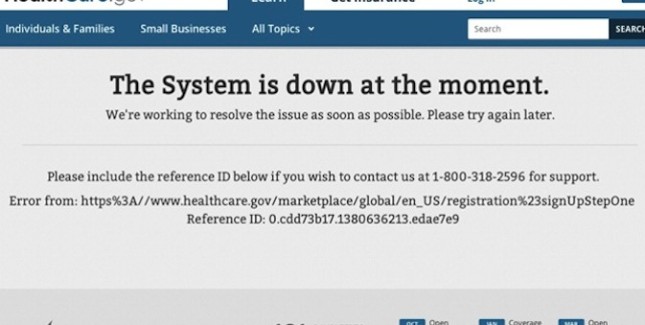


 healthandmedicareinsurance.com
Leave a comment