The Chameleon Which Is The Affordable Care Act

08.14.2013

The Affordable Care Act, like a chameleon, is capable of changing its color or otherwise morphing to fit the pragmatic motives of its creator.

As I have said before, the Patient Protection Affordable Care Act (PPACA) (or ACA for short) is law. Therefore, of late, I have attempted to focus on the reality of it and its ramifications for all of us whether we are currently uninsured, covered by our employer’s plan or have our own individual or family health insurance plan. The primary purpose of this blog is to educate and inform– not to editorialize. If the latter were my objective, I would establish a separate blog where I would rant and rave ad infinitum about all I see wrong with the Act and big government in general. But it is not, so writing for The MedPlus Messenger, I try to remain objective and minimize expression of my feelings. But it is difficult. Increasingly so. Each day I try to put more lipstick on this pig but each day I awaken to more news the White House has selectively chosen another segment of the ACA not to implement in 2014 pursuant to the law.
Yesterday’s headlines broke news that the caps on insured’s out-of-pocket (OOP) maximums–set to go in effect in 2014–have been delayed until 2015. This potentially doubles (or worse) the liability of an insured and benefits the insurance company by allowing it to avoid covering expenses above the current OOP’s. Do you believe that is the objective of the White House? To benefit the insurance companies? And I thought the whole reason for the ACA was to better protect the patient, consumer, insured member. After all, it is the Patient Protection … … … Act is it not?
So what was the motive behind the White House’s reprieve for insurance companies? “General Math” provides the answer. I.e.:
Lower patient out-of-pockets = higher insurance premiums
Higher insurance premiums = less participation in coverage and greater backlash against the ACA


Greater backlash = trouble for the Democrats in the 2014 mid-term elections
Conclusion = this reprieve was politically motivated


Reader and followers – if you can argue this to a different conclusion – please feel free to do so here for my erudition and that of the rest of us.

 
Admin – Kenton Henry
*******************************************************************
Feature Articles:
Washington Times
By Tom Howell Jr.
Tuesday, August 13, 2013
President Obama has granted yet another part of his health care law a delay, quietly announcing a one-year grace period before imposing a strict limit on consumers’ out-of-pocket medical expenses.
The delay means some health care plans in the group market will have until 2015 to begin paying for all expenses exceeding $6,350 for an individual’s out-of-pocket spending, or $12,700 for a family.
________________________________________
SPECIAL COVERAGE: Health Care Reform
________________________________________
Language on the delay has been posted on the Labor Department’s website since February, but it did not surface in the political arena until The New York Times reported on it Tuesday.
Mr. Obama used the limits as a key selling point when he pushed the Affordable Care Act through Congress in 2010. Now, Republicans are using the delay as part of last-ditch bids to dismantle the law before key implementation dates this fall.
“Burying this announcement online in a ‘maze of legal and bureaucratic language’ shows little concern for the promises with which this law was sold,” said House Speaker John A. Boehner, Ohio Republican, borrowing language from the Times article. “What else in the law isn’t working that we don’t yet know about?”
The Obama administration also announced in a pre-July Fourth blog posting that it was delaying the mandate that requires employers with at least 50 full-time employees to provide them with health care coverage.
For the Obama administration, the setbacks are ill-timed and leave officials trying to convince consumers that the delays don’t signal an inability to carry out other parts of the law.
Erin Shields Britt, spokeswoman for the Department of Health and Human Services, said the health care law is still implementing historic consumer protections from “the worst insurance company abuses, by banning discrimination based on pre-existing health conditions, ending lifetime and annual limits on what an insurance company will cover, and capping out-of pocket spending to protect Americans and their families.”
“The February guidance builds on these landmark consumer protections by requiring that health plans limit out-of-pocket spending for major medical coverage for the first time, in 2014, on time,” she said. “This single limit will apply to additional benefits in 2015.”
The newly reported delay arose because some employers and insurers use separate companies to administer major-medical coverage and drug benefits, resulting in separate out-of-pocket limits.
Because of this fractured landscape, parties needed time to streamline their data systems . The rule says that, for the first plan year after Jan. 1, 2014, the annual limit on out-of-pocket expenses will be satisfied if a group health plan that uses more than one service provider complies with the cap on major medical coverage and maintains a similar cap on the non-major medical coverage.
Even as it delays some parts, the administration has said the individual mandate requiring most Americans to have coverage remains in effect. Officials also are working feverishly to implement by Oct. 1 state-by-state health care exchanges where those without employer-based coverage can buy insurance with the help of tax credits.
A recent inspector general report suggested that Health and Human Services is months behind in setting up the federal data hub that will allow federal and state agencies to synchronize information about consumers on the exchanges.
Senate Minority Leader Mitch McConnell, Kentucky Republican, wrote to the Obama administration Monday to suggest that it delay the rollout of the exchanges.
Conservative lawmakers are waging a rhetorical war against Obamacare ahead of a spending showdown on Capitol Hill in September.

**************************************

Forbes

Pharma & Healthcare |

8/13/2013

Yet Another White House Obamacare Delay: Out-Of-Pocket Caps Waived Until 2015

WASHINGTON, DC – MARCH 18: U.S. President Barack Obama (L) speaks as Assistant Attorney General of Justice Department’s civil rights division Thomas Perez (R) listens during a personnel announcement March 18, 2013 at the East Room of the White House in Washington, DC. Perez has succeeded Hilda Solis as the U.S. Secretary of Labor. (Image credit: Getty Images via @daylife)

First, there was the delay of Obamacare’s Medicare cuts until after the election. Then there was the delay of the law’s employer mandate. Then there was the announcement, buried in the Federal Register, that the administration would delay enforcement of a number of key eligibility requirements for the law’s health insurance subsidies, relying on the “honor system” instead. Now comes word that another costly provision of the health law—its caps on out-of-pocket insurance costs—will be delayed for one more year.

According to the Congressional Research Service, as of November 2011, the Obama administration had missed as many as one-third of the deadlines, specified by law, under the Affordable Care Act. Here are the details on the latest one.

Obamacare contains a blizzard of mandates and regulations that will make health insurance more costly. One of the most significant is its caps on out-of-pocket insurance costs, such as co-pays and deductibles. Section 2707(b) of the Public Health Service Act, as added by Obamacare, requires that “a group health plan and a health insurance issuer offering group or individual health insurance coverage may not establish lifetime limits on the dollar value of benefits for the any participant or beneficiary.” Annual limits on cost-sharing are specified by Section 1302(c) of the Affordable Care Act; in addition, starting in 2014, deductibles are limited to $2,000 per year for individual plans, and $4,000 per year for family plans.

Move up http://i.forbesimg.com t Move down

Obamacare Increases Costs of College Health Plans by as Much as 1,112% Avik Roy Contributor

There’s no such thing as a free lunch. If you ban lifetime limits, and mandate lower deductibles, and cap out-of-pocket costs, premiums have to go up to reflect these changes. And unlike a lot of the “rate shock” problems we’ve been discussing, these limits apply not only to individually-purchased health insurance, but also to employer-sponsored coverage. (Self-insured employers are exempted.)

These mandates have already had drastic effects on a number of colleges and universities, which offer inexpensive, defined-cap plans to their healthy, youthful students. Premiums at Lenoir-Rhyne University in Hickory, N.C., for example, rose from $245 per student in 2011-2012 to between $2,507 in 2012-2013. The University of Puget Sound paid $165 per student in 2011-2012; their rates rose to between $1,500 and $2,000 for 2012-2013. Other schools have been forced to drop coverage because they could no longer afford it.

According to the law, the limits on out-of-pocket costs for 2014 were $6,350 for individual policies and $12,700 for family ones. But in February, the Department of Labor published a little-noticed rule delaying the cap until 2015. The delay was described yesterday by Robert Pear in the New York Times.

Delay needed to align ‘separate computer systems’

Notes Pear, “Under the [one-year delay], many group health plans will be able to maintain separate out-of-pocket limits for benefits in 2014. As a result, a consumer may be required to pay $6,350 for doctors’ services and hospital care, and an additional $6,350 for prescription drugs under a plan administered by a pharmacy benefit manager.”

The reason for the delay? “Federal officials said that many insurers and employers needed more time to comply because they used separate companies to help administer major medical coverage and drug benefits, with separate limits on out-of-pocket costs. In many cases, the companies have separate computer systems that cannot communicate with one another.”

The best part in Pear’s story is when a “senior administration official” said that “we had to balance the interests of consumers with the concerns of health plan sponsors and carriers…They asked for more time to comply.” Exactly how is it in consumers’ interests to pay far more for health insurance than they do already?

It’s not. Unless you have a serious, chronic condition, in which case you may benefit from the fact that law forces healthy people to subsidize your care. To progressives, this is the holy grail. But for economically rational individuals, it’s yet another reason to drop out of the insurance market altogether. For economically rational businesses, it’s a reason to self-insure, in order to get out from under these costly mandates.                         Patient groups upset

While insurers and premium-payers will be happy with the delay—whose legal justification is dubious once again—there are groups that grumbled. Specifically, groups representing those with chronic diseases, and the pharmaceutical companies whose costly drugs they will use. “The American Cancer Society American Cancer Society shares the concern” about the delay, says Pear, “and noted that some new cancer drugs cost $100,000 a year or more.” But a big part of the reason those drugs cost so much is because manufacturers know that government-run insurers will pay up.

“The promise of out-of-pocket limits was one of the main reasons we supported health reform,” says Theodore M. Thompson of the National Multiple Sclerosis Society National Multiple Sclerosis Society. “We have wonderful new drugs, the biologics, to treat rheumatoid arthritis,” said Patience H. White of the Arthritis Foundation. “But they are extremely expensive.”

The progressive solution to expensive problems? More subsidies. But subsidies don’t reduce the underlying cost of care. They only excuse the high prices that manufacturers and service providers already charge.

It’s one of the many aspects of Obamacare that should be repealed, if we are to combat the rate shock that the health law imposes on tens of millions of Americans. But that will require Republicans to come up with a smarter strategy than shutting down the government.

***************************************************************************************************

← Back

Thank you for your response. ✨

http://allplaninsurance.com

What is Coming with Your Health Insurance Between Now and January 1!

Just Practical Information On What is Coming with Your Health Insurance Between Now and January 1!

08.12.2013
This is not an editorial. Today’s post is simply non-political, practical information regarding coming changes in health insurance between now and 2016 and beyond. The Patient Protection and Affordable Care Act (PPACA) is law and is on schedule to be fully implemented (for all but groups of 50+) January 1, 2014. For this reason it is my responsibility to inform my clients – and followers of this blog – of what they can expect in the coming months. Specifically, their insurance options and the mechanics involved in transitioning to health plans that provide minimum “essential benefits” that are in compliance with the PPACA. In this post, I will be addressing individuals and families which includes the self-employed and those who have a personal policy because their employer does not provide coverage. All others, including those covered by group plans for less than 50 employees will be addressed in subsequent posts.
First – those of you who currently have a personal or family policy will be allowed to keep your policy until your policy anniversary in 2014. You should check your anniversary date or–if you are my client–call me. Many companies have changed your anniversary date to December 1. This allows you to keep your current plan until December 1, 2014. After that, you must convert to a health care “compliant” plan which will be described below. I can simplify and assist you in this process when the time comes.
If you do not currently have health insurance you must purchase a health policy to be effective January 1 or pay a penalty on your tax return for 2014 and beyond. Another reason you may want to purchase a plan is if you have previously been unable to acquire a policy which covers your pre-existing health condition(s). Your new compliant plan must cover them and health issues will not factor into your cost.
When October 1 arrives (the earliest date you may apply for compliant coverage) I will provide you a link where you will enter your estimated income for 2014. It will instantly tell you whether you qualify for a subsidy. If you do – you are going to want to choose from and apply for plan options in your state health insurance exchange. If your state has not established a state exchange (as is the case in Texas) – you will select from plans in the Federal Health Insurance Exchange. If you do not qualify for a subsidy (which is the case if your income is 400% or greater than the Federal Poverty Level*) – you are probably going to choose a policy offered outside an exchange and direct from an insurance company. The reason being, it is anticipated these plans will offer the same benefits at a lower cost. I can assist you with this option as well.
Below, I will offer further and detailed information on exchanges, plan options and more. Please do not hesitate to call me for clarification or to discuss this information.

Admin. – Kenton Henry

*
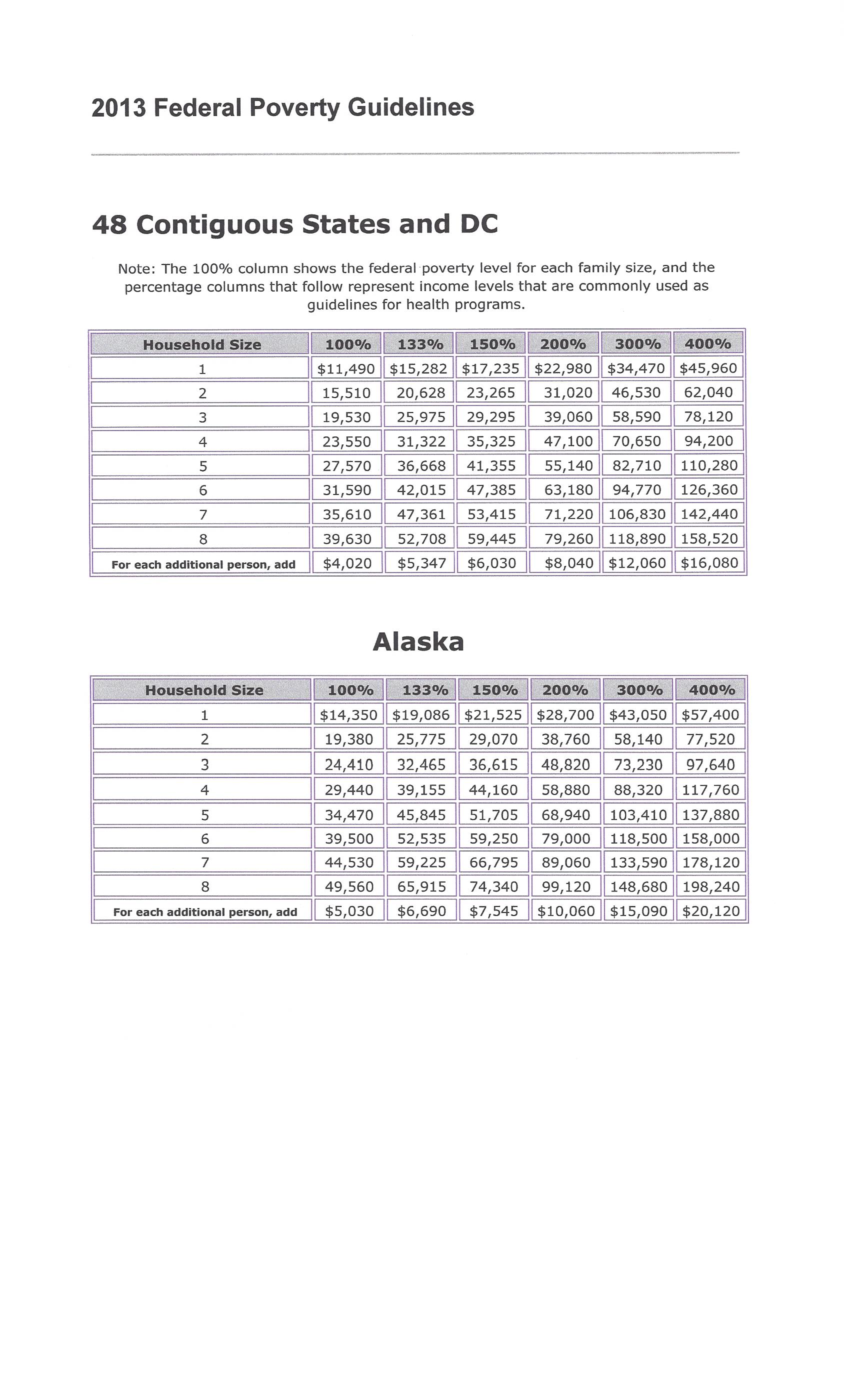
FEDERAL POVERTY LEVEL GUIDELINES 2013
http://allplanhealthinsurance.com
*************************************
STEP 1:
Note these key dates and deadlines in your calendar:
If your employer offers health insurance, get key dates from your HR department. These are key dates if you’re planning to buy health care through your state’s Marketplace, which is available through a web site, a call, or an in-person visit.
• Oct. 1, 2013: First day you can enroll in a health plan on your state’s Marketplace
• Dec. 31, 2013: Last day you can enroll in a health plan and have your coverage start Jan. 1, 2014
• Jan. 1, 2014: First day you have insurance coverage if you buy a plan in the Marketplace — if, of course, you buy before this date
• March 31, 2014: The last date you can enroll in a plan on your state’s Marketplace to be covered for part of 2014
*************************************
Requirements:
* Be a citizen or legal resident.
• Buy your coverage through your state’s or Federal new health insurance Marketplace, also called an “Exchange”.
• Make about $11,490 to $45,960 a year if you are single – or $23,550 to $94,200 a year if you are in a family of four.
If you make less than the lowest amount, you may be eligible for Medicaid. Medicaid will cost you less than you’d save with a tax credit.
Unfortunately, if your state is not expanding Medicaid based on the guidelines in the Affordable Care Act, you may not be able to enroll in Medicaid or be able to get a tax credit. It’s possible that if you make less than $11,490 in 2013, which is the poverty level, you may not qualify for Medicaid if you live in a state that isn’t expanding Medicaid.
In general, you’re not eligible for the tax credits if you could get coverage through a workplace. However, the coverage offered by your employer must be considered affordable. If your company offers a plan that costs more than 9.5% of your income, or that does not cover at least 60% of the cost of covered benefits, you can look for a more affordable plan through your state’s Marketplace and may receive tax credits to lower your costs.
********************************
Insurance Exchanges
State Didn’t Set Up a Marketplace? Relax
You may have heard that not all states will have their own health insurance Marketplace, also called an Exchange. If your state doesn’t set up a Marketplace, what does that mean for you?
Rest assured that no matter which state you live in, you can buy insurance through a Marketplace starting October 2013.
The way you use the Marketplace will be similar in every state. You’ll access a web site, or call, or see someone in person. And you’ll have tools to compare health plans.
But Marketplaces won’t all be the same in every state. There are three ways your state’s Marketplace can be managed — and this affects your choice of health plans and coverage.
1) State-run Marketplaces
Seventeen states are creating their own Marketplaces. These states will have a lot of local control.
Each state will decide which insurance companies can sell policies on its Marketplace.
States also choose the core benefits each plan has to offer. They can set extra requirements for health plans, like benefits that are more generous or more affordable limits on your out-of-pocket costs.
The state is also in charge of getting people to use the Marketplace.
*Indiana and Ohio will have their own State Exchange. Residents of these states should call Kenton Henry @ 800.856.6556
2) Partnerships Between a State and the Government
A few states are teaming up with the federal government to develop Marketplaces.
The federal government:
• Sets up the Marketplace web site and in-person sites
• Decides which health plans will be sold in the partner state
• Sets the benefit levels
• Runs the Marketplace
The states:
• Monitor health plans
• Help people find the best insurance for their needs *(Call Kenton Henry @ 800.856.6556)
• Handle complaints
Federal-run Marketplaces
Some states decided not to set up their own Marketplaces. In those states, the federal government will step in to run the marketplaces directly. It will make all the decisions: how the Marketplace will work, what plans are sold, and how to promote the Marketplace. Each state is considered separately and has its own Marketplace web site. (Texas residents call Kenton Henry @ 800.856.6556)
**********************************************
Your Insurance Choices in a Marketplace: FAQ

A health insuranceMarketplace, also known as an Exchange, is a one-stop shop for affordable insurance in your state. Your state’s Marketplace has tools to make it easy for you to compare your choices and pick the best for your needs.
On a state Marketplace site, health plans are grouped by levels of coverage — how much the plan will pay for your health care and what services are covered.
Each level is named after a type of metal:
• Bronze
• Silver
• Gold
• Platinum
Bronze plans offer the least coverage and platinum plans offer the most.
How do the bronze, silver, gold, and platinum levels differ?
The metal plans vary by the percentage of costs you have to pay on average toward the health care you receive.
Here are the percentages of health care costs you pay for each type of plan:
• Bronze plan: 40%
• Silver plan: 30%
• Gold plan: 20%
• Platinum plan: 10% of your health care costs.
The way you pay your portion of these costs is in deductibles and copayments or co-insurance.
In general, the more you are willing and able to pay each time for health care service or a prescription, the lower your premium. A premium is your monthly payment to have insurance.
As an example, when you compare the bronze and platinum plans:
With a bronze plan: You pay the most each time you see your doctor or get a medicine. This is also called having higher “out-of-pocket” costs. But in a bronze plan you pay the least premium each month.
With a platinum plan: You pay the least each time you see your doctor or get a medicine. But in a platinum plan you pay the highest premium each month.
How does coverage from a metal plan compare to my current insurance?
The bronze through platinum coverage levels are new. So you probably don’t know how the benefits of the plan you use today compare to them. The coverage level you have now depends on whether you bought your plan:
• From an employer: Your coverage level is likely between a gold and platinum level.
• On your own: Your coverage level is likely between a bronze and silver level.
Having a sense of how the insurance you’re used to compares with the new plans will help you decide on a plan. You should compare the out-of pocket costs you are currently paying, the services provided (including prescription drugs), and anticipated changes in your health.
If you shop for insurance on your state’s Marketplace, you’ll see the health plans organized in this way:
• 1st by metal level: Bronze, silver, gold, or platinum
• 2nd by brand, such as Blue Cross, Cigna, Humana, Kaiser, United, and others
• 3rd by type of health plan, such as HMO, PPO, POS, or high-deductible plans with a health savings account.
The type of health plan affects how much choice you have in providers, the amount of paperwork you have, and your out-of-pocket costs.
**************************************
Tax Penalty At-a-Glance: Who Will Pay The Penalty & How Much Is It?
By law, you need to have health insurance by 2014. If you already get insurance through your employer or your partner’s employer, you’re all set. But what happens if you don’t follow this requirement from the Affordable Care Act?
If you can afford health insurance and don’t buy it, you’ll pay a fine when you file your 2013 income taxes in April 2014.
For the first year of the new law, 2014, the fine for not having insurance is the lowest it will be. After that, it goes up steeply in 2015 and again in 2016.
In 2014: There are two ways the government calculates what you owe. You have to pay whichever amount is higher.
• One way is to charge you $95 for each adult and $47.50 for each child, but not more than $285 total per family.
• The other way is to fine you 1% of your family income. If your family makes $50,000 a year, the fine will be $500.
In 2015: There will still be two ways to calculate what you owe. You have to pay whichever amount is higher.
• One way is to charge you $325 for each adult and $162.50 for each child, but no more than $975 total per family.
• The other way is 2% of your family income. If your family makes $50,000 a year, the fine will be $1,000.
In 2016 and beyond: There will still be two ways to calculate what you owe. You have to pay whichever amount is higher.
• One way is to charge you $695 for each adult and $347.50 for each child, but no more than $2,085 per family.
• The other calculation is 2.5% of your family income. If your family makes $50,000 a year, the fine will be $1,250.

← Back

Thank you for your response. ✨


http://allplanhealthinsurance.com

Democrats Can See Their Hometowns From the Steps of the Capitol!

08.09.2013

Sarah Palin was made the butt of jokes – which were later extended to include Republican Paul Ryan – when she proclaimed Medicare recipients would be subjected to “death panels” if the Affordable Care Act’s Independent Payment Advisory Board (IPAB) or Medicare’s cost cutting board remained part and parcel to the statute.

Now it seems even Howard Dean and other notable Democrats are concurring. Like the President, these Democrats are attempting to excise key components of a statute (already law) by repealing the board’s power. In light of next year’s mid-term’s their effort appears politically motivated. Perhaps the Senators and Representatives cited in today’s Feature Article can see their hometowns from the steps of the Capitol Building! It seems they are more concerned with their political lives than the welfare of their constituents. Otherwise, why did they pass the bill with this liability to their constituents in it in the first place? Oh–I forgot–they had to pass it before they could read it!

Admin. – Kenton Henry

*********************************

Feature Article:

The Hill

ObamaCare ‘death panel’ faces growing opposition from Democrats

By Elise Viebeck – 08/08/13 05:00 AM ET

ObamaCare’s cost-cutting board — memorably called a “death panel” by Sarah Palin — is facing growing opposition from Democrats who say it will harm people on Medicare.

Former Democratic National Committee Chairman Howard Dean drew attention to the board designed to limit Medicare cost growth when he called for its repeal in an op-ed late last month.

Dean was quickly criticized by supporters of the Independent Payment Advisory Board        (IPAB) who noted his ties to the healthcare industry as an adviser to a major D.C. lobbying firm.

But the former Vermont governor is not the only Democrat looking to kill the panel.

A wave of vulnerable Democrats over the past three months has signed on to bills repealing the board’s powers, including Sen. Mark Pryor (Ark.) and Reps. Ron Barber (Ariz.), Ann Kirkpatrick (Ariz.), Kyrsten Sinema (Ariz.) and Elizabeth Esty (Conn.).

All five are considered vulnerable in next year’s election, highlighting the stakes and the political angst surrounding the healthcare measure.

The four House Democrats faced criticism from their party in July after voting with Republicans to delay ObamaCare’s individual and employer mandates — moves widely interpreted as political positioning ahead of 2014.

Two of the lawmakers explained their opposition by suggesting the board would limit care for Medicare patients.

But the National Republican Congressional Committee (NRCC) blasted the four Democrats for “desperately trying to jump off the ObamaCare train.”

The cost-cutting board has been dogged with controversy over the last three years.

Major healthcare interests like the American Medical Association, the American Hospital Association and the pharmaceutical lobby have supported IPAB repeal, saying the panel would cut providers’ pay arbitrarily.

Public awareness of the board shot up last year when Palin called it a “death panel,” connecting the IPAB to her previous attacks on a proposal to encourage end-of-life planning in the Affordable Care Act.

“Though I was called a liar for calling it like it is, many of these accusers finally saw that ObamaCare did in fact create a panel of faceless bureaucrats who have the power to make life and death decisions about healthcare funding,” Palin wrote on Facebook.

This claim experienced a revival on the right after Dean published his op-ed, which argued that the board would ultimately ration care for Medicare patients.

“The IPAB will be able to stop certain treatments its members do not favor by simply setting rates to levels where no doctor or hospital will perform them,” Dean wrote in The Wall Street Journal.

“Getting rid of the IPAB is something Democrats and Republicans ought to agree on.”

The piece quickly went viral, prompting conservative bloggers and Fox News hosts to cheer: “Dean confirms that Sarah Palin was right!”

The IPAB is designed to kick in when Medicare cost growth grows above a specified rate. It is charged with making recommendations on how to reduce Medicare spending, and its proposals are required to be fast-tracked through Congress.

The Affordable Care Act prevents the IPAB from making recommendations that would directly ration care. But critics say reducing provider reimbursements would have the same result by making it difficult for healthcare professionals to make money in Medicare.

While it’s unlikely the board will be convened soon, Medicare cost growth is not high enough to trigger its work, and any nominees would face long confirmation fights in the Senate, Dean’s op-ed renewed focus on bills to repeal the IPAB.

The Senate and House measures currently have 32 and 192 co-sponsors, respectively, including 22 Democrats in the House. Co-sponsors include lawmakers like Rep. John Barrow (D-Ga.), a longtime GOP target.

But calls for repeal are not taking up the whole debate.

Dean’s piece also drew strong arguments in favor of the panel from supporters like Peter Orszag.

The former White House budget director said the IPAB is necessary in light of Medicare’s transition to new payment models that are meant to lower costs while improving care.

It’s preferable to the “old way,” which saw Congress “simply slash Medicare payments” to providers, Orszag wrote in a column for Bloomberg.

“The point of having such a board — and here I can perhaps speak with some authority, as I was present at the creation — is to create a process for tweaking our evolving payment system in response to incoming data and experience, a process that is more facile and dynamic than turning to Congress for legislation,” he wrote.

In the meantime, the Democratic National Campaign Committee (DCCC) is warding off criticism of the anti-IPAB Dems with a push to turn the ObamaCare tables on the GOP.

The committee pointed to evidence Wednesday that resisting the healthcare law could hurt Republicans in the next election.

A new poll commissioned by the Service Employees International Union found that undecided voters prefer an anti-repeal Democrat over a pro-repeal Republican in a generic match-up.

“Instead of fighting old political battles on healthcare, polling shows that Americans want Republicans to work with Democrats to implement Obamacare and move on to focus on creating good jobs,” said Emily Bittner, a spokeswoman with the DCCC.

“The public strongly disapproves of Republicans’ plan to give insurance companies free rein over our health care.”

***********************************************

http://allplaninsurance.com/medicare/medicare-supplement.htm

← Back

Thank you for your response. ✨

The Foxes Long Ago Took Over the Hen House

08.06.2013
Last Friday, the President met behind closed doors with Congress to grant they and their staff (who have incomes of $100,000 or more) a waiver from paying for participation in health insurance exchanges. Supposedly, 75% of their premium will be paid by us – regardless of their income.You already knew he had reserved the right to grant waivers to unions and donor corporations, correct? And he has done that over 1,200 times to date. Well now he has done it for our employees who ultimately determine their own salaries and benefits. News of this was not released until they had left town under cover of darkness for their month long recess.
It is anticipated this special dispensation will be formally acknowledged next week by President Obama’s Office of Personnel Management (OPM)–one in the same as the federal government’s H.R. department–which is charged with administering federal benefits within the government.

For a succinct and cogent summation of what the unintended consequences of full Affordable Care Act implementation mean to the quality of our nation’s health care, please view this video of Michigan’ Congressman Rodgers as he makes his opening statement to the Chair on health care reform:

http://safeshare.tv/w/zwhKdMtFHf
Admin. – Kenton Henry
****************************************************************
Feature Article

Grassfire

08.05.2013

Moments before shuttering Capitol Hill for a month-long recess, Congress exempted 11,000 members and staff from ObamaCare. News of Friday’s last-minute deal making is especially frustrating since part of ObamaCare’s original sell to the American people was that lawmakers and aides had to use the plan.
According to The Wall Street Journal, both parties went ballistic when they learned staff would incur dramatically higher healthcare costs. “Democrats in particular, begged for help,” and President Obama leapt into action telling them in a closed-door meeting that “he would personally moonlight as H.R. manager and resolve the issue.”

He did … for Congress.

“A behind-closed-doors deal announced after Congress is safely away from the crime scene. This is exactly why America rightly hates Washington,” charged Sen. David Vitter (R-LA) in a press release posted on his official website. “Obamacare’s a train wreck, even for Congress. So it gets fixed … FOR CONGRESS ONLY” (emphasis in original).
Vitter is right. All Americans should be extended the same “resolution” that Congress is getting.

But with Congress safely tucked away in their districts, the countdown continues for the “less fortunate” Americans who, on October 1, start enrolling in ObamaCare.

* Congress returns on Monday, August 9

← Back

Thank you for your response. ✨

Obama About To Do Another Side-Step?

08.01.2013
Obama About To Do Another Side-Step?
Op-Ed

Do you remember when the snidely Governor of Texas, played by actor Charles Durning, in the movie, The Best Little Whorehouse in Texas, croon’s …
” Ooh … I love to dance the little sidestep / Now they see me, now they don’t / I’ve come and gone / And ooh, I love to sweep around a wide step / Cut a little swath / And lead the people on!”?
This is exactly the image I have of the President so often but–most recently this morning–on hearing his plans to meet again with the federal Office of Personnel Management. The purpose will be to address their concerns about being forced to abandon their Cadillac federal health plans to enter the Federal Health Insurance Exchange like so many of the rest of us. While this mandate became law when the Senate surprisingly went along with the House vote to do so – now that the time for them to enroll in the exchange is rapidly approaching – they are beginning to balk. (I guess they didn’t read the bill till it was passed!) Now it seems they would like, at the very least, for their premiums to be subsidized by the taxpayers to the tune of (a minimum) 75% as is currently the case. This in-spite of the fact that low paid interns and aides can apply for a regular subsidy (just like you and I) while Rank and File Senators and Representatives receive $174,00 in annual salary; Senate Majority and Minority Leaders $193,400; and The Speaker of the House $223,500. Doesn’t your heart just bleed for them?
Rumor has it the President has promised to see what he can do about it and meet with them again soon. Hence, I hear the words …
” Ooh I love to dance a little sidestep, now they see me now they don’t-I’ve come and gone and, ooh I love to sweep around the wide step, cut a little swathe and lead the people on.
I’m a poor boy, come to greatness. So, it follows that I cannot tell a lie.”
Admin. – Kenton Henry
****************************************************************
FEATURED ARTICLE:

POLITICOPro
Lawmakers, aides may get Obamacare exemption
By JOHN BRESNAHAN and JAKE SHERMAN | 4/24/13 9:49 PM EDT
Congressional leaders in both parties are engaged in high-level, confidential talks about exempting lawmakers and Capitol Hill aides from the insurance exchanges they are mandated to join as part of President Barack Obama’s health care overhaul, sources in both parties said.
The talks — which involve Senate Majority Leader Harry Reid (D-Nev.), House Speaker John Boehner (R-Ohio), the Obama administration and other top lawmakers — are extraordinarily sensitive, with both sides acutely aware of the potential for political fallout from giving carve-outs from the hugely controversial law to 535 lawmakers and thousands of their aides. Discussions have stretched out for months, sources said.
A source close to the talks says: “Everyone has to hold hands on this and jump, or nothing is going to get done.”
Yet if Capitol Hill leaders move forward with the plan, they risk being dubbed hypocrites by their political rivals and the American public. By removing themselves from a key Obamacare component, lawmakers and aides would be held to a different standard than the people who put them and aides would be held to a different standard than the people who put them in office.

Democrats, in particular, would take a public hammering as the traditional boosters of Obamacare. Republicans would undoubtedly attempt to shred them over any attempt to escape coverage by it, unless Boehner and Senate Minority Leader Mitch McConnell (R-Ky.) give Democrats cover by backing it.
There is concern in some quarters that the provision requiring lawmakers and staffers to join the exchanges, if it isn’t revised, could lead to a “brain drain” on Capitol Hill, as several sources close to the talks put it.
The problem stems from whether members and aides set to enter the exchanges would have their health insurance premiums subsidized by their employer — in this case, the federal government. If not, aides and lawmakers in both parties fear that staffers — especially low-paid junior aides — could be hit with thousands of dollars in new health care costs, prompting them to seek jobs elsewhere. Older, more senior staffers could also retire or jump to the private sector rather than face a big financial penalty.
Plus, lawmakers — especially those with long careers in public service and smaller bank accounts — are also concerned about the hit to their own wallets.
House Minority Whip Steny Hoyer (D-Md.) is worried about the provision. The No. 2 House Democrat has personally raised the issue with Boehner and other party leaders, sources said.
“Mr. Hoyer is looking at this policy, like all other policies in the Affordable Care Act, to ensure they’re being implemented in a way that’s workable for everyone, including members and staff,” said Katie Grant, Hoyer’s communications director.
Several proposals have been submitted to the Office of Personnel Management, which will administer the benefits. One proposal exempts lawmakers and aides; the other exempts aides alone.
When asked about the high-level bipartisan talks, Michael Steel, a Boehner spokesman, said: “The speaker’s objective is to spare the entire country from the ravages of the president’s health care law. He is approached daily by American citizens, including members of Congress and staff, who want to be freed from its mandates. If the speaker has the opportunity to save anyone from Obamacare, he will.”
Reid’s office declined to comment about the bipartisan talks.
However, the idea of exempting lawmakers and aides from the exchanges has its detractors, including Rep. Henry Waxman (D-Calif.), a key Obamacare architect. Waxman thinks there is confusion about the content of the law. The Affordable Care Act, he said, mandates that the federal government will still subsidize and provide health plans obtained in the exchange. There will be no additional cost to lawmakers and Hill aides, he contends.

← Back

Thank you for your response. ✨

Polls Clearly Indicate the Affordable Care Act Losing Popularity

07.30.2013

Polls clearly indicate that the Patient Protection and Affordable Care Act is losing popularity with not only Democrats and Republican politicians but the American public in general. In spite of the fact that no real costs of the Affordable Care Act to employers have been realized (other than those spent in attempts to decipher it through paid consultants or in house benefits directors and actuaries) popularity for the law continues to diminish. Much of this disenchantment could stem from the fact that more of us are realizing we really may lose our current health coverage and–perhaps more importantly–our providers. Others realize part-time employment may become the norm as employers attempt to avoid the mandate they provide health insurance to full time employees, i.e., those working 30 or more hours per week. It is a highly unpopular mandate with labor unions which have always supported a minimum 40 hour work week as the definition of full-time employment. It seems only logical many employers will restrict workers to less than 30 hours in attempt to avoid providing health insurance coverage. Another unintended consequence of government’s attempts to improve things.

Admin. – Kenton Henry

******************************

Featured Articles (Reprints June 30th and 26th Editions of the National Association of Health Underwriter’s Washington Update)

Is Health Reform Losing Its Base?

It is no secret that public support for health reform has always been mixed at best and that many Republicans have strongly disliked this law from the start. Now it seems like moderate Democrats are joining the pessimistic about health reform crowd. A recent poll conducted by the Washington Post and ABC News showed that moderate Democrats (who were previous PPACA supporters) are becoming lukewarm about the health reform law. When the law was initially passed in 2011, 74% of moderate and conservative Democrats were in favor of the law. Now, that number is down to 46%. Even more notable is that support is 11 points lower than what it was last year at this time. Liberal Democrats on the other hand still strongly support the law, with 78% of them still loving it to be exact. Among the public at large, 42% support and 49% oppose the law, retreating from an even split at 47% last July. On average, 56% of Democrats now support the law, according to the poll, down 10% from last year.
The same day these polling results were released, President Obama gave a speech out of Knox, Illinois on the economy. While the focus of the speech was the nation’s economy, President Obama unsurprisingly, given the magnitude of its economic impact, brought up the health reform law and tried again to raise support. This time, the president noted that the law is in fact working in the states that embrace it. Many of the states that have decided to fight the law are not seeing as many positive results. He cited states such as California and New York as proof that the law is driving costs down. The president also said that we are “well on our way” to full implementation of the law and that once implemented, the law’s benefits will provide security to middle class families.

*****************************

Legislation and Policy

Republicans Divided Over Threat To Defund ACA.
Many outlets, mostly out of the beltway, focus on the political machinations surrounding funding for the Affordable Care Act. The reports highlight a growing rift among factions of the Republican party: those who are pushing to defund the law using a spending bill, and those who believe the move, which could ultimately result in a government shutdown, would be politically dangerous.
Roll Call (7/30, Dennis, Fuller, Subscription Publication) reports that “with 60 Republicans already pushing…to defund Obamacare in any spending bill,” Speaker John Boehner “may not be able to cobble together a House majority” to stave off a government shutdown without courting Democrats. The article notes, though, that “several prominent Republicans” have spoken out against the effort, as this threat “would surely backfire on Republicans if they carry it out.”
FOX News (7/30) reports on the “divide” in the GOP, saying that the “aggressive” push to defund the Affordable Care Act is “increasingly pitting Republicans against Republicans.”
Indeed, several Republicans have spoken out against defunding the law. Politico (7/30, Arkin) reports that in an appearance on MSNBC Monday, House Deputy Whip Tom Cole (R-OK) warned that “shutting down the government to defund Obamacare is a ‘suicidal political tactic.’” Cole is quoted as saying, “Shutting down the government is a suicidal political tactic. Eventually it will be reopened, but the president will not have capitulated and you will have discredited yourself and along the way you will have hurt the American people.”
The Washington Examiner (7/30, Carroll) reports on another high profile Republican who is against defunding the Affordable Care Act, Oklahoma Senator Tom Coburn, who called the efforts “dishonest” and “hype.”
Also reporting on Republican opposition to the tactic are MSNBC (7/30, MacDonald) and the Tulsa (OK) World (7/30, Greene).
However, many Republicans are still pushing for the tactic, led Monday by Texas Senator Ted Cruz. Politico (7/30, Kopan) reports that in an interview with Glenn Beck Monday, Cruz argued that Republicans have the opportunity to can defund the ACA, but “‘scared’ Republicans are standing in the way.” Cruz said, “What I can tell you is there are a lot of Republicans in Washington who are scared. They’re scared of being beaten up politically.”
The Washington Examiner (7/30, Spiering) reports that Senator Marco Rubio (R-FL) “defended” the proposal, saying, “With all these problems why would anyone want to continue with this failed experiment? Only in Washington do people double down on their mistakes.”
Other outlets reporting on Republicans who support fighting for defunding the ACA include the Huffington Post (7/30, Schlanger), the NBC News (7/30, Hunt) website, the Deseret (UT) News (7/30, Askar), The Hill (7/30, Baker) “Healthwatch” blog, The Hill (7/30, Jaffe) “Ballot Box” blog, and the Washington Examiner (7/30, Spiering).
As one of the few Democrats inserting himself into the intra-GOP rift, Politico (7/30, Everett) reports that on Monday, Senate Majority Leader Harry Reid said, “If Republicans force us to the brink of another government shutdown for ideological reasons, the economy will suffer. I would suggest to any of my Republican colleagues that has this idea: Give a call to Newt Gingrich. … Ask him how it worked. It was disastrous for Newt Gingrich, the Republicans and the country.”
Commentary Considers GOP Rift Over Defunding ACA. In addition to accounts of the Republican rift over defunding the Affordable Care Act, several outlets carry analyses and opinion pieces reacting to the debate. Despite some maintaining sympathies for the Republican cause, all conclude that the tactic is certain to fail at the least, and potentially dangerous for the party at the most.
Well-known conservative blogger Jennifer Rubin, in her Washington Post (7/30) “Right Turn” blog, quotes various Republican leaders who are speaking out against the tactic, including Senator Richard Burr (R-NC), who called it “the dumbest idea I’ve ever heard.” Rubin concludes that it is a “certainty” that “the GOP is not going to defund Obamacare on its namesake’s watch.”
Sean Sullivan, in his Washington Post (7/30, Sullivan) “The Fix” blog, calls Cruz’s decision to call his GOP colleagues “scared” for not going along with his plan “a perilous move.” While he is confirming his “conservative bona fides,” Sullivan writes, Cruz is also highlighting his “willingness to be an antagonist at virtually every turn.”
Brent Budowsky, in a piece for The Hill (7/30) “Pundits Blog,” writes that as many Republicans agree, “threatening to shut the government down over healthcare is profoundly unwise policy for America and profoundly unwise politics for the GOP.”
Avik Roy offers a lengthy analysis of the tactic in his Forbes (7/30) “Apothecary” blog, saying that a one year delay of the ACA’s central provisions may be better than a complete repeal.
On the MSNBC (7/30) website, Geoffrey Cowley criticizes Senator Marco Rubio (R-FL) for doubling down on the “kill-it-at-all-costs rhetoric,” seeking to blame President Obama for a potential government shutdown.
Dennis Byrne, a Chicago writer, calls the plan “more than stupid,” in the Chicago Tribune (7/30). He argues that the tactic “will surely fail,” and could very well “cost the GOP in the 2014 elections, possibly including control of the House.” The only way to repeal the law, he concludes, is to “turn the spotlight on what they’d replace it with.”
Similarly, in an editorial, the Baton Rouge (LA) Advocate (7/30) criticizes Republicans for continuing to oppose the Affordable Care Act without coming up with a viable alternative. The paper argues that any sort of GOP-sanctioned replacement “requires legislative initiative, not just opposition.”
Syndicated columnist Jules Witcover writes in the Baltimore Sun (7/30) that despite continued unpopularity, the Affordable Care Act “will nevertheless prevail.”
House To Vote This Week To Repeal Part Of ACA For 40th Time.
The Hill (7/30, Baker) “Healthwatch” blog reports that this week, the House will vote “for the 40th time to repeal part of ObamaCare.” The bill, sponsored by Representative Tom Price (R-GA), restricts the IRS from implementing any part of the law. The article points out that this is part of the GOP’s “effort to keep up the negative pressure” following the employer mandate delay.
Republicans Seek To Change ACA’s Definition Of Full-Time Employment.
CQ (7/30, Attias, Subscription Publication) reports on the “ongoing debate” over whether Congress should revise the Affordable Care Act’s definition of full time employment. So far, “Republicans and business representatives” have voiced their support for “an effort to change the definition to 40 hours a week,” but Democrats aren’t behind it.
The Delmarva (MD) Daily Times (7/30, Gaudiano) also reports on the effort to change the full-time employment threshold.
ACA Call Center Under Fire For Not Offering Health Benefits To All Workers.
FOX News (7/30) reports that a call center set up to offer Affordable Care Act assistance in Contra Costa, California, is making news for not offering health insurance to all of its employees. The state’s budget “only allows for half of the customer service agents hired to work full-time,” which many in the community find “disappointing.”
Feds’ Marketing Of ACA To Young People May Violate Age Discrimination Act.
The Daily Caller (7/29, Howley) reports that the Obama Administration’s public relations campaign touting “the benefits of enrolling in Obamacare” to young people “appears to violate the federal Age Discrimination Act,” which “states that no program that receives federal money can discriminate with respect to age.” The Daily Caller notes that the “campaign-style demographic targeting” would “at least initially have the discriminatory effect of not equally promoting subsidized health care to older participants whose participation would not be as favorable for Obamacare’s convoluted apparatus.”

← Back

Thank you for your response. ✨


http://allplanhealthinsurance.com

No Joke! – IRS Employee’s Union Wants No Part of ACA Exchange Coverage

07.26.2013

No Joke! – IRS Employee’s Union Wants No Part of ACA Exchange Coverage
Op Ed:
In an ultimate case of hypocrisy (which would be hysterical were it not foretelling a travesty of monumental proportions about to be inflicted on the American people) the Union of IRS employees wants no part of the Obamacare and the Affordable Care Act (ACA)! The Union urges its members to write their congressmen expressing reservation about being forced out the Federal Health Benefits Program and into the insurance exchanges scheduled to be up and functional by October 1. The Federal Health Benefits Program is the “Cadillac” health plan we have always heard federal employees enjoy at our expense. In the meantime, many of us will be forced to give up our current health insurance and providers to acquire what they dictate is right for us. The very representatives who passed and will enforce the legislation and mandates say it is good enough for you and me while not wanting to accept it for themselves. They want no part of the very thing they are forcing down our throats!
We cannot make this up people! And you’re not outraged? Or are you?
(For more details, please see our first feature article below.)

Admin. – Kenton Henry
****************************************************************
FEATURE ARTICLES:
Washington Examiner
IRS employee union: We don’t want Obamacare
BY JOEL GEHRKE | JULY 26, 2013 AT 11:45 AM
TOPICS: ANALYSIS BELTWAY CONFIDENTIAL

National Taxpayer Employee Union officials are giving members a form letter expressing concern…
IRS employees have a prominent role in Obamacare, but their union wants no part of the law.
National Treasury Employees Union officials are urging members to write their congressional representatives in opposition to receiving coverage through President Obama’s health care law.
The union leaders are providing members with a form letter to send to the congressmen that says “I am very concerned about legislation that has been introduced by Congressman Dave Camp to push federal employees out of the Federal Employees Health Benefits Program and into the insurance exchanges established under the Affordable Care Act.”
The NTEU represents 150,000 federal employees overall, including most of the nearly 100,000 IRS workers.
Like most other federal workers, IRS employees currently get their health insurance through the Federal Employees Health Benefits Program, which also covers members of Congress.
House Ways and Means Committee Chairman Dave Camp offered the bill in response to reports of congressional negotiations that would exempt lawmakers and their staff from Obamacare.
“Camp has long believed every American ought to be exempt from the law, which is why he supports full repeal,” Camp spokeswoman Allie Walkersaid.
“If the Obamacare exchanges are good enough for the hardworking Americans and small businesses the law claims to help, then they should be good enough for the president, vice president, Congress and federal employees,” she also said.
“The NTEU represents Internal Revenue Service employees who have the responsibility to enforce much of the health insurance law, especially in terms of collecting the taxes and distributing subsidies that finance the whole system,” said Paul Kersey, director of Labor Policy at the Illinois Policy Institute.
“IRS agents will also collect data and apply penalties for those who fail to comply with many of Obamacare’s requirements,” Kersey said.
****************
Polls Identify Americans’ Disapproval Of ACA.
In continuing coverage, the Washington Times (7/26, Sherfinski) “Inside Politics” blog reports on a Fox News poll which shows that 53% of respondents would choose to repeal the Affordable Care Act, given the choice between keeping the law in entirety or overhauling it. The piece also reports on a separate poll, from CBS News, which found that “fifty-four percent disapprove of the law and 36 percent approve of it.”
The National Journal (7/26, Shepard, Subscription Publication) reports on the findings from the new United Technologies/National Journal Congressional Connection Poll which found that “opponents of President Obama’s health care law overwhelmingly believe the Affordable Care Act will worsen the quality of their care.” Further, more of the law’s supporters than not “don’t think it will improve their health care.”
Klein Extols Opportunities Brought By ACA. Washington Post blogger and MSNBC political analyst Ezra Klein writes about the coming “opportunity to change American health-care forever,” in a piece for Bloomberg News (7/26). He explains that the Affordable Care Act “carries the potential for both huge profits and huge social benefits,” as long as “Washington can stop bickering over the politics long enough to pay attention.”
Wonkblog Explores Former Republican Alternative To ACA. The Washington Post (7/26, Matthews) “Wonkblog” reports on a former Republican plan to “replace” the Affordable Care Act, proposed in 2009 by Sen. Tom Coburn (R-OK) and Rep. Paul Ryan (R-WI). Known as the Patients’ Choice Act, the law was “a credible way of covering almost all Americans,” picking up 13 co-sponsors in the House and seven in the Senate. After describing the central aspects of the bill, pointing out its similarities with the ACA.
Papers Offer Opposite Opinions On Repealing ACA. In an editorial, the Colorado Springs (CO) Gazette (7/26) encourages Republicans to work to defund the Affordable Care Act, because “most Americans don’t want” it. The paper argues that “perhaps nothing would give our country’s economy a greater jump-start than” stopping the law “in its tracks.”
However, in an opposing editorial, the Ogden (UT) Standard-Examiner (7/26) asks Congress to “respect” the Affordable Care Act. Although the paper has “problems” with the law, it argues that implementation “should not be hijacked through the inappropriate use of a filibuster, or the House refusing to vote for its funding.”

****************

Christie Slams ACA At GOP Governors’ Meeting.
The Newark (NJ) Star-Ledger (7/26, Portnoy) reports that in a discussion with fellow Republican Governors in Aspen, Chris Christie of New Jersey on Thursday called the Affordable Care Act a “sad legacy” for President Barack Obama. During the talk, Christie said that while he has expanded Medicaid under the law, “he twice vetoed health exchanges.” Criticizing the law, Christie said, “This is what happens when you use Parliamentary maneuvers to jam an absolute sea change in American life down the throats of the American people with bare majorities and not one Republican vote.”
Jindal, Walker Say ACA Is Not Workable. In an op-ed for the Wall Street Journal (7/26, Jindal, Subscription Publication), Louisiana Gov. Bobby Jindal and Wisconsin Gov. Scott Walker write that the ACA is not workable and predict chaos as the Oct. 1 deadline for health insurance exchanges to launch. The Governors argue that while delaying implementation off the ACA is a good idea, outright repeal of the law would be better.
New Jersey Policy Analyst Discusses ACA Benefits. NJ Today (7/26) carries video of an interview with New Jersey Policy Perspective Senior Policy Analyst Raymond Castro, who discusses the benefits of the Affordable Care Act to “New Jersey residents and business owners.” In the interview, Castro drew attention to the law’s subsidies, available to those purchasing insurance on the state’s exchange, calling them “the most important part of the reform.” Castro also pointed out that New Jersey stands to “save a lot of money” under the ACA, as the Federal government will take over a large chunk of costs.
Panels Answer ACA Questions In Utah And Alabama. The Salt Lake (UT) Tribune (7/26) reports that on Thursday, a “panel of Utah health care advocates, experts and state policy leaders answered questions” about the Affordable Care Act in “a televised town hall” event. The article links to recorded versions of the event.
Alabama Live (7/26, Berry) reports that the Chamber of Commerce of Huntsville/Madison County held a panel Thursday morning to inform “several dozen professionals” how the Affordable Care Act “will impact their small businesses in Madison County.” Led by Small Business Administration Alabama District Director Tom Todt, the Affordable Care Act 101 seminar “featured an overview of the Small Business Health Care Tax Credit, Small Business Health Options Program (SHOP) and Employer Shared Responsibility for Employee Health Coverage.”

****************

White Castle Considering Upping Part-Time Hires Due To ACA.
The Huffington Post (7/26) reports that in response to the Affordable Care Act’s employer mandate, White Castle “is considering hiring only part-time workers in the future,” its Vice President Jamie Richardson said in an interview Thursday. Richardson insisted, though, that “the restaurant chain has no intention of firing members of its current full-time staff or reducing benefits.”
The Los Angeles Times (7/26, Lopez) reports that in an interview with NPR Wednesday, Richardson further outlined his plan to deal with ACA implementation, saying, “As we look to the future, when the new healthcare law takes effect, we are considering at that point, for new hires, letting those people know upfront, ‘Hey, at this point we’re only able to hire part-time team members.’”
Brooks-LaSure Speaks At Senate Hearing On ACA. Bloomberg BusinessWeek (7/26, Clark) reports on Wednesday’s Senate Committee on Small Business and Entrepreneurship hearing on concerns about the Affordable Care Act. According to the article, “the big questions…didn’t have easy answers.” Will, when asked whether “all health exchanges will be up and running as scheduled on Oct. 1,” HHS Deputy Director Chiquita Brooks-LaSure “said she expects all exchanges will be up and running.”
Survey: Business Owners In New England More Optimistic About ACA. The Boston Globe (7/26, Reidy) reports that a new survey out of Deloitte LLP shows that “mid-size companies in New England seem to be more optimistic about containing health care costs than their national counterparts.” Overall, 60% of executives “cited rising health care costs as a major obstacle to US growth,” while only 46% did in New England.

← Back

Thank you for your response. ✨

http://allplaninsurance.com

What will my health insurance premiums go to January 1?

07.23.2013
****************************************************************
What will your health insurance premiums be come January 1? If you are covered by a small business (less than 50 employees)group plan – projections are you can expect your company’s premiums to increase by a minimum of 8%. If you are not covered by an employer group plan, you will be forced to buy from a federal, state or partnership (between the two) exchange or directly from the private market. While premiums are predicted to go down in as many as 10 states, that leaves 40 where potentially they will not. The question remains – what will your premiums go to? The federal exchange which–will be the source for plans in 34 states which are not creating their own exchange–is yet to release their premiums for the plans which must be available by October 1st. The word is that you better qualify for a subsidy or you are looking at rates at least 30% higher for those currently covered.
As our feature article details, the debate still continues as to how accurate and complete is the information we are being fed as to what our costs will be.
Admin. – Kenton Henry
****************************************************************
Feature Article:
GOP: Obama administration selective with health law data
By Tom Howell Jr. – The Washington Times
Congressional Republicans on Monday accused the Obama administration of withholding data on insurance premiums because it would undermine positive trends the White House touted last week while promoting the health care law.
Citing news reports, three senior GOP senators and the chairmen of House health-related committees said the administration has collected premium filings for 34 states that will use a federally run or federal-state partnership exchange — a market where those without employer-based insurance can buy coverage with the help of government subsidies — but it will not release the information until September as it negotiates the final rates.
________________________________________
SPECIAL COVERAGE: Health Care Reform
________________________________________
“We believe it is essential that the U.S. Department of Health and Human Services provide transparent pricing as soon as possible for the millions of Americans who will be impacted by this law,” they said in a letter to HHS Secretary Kathleen Sebelius, arguing many Americans’ premiums will rise under the Affordable Care Act.
They also accused the Obama administration of negotiating rates in secret, something the Wall Street Journal editorial page described as “running Obamacare as a black-ops mission.”
Supporters of the law have been buoyed by news out of New York, where officials last week said premiums on the state’s health care exchange in 2014 will be about 50 percent lower than last year’s direct-pay rates for individuals.
The Obama administration then released a report showing that, on average, premiums would drop by 18 percent in about 10 states and the District of Columbia. Those states have made information available for the individual market in 2014, when their health exchanges open under “Obamacare.”
Since then, Republicans have cited states where early data suggest that premiums will rise.
“Instead of selectively highlighting provisions and data that paint a rosy picture, we encourage the administration to give the American people as much information as possible so they can plan and prepare, and so that we can continue the necessary oversight,” the senior Republicans said in their letter.

← Back

Thank you for your response. ✨

http://allplanhealthinsurance.com

Can we really say we didn’t see the cuts to Medicare Part B coming? (These are described in the Houston Chronicle, our feature article below.) Last year the administration made the decision to cut $716 billion from Medicare over the next ten years. $156 billion of this is predicted to come from Medicare Advantage. If you are a Medicare Advantage policyholder, did this news somehow fail to appear in your “Annual Notice of Change” which arrived last October? If so–could this be because we were in the middle of a Presidential election and cuts to your Medicare Advantage Plan might not have helped someone’s re-election? Fortunately for me, I have always encouraged my clients to enroll in Medicare Supplement to fill in their gaps in Medicare if it was at all affordable.
Admin. – Kenton Henry

*OBAMACARE CUTS

****************************************************
Feature Article:
Houston Chronicle Medicare Part B, life and death
By Michael Hazel | July 19, 2013 | Updated: July 21, 2013 7:04pm
Across Texas, seniors with serious medical conditions could soon lose access to the medical treatments they need.
Right now, in an effort to trim federal spending, lawmakers are considering cuts to Medicare Part B, the component of Medicare that covers cancer treatments and other medicines that are administered by physicians. Lawmakers must reject this proposal and work to balance the budget without restricting access to medical care.
Under Medicare Part B, health care providers purchase drugs that require administration by the provider and are later reimbursed by Medicare, after administering the treatments in their office, according to a preset formula.
For almost a decade, physicians have been reimbursed the average sales price (ASP) of each medicine plus an additional 6 percent. That extra 6 percent helps to cover costs related to the shipping, handling and storage of the drugs, in addition to health care providers’ other overhead and administrative costs.
The federal “sequester,” which took effect in April, has in effect reduced Medicare Part B’s payment formula for drugs from ASP, plus 6 percent, to ASP, plus 4 percent. Now, some lawmakers want to cut that reimbursement rate even further. Such reductions could mean big problems for Medicare patients.
Medicare patients in Texas are understandably worried. John Peterson, a patient at Texas Oncology who’s been battling leukemia for 12 years, is concerned about future treatments. “I have a lot of exotic drugs that we have Medicare pick up the cost … it’s been a life saver,” Peterson told News Channel 25 in Waco. He fears Part B reductions will make continuing treatments at his current cancer center impossible.
Such reservations are not unfounded. Further Medicare Part B cuts could very well force cancer clinics to start closing. According to the Community Oncology Alliance, approximately 240 oncology clinics have closed in the past four and a half years and another 400 are struggling financially.
“Without adequate reimbursement, providers will close their doors, forcing patients to either forgo treatment or be relocated to inpatient facilities, many outside their communities or region,” reports the National Patient Advocate Foundation.
Such closures are particularly problematic in states like Texas, because our state is home to so many rural residents. With fewer community clinics available, rural Texans will have to travel far distances to other centers or hospitals for treatment. For those suffering from life-threatening illnesses, unnecessary travel is exactly what they should be avoiding.
Treating patients in hospitals instead of doctors’ offices is also far more expensive. Milliman, a respected actuarial firm, found that a chemotherapy patient who receives treatment at a hospital costs Medicare about $600 more per month than a patient who is seen at a physician’s office.
For Texans like John Peterson, Medicare Part B is a matter of life and death. It’s unacceptable that politicians in Washington are considering further reductions to the program’s payments for Part B drugs.
Texas’ representatives should make certain that patients can continue to access the medical care they need.

Michael Hazel is the incoming president of Texas Nurse Practitioners.

← Back

Thank you for your response. ✨


http://allplanhealthinsurance.com

Health Insurance Premiums To Increase 72% in State Exchange

07.19.2013

So much for the “affordable” part of the Affordable Care Act. At least in some states, like Indiana, where along with Texas and Ohio, I have many clients. As October 1st winds nearer, the date when the Federal and State Health Insurance Exchanges must unveil the new health care compliant policies for 2014 that individuals, families and small groups must choose from – it is evident costs will skyrocket. According to the Indiana Department of Insurance rates there will increase 72%! (See Feature Article below.) In Texas–which is one of 34 states which elected not to establish a state exchange–the Federal Exchange will be the (default) exchange from which to elect coverage. It’s premiums are yet to be revealed but are predicted to be at least 30% higher than for those who currently have health insurance in Texas.

In conclusion, if you do not qualify for a federal subsidy for at least a portion of your coverage–prepare yourself for a significant rate increase. What does it take to qualify for a subsidy? Your annual reportable income must be less than 400% of the Federal Poverty Limit. *Refer to the chart below that limit, increasing increments and the accompanying subsidy.

Admin. – Kenton Henry

********************************

FEATURED ARTICLE:

In Indiana, Individual Health Insurance to Cost 72% More Due to Obamacare

8:15 AM, Jul 19, 2013 • By DANIEL HALPER

Obamacare will be costly for Hoosiers who already have health insurance, according to a report from Indystar.com.

“Insurance rates in Indiana will increase 72 percent for those with individual plans and 8 percent for small group plans under President Barack Obama’s healthcare overhaul, according to the state’s insurance department,” reads the report.

“The spike in costs is due primarily to new mandates under the law, which requires insurers to cover those with pre-existing conditions and to offer a minimum level of benefits, said Logan Harrison, chief deputy commissioner with the Indiana Department of Insurance under Republican Gov. Mike Pence. New taxes and fees under the law also contributed, Harrison said.

The Indiana governor tells the paper: “This new data regrettably confirms the negative impact of the Affordable Care Act on the insurance market in Indiana. … The Affordable Care Act requires many Hoosiers to purchase more comprehensive and more expensive health insurance than they may want or need. These rates call into question just how affordable health insurance will really be for many Hoosiers.”

Costs for individual plans is expected to increase from an average of $255 per member per month in 2012 to $570 in 2014, when the most aspects of the law go into effect.

***************************************

*2013 Federal Poverty Guidelines


48 Contiguous States and DC

Note: The 100% column shows the federal poverty level for each family size, and the percentage columns that follow represent income levels that are commonly used as guidelines for health programs.

 Household   Size

 100%

 133%

 150%

200%

 300%

400%

 1

$11,490

$15,282

$17,235

$22,980

$34,470

$45,960

 2

15,510

 20,628

23,265

  31,020

46,530

62,040

 3

19,530

 25,975

29,295

  39,060

58,590

78,120

 4

23,550

 31,322

35,325

  47,100

70,650

94,200

 5

27,570

 36,668

41,355

  55,140

82,710

110,280

 6

31,590

 42,015

47,385

  63,180

94,770

126,360

 7

35,610

 47,361

53,415

  71,220

106,830

142,440

 8

39,630

 52,708

59,445

  79,260

118,890

158,520

 For   each additional person, add

$4,020

 $5,347

$6,030

  $8,040

$12,060

$16,080


Alaska

 Household Size

 100%

    133%

 150%

200%

 300%

 400%

 1

$14,350

$19,086

$21,525

$28,700

$43,050

$57,400

 2

19,380

25,775

29,070

38,760

58,140

77,520

 3

24,410

32,465

36,615

48,820

73,230

97,640

 4

29,440

39,155

44,160

58,880

88,320

117,760

 5

34,470

45,845

51,705

68,940

103,410

137,880

 6

39,500

52,535

59,250

79,000

118,500

158,000

 7

44,530

59,225

66,795

89,060

133,590

178,120

 8

49,560

65,915

74,340

99,120

148,680

198,240

 For   each additional person, add

$5,030

$6,690

$7,545

$10,060

$15,090

$20,120


Hawaii

 Household   Size

 100%

 133%

  150%

 200%

 300%

 400%

 1

$13,230

$17,596

$19,845

$26,460

$39,690

$52,920

 2

17,850

23,741

26,775

35,700

53,550

71,400

 3

22,470

29,885

33,705

44,940

67,410

89,880

 4

27,090

36,030

40,635

54,180

81,270

108,360

 5

31,710

42,174

47,565

63,420

95,130

126,840

 6

36,330

48,319

54,495

72,660

108,990

145,320

 7

40,950

54,464

61,425

81,900

122,850

163,800

 8

45,570

60,608

68,355

91,140

136,710

182,280

 For   each additional person, add

$4,620

$6,145

$6,930

$9,240

$13,860

$18,480

Source: Calculations by Families USA based on data from the U.S. Department of Health and Human Services

Courtesy of All Med & Life Quote

http://allplanhealthinsurance.com

← Back

Thank you for your response. ✨

http://allplaninsurance.com