Unknown's avatar

About thehealthinsuranceanswerman

Kenton graduated in 1978 with a degree in Social Work from Indiana University and returned to Texas where he had lived in Tyler and McAllen as a youth. After working as a counselor for the Harris County Department of Mental Health and Retardation and the Texas Department of Health and Human Services as a Child Protective Services caseworker, he moved into the private sector where he had a five year career as a pharmaceutical sale representative for Adria Laboratories and Stuart Pharmaceuticals. In 1986, Kenton became a career agent for The Mass Mutual where he learned the life, health and executive disability market. Wishing to be independent, he moved to The Woodlands, Texas in 1991 and formed ALL PLAN MED QUOTE. In 1995 he was one of the first insurance agents to begin marketing health insurance via his original website Allplaninsurance.com, eventually becoming licensed in thirty three states. For the last twenty-two years he has specialized in medical insurance. In 2005--as his clients began to age into Medicare--he began to focus on the "Medicare related insurance market" in order to better serves their needs. After twenty-seven years in the industry, he remains committed to his profession and his clients, particularly to the latter as they transition through and adjust to the "Affordable Care Act" (ACA), commonly referred to as health care reform.

HEALTH INSURANCE “OPEN ENROLLMENT” PERIOD 2014 – 2015: DEJA VU ALL OVER AGAIN (AND THEN SOME)?

So you thought last year’s open enrollment period (the limited time frame in which an individual may enroll in a health insurance plan for the coming calendar year) was a fiasco? Consider the words of Kevin Counihan, head of the federal insurance marketplace who says 2015’s hurdles may outstrip 2014’s. “Part of me thinks that this year is going to make last year look like the good old days,” said Counihan in an interview with the New York Times. Now that’s a scary thought indeed.

No one expects the Federal Health Insurance Marketplace website, Healthcare.gov, to have all the technological problems it had last year. (Although this agent and editor experienced an exasperating number in attempting to enroll clients through the website just in the last six weeks.) Rather the problems will result from, among others, two things:

1) Price matters. And, in large part, premiums will not be going down. BlueCross Association plans, for instance, have requested steep increases in general, up to 17.6% for Florida Blue. Double-digit―up to 30% increases may be common among those competitive last year and others, previously not competitive, may offer equally lower premiums. In those states where prices will increase predominately, and the consumer does not qualify for a subsidy, affordability will be an issue and cost a deterrent to enrollment in spite of the penalty for not purchasing health insurance. The penalty will increase to 2% of family income or $325 per adult and $162.50 per child, whichever is higher. The reality is most insurers are filing their proposed 2015 health insurance premiums for approval now, even though claims experience for the current year remains unknown with four months remaining. Will premiums increases be warranted? Will decreases be mere wishful thinking? The good news is, the number of companies participating in the market is going up and there will be 1.6 times more plans to choose from.

2) The open enrollment period will be cut in half. Three months down from six to be exact. This period will run from November 15th to Febraury15th. What this means is, not only will all those who wish to enroll in a plan for the first time be attempting to navigate the system, but all those who wish to change plans will also. With the administration’s objective of signing up an additional 5 million subscribers this year, the process may end up resembling a stampede of cows all trying to enter the Fort Worth stock yard chute simultaneously. Let us hope the end result is more pleasant for the participants.

Actuarial concerns relative to the fiscal viability of the Affordable Care Act (of great concern to this editor) aside, the consumer can expect this fall, through February 15th, to present a host of challenges from knowing which plan is best for them to being able to afford it. All the more reason for the consumer to seek the counsel of an independent health insurance specialist who is licensed (passed their state’s insurance exam); maintains errors and omissions insurance for your protection; has met his or her state’s continuing education classes and may have (as in the case of this agent) decades of experience in the health insurance market. These qualifications as opposed to government enrollers or “navigators” for whom none of this may apply.

― D. Kenton Henry, editor, agent, broker

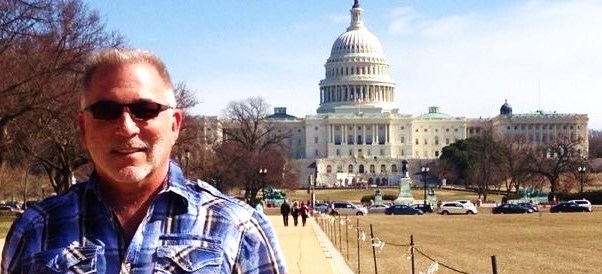
KENTON AT CAPITOL 2 (2)

http://allplaninsurance.com

http://thewoodlandstxhealthinsurance.com

**************************************************************************************

FEATURED ARTICLES:

The New York Times

Business Day |​NYT Now

Bracing for New Challenges in Year 2 of Health Care Law

By REED ABELSON SEPT. 2, 2014

The first year of enrollment under the federal health care law was marred by the troubled start of HealthCare.gov, rampant confusion among consumers and a steep learning curve for insurers and government officials alike.

But insurance executives and managers of the online marketplaces are already girding for the coming open enrollment period, saying they fear it could be even more difficult than the last.

One challenge facing consumers will be wide swings in prices. Some insurers are seeking double-digit price increases, while others are hoping to snare more of the market by lowering premiums for the coming year. At the same time, the Obama administration is expected to try to persuade about five million more people to sign up while also trying to ensure that eight million people who now have coverage renew for another year.

Adding to the complexity is the shorter time frame for choosing a new policy: three months instead of six.

“In some respects, it’s going to be more complicated,” said Kevin Counihan, the former chief executive of Access Health CT, Connecticut’s online marketplace, who was just named as the head of the insurance marketplaces for the federal government. Connecticut’s marketplace was among the most successful state-based exchanges, sharply reducing the number of uninsured in the state. “Part of me thinks that this year is going to make last year look like the good old days.”

Kevin Counihan, head of the federal insurance marketplaces, says 2015’s hurdles may outstrip 2014’s. Credit Christopher Capozziello for The New York Times

No one expects to face last year’s technological hurdles, in which consumers sometimes could not navigate the federal or state websites to buy a policy. HealthCare.gov is running relatively smoothly, and the states have been working to address technical problems with their marketplaces.

“The exchange can’t work worse than it did last year,” said Dr. Peter Beilenson, chief executive of Evergreen Health Co-op, an insurer in Maryland, where a faulty state-run marketplace prevented many people from signing up.

But the upheaval in insurance markets, with new carriers entering and the price of plans changing significantly, may make the coming year no easier than the last. While federal rules allow people to renew their coverage automatically for the next year in the same plan, many customers, especially if they were eligible for federal tax credits, will want to resurvey the landscape.

Just as there was an uproar when some people found out last year that their policies had been canceled, individuals this year may be surprised to find that they could be asked to pay much more for the same plan because their carrier is raising its prices or the amount of the federal tax credit they will receive is changing.

People will be renewing at the same time that others are enrolling for the first time, starting a week and a half before Thanksgiving, on Nov. 15. To ensure that they have a new plan by the beginning of the year, those who renew will have to sign up by Dec. 15. Exactly how the renewal process will work has not yet been determined.

“We’re still waiting on the details of the process,” said Paula Steiner, chief strategy officer for Health Care Service Corporation, which offers Blue Cross plans in five states. “We haven’t gone through any testing yet of any changes to the system for 2015.”

“I think there’s a possibility that there’s equal or more confusion this fall,” she said.

Those responsible for the federal marketplace say they are working hard to make the process as easy as possible. “We’re putting in place the simplest path for consumers this year to renew their coverage,” said Andrew Slavitt, principal deputy administrator for Medicare, which oversees the insurance marketplaces. Those who prefer to stay with the same plan will be able to renew their coverage automatically, as many do with employer coverage. People can renew by doing “absolutely nothing,” he said.

The federal online marketplace is being continuously improved, according to Mr. Slavitt, who said the government was updating the website to allow renewals. “We’re in a very different position than we were last year,” he said.

Dunia Padrino, left, with her sons Rolando Vega and Hanoy Castellon, learning about insurance under the Affordable Care Act last November in Hialeah, Fla. Credit Joe Raedle/Getty Images

Compared with this year, from the 19 states for which information is available, 30 carriers have requested entrance into the marketplaces for 2015 and 1.6 times more plans are being offered, with prices for 2015 likely to remain varied, as they were the previous year, according to McKinsey & Company’s Center for US Health System Reform, which is analyzing the insurance filings as they become available. Prices are rising about 30 percent for some plans, while decreasing by the same amount for others, depending on the market and policy. “We are definitely seeing a lot of volatility in pricing,” said Erica Hutchins Coe, a McKinsey expert.

Some of the large insurers, like some of the Blue Cross plans, have requested steep increases. Florida Blue, for example, expects to raise its rates by an average of 17.6 percent for 2015. Others, like some of the co-op plans, have been keeping prices low or even reducing rates.

Molina Healthcare, a company that has traditionally offered Medicaid coverage and now sells exchange policies, says its renewal strategy for the coming year is to emphasize that its members need not be concerned that the plan they selected will be more expensive. “One thing you can count on is the rates are flat or down,” said Lisa Rubino, senior vice president of exchanges for Molina.

In California, the state exchange is trying to get a step ahead by allowing people to begin renewing their plans Oct. 1. But anyone who wants to switch plans will still have to wait until Nov. 15, and many individuals may well want to shop around. In the Sacramento area, for example, someone who selected an H.M.O. plan from Anthem for 2014 faces a possible increase of nearly 17 percent, compared with a 2 percent increase for an H.M.O. plan from Kaiser Permanente in the same area.

Consumer advocates and others say nearly everyone with coverage should review their options ( https://www.brokeroffice.com/quote/quoteengine.jsp?login=insurnet) as well as whether their federal tax subsidy is likely to shift — either because their income may have changed or because the cost of the benchmark plan used to calculate the tax credit has changed.

Experts like Sabrina Corlette, a policy expert at Georgetown University’s Center on Health Insurance Reforms, say persuading those who did not sign up for coverage during the last open enrollment period to get coverage for 2015 will also present a significant challenge. People in this group were unaware they could get assistance with the cost of their premiums, decided the coverage was not worth the cost or simply found the process of enrolling too challenging.

“Most people assume in the first year they got the low-lying fruit,” Ms. Corlette said. Insurers and others “do have to widen the net,” she said, targeting hard-to-reach populations with what in the second year will often be “fewer resources and less time.”

Dr. Martin E. Hickey, chief executive of New Mexico Health Connections, a co-op that will rely on low prices to continue to attract members, said it was “a lot easier to retain a consumer than chase a new one.” In his state, many individuals failed to take advantage of the subsidies that reduced the cost of coverage substantially. “We didn’t communicate the affordability,” he said.

Even in California, which enrolled nearly 1.4 million people in its first open enrollment, there is acknowledgment that more effort is needed.

“We have a heavy lift again,” said Dana Howard, a spokesman for the state’s exchange, Covered California.

*******************************

THE HILL

Home | Policy | Healthcare

HealthCare.gov CEO sees challenges ahead

By Elise Viebeck – 09/03/14 10:50 AM EDT

The newly appointed CEO of HealthCare.gov is predicting fresh challenges for the system’s second enrollment period this November. Kevin Counihan, former head of Connecticut’s exchange, cited concerns such as the shorter sign-up period for 2015 plans that could create problems for officials and consumers alike.

“In some respects, it’s going to be more complicated,” Counihan told The New York Times in an interview. “Part of me thinks that this year is going to make last year look like the good old days.” The comment highlights the heady task facing federal health officials as they work to prevent a repeat of last year’s first enrollment period. Last year, technical flaws at HealthCare.gov and other exchanges plunged the enrollment process into chaos and created an enormous political headache for the Obama administration. Counihan did not indicate that his fears related to the technology, which has undergone extensive repairs since last October. The 2014 sign-up period was six months long, but with just three months to enroll more consumers, this year’s process could prove a tough climb as insurers and the government seek to convince hard-to-reach populations to buy health plans.

Existing policyholders are likely to encounter changes in their premium prices that could also cause confusion.

http://thehill.com/policy/healthcare/216496-healthcaregov-ceo-sees-challenges-ahead

← Back

Thank you for your response. ✨


CENTER FOR MEDICARE SERVICES DELAYS CUTS TO MEDICARE ADVANTAGE – OR DID THEY?

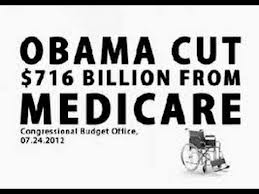
OBAMA CUTS TO MEDICARE

In a surprise announcement today the Center For Medicare and Medicaid Services gave notice they are reversing planned cuts to Medicare Advantage Plans for 2015. But after all variables are factored in will the end result be an increase or decrease in reimbursements for Medicare approved procedures next year?

If implemented the cuts would have resulted in 2% lower payments to Medicare providers on top of the 6% cuts for 2014. Instead, the agency says, payments will instead be increased 0.4%. Still, with all variables in play, Aetna anticipates payment reductions and Humana estimates a funding decline of 3%. (See feature article from Reuters below.)

OBAMA CUTS TO MEDICARE II

What is the end result of all this? 2014 reductions already saw the termination of thousands of providers from HMO and PPO Medicare Advantage networks. Further reductions are likely to result in more of the same along with probable increases in premiums and copays for medical procedures. And–if not now–certainly when they are ultimately implemented as mandated by the Affordable Care Act (ACA). Which begs the question: If all these cuts to Medicare Advantage were for the purpose of financing the ACA, what is the long-term impact of delaying them on the financial solvency of the Act? Or was the latter really ever a concern of the administration? Or is it simply the case that concern over the effect of cuts on this fall’s election over-rides the need for the Act to be financially feasible? (In case you were naïve enough to believe feasibility was realistic in the first place.) In light of all the approximately 38 delays and changes in the law since its passage, it is apparent to this author that political expediency rules the day in Washington. In other words, “business as usual”.

– Admin. Kenton Henry

*************************************************************************************

FEATURE ARTICLE

U.S. insurers still expect cuts in 2015 Medicare payments

By Caroline Humer

Tue Apr 8, 2014 1:40pm EDT

(Reuters) – U.S. health insurers said on Tuesday they still expected cuts in government reimbursements for privately managed Medicare health plans for the elderly next year even after the Obama administration rolled back the steepest reductions.

The government agency that oversees Medicare said late on Monday that on average, reimbursements to insurers for private Medicare plans would rise 0.4 percent, reversing what it said was a proposed cut of 1.9 percent.

The insurance industry and advocates for the elderly had lobbied against the cuts, which were first proposed in February, saying they would reduce benefits for older people.

Republican and Democratic lawmakers had broadly opposed further cuts as well, adding pressure on the administration at a time when President Barack Obama’s healthcare law was also under attack.

After analyzing the final rate notice from the Centers for Medicare and Medicaid Services (CMS) and comparing it with their own models, health insurers said on Tuesday that the 2015 Medicare Advantage payment rates represented a cut to payments from 2014 levels.

Humana Inc, which derives two-thirds of its revenue from administering Medicare Advantage plans, said it expected a funding decline of about 3 percent for 2015 plans from 2014, according to a filing with the Securities and Exchange Commission.

This is slightly better than Humana’s initial forecast for a drop of 3.5 percent to 4 percent in those rates, based on the proposal issued on February 21.

Aetna Inc, which also provides Medicare Advantage plans, said it also anticipated a decline.

“Despite CMS’s actions, Medicare Advantage plans will still face rate decreases for 2015,” Aetna spokeswoman Kendall Marcocci said in a statement. The company is still evaluating the impact, she added.

CMS officials were not immediately available for comment on the insurers’ or analysts’ analyses.

Humana shares fell 1.7 percent on Tuesday. Aetna was little changed, and UnitedHealth Group Inc slipped 0.4 percent.

APPLES-TO-ORANGES

The comments from individual insurers echoed that of industry trade group America’s Health Insurance Plans, which said it was concerned about how the policy will affect the 15 million people who receive privately managed benefits. The balance of the more than 50 million older and disabled people who use Medicare are in a different program run by the government.

“The changes CMS included in the final rate notice will help mitigate the impact on seniors, but the Medicare Advantage program is still facing a reduction in payment rates next year on top of the 6 percent cut to payments in 2014,” AHIP President Karen Ignagni said in a statement.

Wall Street analysts saw an improvement of 2 to 3 percentage points in the government’s funding proposal, but they estimated about a 3 percent cut overall, not an increase of 0.4 percent.

They described an apples-and-oranges comparison between how they calculate the total impact of Medicare reimbursement rates versus how the government does so.

One difference may be that the government analysis did not reflect the 1 percent insurance tax that funds Obama’s Patient Protection and Affordable Care Act, while some analysts included it.

Another factor, some said, is that CMS adjusted its estimates to reflect the worsening health of some Medicare members, while analysts did not.

Analyst Sheryl Skolnick of CRT Capital described the final funding announcement as being “less worse” than anticipated.

“The market was assuming that the final rate would be better than the proposal, and that’s what it got,” Skolnick wrote in a note.

Each year, the government releases its formulas for determining how it will reimburse the insurers for plan members’ procedures and doctor visits. Insurers use this information to decide on the markets where they will offer plans and what benefits they can provide.

(Reporting by Caroline Humer; Editing by Michele Gershberg, Lisa Von Ahn)

← Back

Thank you for your response. ✨

http://allplaninsurance.com

http://thewoodlandstxhealthinsurance.com

ALL PLAN MED QUOTE LAUNCHES SISTER TO ORIGINAL WEBSITE!

ALLPLANHEALTHINSURANCE DOT COM LOGO

All Plan Med Quote has been providing the individuals, families and employer groups the lowest quotes and best value in health and Medicare related insurance in four different states since 1991. In 1998 we became one of the first insurance agencies in the country to begin marketing via the internet through our website AllplanHealthInsurance.com.

In an effort to respond more directly and with products tailored to our hometown, we have just launched a sister website: TheWoodlandsTXHealthInsurance.com http://thewoodlandstxhealthinsurance.com. Logos and customized marketing materials are still being designed but the website is online!

In addition to health, Medicare related, dental and life insurance we will be posting health care news relevant to residents of our great community. If you are a resident of The Woodlands or Montgomery County, Texas please visit our site and also follow my blog at http://healthandmedicareinsurance.com to stay abreast of the latest in consumer medical insurance and health related news.

Thanks so very much,

Kenton Henry

Owner; Broker; Editor

← Back

Thank you for your response. ✨

http://allplanhealthinsurance.com

Obamacare Backers Quietly Destroying Their Own Creation

DR FRANKENSTEIN AND HIS MONSTER

Op-ed by Kenton Henry

The analogy is irresistible and the comparison inescapable. Dr. Frankenstein  experienced an epic epiphany when he realized his good intentions had gone awry and he was responsible for creating a monster which was a threat to the public’s health and welfare.  And now the same realization has dawned on  the White House and Democratic Senate. They ignored all the polls which have always indicated the majority of Americans are not in favor of Obamacare. They ignored the entreaties of the Republicans (not one of whom voted for the Act) to at first repeal; then later, to post-pone the individual mandate. Now, with November’s mid-term elections on the horizon, they are pressing the panic button and back-pedaling in an overtly political attempt to mitigate fallout at the polls. Last week they modified the individual mandate allowing those who like their non-compliant plan to keep their plan through 2016. But what went unnoticed and unreported by the media was their latest move (also last week) to destroy their own creation wherein they modified the hardship exemption. It now allows anyone whose health plan was canceled due to Obamacare to sign a form stating such–and that the act of purchasing ACA compliant coverage would be “hardship”– to opt out of a purchase with no financial repercussions.  The details of the exemption are outlined in our feature article in The Wall Street Journal which concludes the exemption is essentially available to anyone who wants one.


In reality, the Democrats are realizing they are falling on their own sword. What was already a case of adverse selection in terms of the risk funneled into the new Affordable Care Act (ACA) compliant  policies, has now been made a case of adverse selection on steroids. This editor’s concern is that the insurance companies will not be able to sustain the new block of compliant policies and will fail minus another massive government bailout. Like banks, they will be deemed “too big to fail” by the administration. For now. Of course, in good time (after Democrats succeed in maintaining control of things), the safety net will be removed and the liberals will rejoice as the companies fail. And left leaning Democrats will have the single-payer system they have long admitted was their prize objective. An accomplishment so necessary for them to control one sixth of our nation’s economy. This in spite of the fact that every major social welfare program this country has implemented is on the fast track to insolvency.


As Dr. Frankenstein worked to destroy his own signature creation, the President now works to gut his. And as always . . . for the sake of politics.

************************************************************************************************

FEATURE ARTICLE:

The Wall Street Journal

ObamaCare’s Secret Mandate Exemption

HHS quietly repeals the individual purchase rule for two more years.

Updated March 12, 2014 6:58 p.m. ET
 

ObamaCare’s implementers continue to roam the battlefield and shoot their own wounded, and the latest casualty is the core of the Affordable Care Act—the individual mandate. To wit, last week the Administration quietly excused millions of people from the requirement to purchase health insurance or else pay a tax penalty. 

This latest political reconstruction has received zero media notice, and the Health and Human Services Department didn’t think the details were worth discussing in a conference call, press materials or fact sheet. Instead, the mandate suspension was buried in an unrelated rule that was meant to preserve some health plans that don’t comply with ObamaCare benefit and redistribution mandates. Our sources only noticed the change this week.

That seven-page technical bulletin includes a paragraph and footnote that casually mention that a rule in a separate December 2013 bulletin would be extended for two more years, until 2016. Lo and behold, it turns out this second rule, which was supposed to last for only a year, allows Americans whose coverage was cancelled to opt out of the mandate altogether.

In 2013, HHS decided that ObamaCare’s wave of policy terminations qualified as a “hardship” that entitled people to a special type of coverage designed for people under age 30 or a mandate exemption. HHS originally defined and reserved hardship exemptions for the truly down and out such as battered women, the evicted and bankrupts.

But amid the post-rollout political backlash, last week the agency created a new category: Now all you need to do is fill out a form attesting that your plan was cancelled and that you “believe that the plan options available in the [ObamaCare] Marketplace in your area are more expensive than your cancelled health insurance policy” or “you consider other available policies unaffordable.”

This lax standard—no formula or hard test beyond a person’s belief—at least ostensibly requires proof such as an insurer termination notice. But people can also qualify for hardships for the unspecified nonreason that “you experienced another hardship in obtaining health insurance,” which only requires “documentation if possible.” And yet another waiver is available to those who say they are merely unable to afford coverage, regardless of their prior insurance. In a word, these shifting legal benchmarks offer an exemption to everyone who conceivably wants one.

Keep in mind that the White House argued at the Supreme Court that the individual mandate to buy insurance was indispensable to the law’s success, and President Obama continues to say he’d veto the bipartisan bills that would delay or repeal it. So why are ObamaCare liberals silently gutting their own creation now?

The answers are the implementation fiasco and politics. HHS revealed Tuesday that only 940,000 people signed up for an ObamaCare plan in February, bringing the total to about 4.2 million, well below the original 5.7 million projection. The predicted “surge” of young beneficiaries isn’t materializing even as the end-of-March deadline approaches, and enrollment decelerated in February.

Meanwhile, a McKinsey & Company survey reports that a mere 27% of people joining the exchanges were previously uninsured through February. The survey also found that about half of people who shopped for a plan but did not enroll said premiums were too expensive, even though 80% of this group qualify for subsidies. Some substantial share of the people ObamaCare is supposed to help say it is a bad financial value. You might even call it a hardship.

HHS is also trying to pre-empt the inevitable political blowback from the nasty 2015 tax surprise of fining the uninsured for being uninsured, which could help reopen ObamaCare if voters elect a Republican Senate this November. Keeping its mandate waiver secret for now is an attempt get past November and in the meantime sign up as many people as possible for government-subsidized health care. Our sources in the insurance industry are worried the regulatory loophole sets a mandate non-enforcement precedent, and they’re probably right. The longer it is not enforced, the less likely any President will enforce it.

The larger point is that there have been so many unilateral executive waivers and delays that ObamaCare must be unrecognizable to its drafters, to the extent they ever knew what the law contained.

http://allplanhealthinsurance.com

http://thewoodlandstxhealthinsurance.com

← Back

Thank you for your response. ✨

Cost of Obamacare Borne On The Back Of Seniors

SENIORS ANGRY 1

To say that President Obama is not an enthusiastic backer of the two Medicare programs that offer seniors private insurance options would be something of an understatement.

Over the years, Obama has repeatedly derided Medicare Advantage — the program that lets seniors enroll in subsidized, private insurance. He once called it “wasteful,” and said it amounted to “giveaways that boost insurance company profits but don’t make (seniors) any healthier.”

Obama has been equally harsh when it comes to Medicare Part D — the prescription drug benefit President Bush signed into law that relies on privately run plans.

In his 2006 book, “The Audacity of Hope,” Obama blasted the program, saying it “somehow managed to combine the worst aspects of the public and private sectors.” As president, he said it gave overly generous “taxpayer subsidies to prescription drug companies.”

Both programs, it turns out, have been wildly popular with seniors and, by most measures, big successes. But Obama nevertheless appears determined to undermine them with sharp cuts in payments and sweeping new regulations.

Started back in 1997 — and initially called Medicare+Choice — the Medicare Advantage program pays private insurers a set amount per enrollee to provide comprehensive benefits and anything else they can afford to offer.

The idea was that private insurers could better co-ordinate care and manage health costs than the old fee-for-service Medicare, and so provide more comprehensive benefits.

While enrollment in these private plans was flat for the first several years, it has skyrocketed since 2005, to the point where almost one in three seniors are covered by a private health plan. As long as it is affordable, this editor considers Medicare Supplement the ideal way for a Medicare recipient to be covered for medical expenses. Not because selection of Supplement Plan F or G will cover all or virtually all of your expenses but because ALL Medicare Supplement options allow you to visit any doctor, hospital or medical provider that sees Medicare Patient. This as opposed to Medicare Advantage Plans most of which have evolved to significantly limiting your choice of providers. This being said, Medicare Advantage has been a savior to those who simply cannot afford Medicare Supplement. And contrary to Obama’s claim, seniors selecting Medicare Advantage tend to get better quality health care than those in traditional Medicare.

Critics, however, point to studies showing that the government pays Medicare Advantage more per enrollee than it would cost if these seniors had enrolled in the old Medicare program.

Obama tried to remedy this by cutting Medicare funding by $716 billion over the next ten years with payments to Medicare Advantage totaling $200 billion. The purpose of which is to help pay for ObamaCare (while providing “bonus” payments to plans that score high on a quality rating). An official analysis from Medicare’s actuary concluded, however, that such cuts would drive millions seniors out of their Advantage plans and back into the government-run program.

Recognizing political risks of these payment cuts, the administration put them off until AFTER the presidential elections, shoveling $8 billion into a bogus “demonstration project” that offset almost all the scheduled Medicare Advantage cuts implemented in 2012.

Question: What are your thoughts about President Obama’s cuts to the Medicare Advantage and Part D Prescription Drug Programs?

Admin. – Kenton Henry

http://TheWoodlandsTXHealthInsurance.com

*******************************************************************

FEATURE ARTICLE:

THE HILL

February 25, 2014, 10:58 am

GOP leaders to HHS: Call off Medicare changes

By Elise Viebeck

Republican Senate leaders criticized the Obama administration Tuesday for proposed changes to Medicare Advantage (MA) and Part D they say would weaken the two programs.

Led by Minority Leader Mitch McConnell (R-Ky.), the lawmakers called on Health and Human Services (HHS) Secretary Kathleen Sebelius to suspend proposed cuts to Medicare Advantage and reforms in Part D that would allow regulators to participate in negotiations between insurance companies and pharmacies for the first time.

“Unlike ObamaCare, the Medicare prescription drug benefit is wildly popular and it has cost less than initial projections,” the letter stated.

“At a time when HHS is struggling on basic implementation tasks on many fronts, we cannot understand the logic behind the department’s interest in further undermining one of the few success stories under its purview.”

The administration argues that cuts in Medicare Advantage would reduce waste within the program and bring its per-patient funding in line with traditional Medicare, which currently receives less money on average.

In Part D, federal health officials say regulators need new authority to ensure the market for prescription drugs works well for seniors.

The proposed rules would also open drug plans’ preferred networks to a wider range of pharmacies, limit plan bids within a region and remove “protected class” designations for certain types of drugs.

But Republicans say the changes will harm Medicare Advantage beneficiaries and potentially raise premiums on Part D plans or force seniors out of their current coverage.

Both issues are rearing their heads in the midterm elections, as the GOP seeks to broaden its healthcare attacks to include more than ObamaCare.

Tuesday’s letter to Sebelius was signed by McConnell, GOP Whip John Cornyn (Texas), GOP Conference Chairman John Thune (S.D.), GOP Policy Committee Chairman John Barrasso (Wyo.), Conference Vice Chair Roy Blunt (Mo.) and National Republican Senatorial Committee Chairman Jerry Moran (Kan.).

← Back

Thank you for your response. ✨

http://TheWoodlandsTXHealthInsurance.com

http://allplanhealthinsurance.com

The White House Doubles Down On Republicans Request To Delay The Individual Mandate

LONELY OBAMACARE NAVIGATOR (2)

Pictured: Navigator Dealing With The Public’s Not So Mad Rush To Enroll

**************************************************************************************************

The White House has doubled down on the Republican’s November request to delay the “Individual Mandate” of the Affordable Care Act.

At least a major portion of it.

The only thing predictable about implementation of the Affordable Care Act is that . . . nothing is predictable. On Wednesday, the Obama Administration played “tooth fairy” to Democrat candidates up for re-election this November and gave American individuals and families with pre-2014 health insurance policies a reprieve on the mandate to purchase ACA compliant coverage for two years through 2016. Last fall the House argued and passed a bill allowing American individuals and families who liked their current health plan – to keep their health plan. As the President had originally promised they could do. But for just one year. Now, in what appears to be an entirely self-serving and purely political move to mitigate a loss of Democratic seats in the up-coming mid-term elections, the Administration Obama says . . . “Errrr – of course! You can keep your plan for two more years!” It is quite apparent the Democrats have correctly determined the backlash from plan cancellations mandated by law could be devastating in terms of their election. Therefore, they speculate, with this aspect of the law deferred they will fair much better at the polls.

As a health insurance broker, I must admit I feel this is something of reprieve for myself and many of my clients. My clients can keep their lower cost plans which, in Texas, average approximately 40% higher than pre-compliant plans (approximately 80% higher in Indiana and Ohio – not to mention a dearth of PPO options as opposed to the restrictive HMO options). As for me, I can cease worrying, for now, about losing clients en masse who would otherwise be forced off their existing plans and might go elsewhere for replacement coverage. I can also anticipate obtaining entirely new clients who choose to elect a new plan in order to cover a pre-existing condition or just to comply with the law. And therein lies the rub. Just because the White House says those who have a plan can keep their plan, does not mean the individual states or the insurance companies will agree to this. And for many, it is far too late – their policies already having been canceled. But–furthermore–this reprieve apparently does not carry over to those who have no coverage whatsoever. They must still acquire coverage by March 31st or be assessed the penalty and locked out of insurance for the remainder of 2014. (Unless, of course, they are also eventually granted clemency by the President.)

And how does your editor feel about this from an actuarial standpoint relative to the insurance companies and the ACA itself? In four words: “Politically Pragmatic Voodoo Economics”. Even Obamacare architect Ezikiel Emanuel, stated Wednesday while on MSNBC, that while he denounced the policy implications of yet another Obamacare delay, “for the political gain, it’s worth it”. Unabashedly self-serving.

If the insurance companies comply, they are once again forced to flex at the last minute and be left with two separate blocks of business. One old block containing less claim’s risk. And one new block where the only motivation to insure oneself will be to transfer personally large risk to the insurance company. This will be in terms of pre-existing conditions which were previously manageable or that arise for the first time. As evidence of this, in an attempt to limit the disruption to the insurance industry precipitated by this latest modification, the Department of Health and Human Services also announced yesterday that the “risk corridor” program (which has been described as a bailout to insurers) would be further modified to channel more money to the insurers in states affected by the change. This only reinforces my opinion that those behind this bill are not economists and never cared about the financial viability of this law. They are, however, very concerned with maintaining their political lives at all cost.

Admin. – Kenton Henry

http://allplanhealthinsurance.com

http://thewoodlandstxhealthinsurance.com

****************************************************************************************************

FEATURE ARTICLE:

THE NEW YORK TIMES

Politics

Consumers Allowed to Keep Health Plans for Two More Years

By ROBERT PEARMARCH 5, 2014

WASHINGTON — The Obama administration, grappling with continued political fallout over its health care law, said Wednesday that it would allow consumers to renew health insurance policies that did not comply with the new law for two more years, pushing the issue well beyond this fall’s midterm elections.

The reprieve was the latest in a series of waivers, deadline extensions and unilateral actions by the administration that have drawn criticism from the law’s opponents and supporters, many saying President Obama was testing the limits of his powers.

The action reflects the difficulties Mr. Obama has faced in trying to build support for the Affordable Care Act and the uproar over his promise — which he later acknowledged had been overstated — that people who liked their insurance plans could keep them, no matter what.

Under pressure from Democratic candidates, who are struggling to defend the president’s signature domestic policy, Mr. Obama in November announced a one-year reprieve for insurance plans that did not meet the minimum coverage requirements of the 2010 health care law.

The Times would like to hear from Americans who have signed up for health care under the Affordable Care Act.

Wednesday’s action goes much further, essentially stalling for two more years one of the central tenets of the much-debated law, which was supposed to eliminate what White House officials called substandard insurance and junk policies.

The extension could help Democrats in tight midterm election races because it may avoid the cancellation of policies that would otherwise have occurred at the height of the political campaign season this fall.

In announcing the new transition policy, the Department of Health and Human Services said it had been devised “in close consultation with members of Congress,” and it gave credit to a number of Democrats in competitive races, including Senators Mary L. Landrieu of Louisiana, Jeanne Shaheen of New Hampshire and Mark Udall of Colorado.

Kathleen Sebelius, the secretary of health and human services, said Mr. Obama was trying to “smooth the transition” to a new system, using flexibility that exists under the law.

The move reflects the administration’s view that a divided Congress would not be willing to make changes to the law, but lawyers questioned the legitimacy of the action and said it could have unintended consequences in the long run.

“I support national health care, but what the president is doing is effectively amending or negating the federal law to fit his preferred approach,” said Jonathan Turley, a law professor at George Washington University. “Democrats will rue the day if they remain silent in the face of this shift of power to the executive branch.”

Mr. Turley said Mr. Obama was setting precedents that could be used by future presidents to delay other parts of the health care law or to suspend laws dealing with taxes, civil rights or protection of the environment.

Republicans said the move confirmed their contention that parts of the health care law were ill conceived and unworkable.

The number of people with noncompliant coverage is not known. Insurers sent out perhaps 4.5 million cancellation notices last fall, but some of the policyholders have bought new coverage that complies with the law. Administration officials said that the number of people with noncompliant policies would shrink by attrition in the next two years.The health care law sets dozens of federal standards for insurance, requiring coverage of services in 10 specific areas and providing many consumer protections not found in older policies.Under the transition policy announced by Mr. Obama in November, insurers “may choose to continue coverage that would otherwise be terminated or canceled.” Insurers were allowed to renew existing policies even if they did not provide the “essential health benefits” prescribed by law. In addition, the administration said, insurers could continue charging women more than men for those policies and could charge higher premiums based on a person’s health status, in violation of the new law.

A White House official said Wednesday that it would allow insurers to continue existing policies with renewals as late as Oct. 1, 2016, so individuals and small businesses could have noncompliant coverage well into 2017.

Under another policy announced by the administration on Wednesday, certain health plans will be exempt from new fees imposed on insurance companies and on many self-insured group health plans. Labor unions had been lobbying for such an exemption, saying the fees could be “highly disruptive” to Taft-Hartley plans administered jointly by labor and management representatives in construction, entertainment and other industries.

The Times would like to hear from Americans who have signed up for health care under the Affordable Care Act.

Wednesday’s action goes much further, essentially stalling for two more years one of the central tenets of the much-debated law, which was supposed to eliminate what White House officials called substandard insurance and junk policies.

The extension could help Democrats in tight midterm election races because it may avoid the cancellation of policies that would otherwise have occurred at the height of the political campaign season this fall.

In announcing the new transition policy, the Department of Health and Human Services said it had been devised “in close consultation with members of Congress,” and it gave credit to a number of Democrats in competitive races, including Senators Mary L. Landrieu of Louisiana, Jeanne Shaheen of New Hampshire and Mark Udall of Colorado.

Kathleen Sebelius, the secretary of health and human services, said Mr. Obama was trying to “smooth the transition” to a new system, using flexibility that exists under the law.

The move reflects the administration’s view that a divided Congress would not be willing to make changes to the law, but lawyers questioned the legitimacy of the action and said it could have unintended consequences in the long run.

“I support national health care, but what the president is doing is effectively amending or negating the federal law to fit his preferred approach,” said Jonathan Turley, a law professor at George Washington University. “Democrats will rue the day if they remain silent in the face of this shift of power to the executive branch.”

Mr. Turley said Mr. Obama was setting precedents that could be used by future presidents to delay other parts of the health care law or to suspend laws dealing with taxes, civil rights or protection of the environment.

Republicans said the move confirmed their contention that parts of the health care law were ill conceived and unworkable.

But Republicans denounced the change. “The administration’s decision to carve out its union cronies from the Obamacare fee is beyond egregious and will leave others with self-insured plans on the hook to foot the bill,” said Senator John Thune, Republican of South Dakota.

Robert Laszewski, a consultant who works closely with insurers, said the reprieve for noncompliant policies “tends to undermine the sustainability of Obamacare” by reducing the number of people who will buy insurance through the exchanges.

The administration acknowledged that its transition policy could lead to “higher average claims costs” for people who buy insurance that complies with the Affordable Care Act. But health officials said the 2010 law provided several “shock absorbers” to help stabilize premiums.

← Back

Thank you for your response. ✨

http://thewoodlandstxhealthinsurance.com

http://allplanhealthinsurance.com

Capitol Conference 2014 (or Your Intrepid Editor Goes to Washington)

MR BUCK GOES TO WASHINGTON II (2)

Late last week I returned from the National Association of Health Underwriters Capitol Conference 2014 in our nation’s capitol. Our group stayed in the shadow of the Capitol at the Capitol Hill Hyatt two blocks from where our laws or bills are created and passed. Our primary objective this year would be to address the ramifications of what is arguably the biggest Act ever in terms of its impact on all America. It was my first meeting to attend at a national level and I am grateful for the warm welcome provided me by the Houston, Texas Chapter and the entire experience. I express particular thanks to Lonnie Klene for facilitating my attendance and Malcolm Browne, Sibony-Trevino Toth, Jo Middleton and Jeffrey Bacot for their engaging conversation which made the informal time much more enjoyable.

 
The overall goal of the conference was to represent the interests of health insurance agents and brokers in their role of assisting the public in the administration’s goal of acquiring quality, affordable health insurance. Of course, because of what we now know are the results of the Patient Protection and Affordable Care Act, this seems something of a daunting, if not failed, mission in terms for many of the stated beneficiaries at this point. Still, it was the Association’s stance that the bill is law and for now is the system we have to work with. As much as I would have liked to have protested and lobbied for solutions to our nation’s debt crisis; its lack of a viable energy policy and justice for the victims of Fort Hood and Benghazi – this was not the purpose of our attendance as a group nor the reason the Houston Chapter sponsored my presence at the conference. Those are issues which I will have to address through correspondence with the contacts I made and indirectly at the poll booth in the coming mid-term election.
The issues which our group did address with our respective Representatives were, among others:

 
1) The need for involvement of professionally licensed benefit specialists, i.e., agents and brokers (as opposed to unlicensed, unvetted navigators) to help consumers before, during and–most importantly–after the sale of private health insurance coverage and, of course, our opposition to their exclusion in this process.
2) Our concern over the inability of many employers to afford to offer coverage to their employees and the negative effect this has on our nation’s current economic uncertainty and limited job growth.
3) Our support of a comprehensive bill to rectify provisions of the law and new regulatory requirements that are creating compliance burdens for businesses and conflict with time tested employee benefit practices.
4) Our opposition to changes to time tested traditional definitions of small and large employers and full-time and part-time employees, this last of which has resulted in employers cutting employees to 29 hours thus making them part-time employees pursuant to the new definition (30 Hour Work Week) and contributing to under-employment.
5) Our opposition to age banding which unfairly discriminates against the young and does not accurately assign cost relative to risk.
6) Eliminating the national premium tax projected to add an average of $500 of costs to a typical family policy in 2014 and more thereafter.

 
For Seniors:
1) Our support of efforts to preserve Medicare options flexibility for recipients and restore the long-term financial health of the program.
2) Our opposition to funding the costs of the Affordable Care Act on the backs of our nation’s senior citizens. Specifically, cuts to Medicare Advantage and Part D Prescription Drug Plans.
3) Providing new financial incentives to encourage and make possible the purchase of long-term care insurance for our exploding senior population. (an average of 10,000 boomers turn age 65 every day)
Day 1 of the conference consisted in part of a break-out session covering the current state of the employer mandate; Private Exchanges for Employers; Medicaid 101 and Compliance.
Day 2 Addressed The Political Impact of Health Reform; The Future of the Marketplace (federal and state exchanges) followed by lobbying on Capitol Hill. It was at this point Lonnie Klene, Sibony Trevino-Toth and myself met briefly with our District 8 Representative, Kevin Brady and longer with his assistant, Andriu Colgan. Like most aides, Andriu was young, bright and responsive to our concerns (as outlined above) and assured us Congressman Brady was sympathetic to these. In his brief time with us, he confirmed such.

KENTON AT CAPITOL 2 (2)

Your blog editor outside Representative Brady’s Office in the Cannon Building.

CAPITOL AT NIGHT 2

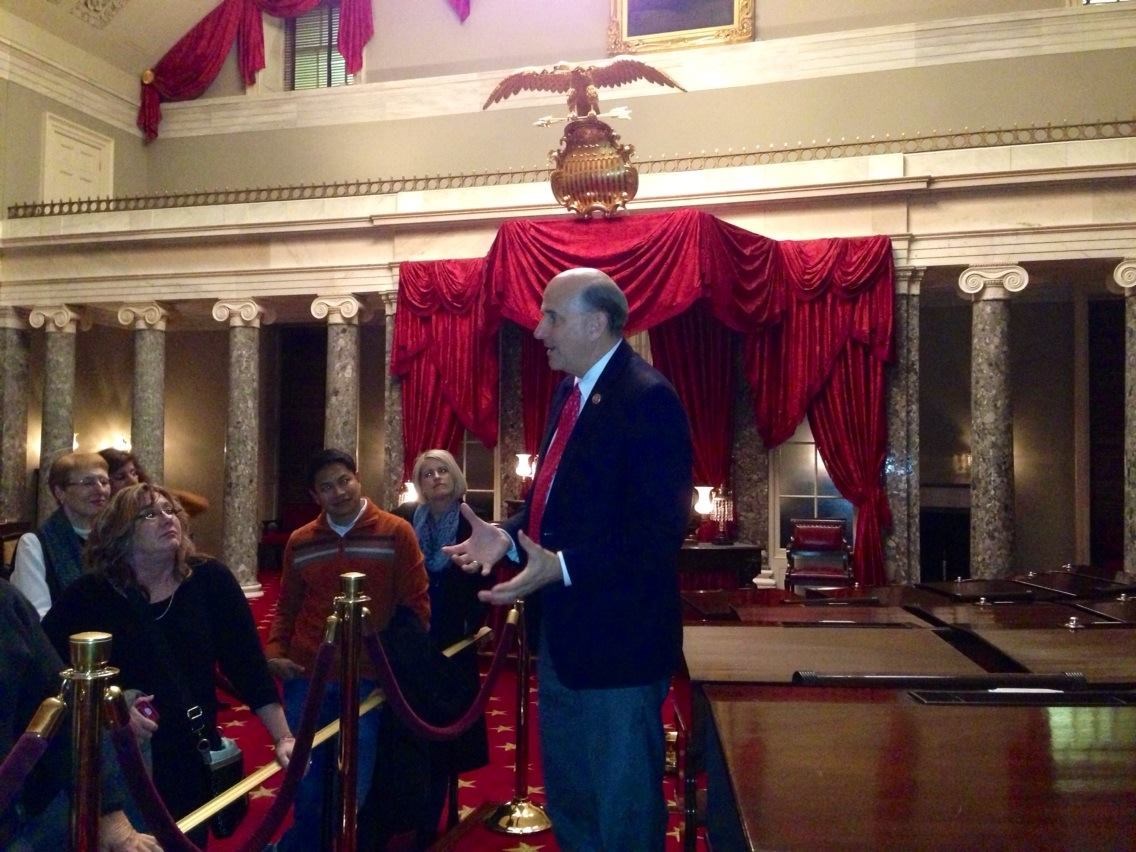
That evening, I was one of a group of Texans privileged to attend a 3.5 hour tour of the Capitol hosted by Texas District One Republican Representative Louie Gohmert, from a boyhood home of mine, Tyler Texas. He insisted he knew some of my cousins, but there was no doubt he knew an incredible amount of our nation and its leader’s history which he very generously shared with us. He is a remarkable story teller with a keen sense of humor and the tour he hosted for us, most of whom will never have occasion to vote for him, proved to be one of the most memorable experiences of my life. My appreciation of our nation’s history and heritage (which was already tremendous) is even greater thanks to him. And he made no bones–he’s with me on the issues! If I lived in his district, he’d certainly have my vote!

CONGRESSMAN LOUIE GOHMERT 1

U.S. Representative, Texas First Congressional District, Louis B. Gohmert, Jr.

 
Day 3 consisted of a panel of physicians discussing Health Cost Transparency; “The Marketplace Transformed” hosted by Representative Renee Elmers (R-NC); Jennifer Duffy, Senior Editor, The Cook Political Report and Representative Jim Matheson (D-UT).
All sessions were followed by a fairly extensive, cogent question and answer period.
This last day ended with a special presentation entitled “Taking It All Home” by Dan Clark, motivational speaker and author of, among other works, the “Chicken Soup for The Soul” series. I must say that after the stress of all the change the Affordable Care Act has brought to this agent, and the others in attendance, we were in need of his inspirational soup and it proved very therapeutic.

 
All in all I came home with more knowledge and ideas of how to assist my clients in dealing with the reality and mandates of the Patient Protection and Affordable Care Act as it stands for now.

 
My advice in short? Just don’t blink!

← Back

Thank you for your response. ✨

http://allplanhealthinsurance.com

Facebook Posting Does Double Duty On This Healthcare Blog

Healthandmedicareinsurance.com followers – I spent enough time responding to the left on my facebook posting – I thought the effort could serve double duty on this blog.
***************************************************************************************************
Before preparing for my trip, I would first like to respond to Kathy: No, I won’t be lobbying for an expansion of Medicaid in Indiana (or any other state for that matter) that has not already expanded it beyond 100% of the Federal Poverty Level. If Medicaid were expanded, it would be to include individuals up to and including those with an income of 133% of the FPL or a maximum income of $15,521 for 2014. Deserving or not aside – while these individuals currently do not qualify for Medicaid in Indiana or Texas – THEY DO qualify for a subsidy of approximately 88% of their health insurance premium. If they elect the plan recommended by the Department of Health and Human Services (“benchmark” plan) it will be the second lowest cost Silver Plan in their area. They are required to pay no more than $40.41 per month. No, I don’t feel sorry for them. They are certainly already receiving food stamps and government subsidized housing and Medicaid is already in financial trouble in most states without further expansion. (Of course I am aware financial feasibility and a balanced state or federal budget is not your concern.)

The person I feel sorry for is the poor working stiff who is making in the $50 – $60,000 dollar range and actually earning his or her income. They don’t qualify a health insurance premium subsidy. (Food stamps I’m not certain of because our government has made those available to virtually everyone including illegal aliens.) Because this responsible working person doesn’t qualify for a subsidy, they will be forced to pay 100% of the Silver plan premium–with an average annual cost of $4,113–entirely on their own. That amounts to 8% of their annual income (at $50k) before taxes which the entitlement person isn’t paying! That’s the person I feel sorry for! Then try providing them with a plan that has their doctor in the network and the benefits they would really like and their cost and that percentage soars! In summation – you keep lobbying for the entitlement class; I’ll keep lobbying for the working American.

Now to address Scott: Glad to see you are finally making a prediction which I feel is pretty much on target. As I’m the one on the front line signing people up for Obamacare, no one knows better the “adverse selection” (bad risk disproportionately selected for participation) than I. But I remember a few of my predictions you tried to dismiss. First – I said Barrack Obama would be elected in 2008. You said, “no”. In 2010 – I said the Patient Protection and Affordable Care Act (PPACA or ACA for short) would pass. You said, “no way!”. Then, in June of 2012 – I said the Supreme Court is going to find a way to uphold the ACA as “constitutional”. You said, “not to worry!” God! I hate being right. (Almost as much as you hate being wrong!)
Anyway, I’m glad you are finally smelling the coffee which probably got to a stench with your latest health insurance premium increase. And, as such, this begs many questions – two of which I will address at this point:

(1) If the federal government cannot build a functional website, to insure the estimated 30 million uninsured, with 3 years lead time – How long is it going to take them to transition us to a “Medicare like” social welfare health insurance program that insures all 300 million plus Americans. And . . .

(2) If Social Security is on track to insolvency and Medicare is predicted to be insolvent by 2023 (nine years from now, people) – how the hell are they going to finance and subsidize healthcare for everyone? Redistribution. Because it wasn’t fair you’ve been so successful, Scott.

In my next blog post, I will address what I see as the specifics of why these things regarding the ACA are destined to transpire. In the meantime, I’m still going to Washington because the one thing we do know is – the person that never gets in the ring has already lost. The real issues I would like to confront our elected officials with are my suggestions for workable healthcare reform which guarantees coverage for pre-existing conditions while being financially responsible and feasible; term limits (I know, I know – when hell freezes over); amnesty and targeting of conservative groups by the IRS. I know they’ll try to get me back on point (theirs) – but not until I’ve made them say, “next question!”

← Back

Thank you for your response. ✨

ALL PLAN MED QUOTE AND CLIENTS TO BE REPRESENTED IN WASHINGTON, D.C. NEXT WEEK

ALL PLAN MED AND LIFE LOGO (2)

Not content to sit passively on the side lines while Washington dictates to him, his clients and fellow citizens – Kenton Henry, agent, owner of Allplanhealthinsurance.com in The Woodlands, will voices his–and your–concerns  in our nation’s Capitol.

KENTONSBUSINESSWEBPHOTO

*******************************************************************

Trusted friends and clients:

It is my privilege to soon be attending the annual legislative conference for my professional association, the National Association of Health Underwriters, from February 24-26 in Washington, D.C. Representing influential professionals in my industry, I will take this opportunity to present meaningful solutions to our national policymakers to improve the cost and quality of health insurance while reducing the burdens the Patient Protection and Affordable Care Act has placed on businesses and individuals across the United States.

As the regulations and requirements of the health reform law continue to evolve, it is extremely important that our representatives in Washington, D.C., hear what is going on with you; your families; employers and employees. Our representatives on Capitol Hill need to hear a common-sense perspective from the average citizen’s point of view along with consumer inspired solutions. I will attend meetings on Capitol Hill with Senators, Representatives and their staff and would be happy to pass along any thoughts about health reform you, my valued friends and clients, may have. I have requested an appointment with Texas District 8 Congressman Kevin Brady, among others.  Please contact me at Quote@Allplaninsurance.com to share your message with them. Share with me your greatest problems and concerns with health care and health insurance and what solutions you may have in mind. I promise your story will be told and commit to being your voice among those who represent us.

In addition to talking to our elected representatives, I will be attending educational sessions about benefit and policy trends that will include:

• Key briefings from the national policy staff and association leadership.
• Panel discussions on health cost transparency, innovations in coverage and delivery systems, and policy trends relative to cost containment.
• Updates on the latest developments regarding the new health insurance marketplaces (exchanges).
• Presentations from congressional and Administration health policy leaders including updates about potential changes to the law and new evolving regulatory guidance.
• A session about using the political dynamics of healthcare to transform business.
• Breakout meetings that will cover innovative solutions to address the employer reporting requirements, shared responsibility requirements, self-funding options in a reformed health system, private and public exchanges, small group market trends and much more!

The future of healthcare reform is ever changing and the impact of this law will affect us all in many different ways across the country. I believe that my voice and your voice truly do make a difference. I look forward to sharing our stories as I lobby on Capitol Hill. Upon my return, I will share with you what I hope will be encouraging news of coming improvements to the present state of healthcare and health insurance in Texas and the rest of America.

Sincerely,
D. Kenton Henry

← Back

Thank you for your response. ✨

Who Needs the Healthcare.gov Website?

HEALTHCARE DOT GOV 2

Op-ed by Kenton Henry

If the administration and main stream media will not tell you–I will:

You can go through me–or any licensed health insurance agent or broker to acquire health insurance. NOW. And this is whether you qualify for a subsidy or not. And, importantly, there will be no, I repeat – $0 difference in your cost (premium) for doing so vs. the government website Healthcare.gov or a private insurance company’s. Period. Now where have you heard “Period” before and it turned out to be true? Well . . . in this case it is.

There is only ONE reason to go to the still basically inoperable, security in doubt, aforementioned federal government health insurance website known as The Marketplace:

1) You qualify for a subsidy of your 2014 health insurance premium and you would like to take advantage of that subsidy as you pay your premiums. I.e., you qualify and would like the premium you pay to your insurance company to be reduced by the amount of your subsidy as you pay the premium. (This as opposed to paying the gross premium (cost before your subsidy is applied) then declaring your subsidy on your 2014 tax return and having your tax liability reduced accordingly.)

If you this does not describe you – there is absolutely no reason to go to healthcare.gov!

Neither do you need to go through a state appointed, federally funded Navigator, hired by the State and required to complete only 20 hours of online education and be subjected to no background check. Why replicate and risk the possible insecurity of your personal information which includes your address; birth date; social security number and reported income by going through someone not even vetted by the Department of Health and Human Services (HHS) or the Center for Medicare Services (CMS)? As the Secretary for HHS, Kathleen Sebelius, admitted under oath and questioning from Texas Senator John Cornyn during Congressional, hearings just last week – “It is possible (for a convicted felon to be hired as a Navigator and take your personal and vital information).”

This begs the question: Why is the administration and main stream media not advertising, and barely mentioning, that a health insurance shopper can go through a licensed and vetted insurance agent who has passed a background check with every company with whom they are appointed and do so at no additional cost? Or that the shopper can then have all the expertise that that agent’s time in the industry (27 years in my case) brings to bear on their needs and situation? Or how about a “go to” advocate in their behalf they can call whenever there is an issue relating to claims; rates or general service related issues such as changes in address or dependents. This as opposed to a different unknown service rep at the end of a toll free number each time they call an insurance company directly?

I will let you speculate on the answers to these questions but (while the purpose of this blog is to educate the follower on issues relating to health and Medicare insurance) indulge me while I for once engage in a little shameless self-promotion on behalf of myself and all licensed agents and brokers:

If you reside in Texas; Indiana; or Ohio – please visit my website at http://allplaninsurance.com and click on the bold red “Get A Quote!” button on the home page or–better yet–call me toll free @ 800.856.6556 and let’s have an intelligent dialogue about your true wants and needs relative to coverage and then get some meaningful quotes and information for you. All without submitting the equivalent of a home mortgage application!

If you reside in any other state – do yourself a favor and call a well recommended licensed health insurance agent or broker in your community.

Again, call me even if you do qualify for a subsidy. I can help you just the same and–as without a subsidy–your cost for insurance will be the same. If you do not want to take the subsidy now but would rather take it on your 2014 tax return (when you actually know what your income will have been) we can apply for you now and have your coverage issued immediately.

If you want the subsidy applied upfront, to reduce the premium you pay each month, we will still have to enter the healthcare.gov website. But we will do so only after we have obtained your gross quotes via my website. I know the formula and can do a pretty fair job of estimating your net premium (after your subsidy is applied). If this scenario describes you,  as the federal website is still inoperable, we should wait and see if HHS and CMS have the site fixed and secure by November 30th as promised. Let’s keep our fingers crossed and–if so–we should sail (wink, wink) through the application and have your coverage issued by January 1. But remember, if all government deadlines remain as now, we will need to complete your application no later than December 15th!

Admin. – Kenton Henry

← Back

Thank you for your response. ✨

http://allplanhealthinsurance.com