
ON THE STATE OF OBAMACARE EXCHANGES AS 2017 OPEN ENROLLMENT APPROACHES

By D. Kenton Henry

As a health insurance broker the last thirty years, I have a vested interest in the state of the industry, and especially so since the Affordable Care Act (ACA) , commonly referred to as Obamacare, was passed in March of 2010. It has been a turbulent ride as I and my clients have struggled to adapt to each phase of the law’s implementation. This has been especially true, the previous three years, as I prepared―and now prepare again―for “Open Enrollment” (OE). OE is the period during which the Department of Health and Human Services allows people to acquire individual and family health insurance for the coming year. This year, it is scheduled to run from November the 1st through January 31st. I say “scheduled”, because they typically extend it in an effort to give people more time to enroll. And, apparently, the Department needs to give people as much time as possible because the latest numbers indicate Obamacare enrollment has fallen significantly short of expectations. (Refer to our feature article from The Washington Post below.)  As it explains, enrollment in the exchanges is less than half initially predicted. The success of the exchanges was predicated on the young and healthy enrolling in numbers sufficient to offset the sick and elderly who would naturally submit more and higher claims to the insuring companies. The young and healthy have largely declined enrolling―presumably and primarily because, well―they’re young and healthy. Had they enrolled, the theory was they would have diluted the claims (losses) with positive (no losses) premium dollars. Additional factors are that, unless someone qualifies for a subsidy, the premiums are high and, for the most part, going higher. The only cases where premiums seem to have gone down are where the insured members are forced into Health Maintenance Organization (HMO) plans where they find their providers and treatment rationed. Furthermore, the penalties (“Shared Responsibility Tax”) for not having insurance, relative to the premiums for having it, are so small as to be largely ignored. Yes, the penalties are increasing but not in proportion to the premiums. And word is, the premiums are only going higher in 2017.

*(CLICK ON THE GRAPHIC TO ENLARGE STATE BY STATE PROJECTED 2017 PREMIUM INCREASES.)
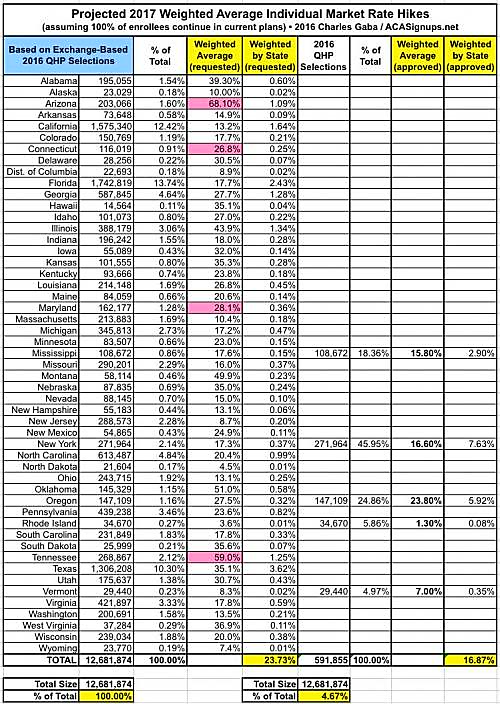
PREMIUM STATS 2017

As our feature article from the Wall Street Journal ( posted below) describes ―another factor detrimental to the success of the Act and the exchanges is decreasing competition among carriers. In spite of the high premiums they charge, insurers are experiencing losses too great to allow them to remain in the marketplace. As a result, they are dropping out in ever increasing numbers. These losses result, in part, because the government itself has cut the subsidies they originally promised insurance companies in order to offset the losses they anticipated. Obviously, companies have less money to pay the higher than expected claims they are experiencing. A Kaiser Family Foundation study, cited in the WSJ article, indicates exchange shoppers may have only one insurance company to choose from in 31% of the nation’s counties and the possibility of only two in another 31%. While many are quick to blame the “greedy” insurance companies, this editor feels the need to point out the reality that insurance companies are not charities. And even charities must operate in the black if they are to remain in existence. It is my opinion that only the government feels it is entitled to operate at a loss and, additionally, that, that is acceptable. Of course, when your are operating entirely with other people’s money―that is a much easier thing to do.

I will now put down my keyboard and go back to studying, testing and certifying to offer and provide the new Obamacare and Medicare related plans to both my clients and prospective clients for 2017. It amounts to an investment of many hours in order to remain informed and credible in an extremely complicated market. As in 2016, one key hurdle for those purchasing 2017 individual and family coverage will be to deal with the inability to find their doctors, and even their hospitals, in the HMO networks. I have developed a strategy for coping with this which I have utilized for myself. While it does not entirely eliminate the inconvenience of the aforementioned problem, it does soften the blow and in some cases―from a purely monetary standpoint―offset the loss in dollars a total and ideal solution would have cost.  Please call me at 281.367.6565 to discuss this and other strategies designed to minimize the difficulties and accompanying stress of identifying and acquiring 2017 health insurance.

*****************************

FEATURE ARTICLES

Wall Street Journal

Health Insurers’ Pullback Threatens to Create Monopolies

Analysis suggests ACA exchanges are likely to offer just one coverage option in 31% of U.S. counties

By Anna Wilde Mathews and Stephanie Armour

Updated Aug. 28, 2016 7:47 p.m. ET

Nearly a third of the nation’s counties look likely to have just a single insurer offering health plans on the Affordable Care Act’s exchanges next year, according to a new analysis, an industry pullback that adds to the challenges facing the law.

******************************

THE WASHINGTON POST

Business

Health-care exchange sign-ups fall far short of forecasts

By Carolyn Y. Johnson

Business

August 27 at 8:10 p.m.

Enrollment in the insurance exchanges for President Obama’s signature health-care law is less than half the initial forecast, pushing several major insurance companies to stop offering health plans in certain markets because of significant financial losses.

As a result, the administration’s promise of a menu of health-plan choices has been replaced by a grim, though preliminary, forecast: Next year, more than 1 in 4 counties are at risk of having a single insurer on its exchange, said Cynthia Cox, who studies health reform for the Kaiser Family Foundation.

The debate over how perilous the predicament is for the Affordable Care Act, commonly called Obamacare, is nearly as partisan as the divide over the law itself. But at the root of the problem is this: The success of the law depends fundamentally on the exchanges being profitable for insurers — and that requires more people to sign up.

In February 2013, the Congressional Budget Office predicted that 24 million people would buy health coverage through the federally and state-operated online exchanges by this year. Just 11.1 million people were signed up as of late March.

Exchanges are marketplaces where people who do not receive health benefits through a job can buy private insurance, often with government subsidies.

Aetna, the nation’s third-largest health insurer, announced that it will pull back from Obamacare exchanges citing losses of more than $430 million since January 2014. (Daron Taylor/The Washington Post)

Aetna, the nation’s third-largest health insurer, announced that it will pull back from Obamacare exchanges citing losses of more than $430 million since January 2014. Aetna, the nation’s third-largest health insurer, announced that it will pull back from Obamacare exchanges citing losses of more than $430 million since 2014. (Daron Taylor/The Washington Post)

“Enrollment is key, first and foremost,” said Sara R. Collins, a vice president at the Commonwealth Fund, a nonpartisan foundation that funds health-care research. “They have to have this critical mass of people so that, by the law of averages, you’re going to get a mix of healthy and less healthy people.”

A big reason the CBO projections were so far off is that the agency overestimated how many people would lose insurance through their employers, which would force them into the exchanges. But there have been challenges getting the uninsured to sign up, too.

The law requires every American to get health coverage or pay a penalty, but the penalty hasn’t been high enough to persuade many Americans to buy into the health plans. Even those who qualify for subsidized premiums sometimes balk at the high deductibles on some plans.

And people who do outreach to the uninsured say the enrollment process itself has been more complex and confusing than Obama’s initial comparison to buying a plane ticket.

“This exchange will allow you to ‘one-stop’ shop for a health-care plan, compare benefits and prices, and choose a plan that’s best for you and your family,” Obama said in a speech in 2009. “You will have your choice of a number of plans that offer a few different packages, but every plan would offer an affordable, basic package.”

In some markets, a shortfall in enrollment is testing insurers’ ability to balance the medical claims they pay out with income from premiums. In an announcement curtailing its involvement in the exchanges this month, Aetna cited financial losses traced to too many sick people signing up for care and not enough healthy ones.

The health-care law has been a political lightning rod from the beginning, and Republican legislators have used insurance companies’ withdrawals from the exchanges to reignite calls for the law’s repeal.

Kaiser tracks public data on insurer participation in the exchanges to project how many options counties will have, but the numbers are not final. This year, exchanges in about 7 percent of counties had just one insurer. Earlier this month, Aetna announced that it will pull out of 11 of the 15 states where it offers coverage on the health-care exchanges. Humana made a similar decision weeks earlier, planning to exit several states. And last spring, UnitedHealth Group said it would remain in three or fewer exchanges next year.

Obama has used the health-care law’s challenges to issue a new call for a public insurance option.

“Congress should revisit a public plan to compete alongside private insurers in areas of the country where competition is limited,” he wrote in an essay published in the Journal of the American Medical Association. “Adding a public plan in such areas would strengthen the Marketplace approach, giving consumers more affordable options while also creating savings for the federal government.”

Chicago resident Eva Saur, 32, is exactly the kind of healthy person insurers would like to have on their rolls. Saur hasn’t had coverage in nearly a decade, but she takes good care of her health. For the handful of times she’s been sick, a walk-in clinic at a pharmacy has been sufficient.

“I was raised — not against the system — but we had a doctor who would prescribe us herbs before a prescription” medication, Saur said. “For me, monetarily, it makes way more sense to do this.”

Saur’s tax penalty for being uninsured was a bit more than $600 last year, while the cheapest health plan she examined cost about as much for three months in premiums — and came with a $7,000 deductible.

The penalty for not signing up is increasing. Still, some policy experts insist it is not enough motivation to buy insurance.

“It was basically no stick at all. This is the classic case of where Johnny marked crayon on the wall, his mother said, ‘Don’t do that,’ and then slapped his hand a day later,” said Joseph Antos, a resident fellow at the American Enterprise Institute. “The connection between the offense and the penalty is a little remote.”

The health-care law has had unequivocal successes. In some areas, lots of insurers compete on the exchanges, which helps keep premiums low. In Cleveland and Los Angeles, the average premium for a benchmark health plan actually declined in 2016. The number of uninsured Americans continues to shrink, hitting 9.1 percent last year — the lowest level ever.

The average premium for the people who receive tax credits – 85 percent of the people signed up through the exchanges — is just $106 per month. People who qualify for the income-based tax credits are largely sheltered from premium increases.

The first people to sign up for insurance through the exchanges were expected to be those with chronic diseases and high medical costs. Because insurers could no longer discriminate against those people, the law built in three mechanisms for the government to redistribute money from plans with healthier patients to those with sicker ones. Two of those programs expire at the end of the year. The third, called the “risk adjustment” program, transferred $4.6 billion between insurers in 2014.

Critics say there’s a fundamental problem with the system, and the risk-adjustment program needs to be fixed. But supporters of the law argue that the problem is temporary, the natural evolution of a nascent free-market system. Some of the first companies to enter the market made bad bets on how healthy customers would be, resulting in unprofitable health plans. Proponents say it’s natural for new entrants to replace them, with better information and more competitive plans.

Cigna, for example, has said it has filed to enter exchanges in three new states next year.

“There’s no bottleneck, this is just the natural growth pains of a new market,” said Jonathan Gruber, an economist at the Massachusetts Institute of Technology. “What happened is they set up this new market where insurers didn’t have experience; insurers made an estimate as to what people would cost and their estimate turned out to be too low.”

Supporters point to a recent government analysis that suggests the “risk pool” — the number of high-cost sick customers relative to healthy ones — is not worsening and could even be improving. Medical costs per enrollee in the marketplaces fell by 0.1 percent in 2015, while medical costs for people in the broader health-insurance market grew by at least 3 percent. In states with strong enrollment growth, there were greater reductions in members’ costs.

Everyone agrees that more healthy people need to sign up.

In June, the Obama administration unveiled its plan to target younger and healthier adults, including direct outreach to individuals and families who paid the penalty. It also released new guidance, encouraging insurance companies to communicate more with young adults being kicked off their family’s plan when they turn 26 years old.

Even older adults are taking their chances without health-care coverage.

Donte Fitzhugh, 55, of Charlotte was laid off last year from a job as a call-center operations manager. COBRA, which allows former workers to extend their employer-provided health insurance if they pay the full premium, was expensive, and Fitzhugh didn’t sign up for the exchanges for very human reasons: He figured he’d find a job faster than he did. He thought every penny counted when he was unemployed. He didn’t have major health problems, and he got a coupon to help cover the costs of his hypertension medicine.

As the window to sign up for health insurance passed without a new job, he kept procrastinating. Although health insurance from a new job will begin in October, he faces a penalty that will cost him hundreds of dollars.

“I believe in Obamacare. As an American, it’s my responsibility to have health insurance,” Fitzhugh said. “Since I didn’t have it, it’s going to impact me financially.”

Such are the barriers to insurance: Remaining uninsured can be more attractive or just easier than signing up to pay hundreds of dollars a month for something that many people don’t think they need.

Judy Robinson, a health insurance support specialist at the Charlottesville Free Clinic, has counseled hundreds of patients who are eligible for subsidized insurance on the exchanges but ultimately decide not to sign up. She said the subsidized insurance on the marketplace tends to be a good deal for those who make between 100 and 150 percent of the poverty level. But those who make more often are faced with large deductibles that don’t seem like a good deal to many people.

Beyond the sticker price, she said it can require a lot of paperwork to demonstrate the annual income required to qualify for tax credits if people are juggling multiple part-time jobs. And sometimes, people are simply mistrustful.

“There’s a lot of people that live sort of off the grid, sort of semi-off the grid and they just don’t go to the doctor,” Robinson said. “The hospital is the place where you go to die, and doctors are just going to try and make you do procedures and get money out of you. That’s how they think.”

There are also those who want insurance but are struggling — and find themselves trapped by the high cost of health care.

Donna Privigyi, 49, of Charlottesville has looked into insurance through the exchanges a few times. But over the past few years, much of her modest child-care salary and effort went toward trying to help support her adult son, Mark, who hadn’t been the same since the death of his younger brother. Donna was focused on trying to support her son. Health insurance — even rent — was an afterthought.

“With supporting my son, it didn’t matter,” Privigyi said. “I was just like, I can barely get by, just juggling the bills and taking care of him.”

Late last year, Mark died of a drug overdose, and Privigyi — consumed by grief — wasn’t thinking about insurance when the window to sign up opened and closed.

Then, in June, she got appendicitis. Her bills from two hospitals were $33,000.

The argument for having health insurance is the pile of bills she has been collecting — now with late fees added. The obstacle to getting health insurance is that same stack of bills.

“It’s such a gamble, you know, until I figure out what to do with these medical bills,” Privigyi said. “They’re just adding on late fees. How can I even afford to sign up?”

Juliet Eilperin contributed to this report.

← Back

Thank you for your response. ✨

*************************************************************************************************

https://healthandmedicareinsurance.com
https://thewoodlandstxhealthinsurace.com

https://allplanhealthinsurance.com

The State of Health Insurance for 2017 (or “If It Weren’t For Bad News . . .)

HEALTH BLOG PIC 1

By D. Kenton Henry, editor


We are more than half-way through 2016 and three months away from the scheduled beginning of the 2017 Affordable Care Act (ACA) individual and family health insurance Open Enrollment Period (OEP). All of which finds this broker and many of his clients still reeling from the this year’s OEP which ended in February.

By last September, the rumor was health insurance premiums would not be inflating. That was quite encouraging to myself and to my clients who inquired as to such. However, what was unsaid―and to our shock―was what we learned with the commencement of OEP, November 1. Specifically, all carriers in southeast Texas (my major market) were eliminating Preferred Provider Organization (PPO) plans and forcing all new policyholders to accept Health Maintenance Organization (HMO) plans in their place. Anyone who knows anything about the latter knows that, with this type of plan, the patient must obtain treatment within the network or have no coverage whatsoever. For the young and bulletproof this seemed no great compromise. But to the middle-aged and older, whose health problems are moderate to very serious, it was a huge one. My existing PPO plan clients who were not grandfathered, including myself, were forced by the state’s largest insurance carrier (among others) to accept HMO coverage as a substitute or lose coverage altogether effective January 1, 2016. I scrambled to find acceptable replacement coverage for over 150 of my clients from the 2017 HMO plan options. This endeavor materialized into a “Mission Impossible” style nightmare as the HMO networks made available to them had nothing approaching the larger number of provider doctors and hospitals to which the employees and dependents of large employer plans had access. My clients learned they would be unable to utilize the providers in their current (and now former) PPO plans. It was mostly an exercise in futility attempting to find all of a person’s providers in any one network and, even if that person were so lucky, the inconvenience of getting their Primary Care Physician to refer them to a specialist was another cumbersome hurdle most considered an unwanted liability. After first enrolling in a higher cost Silver Plan offering doctor’s office copays, I myself, before the close of OEP, switched to a lower cost Bronze (non-copay plan) with another company. This after realizing it was virtually impossible for my physician to successfully maneuver the referral process.  I made the decision it was best to take the premium savings involved in the benefit downgrade and have it for the occasional doctor’s visit which I have found to average $150. I save much more than this by having gone with a Bronze plan and―so far―it has worked out for me.

Since the close of OEP my phone rings throughout the week with people pleading with me to get them out of their HMO plan and into PPO coverage so they may see the doctor of their choice. I have only one PPO medical plan I can refer them to. This plan made itself available after the close of OEP but it is a hospital system plan which requires the patient remain in the system or face high out-of-network expenses. Furthermore, if the prospect has not had what the Department of Health and Human Services and ACA call a “Life Changing Event” they cannot change to a new plan at this time and must wait until October to enroll for a January 1 effective date. To add personal insult to injury, the plan does not even allow brokers and agents to be appointed with them for the purpose of doing business. Any business we refer or submit to them is done strictly on a “pro bono” basis. The only good news to be had for the consumer is that premiums not only stabilized but, in the case of those forced to migrate to HMO coverage, may have even gone down. Of course. Why shouldn’t they? The forced migration took client/patients from a position of having the final say on who their provider was to a position of having their providers, and therefore, treatment rationed. Most do not consider the trade off a worthy one. I know I do not. Of all my clients on individual and family PPO plans, forced to exchange such, some were small business owners. Those that had the minimum two W2 employees were able to switch to “Group” (employer based coverage) and maintain a PPO plan and provider network. If you fit this profile, please contact me. I can assist you in acquiring group coverage at any time throughout the calendar year.

My clients ask me if I expect PPO plans to re-enter the individual and family market in 2017. I tell them we will have to wait until the beginning of the OEP October 15th. But I advise them not to bet the ranch on it. If insurance companies do reintroduce PPOs, it will be only to entice policyholders to make a plan switch which would require a new contract (policy) in which brokers and agents would be excluded from compensation. This would be done in an effort to wipe the insurance companies books clean of the liability for our compensation. Their rationale is they can now put a great deal of the cost of enrolling people on the American taxpayer by directing prospective enrollees to the state and federal health insurance exchanges. The lion’s share will be directed to Healthcare.gov.

But what of the financial health and solvency of the insurance companies and their plans? Today’s feature article, from the New York Times (below) describes the push to ration provider access and treatment. Of course, they do not use those words, choosing instead to describe it as a move to “curb” cost in an effort to stabilize premiums. In spite of such, the insurers, for the most part, still struggle for solvency. The article explains that companies overestimated the number of ultimate enrollees and underestimated the cost of providing all the mandated care. To exacerbate their generally thin to negative profit margin, they did not receive all the government subsidies originally promised. Like so many programs, it would appear they cannot approach solvency without tax-payer funded subsidies.

Given all this, most of the insurance co-ops have failed and even major carriers are announcing withdrawal from the market. UnitedHealthcare, the nation’s largest health insurance carrier, has announced it will be pulling out of 90% of its current market in 2017. Anthem seeks to buy Cigna and Aetna seeks to merge with Humana. All this results in far less competition and . . . less competition means higher premiums for the consumer.

Stay tuned to see what the market offers us during this fall’s OEP. I will be focusing more and more on my “Medicare” clients who, much to my regret, were somewhat neglected during last fall’s scramble on my part to find new policies for 150 plus under-age 65 health insurance clients. Medicare recipients will be a priority this fall during their own OEP for Medicare Advantage and Part D Prescription Drug Plans. I hope the market allows me to play an active role in assisting families in obtaining health insurance.  . . . We shall see. Predicting what is going to happen next in terms of what the general public refers to as “Obamacare” is a lot like walking into a swamp. You’re not quite certain if your next step will land in quicksand or on top of an alligator. Terra firma would be a welcome and unexpected change for the consumer and this agent / broker.

****************************************************************************************************

*FEATURED ARTICLE

New York Times

Business Day

Health Insurer Hoped to Disrupt the Industry, but Struggles in State Marketplaces

By REED ABELSON JUNE 19, 2016

Oscar Health was going to be a new kind of insurance company. Started in 2012, just in time to offer plans to people buying insurance under the new federal health care law, the business promised to use technology to push less costly care and more consumer-friendly coverage.

“We’re trying to build something that’s going to turn the industry on its head,” Joshua Kushner, one of the company’s founders, said in 2014, as Oscar began to enroll its first customers.

These days, though, Oscar is more of a case study in how brutally tough it is to keep a business above water in the state marketplaces created under the Affordable Care Act. And its struggles highlight a critical question about the act: Can insurance companies run a viable business in the individual market?

Oscar has attracted 135,000 customers, about half of them in New York State. And some of its efforts with technology have been successful. But for every dollar of premium Oscar collects in New York, the company is losing 15 cents. It lost $92 million in the state last year and another $39 million in the first three months of 2016.

“That’s not a sustainable position,” said Mario Schlosser, chief executive at Oscar.

Companies like Oscar were initially attracted by the potential of millions of new customers added to the individual market by the health law. But the reality has been far messier.

In an effort to attract customers, insurers put prices on their plans that have turned out to be too low to make a profit. The companies also assumed they could offer the same sort of plans as they do through employer-based coverage, including broad networks of doctors and hospitals.

But the market has turned out to be smaller than they hoped, with 12 million signed up for coverage in 2016. Fewer employers have dropped health insurance than expected, for example, keeping many healthy adults out of the individual market.

And among the remaining population, the insurers cannot pick and choose their customers. The law forces them to insure people with pre-existing conditions, no matter how expensive those conditions may be.

As a result, most insurers are still trying to develop a successful business model. Last year, only a quarter of the insurers appear to have made money selling individual policies, according to a preliminary analysis from McKinsey, the consulting firm. Giant insurers like UnitedHealth Group have stopped offering individual coverage through the public exchanges in some states. And most of the new insurance co-ops, which were founded to create more competition, have failed.

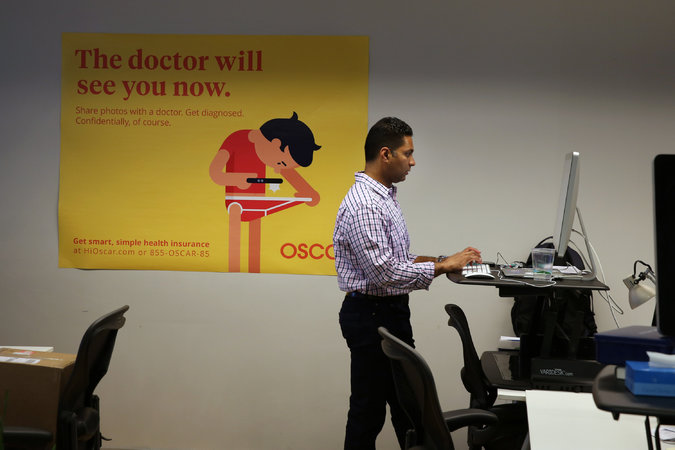
A few times a week, Oscar Health serves a catered lunch for employees. The company has attracted 135,000 customers, but it is losing money. Credit Richard Perry/The New York Times

The heavy losses do not necessarily mean that the individual market is ready to implode. Some insurers, including large companies like Anthem, say they remain committed to the market, and some insurers have made money.

But the turbulence is certainly greater than expected. And it may well lead many insurers to seek double-digit percentage rate increases and tighten their networks.

“There was tremendous uncertainty that even the very established companies were flummoxed by,” said Larry Levitt, an executive with the Kaiser Family Foundation, which has been closely following the insurers’ progress.

Over all, insurance companies continue to make profits. The dearth of profits from the individual markets, though, show how challenging it is to make insurance affordable when it is not subsidized by the government or an employer.

The troubles in the individual market also underscore how some of the law’s provisions meant to protect the insurers have not worked as well as desired. Insurers did not receive all the payments they were due under one of the law’s provisions, and another provision, meant to even out the risk among companies to protect those that enroll sicker individuals, has been described as flawed by many health care experts. Federal officials have said they would tweak those formulas.

The companies that have fared best so far are those that have kept the tightest control over their costs, by working closely with low-cost providers or a limited group of hospitals and doctors. Many have abandoned the idea of offering the kind of access available through many employer plans. The successful companies have also avoided the very low prices found in some of the co-ops.

For most of the insurers, though, the math has just not added up, which is the case with Oscar.

In New York State, where Oscar is based, the company recently filed eye-catching requests to raise rates by a weighted average of nearly 20 percent for 2017. Regulators will make a decision in August.

“The market is over all too low in price,” Mr. Schlosser said. “We, like everybody else, have priced in a very aggressive way.”

Many of the big insurers, like Anthem, can rely on their other businesses to generate profits while they wait for this market to stabilize. Oscar does not have that luxury; it is focused on individual marketplaces. (In addition to New York, Oscar operates in California, New Jersey and Texas.)

Other new insurers that sell plans to employers or under government programs like Medicare have been a little more insulated. When Northwell Health, the system in New York previously known as North Shore-LIJ Health System, entered the insurance market, it created a new company. That company, CareConnect, has 100,000 customers, most of them individuals insured through both large and small employers.

“If we only had the individual market, we would have taken undue risk because we would not have understood that market,” said Alan J. Murray, CareConnect’s chief executive. He said the company is close to turning a profit.

Oscar says it plans to begin offering coverage to small businesses, but Mr. Schlosser was adamant that individuals will eventually be buying their own coverage, rather than relying on employers. The company is also racing to incorporate plans with smaller networks.

Bright Health, another start-up, also plans to work closely with health systems to offer consumer-friendly plans.

While Oscar has had to use another insurer’s network in New York, the company’s goal is to form partnerships with systems to create networks that specialize in managing care. The company began experimenting with these networks this year in Texas and California.

“Oscar talks about narrow networks like no one has seen one before,” said Dr. Sanjay B. Saxena, who works with insurers and health systems at the Boston Consulting Group.

Oscar has received $750 million from its investors, and Mr. Schlosser insists that the company understood how long it would take for the new insurance marketplaces to develop, calling these “very, very early days.”

Oscar points to its technological edge as a way to manage patients’ health better than the established insurers. It has created teams, including nurses, who are assigned to groups of patients and can intervene when its data flags a potentially worrisome condition like a high blood sugar level.

Promoting itself as a consumer-friendly alternative to the other insurers also has its risks. While Oscar has loyal customers, others say they are disappointed to find the insurer behaving like everyone else. Cosmin Bita, a real estate broker in New York, switched to Oscar from an insurer that had given him the runaround about whether it would pay for blood tests as part of his annual physical. Although Oscar said when he enrolled that the tests would be covered, he said, he found himself fighting with the company over whether everything was covered.

“The exact same thing happened,” Mr. Bita said.

Oscar executives said the company works hard to keep customers satisfied.

But so far, it has not proved that it has created a better model than the rest of the industry.

As Darren Walsh, a principal at Power & Walsh Insurance Advisors, said: “They haven’t invented a new mousetrap.”

← Back

Thank you for your response. ✨

http://healthandmedicareinsurance.com
AS YOU SLEEP THE FUTURE OF YOUR HEALTH INSURANCE SUBSIDY HANGS IN THE BALANCE

KENTONSBUSINESSWEBPHOTO

Op-Ed by D. Kenton Henry

While most Americans who receive a health insurance subsidy to offset the cost of the coverage they obtained from the federal website, Healthcare.gov, go quietly about their personal business―the future of that subsidy―and the very future of the Patient Protection and Affordable Care Act (PPACA) or Affordable Care Act (ACA) for short―which gave birth to said subsidies―hangs in the balance. And, for the most part, these same Americans remain blissfully ignorant that the future of their health insurance protection hangs with it also. Apparently sleeping as its fate is to be decided by the 30th of this very month when the Supreme Court releases its decision on King vs. Burwell.

King vs. Burwell contests the financial help available to some enrollees on  the federal insurance exchange in 34 states on the basis that the PPACA was not written to allow for the existence of subsidies provided by the federal exchange. In fact, the plaintiffs argue just the opposite―that only those exchanges established by the states could provide such. Should the court rule in favor of the administration, it will mean the law has survived one more effort to derail it and its future may well be assured. However, If the plaintiffs prevail, that leaves the estimated 6.4 million recipients of the subsidies in the thirty four states which did not with illegally subsidized health insurance. And, without subsidies . . . health insurance reform starts to fall apart. The majority of the recipients will drop their coverage and only the sickest―who bring the most expensive claims to the insurance companies―will remain on their plans. This phenomena is know within the industry as “adverse selection”. In reality, it means that the youngest and the healthiest, regardless of age, will flee their plans like rats off a sinking ship. And the sinking ship will be Obamacare. The law itself. This is because it is estimated that insurance premiums for these 6.4 million will increase an average 256%. A result which will single-handedly insert the substitution “Unaffordable” into the Affordable Care Act―Obama’s signature landmark legislation― sending it into a classic death spiral.

And what does the Supreme Court’s decision hinge on? Four key words: “established by the state”. As in the subsidies are to be available only to income qualified recipients in those exchanges established by the state. The four words are contained in that portion of the law which details how premium subsidies are calculated for health insurance policies. Plaintiffs argue thirty four states never established an exchange. Ergo, how can subsidies be provided for their residents? They argue the wording was constructed to serve as an incentive for the states to create own exchange; the states called the federal government’s bluff and the feds willy-nilly pulled a rabbit out of their head and provided federal exchange subsidies for which no provision within the law was made. To follow their argument to its logical conclusion, the Internal Revenue Service has violated the law by providing tax credits to individuals in these states.

The administration argues that exchanges were created by the states when they effectively opted to let the federal government do it for them. Therefore, their inaction became their action. This allows subsidies to be provided their residents.

As a health insurance broker with twenty-nine years in the industry, I have survived the inevitable ups and downs of the small business owner. I, and my practice, have survived Hillary’s attempt in the early nineties at health care reform and the deterring effect of ever increasing health care costs; the resulting sky-rocketing insurance premiums and the general turbulence of an industry which attempts to manage the costs of a sector which comprises an estimated twenty percent of our nation’s economy. I have survived the Affordable Care Act’s resulting cut in my compensation and the loss of hundreds of clients who were forced off their policies because they did not comply with the law’s mandates. Policies with which, for the most part, my clients were happy. Had they not been, they would have dropped them on their own. I now survive the effect of premiums which have risen on average fifteen percent each of the last two years and, in many cases, much, much more for those clients who do not qualify for the subsidy. The bottom line is, “if you qualify for a significant subsidy, you are probably happy with this law. If you qualify for a relatively small subsidy―or none at all―you are most likely very unhappy with it.” It seems everyone is judging it from the perspective of their own personal welfare. And that is human nature, is it not? And I reluctantly admit, I am no exception. And it is not without guilt I do so.

Because, if the subsidies are revoked, by my estimates, I stand to lose approximately two thirds of the new business I have written in the last two years since ACA plans were forced on the public under threat of penalty. Just last month I experienced the first and slightest increase in income since the act’s passage in March of 2010. My income had been decreasing precipitously since then, mostly due to the “minimum loss ratios” imposed on insurance companies resulting in maximum losses to the agent and broker. But I accepted these; remained committed to my industry and business and have survived. If King v. Burwell is decided in favor of the administration’s adversaries, my clients will let their coverage lapse and the resulting personal effect will be “two steps forward and three steps back”. Hence, the guilt. The guilt born of knowing the worst aspects of this law (unknown to average person) are yet to be implemented and only a minute portion of the resulting costs are currently apparent. Those forthcoming will have a devastating effect on our nation’s treasury which is already eighteen trillion in debt and rising “with a bullet”. I know that progression of this law and its mandates is already forcing rationing of our health care providers and further progression is going to result in ever increasing rationing of health care treatment available to each of us. And yet, for my own sake, I don’t want to experience more losses.

Please do not think I do believe there was no need for health care reform. When two of every five health insurance applications I submitted on behalf of clients was declined due to pre-existing conditions and another not taken due to “waivers” of such (prior to the law’s enforcement) I experienced the angst of my clients and my own.

And so I sit, in front of my computer desktop, on the edge of my seat monitoring each post from SCOTUSBLOG.COM and each editorial from the most liberal to conservative journalist (who knows much less about this law than I) attempting to predict as to which way this imminently pending decision will go. The patriotic conservative within me says, “for the welfare of my nation’s economy, this law should fail.” While the agent, broker, small business man within me who likes to eat, pay his bills, maybe put something away for retirement and doesn’t want to see any more of his clients lose their very necessary and greatly appreciated health insurance coverage says―”Please, oh, please. Let the Supreme Court of this United States of America, in all their supremacy, rule that the authors of the Patient Protection and Affordable Care Act didn’t really mean what they wrote. Let the subsidies stand.”

← Back

Thank you for your response. ✨

http://thewoodlandstxhealthinsurance.com

http://allplaninsurance.com

http://healthandmedicareinsurance.com

**********************

Related stories:

THE NEW YORK TIMES

Politics

Four Words That Imperil Health Care Law Were All a Mistake, Writers Now Say

By ROBERT PEAR MAY 25, 2015

**********************

MORNING CONSULT Burwell Draws Line On Health Subsidy Fix Jon Reid   |   June 10, 2015  http://morningconsult.com/2015/06/burwell-draws-line-on-health-subsidy-fix/

“Happy Anniversary Healthcare.Gov!” (Do We Want A Divorce?)

Op-ed by D. Kenton Henry

BIRTHDAY CAKE


Happy anniversary, Healthcare.gov! Today, October 1st, marks the first anniversary of the premier of the originally beleaguered Federally Facilitated “Marketplace” (FFM), the federal government website for the purchase of Affordable Care Act (ACA) compliant health insurance plans in states which did not implement their own. And what of it now?

After a rollout, which was anything but smooth, and a current expenditure of approximately $2.1 billion dollars (after a winning bid of $90 million) the site seems to have solved the majority of its “front- end” issues. These involve opening an account; verifying identity and plan selection. But in light of notice that the time has run out for those who did not succeed in providing adequate proof of income for subsidy (“Premium Tax Credit”) purposes thereby resulting in their loss of coverage or―at least the subsidy―one is left wondering what if anything will change relative to this “back-end” issue for 2015. According to a September 15th article in the New York Times, approximately half a million insured face a forced plan change. “363,000 could lose their premium subsidies due to an inability to verify income, while 115,000 more could have their policies canceled because they have not proven their immigration status. Federal authorities have been working for months to resolve both backlogs.”

My BlueCross BlueShield of Texas clients who have “grand-mothered” plans just received notice dated today that “The health plan you now have will no longer be available and cannot be renewed”. Grand-mothered plans are those which have been modified in anyway, such as a change in deductible, but purchased prior to January 1 of this year when all new policies were required to be ACA compliant. Termination will be effective the end of 12.31.2014 and the client, insured will have until that date to enroll in a new plan for seamless coverage beginning January 1. These policyholders are instructed to log in starting November 15th to review their options and elect new coverage through BlueCross BlueShield. What will the benefits look like and what will be the cost? Well, we won’t know until November 15th. The consensus seems to be that premiums in all but a few locations will be increasing somewhat across the market compared to this year’s ACA compliant plans but at less than the average rate of medical inflation in recent years. (Call me skeptical.) But what about compared to their grand-mothered plan? No way. By the time you add in the additional cost of mandated coverage for benefits such as pediatric dental and vision, maternity and the rest of the “minimum essential health benefits” along with guarantee issue for pre-existing conditions, there is no way these policyholders are going to be pleased with the premiums their new options will cost. If they had thought the marketplace offered better options, they would have elected them for 2014. I am certain the words, “If you like your plan, you can keep your plan. Period.” will be ringing in their ears as they peruse their new options.

On the upside, an estimated 25% additional insurance companies will be providing coverage for 2015 both in and out of the marketplace and state exchanges. This increased competition will give consumerd more options and will hopefully help offset some of the inflationary aspects of mandated coverage in future years.

On the downside, what of the “It’s a penalty … not a tax!” ― now known as the “Shared Responsibility Payment” ― for not having coverage in 2015? That increases to $325 per adult and $162.50 per child or 2% of household income ― whichever is higher. (Family maximum is $975.) It will increase every year hereafter, tied to the rate of inflation beyond 2016.

Additional variables remain to be seen such as “provider selection”. While pressure is being put on insurance companies to increase the number of in-network providers available to the insured, surveys seem to indicate more providers are electing not to join. They feel payments have dropped to low to make it worth their while to participate. Insurance companies are going have to find alternative ways to control costs and since they cannot control the risk they are forced to assume (elative to pre-existing conditions and the mandated “loss ratio”) they are going to ration our providers and our treatment.

On a final note, the enrollment period for 2015 plans will be half as long as for 2014 and will end February 15th. So get ready to be like the sheep, in the Wild Kingdom segment, passing through the anaconda. It’s going to be a tight squeeze! And once again . . . “Happy Anniversary to Healthcare.gov!”

By all means, please contact me if you feel I can make the celebration cake a little more palatable!

*******************************************************************

FEATURED ARTICLE:

The New York Times

U.S. to End Coverage Under Health Care Law for Tens of Thousands

By ROBERT PEAR SEPT. 15, 2014

WASHINGTON — The Obama administration said on Monday that it planned to terminate health insurance for 115,000 people on Oct. 1 because they had failed to prove that they were United States citizens or legal immigrants eligible for coverage under the Affordable Care Act. It also told 363,000 people that they could lose financial aid because their incomes could not be verified.

The 115,000 people “will lose their coverage as of Sept. 30,” said Andrew M. Slavitt, the No. 2 official at the Centers for Medicare and Medicaid Services, which runs the federal insurance marketplace.

Some of them may be able to have their coverage reinstated retroactively if they produce the documents that they were repeatedly asked to provide in recent months, Mr. Slavitt said.

At the end of May, the administration said, 966,000 people were found to have discrepancies in their immigration and citizenship records. Most sent in documents as requested. In mid-August, the administration sent letters to about 310,000 people who had failed to respond. They were supposed to submit documents by Sept. 5, but the 115,000 consumers failed to do so, Mr. Slavitt said.

Many consumers and lawyers who work with them said that they had tried to submit immigration and citizenship papers, but that they experienced problems transmitting documents through HealthCare.gov. Other people said they sent the documents by mail to a federal contractor in Kentucky but never heard back from the contractor or the government.

“We heard from lots of consumers who told us they sent in their documents multiple times or tried to upload them through HealthCare.gov,” said Mara Youdelman, a lawyer at the National Health Law Program, an advocacy group for low-income people.

Jenny Rejeske, a health policy analyst at the National Immigration Law Center, which represents immigrants, said: “It is unduly harsh to terminate coverage while there are still technical problems with the federal system for verifying citizenship and immigration status. And there has not been adequate notice to people who speak languages other than English and Spanish.”

Florida leads the list of states whose residents are losing coverage because of immigration and citizenship issues, with 35,100. Federal officials said they were ending coverage for 19,600 people in Texas, 6,300 in Georgia, 5,300 in North Carolina, 5,200 in Pennsylvania, 4,000 in Illinois and 2,400 in New Jersey. The numbers released on Monday are for 36 states using the federal insurance marketplace. They do not include terminations in California, New York and other states running their own insurance exchanges.

Federal subsidies for the purchase of private insurance are a cornerstone of the Affordable Care Act. More than eight out of 10 people who selected health plans through the exchanges from October through mid-April were eligible for subsidies, including income tax credits. But in many cases, the government could not verify the incomes people reported when they applied for subsidized insurance.

This does not mean that they provided false information or were ineligible for assistance. The government tried to verify incomes by checking 2012 tax return information, but consumers may have switched jobs or received pay raises since filing those returns. As a result, officials said, the information in their applications may not match the data in federal files or in sources available to the government.

Mr. Slavitt said that on May 30 there were roughly 1.2 million households (and a total of 1.6 million people) with “data-matching issues.”

Since then, the government said, it has closed cases for 467,000 households with data discrepancies, and 430,000 cases are “currently in the process of being resolved.”

“There are still about 279,000 households with unresolved income-related data-matching issues that haven’t sent in supporting information, representing 363,000 individuals,” Mr. Slavitt said. They will soon receive letters from the government asking for proof of income, and if they do not reply by Sept. 30, they may lose some or all of their subsidies.

They would still be eligible for coverage, but in many cases could not afford it. In some cases, they would also have to repay some or all of the subsidies they received.

It is also possible that some people could receive larger subsidies if their incomes are lower than what they expected when they applied.

(A version of this article appears in print on September 16, 2014, on page A18 of the New York edition with the headline: U.S. to End Coverage Under Health Care Law for Tens of Thousands.)

← Back

Thank you for your response. ✨

http://allplaninsurance.com

http://thewoodlandstxhealthinsurance.com

HEALTH INSURANCE “OPEN ENROLLMENT” PERIOD 2014 – 2015: DEJA VU ALL OVER AGAIN (AND THEN SOME)?

So you thought last year’s open enrollment period (the limited time frame in which an individual may enroll in a health insurance plan for the coming calendar year) was a fiasco? Consider the words of Kevin Counihan, head of the federal insurance marketplace who says 2015’s hurdles may outstrip 2014’s. “Part of me thinks that this year is going to make last year look like the good old days,” said Counihan in an interview with the New York Times. Now that’s a scary thought indeed.

No one expects the Federal Health Insurance Marketplace website, Healthcare.gov, to have all the technological problems it had last year. (Although this agent and editor experienced an exasperating number in attempting to enroll clients through the website just in the last six weeks.) Rather the problems will result from, among others, two things:

1) Price matters. And, in large part, premiums will not be going down. BlueCross Association plans, for instance, have requested steep increases in general, up to 17.6% for Florida Blue. Double-digit―up to 30% increases may be common among those competitive last year and others, previously not competitive, may offer equally lower premiums. In those states where prices will increase predominately, and the consumer does not qualify for a subsidy, affordability will be an issue and cost a deterrent to enrollment in spite of the penalty for not purchasing health insurance. The penalty will increase to 2% of family income or $325 per adult and $162.50 per child, whichever is higher. The reality is most insurers are filing their proposed 2015 health insurance premiums for approval now, even though claims experience for the current year remains unknown with four months remaining. Will premiums increases be warranted? Will decreases be mere wishful thinking? The good news is, the number of companies participating in the market is going up and there will be 1.6 times more plans to choose from.

2) The open enrollment period will be cut in half. Three months down from six to be exact. This period will run from November 15th to Febraury15th. What this means is, not only will all those who wish to enroll in a plan for the first time be attempting to navigate the system, but all those who wish to change plans will also. With the administration’s objective of signing up an additional 5 million subscribers this year, the process may end up resembling a stampede of cows all trying to enter the Fort Worth stock yard chute simultaneously. Let us hope the end result is more pleasant for the participants.

Actuarial concerns relative to the fiscal viability of the Affordable Care Act (of great concern to this editor) aside, the consumer can expect this fall, through February 15th, to present a host of challenges from knowing which plan is best for them to being able to afford it. All the more reason for the consumer to seek the counsel of an independent health insurance specialist who is licensed (passed their state’s insurance exam); maintains errors and omissions insurance for your protection; has met his or her state’s continuing education classes and may have (as in the case of this agent) decades of experience in the health insurance market. These qualifications as opposed to government enrollers or “navigators” for whom none of this may apply.

― D. Kenton Henry, editor, agent, broker

KENTON AT CAPITOL 2 (2)

http://allplaninsurance.com

http://thewoodlandstxhealthinsurance.com

**************************************************************************************

FEATURED ARTICLES:

The New York Times

Business Day |​NYT Now

Bracing for New Challenges in Year 2 of Health Care Law

By REED ABELSON SEPT. 2, 2014

The first year of enrollment under the federal health care law was marred by the troubled start of HealthCare.gov, rampant confusion among consumers and a steep learning curve for insurers and government officials alike.

But insurance executives and managers of the online marketplaces are already girding for the coming open enrollment period, saying they fear it could be even more difficult than the last.

One challenge facing consumers will be wide swings in prices. Some insurers are seeking double-digit price increases, while others are hoping to snare more of the market by lowering premiums for the coming year. At the same time, the Obama administration is expected to try to persuade about five million more people to sign up while also trying to ensure that eight million people who now have coverage renew for another year.

Adding to the complexity is the shorter time frame for choosing a new policy: three months instead of six.

“In some respects, it’s going to be more complicated,” said Kevin Counihan, the former chief executive of Access Health CT, Connecticut’s online marketplace, who was just named as the head of the insurance marketplaces for the federal government. Connecticut’s marketplace was among the most successful state-based exchanges, sharply reducing the number of uninsured in the state. “Part of me thinks that this year is going to make last year look like the good old days.”

Kevin Counihan, head of the federal insurance marketplaces, says 2015’s hurdles may outstrip 2014’s. Credit Christopher Capozziello for The New York Times

No one expects to face last year’s technological hurdles, in which consumers sometimes could not navigate the federal or state websites to buy a policy. HealthCare.gov is running relatively smoothly, and the states have been working to address technical problems with their marketplaces.

“The exchange can’t work worse than it did last year,” said Dr. Peter Beilenson, chief executive of Evergreen Health Co-op, an insurer in Maryland, where a faulty state-run marketplace prevented many people from signing up.

But the upheaval in insurance markets, with new carriers entering and the price of plans changing significantly, may make the coming year no easier than the last. While federal rules allow people to renew their coverage automatically for the next year in the same plan, many customers, especially if they were eligible for federal tax credits, will want to resurvey the landscape.

Just as there was an uproar when some people found out last year that their policies had been canceled, individuals this year may be surprised to find that they could be asked to pay much more for the same plan because their carrier is raising its prices or the amount of the federal tax credit they will receive is changing.

People will be renewing at the same time that others are enrolling for the first time, starting a week and a half before Thanksgiving, on Nov. 15. To ensure that they have a new plan by the beginning of the year, those who renew will have to sign up by Dec. 15. Exactly how the renewal process will work has not yet been determined.

“We’re still waiting on the details of the process,” said Paula Steiner, chief strategy officer for Health Care Service Corporation, which offers Blue Cross plans in five states. “We haven’t gone through any testing yet of any changes to the system for 2015.”

“I think there’s a possibility that there’s equal or more confusion this fall,” she said.

Those responsible for the federal marketplace say they are working hard to make the process as easy as possible. “We’re putting in place the simplest path for consumers this year to renew their coverage,” said Andrew Slavitt, principal deputy administrator for Medicare, which oversees the insurance marketplaces. Those who prefer to stay with the same plan will be able to renew their coverage automatically, as many do with employer coverage. People can renew by doing “absolutely nothing,” he said.

The federal online marketplace is being continuously improved, according to Mr. Slavitt, who said the government was updating the website to allow renewals. “We’re in a very different position than we were last year,” he said.

Dunia Padrino, left, with her sons Rolando Vega and Hanoy Castellon, learning about insurance under the Affordable Care Act last November in Hialeah, Fla. Credit Joe Raedle/Getty Images

Compared with this year, from the 19 states for which information is available, 30 carriers have requested entrance into the marketplaces for 2015 and 1.6 times more plans are being offered, with prices for 2015 likely to remain varied, as they were the previous year, according to McKinsey & Company’s Center for US Health System Reform, which is analyzing the insurance filings as they become available. Prices are rising about 30 percent for some plans, while decreasing by the same amount for others, depending on the market and policy. “We are definitely seeing a lot of volatility in pricing,” said Erica Hutchins Coe, a McKinsey expert.

Some of the large insurers, like some of the Blue Cross plans, have requested steep increases. Florida Blue, for example, expects to raise its rates by an average of 17.6 percent for 2015. Others, like some of the co-op plans, have been keeping prices low or even reducing rates.

Molina Healthcare, a company that has traditionally offered Medicaid coverage and now sells exchange policies, says its renewal strategy for the coming year is to emphasize that its members need not be concerned that the plan they selected will be more expensive. “One thing you can count on is the rates are flat or down,” said Lisa Rubino, senior vice president of exchanges for Molina.

In California, the state exchange is trying to get a step ahead by allowing people to begin renewing their plans Oct. 1. But anyone who wants to switch plans will still have to wait until Nov. 15, and many individuals may well want to shop around. In the Sacramento area, for example, someone who selected an H.M.O. plan from Anthem for 2014 faces a possible increase of nearly 17 percent, compared with a 2 percent increase for an H.M.O. plan from Kaiser Permanente in the same area.

Consumer advocates and others say nearly everyone with coverage should review their options ( https://www.brokeroffice.com/quote/quoteengine.jsp?login=insurnet) as well as whether their federal tax subsidy is likely to shift — either because their income may have changed or because the cost of the benchmark plan used to calculate the tax credit has changed.

Experts like Sabrina Corlette, a policy expert at Georgetown University’s Center on Health Insurance Reforms, say persuading those who did not sign up for coverage during the last open enrollment period to get coverage for 2015 will also present a significant challenge. People in this group were unaware they could get assistance with the cost of their premiums, decided the coverage was not worth the cost or simply found the process of enrolling too challenging.

“Most people assume in the first year they got the low-lying fruit,” Ms. Corlette said. Insurers and others “do have to widen the net,” she said, targeting hard-to-reach populations with what in the second year will often be “fewer resources and less time.”

Dr. Martin E. Hickey, chief executive of New Mexico Health Connections, a co-op that will rely on low prices to continue to attract members, said it was “a lot easier to retain a consumer than chase a new one.” In his state, many individuals failed to take advantage of the subsidies that reduced the cost of coverage substantially. “We didn’t communicate the affordability,” he said.

Even in California, which enrolled nearly 1.4 million people in its first open enrollment, there is acknowledgment that more effort is needed.

“We have a heavy lift again,” said Dana Howard, a spokesman for the state’s exchange, Covered California.

*******************************

THE HILL

Home | Policy | Healthcare

HealthCare.gov CEO sees challenges ahead

By Elise Viebeck – 09/03/14 10:50 AM EDT

The newly appointed CEO of HealthCare.gov is predicting fresh challenges for the system’s second enrollment period this November. Kevin Counihan, former head of Connecticut’s exchange, cited concerns such as the shorter sign-up period for 2015 plans that could create problems for officials and consumers alike.

“In some respects, it’s going to be more complicated,” Counihan told The New York Times in an interview. “Part of me thinks that this year is going to make last year look like the good old days.” The comment highlights the heady task facing federal health officials as they work to prevent a repeat of last year’s first enrollment period. Last year, technical flaws at HealthCare.gov and other exchanges plunged the enrollment process into chaos and created an enormous political headache for the Obama administration. Counihan did not indicate that his fears related to the technology, which has undergone extensive repairs since last October. The 2014 sign-up period was six months long, but with just three months to enroll more consumers, this year’s process could prove a tough climb as insurers and the government seek to convince hard-to-reach populations to buy health plans.

Existing policyholders are likely to encounter changes in their premium prices that could also cause confusion.

http://thehill.com/policy/healthcare/216496-healthcaregov-ceo-sees-challenges-ahead

← Back

Thank you for your response. ✨


ALL PLAN MED QUOTE LAUNCHES SISTER TO ORIGINAL WEBSITE!

ALLPLANHEALTHINSURANCE DOT COM LOGO

All Plan Med Quote has been providing the individuals, families and employer groups the lowest quotes and best value in health and Medicare related insurance in four different states since 1991. In 1998 we became one of the first insurance agencies in the country to begin marketing via the internet through our website AllplanHealthInsurance.com.

In an effort to respond more directly and with products tailored to our hometown, we have just launched a sister website: TheWoodlandsTXHealthInsurance.com http://thewoodlandstxhealthinsurance.com. Logos and customized marketing materials are still being designed but the website is online!

In addition to health, Medicare related, dental and life insurance we will be posting health care news relevant to residents of our great community. If you are a resident of The Woodlands or Montgomery County, Texas please visit our site and also follow my blog at http://healthandmedicareinsurance.com to stay abreast of the latest in consumer medical insurance and health related news.

Thanks so very much,

Kenton Henry

Owner; Broker; Editor

← Back

Thank you for your response. ✨

http://allplanhealthinsurance.com

Cost of Obamacare Borne On The Back Of Seniors

SENIORS ANGRY 1

To say that President Obama is not an enthusiastic backer of the two Medicare programs that offer seniors private insurance options would be something of an understatement.

Over the years, Obama has repeatedly derided Medicare Advantage — the program that lets seniors enroll in subsidized, private insurance. He once called it “wasteful,” and said it amounted to “giveaways that boost insurance company profits but don’t make (seniors) any healthier.”

Obama has been equally harsh when it comes to Medicare Part D — the prescription drug benefit President Bush signed into law that relies on privately run plans.

In his 2006 book, “The Audacity of Hope,” Obama blasted the program, saying it “somehow managed to combine the worst aspects of the public and private sectors.” As president, he said it gave overly generous “taxpayer subsidies to prescription drug companies.”

Both programs, it turns out, have been wildly popular with seniors and, by most measures, big successes. But Obama nevertheless appears determined to undermine them with sharp cuts in payments and sweeping new regulations.

Started back in 1997 — and initially called Medicare+Choice — the Medicare Advantage program pays private insurers a set amount per enrollee to provide comprehensive benefits and anything else they can afford to offer.

The idea was that private insurers could better co-ordinate care and manage health costs than the old fee-for-service Medicare, and so provide more comprehensive benefits.

While enrollment in these private plans was flat for the first several years, it has skyrocketed since 2005, to the point where almost one in three seniors are covered by a private health plan. As long as it is affordable, this editor considers Medicare Supplement the ideal way for a Medicare recipient to be covered for medical expenses. Not because selection of Supplement Plan F or G will cover all or virtually all of your expenses but because ALL Medicare Supplement options allow you to visit any doctor, hospital or medical provider that sees Medicare Patient. This as opposed to Medicare Advantage Plans most of which have evolved to significantly limiting your choice of providers. This being said, Medicare Advantage has been a savior to those who simply cannot afford Medicare Supplement. And contrary to Obama’s claim, seniors selecting Medicare Advantage tend to get better quality health care than those in traditional Medicare.

Critics, however, point to studies showing that the government pays Medicare Advantage more per enrollee than it would cost if these seniors had enrolled in the old Medicare program.

Obama tried to remedy this by cutting Medicare funding by $716 billion over the next ten years with payments to Medicare Advantage totaling $200 billion. The purpose of which is to help pay for ObamaCare (while providing “bonus” payments to plans that score high on a quality rating). An official analysis from Medicare’s actuary concluded, however, that such cuts would drive millions seniors out of their Advantage plans and back into the government-run program.

Recognizing political risks of these payment cuts, the administration put them off until AFTER the presidential elections, shoveling $8 billion into a bogus “demonstration project” that offset almost all the scheduled Medicare Advantage cuts implemented in 2012.

Question: What are your thoughts about President Obama’s cuts to the Medicare Advantage and Part D Prescription Drug Programs?

Admin. – Kenton Henry

http://TheWoodlandsTXHealthInsurance.com

*******************************************************************

FEATURE ARTICLE:

THE HILL

February 25, 2014, 10:58 am

GOP leaders to HHS: Call off Medicare changes

By Elise Viebeck

Republican Senate leaders criticized the Obama administration Tuesday for proposed changes to Medicare Advantage (MA) and Part D they say would weaken the two programs.

Led by Minority Leader Mitch McConnell (R-Ky.), the lawmakers called on Health and Human Services (HHS) Secretary Kathleen Sebelius to suspend proposed cuts to Medicare Advantage and reforms in Part D that would allow regulators to participate in negotiations between insurance companies and pharmacies for the first time.

“Unlike ObamaCare, the Medicare prescription drug benefit is wildly popular and it has cost less than initial projections,” the letter stated.

“At a time when HHS is struggling on basic implementation tasks on many fronts, we cannot understand the logic behind the department’s interest in further undermining one of the few success stories under its purview.”

The administration argues that cuts in Medicare Advantage would reduce waste within the program and bring its per-patient funding in line with traditional Medicare, which currently receives less money on average.

In Part D, federal health officials say regulators need new authority to ensure the market for prescription drugs works well for seniors.

The proposed rules would also open drug plans’ preferred networks to a wider range of pharmacies, limit plan bids within a region and remove “protected class” designations for certain types of drugs.

But Republicans say the changes will harm Medicare Advantage beneficiaries and potentially raise premiums on Part D plans or force seniors out of their current coverage.

Both issues are rearing their heads in the midterm elections, as the GOP seeks to broaden its healthcare attacks to include more than ObamaCare.

Tuesday’s letter to Sebelius was signed by McConnell, GOP Whip John Cornyn (Texas), GOP Conference Chairman John Thune (S.D.), GOP Policy Committee Chairman John Barrasso (Wyo.), Conference Vice Chair Roy Blunt (Mo.) and National Republican Senatorial Committee Chairman Jerry Moran (Kan.).

← Back

Thank you for your response. ✨

http://TheWoodlandsTXHealthInsurance.com

http://allplanhealthinsurance.com

Capitol Conference 2014 (or Your Intrepid Editor Goes to Washington)

MR BUCK GOES TO WASHINGTON II (2)

Late last week I returned from the National Association of Health Underwriters Capitol Conference 2014 in our nation’s capitol. Our group stayed in the shadow of the Capitol at the Capitol Hill Hyatt two blocks from where our laws or bills are created and passed. Our primary objective this year would be to address the ramifications of what is arguably the biggest Act ever in terms of its impact on all America. It was my first meeting to attend at a national level and I am grateful for the warm welcome provided me by the Houston, Texas Chapter and the entire experience. I express particular thanks to Lonnie Klene for facilitating my attendance and Malcolm Browne, Sibony-Trevino Toth, Jo Middleton and Jeffrey Bacot for their engaging conversation which made the informal time much more enjoyable.

 
The overall goal of the conference was to represent the interests of health insurance agents and brokers in their role of assisting the public in the administration’s goal of acquiring quality, affordable health insurance. Of course, because of what we now know are the results of the Patient Protection and Affordable Care Act, this seems something of a daunting, if not failed, mission in terms for many of the stated beneficiaries at this point. Still, it was the Association’s stance that the bill is law and for now is the system we have to work with. As much as I would have liked to have protested and lobbied for solutions to our nation’s debt crisis; its lack of a viable energy policy and justice for the victims of Fort Hood and Benghazi – this was not the purpose of our attendance as a group nor the reason the Houston Chapter sponsored my presence at the conference. Those are issues which I will have to address through correspondence with the contacts I made and indirectly at the poll booth in the coming mid-term election.
The issues which our group did address with our respective Representatives were, among others:

 
1) The need for involvement of professionally licensed benefit specialists, i.e., agents and brokers (as opposed to unlicensed, unvetted navigators) to help consumers before, during and–most importantly–after the sale of private health insurance coverage and, of course, our opposition to their exclusion in this process.
2) Our concern over the inability of many employers to afford to offer coverage to their employees and the negative effect this has on our nation’s current economic uncertainty and limited job growth.
3) Our support of a comprehensive bill to rectify provisions of the law and new regulatory requirements that are creating compliance burdens for businesses and conflict with time tested employee benefit practices.
4) Our opposition to changes to time tested traditional definitions of small and large employers and full-time and part-time employees, this last of which has resulted in employers cutting employees to 29 hours thus making them part-time employees pursuant to the new definition (30 Hour Work Week) and contributing to under-employment.
5) Our opposition to age banding which unfairly discriminates against the young and does not accurately assign cost relative to risk.
6) Eliminating the national premium tax projected to add an average of $500 of costs to a typical family policy in 2014 and more thereafter.

 
For Seniors:
1) Our support of efforts to preserve Medicare options flexibility for recipients and restore the long-term financial health of the program.
2) Our opposition to funding the costs of the Affordable Care Act on the backs of our nation’s senior citizens. Specifically, cuts to Medicare Advantage and Part D Prescription Drug Plans.
3) Providing new financial incentives to encourage and make possible the purchase of long-term care insurance for our exploding senior population. (an average of 10,000 boomers turn age 65 every day)
Day 1 of the conference consisted in part of a break-out session covering the current state of the employer mandate; Private Exchanges for Employers; Medicaid 101 and Compliance.
Day 2 Addressed The Political Impact of Health Reform; The Future of the Marketplace (federal and state exchanges) followed by lobbying on Capitol Hill. It was at this point Lonnie Klene, Sibony Trevino-Toth and myself met briefly with our District 8 Representative, Kevin Brady and longer with his assistant, Andriu Colgan. Like most aides, Andriu was young, bright and responsive to our concerns (as outlined above) and assured us Congressman Brady was sympathetic to these. In his brief time with us, he confirmed such.

KENTON AT CAPITOL 2 (2)

Your blog editor outside Representative Brady’s Office in the Cannon Building.

CAPITOL AT NIGHT 2

That evening, I was one of a group of Texans privileged to attend a 3.5 hour tour of the Capitol hosted by Texas District One Republican Representative Louie Gohmert, from a boyhood home of mine, Tyler Texas. He insisted he knew some of my cousins, but there was no doubt he knew an incredible amount of our nation and its leader’s history which he very generously shared with us. He is a remarkable story teller with a keen sense of humor and the tour he hosted for us, most of whom will never have occasion to vote for him, proved to be one of the most memorable experiences of my life. My appreciation of our nation’s history and heritage (which was already tremendous) is even greater thanks to him. And he made no bones–he’s with me on the issues! If I lived in his district, he’d certainly have my vote!

CONGRESSMAN LOUIE GOHMERT 1

U.S. Representative, Texas First Congressional District, Louis B. Gohmert, Jr.

 
Day 3 consisted of a panel of physicians discussing Health Cost Transparency; “The Marketplace Transformed” hosted by Representative Renee Elmers (R-NC); Jennifer Duffy, Senior Editor, The Cook Political Report and Representative Jim Matheson (D-UT).
All sessions were followed by a fairly extensive, cogent question and answer period.
This last day ended with a special presentation entitled “Taking It All Home” by Dan Clark, motivational speaker and author of, among other works, the “Chicken Soup for The Soul” series. I must say that after the stress of all the change the Affordable Care Act has brought to this agent, and the others in attendance, we were in need of his inspirational soup and it proved very therapeutic.

 
All in all I came home with more knowledge and ideas of how to assist my clients in dealing with the reality and mandates of the Patient Protection and Affordable Care Act as it stands for now.

 
My advice in short? Just don’t blink!

← Back

Thank you for your response. ✨

http://allplanhealthinsurance.com

ALL PLAN MED QUOTE AND CLIENTS TO BE REPRESENTED IN WASHINGTON, D.C. NEXT WEEK

ALL PLAN MED AND LIFE LOGO (2)

Not content to sit passively on the side lines while Washington dictates to him, his clients and fellow citizens – Kenton Henry, agent, owner of Allplanhealthinsurance.com in The Woodlands, will voices his–and your–concerns  in our nation’s Capitol.

KENTONSBUSINESSWEBPHOTO

*******************************************************************

Trusted friends and clients:

It is my privilege to soon be attending the annual legislative conference for my professional association, the National Association of Health Underwriters, from February 24-26 in Washington, D.C. Representing influential professionals in my industry, I will take this opportunity to present meaningful solutions to our national policymakers to improve the cost and quality of health insurance while reducing the burdens the Patient Protection and Affordable Care Act has placed on businesses and individuals across the United States.

As the regulations and requirements of the health reform law continue to evolve, it is extremely important that our representatives in Washington, D.C., hear what is going on with you; your families; employers and employees. Our representatives on Capitol Hill need to hear a common-sense perspective from the average citizen’s point of view along with consumer inspired solutions. I will attend meetings on Capitol Hill with Senators, Representatives and their staff and would be happy to pass along any thoughts about health reform you, my valued friends and clients, may have. I have requested an appointment with Texas District 8 Congressman Kevin Brady, among others.  Please contact me at Quote@Allplaninsurance.com to share your message with them. Share with me your greatest problems and concerns with health care and health insurance and what solutions you may have in mind. I promise your story will be told and commit to being your voice among those who represent us.

In addition to talking to our elected representatives, I will be attending educational sessions about benefit and policy trends that will include:

• Key briefings from the national policy staff and association leadership.
• Panel discussions on health cost transparency, innovations in coverage and delivery systems, and policy trends relative to cost containment.
• Updates on the latest developments regarding the new health insurance marketplaces (exchanges).
• Presentations from congressional and Administration health policy leaders including updates about potential changes to the law and new evolving regulatory guidance.
• A session about using the political dynamics of healthcare to transform business.
• Breakout meetings that will cover innovative solutions to address the employer reporting requirements, shared responsibility requirements, self-funding options in a reformed health system, private and public exchanges, small group market trends and much more!

The future of healthcare reform is ever changing and the impact of this law will affect us all in many different ways across the country. I believe that my voice and your voice truly do make a difference. I look forward to sharing our stories as I lobby on Capitol Hill. Upon my return, I will share with you what I hope will be encouraging news of coming improvements to the present state of healthcare and health insurance in Texas and the rest of America.

Sincerely,
D. Kenton Henry

← Back

Thank you for your response. ✨

