

By D Kenton Henry, editor, agent, broker
For all my three and a half decades as an independent health insurance agent, I have worked with people who don’t fit neatly into the health insurance system.
They may be self-employed. They may own a small business. They may work for an employer that doesn’t provide health insurance. Some have retired before becoming eligible for Medicare at age 65.
They aren’t poor enough to qualify for Medicaid. They don’t have an employer paying most of their health insurance costs. And they certainly aren’t wealthy.
They are simply caught in the middle.
As we prepare for the 2027 Affordable Care Act (ACA) Individual and Family Health Insurance Open Enrollment Period, I am increasingly concerned about this group.
Health insurance premiums are rising. The enhanced federal premium subsidies that temporarily made coverage much more affordable expired at the end of 2025. And there are signs that healthier people—particularly younger people—are increasingly deciding they simply cannot justify the cost of coverage.
Unfortunately, that can make health insurance more expensive for everyone who remains.
First, What Happened to the ACA Subsidies?
The Affordable Care Act has provided premium tax credits to eligible individuals and families who purchase health insurance through the federal Marketplace since its major coverage provisions took effect in 2014.
During the COVID era, Congress substantially increased those subsidies.
The American Rescue Plan of 2021 increased the amount of financial assistance available and eliminated the ACA’s previous income ceiling of 400% of the Federal Poverty Level for receiving premium assistance. The Inflation Reduction Act subsequently extended those enhanced subsidies through 2025.
The result was dramatic.
Millions of Americans who previously received little or no assistance suddenly qualified for significant help paying their premiums. Marketplace enrollment soared.
But those enhanced subsidies expired at the end of 2025.
The original ACA premium tax credits did not disappear. Eligible consumers can still receive substantial assistance.
What disappeared was the additional assistance provided under the temporary enhanced subsidy program.
And for many middle-income Americans, that distinction is enormous.
The Return of the “Subsidy Cliff”
One of the most significant consequences is the return of what has commonly been called the ACA subsidy cliff.
Under the temporary enhanced subsidies, people earning more than 400% of the Federal Poverty Level could still receive assistance if the cost of the benchmark health insurance plan represented too large a percentage of their household income.
Beginning in 2026, that protection disappeared.
For 2026 coverage, 400% of the Federal Poverty Level is approximately $62,600 for a single person. Someone whose income exceeds the applicable limit can find himself or herself responsible for the entire health insurance premium.
That can be particularly painful for someone in his or her late 50s or early 60s because ACA premiums are age-rated.
Imagine being 62 years old, self-employed, earning too much to qualify for a subsidy—but still several years away from Medicare.
You may be doing reasonably well financially.
But you may suddenly be staring at a health insurance premium that looks more like another mortgage payment.
That is the population I mean when I say caught in the middle.
We Are Already Seeing People Walk Away
This isn’t merely a prediction about what might happen.
We are beginning to see it.
Nationally, average monthly Marketplace premium payments after tax credits increased approximately 58% from 2025 to 2026.
People responded in several ways.
Some moved to less expensive plans with higher deductibles.
Some dropped their coverage.
And some selected coverage during Open Enrollment but apparently decided they couldn’t afford to actually put it into effect or keep paying for it.
Texas provides a particularly interesting example.
Approximately 206,000 more Texans selected an ACA Marketplace plan for 2026 than had selected one for 2025—an increase of about 5%.
At first glance, that sounded like great news.
But selecting a plan and actually paying for it are two different things.
When federal researchers subsequently looked at people who had actually effectuated their coverage—generally by paying their premiums—Texas enrollment had fallen by approximately 146,000 people, or about 4%, compared with the previous year.
In other words, Texas had hundreds of thousands more people sign up, yet ultimately had fewer people maintaining coverage.
That should tell us something about affordability.
And Who Is Most Likely to Leave?
This is where the situation becomes troublesome for the health insurance market itself.
Health insurance works because we pool risk.
Some insured members become seriously ill and incur hundreds of thousands of dollars in claims.
Others may go an entire year without doing much more than getting an annual physical.
The premiums paid by everyone help finance the medical expenses of those who need substantial care.
But what happens when insurance becomes so expensive that people begin asking themselves:
“Do I really need this?”
A healthy 28-year-old may decide to take the gamble.
A 58-year-old cancer survivor probably won’t.
Neither will someone with diabetes, heart disease, multiple sclerosis or another serious chronic condition requiring ongoing treatment and expensive prescription medications.
Those people know they need insurance.
This creates what insurers call adverse selection: healthier people disproportionately leave the insurance pool while people who know they will incur substantial medical expenses do everything possible to maintain coverage.
We are already seeing evidence of it.
Marketplace enrollment among Americans ages 18 through 34 fell by approximately 542,000 people—or 8%—for 2026. That relatively young group accounted for approximately 46% of the entire decline in Marketplace plan selections.
Meanwhile, people with incomes just above the returning subsidy cliff were hit especially hard.
Consumers with known incomes above the subsidy cutoff represented only about 7% of Marketplace enrollment in 2025 but accounted for nearly half—48%—of the decline in plan selections for 2026.
That is almost a textbook illustration of the problem.
Why Does That Affect My Premium?
Insurance companies don’t establish premiums based solely upon what they spent last year.
They have to estimate what the people they expect to insure next year are going to cost.
If relatively healthy people leave while people with serious health conditions remain, the average expected medical cost per insured member increases.
The insurance company has to price for it.
According to KFF’s analysis of insurer rate filings, insurers estimate that deterioration in the health of the individual-market risk pool added approximately four percentage points to 2026 premiums and could add approximately another four percentage points in 2027.
That isn’t the only reason premiums are rising.
Far from it.
Hospitals cost more. Physicians cost more. Labor costs more. Prescription drugs—particularly specialty medications—can be extraordinarily expensive. Insurers estimate that underlying medical and prescription drug costs alone are increasing by approximately 10% for 2027.
But losing healthier members from the insurance pool only makes matters worse.
What Are Texas Insurance Companies Predicting for 2027?
We now have preliminary indications.
Texas insurers have submitted their proposed 2027 individual-market rates, and many are requesting substantial increases.
Among the proposed average increases currently filed are approximately:
Blue Cross and Blue Shield of Texas — 8.9%
Superior HealthPlan/Ambetter — 11.1%
Molina Healthcare of Texas — 13.0%
Wellpoint — 15.3%
Community Health Choice — 27.2%
UnitedHealthcare — approximately 27% to 34%, depending upon the underwriting entity
Other Texas insurers have filed increases both above and below those figures.
These are proposed average rate increases—not necessarily the final rates consumers will pay in 2027. Regulators review the filings; rates can change before approval, and an individual person’s premium will depend upon age, county, tobacco use, family composition, plan selection, and eligibility for a premium tax credit.
Nevertheless, the trend is difficult to ignore.
Nationally, insurers are currently requesting a median ACA Marketplace premium increase of approximately 15% for 2027, following a finalized median increase of approximately 20% for 2026.
Two consecutive years of increases of that magnitude inevitably put pressure on people purchasing their own insurance.
People Are Buying Less Insurance to Keep Some Insurance
There is another revealing statistic.
As premiums increased for 2026, consumers migrated dramatically toward Bronze plans.
Bronze plans generally offer lower monthly premiums in exchange for substantially greater out-of-pocket exposure when medical care is needed.
The percentage of Marketplace consumers selecting Bronze plans jumped from 30% in 2025 to 40% in 2026.
At the same time, the average Marketplace deductible increased from approximately $2,759 to $3,786 per person—a 37% increase in a single year.
That doesn’t necessarily mean the insurance company dramatically increased the deductible on the same policy.
Much of the increase occurred because consumers themselves moved into higher-deductible plans in an effort to reduce their monthly premiums.
In plain English:
People are buying less insurance in order to afford to remain insured.
Medicaid Is No Longer Catching as Many People Either
There is another part of this story.
During the COVID public health emergency, states generally were required to maintain continuous Medicaid enrollment as a condition of receiving enhanced federal funding.
That requirement eventually ended.
States resumed reviewing Medicaid eligibility, and more than 25 million people nationwide were subsequently disenrolled from Medicaid or CHIP during what became known as the Medicaid “unwinding.”
Some remained eligible and lost coverage for procedural or paperwork reasons. Others legitimately no longer met Medicaid’s income or other eligibility requirements.
For those who don’t have employer coverage, that frequently leaves the ACA individual market as their principal alternative.
And once again we arrive at the same group:
Too much income for Medicaid.
No employer health plan.
Too young for Medicare.
And increasingly concerned about whether they can afford individual health insurance.
So What Does This Mean for Texans Shopping for 2027 Coverage?
It does not mean you should assume you can’t afford health insurance.
And it certainly doesn’t mean you should automatically renew whatever policy you have now.
The original Affordable Care Act premium tax credits still exist. Many Texans will continue to qualify for substantial assistance in 2027.
Texas also has some characteristics in its Marketplace pricing that have helped many subsidy-eligible consumers obtain relatively inexpensive Bronze—and sometimes Gold—coverage.
But your eligibility for assistance depends upon your household income and circumstances.
And the insurance company that was the best choice for you in 2026 may not be the best choice in 2027.
Premiums change.
Provider networks change.
Prescription formularies change.
Deductibles and copayments change.
And your own income and health care needs may have changed.
That makes comparison shopping particularly important this year.
Don’t Shop for Health Insurance on Premium Alone
I have been an agent since 1986 and an independent health insurance agent since 1991.
One lesson I’ve learned repeatedly is that the cheapest policy isn’t necessarily the least expensive policy to own.
A low premium doesn’t help much if your physicians aren’t in the network.
A low premium may not be much of a bargain if an important prescription isn’t covered.
And saving $100 per month can become an expensive decision if it means accepting several thousand dollars of additional exposure when you actually need medical care.
For 2027, many individuals and families may have to make some uncomfortable compromises.
The objective is not necessarily to find the policy with the lowest premium or the richest benefits.
It is to find the best balance among:
Premium.
Deductible and maximum out-of-pocket exposure.
Physician and hospital network.
Prescription drug coverage.
And the financial protection your family can realistically afford.
For people caught in the middle, that balancing act may be more important in 2027 than it has been in many years.
But those people shouldn’t simply give up.
They should shop carefully, understand what financial assistance is available to them, understand what they are buying—and make the most informed decision their circumstances allow.
That’s what Open Enrollment is for.
The 2027 Affordable Care and Patient Protection Act (ACA) Open Enrollment Period begins November 1 and runs through December 15th for a January 1 effective date. If you have not bound or changed coverage by then you have through January 15th to apply for a February 1 effective date. After January 15th (aside from qualifying for a Special Enrollment Period) you will be locked into any health plan you may have—or locked out of health insurance altogether for the remainder of the calendar year if enrolled in no health insurance plan.
I would appreciate the opportunity to be your agent and an advocate on your behalf. Please call me. I charge no fee, and you are under no obligation. Whether you qualify for a subsidy or not—or just want to find out—you will have access to virtually every health insurance option available to an individual or family in your zip code and county at no additional cost.
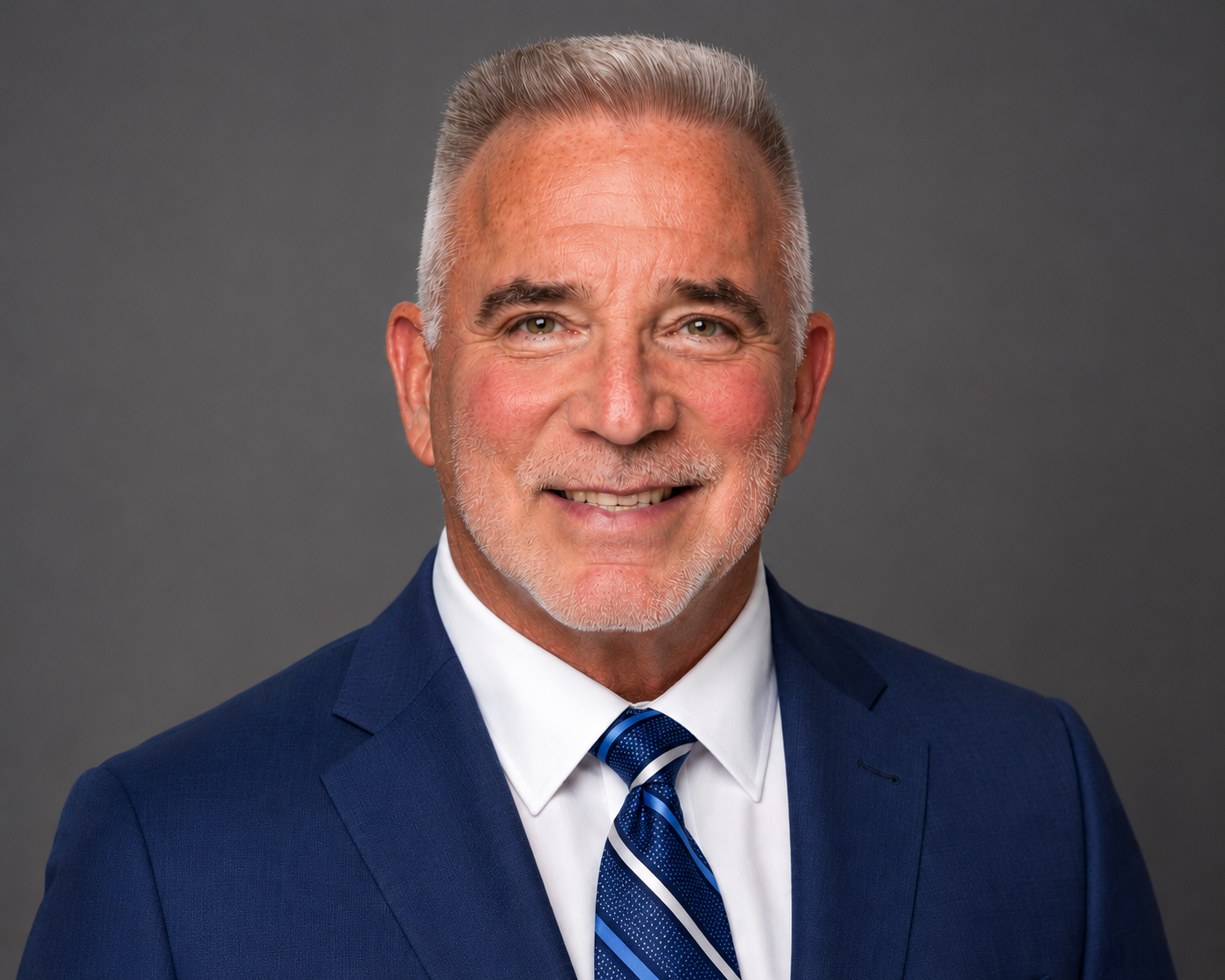
D Kenton Henry
Office: 281-367-6565
Text my cell 24/7 @713-907-7984
Email: Allplanhealthinsurance.com@gmail.com
Https://Allplanhealthinsurance.com@gmail.com
Https://KTHillcountryhealthandmedicareinsurance.com
Https://HealthandMedicareInsurance.com


Leave a Reply